

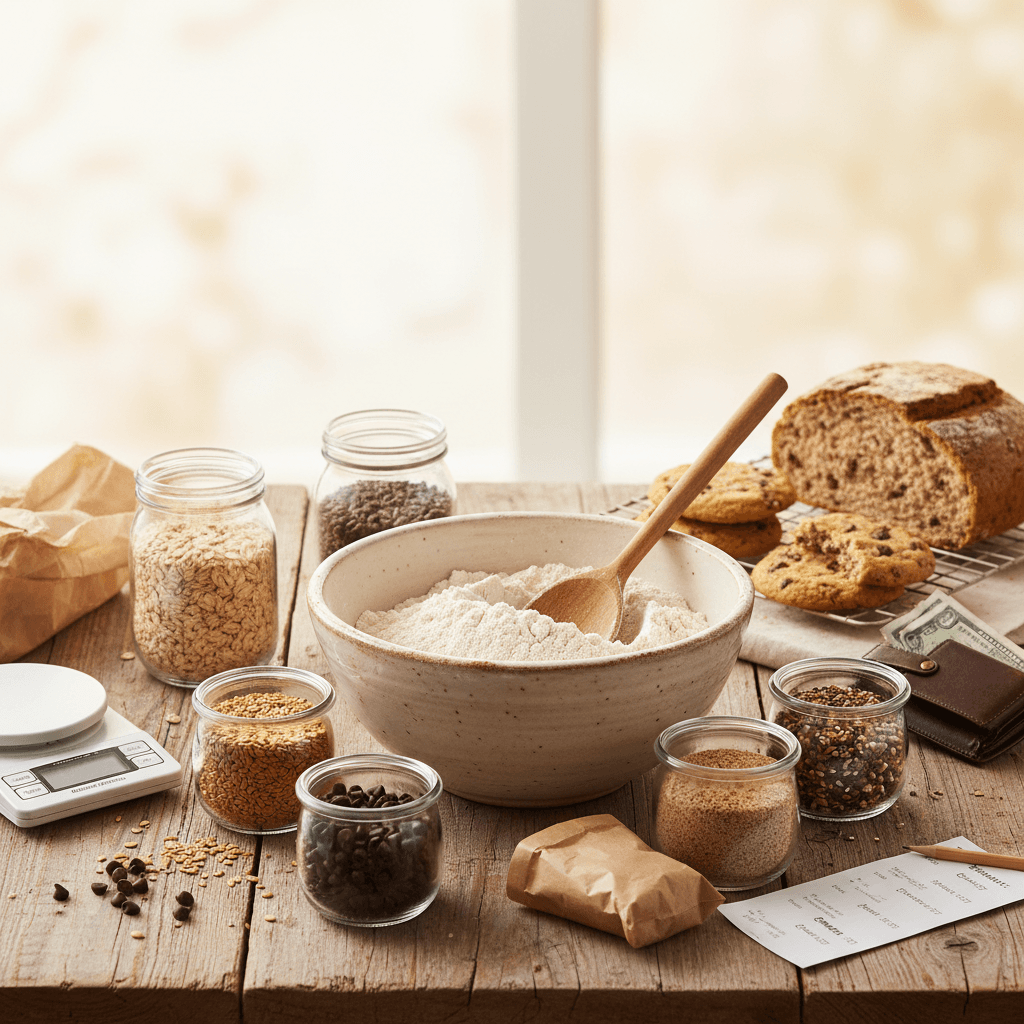
Building a gluten-free baking pantry can feel overwhelming and expensive, especially when you're just starting out. The good news: you don't need to spend hundreds of dollars upfront to start baking great things. Here's exactly how to stock a baking pantry on a budget, with real prices and smart strategies that keep quality high and costs low.
Key takeaways
- You can build a fully functional gluten-free baking pantry for under $50 by focusing on versatile, multi-use ingredients first.
- Store brands and budget-friendly options from Walmart, Aldi, and Amazon often perform just as well as premium brands in everyday baking.
- Buying staples like rice flour and starches in bulk can cut your per-recipe cost by 30-50% compared to small bags.
- Making your own flour blends, buttermilk substitutes, and egg replacers from pantry basics saves significant money over buying specialty products.
- A focused starter list of 8-10 ingredients covers the vast majority of gluten-free recipes, so you don't need to buy everything at once.
Start with multi-use ingredients, not specialty items
The single best way to save money on a baking pantry is to prioritize ingredients that show up in dozens of recipes rather than buying something you'll use once. A bag of brown rice flour or white rice flour, for example, is used in bread, cookies, cakes, pancakes, and pizza dough. A specialty flour like cassava flour is wonderful, but it's not where you should start if money is tight.
Here's the core principle: build outward from the center. Get the ingredients that cover 80% of recipes first, then add specialty items as your budget and confidence grow.
The budget starter pantry: what to buy first (under $50)
This is the list we recommend for anyone stocking a gluten-free baking pantry from scratch. Every item here pulls double or triple duty across recipe types, and we've included real price ranges based on current availability at major retailers.
| Ingredient | Approx. price | Where to find it | What it covers |
|---|---|---|---|
| White rice flour (2 lb bag) | $3-5 | Walmart, Aldi, Amazon | Base flour for most GF blends |
| Tapioca starch (1 lb bag) | $3-4 | Walmart, Amazon, Target | Binding, chewiness, structure |
| Potato starch (1 lb bag) | $3-5 | Walmart, Amazon | Moisture, tenderness in cakes and bread |
| Xanthan gum (8 oz bag) | $8-12 | Walmart, Amazon, Target | Gluten replacement in nearly every recipe |
| Baking powder (8-10 oz) | $1-3 | Walmart, Aldi, any grocery | Leavening for cakes, muffins, pancakes |
| Baking soda (1 lb box) | $1 | Everywhere | Leavening, browning, flavor |
| Granulated sugar (4 lb bag) | $3-4 | Walmart, Aldi, any grocery | Sweetening, structure, moisture |
| Canola or vegetable oil | $3-4 | Everywhere | Fat for cakes, muffins, quick breads |
| Vanilla extract (4 oz) | $2-8 | Walmart, Aldi, Amazon | Flavor in almost everything |
| Salt | $1 | Everywhere | Flavor balance in all baking |
Total for this starter list: roughly $28-46, depending on where you shop and whether you go store brand. That's enough to make your own flour blend and bake cookies, cakes, muffins, pancakes, and simple quick breads.
Notice what's not on this list: almond flour, coconut flour, specialty gums, or pre-made mixes. Those are all great, but they're not essential to get started. If you want to understand how xanthan gum and guar gum compare, we have a full breakdown, but xanthan gum is the more versatile pick for a budget pantry.
If you're looking for a structured resource that walks you through exactly which ingredients to buy, how to use them, and how to troubleshoot common problems, our Confident Gluten-Free Baker Toolkit was built for exactly this stage of the journey. It takes the guesswork out of getting started.
Where to shop for the best prices on gluten-free baking staples
Not all stores price gluten-free ingredients the same way, and the differences can be dramatic. Here's where the best deals tend to be.
Walmart
Walmart is one of the most accessible and affordable places to build a gluten-free baking pantry. Their Great Value brand carries white rice flour, tapioca starch, and basic baking staples at prices that are hard to beat. Bob's Red Mill products are also widely stocked, often at $1-2 less than specialty grocery stores. We have a full aisle-by-aisle guide to gluten-free products at Walmart if you want to plan your trip.
Aldi
Aldi is a budget baker's best friend. Their liveGfree line includes baking mixes in the $3-5 range, and their basic baking staples (sugar, oil, eggs, baking powder) are consistently among the cheapest at any brick-and-mortar store. Check out our complete Aldi gluten-free shopping guide for specifics.
Amazon
Amazon is where bulk buying really shines for gluten-free baking. You can get a 4 lb bag of white rice flour for around $6-8, which is significantly cheaper per ounce than small bags at the grocery store. Subscribe and Save can knock off an additional 5-15%. Our Amazon gluten-free baking guide covers the best deals across all categories.
Target
Target's Good and Gather line and their Bob's Red Mill selection make it a solid option, especially if you have a Target RedCard for the extra 5% off. Prices land between Walmart and Whole Foods for most items.
Make your own flour blend and save 40% or more
Pre-made gluten-free flour blends are convenient, but they're also one of the biggest markups in gluten-free baking. A 1 lb bag of a popular blend can run $5-7, while making your own from bulk ingredients costs roughly $2-3 per pound.
Here's the simple DIY blend we recommend for beginners:
- 2 cups white rice flour
- 2/3 cup potato starch
- 1/3 cup tapioca starch
This is a classic ratio that works as a 1:1 substitute for all-purpose flour in most recipes when you add xanthan gum (about 1 teaspoon per cup of flour blend for bread, 1/2 teaspoon for cookies and cakes). It's essentially the same formula many commercial blends use, minus the premium price tag.
If you want to compare how commercial blends stack up, our guide to Bob's Red Mill vs King Arthur gluten-free flour breaks down the two most popular options.
Budget-friendly substitutes you can make at home
Beyond flour blends, there are several common baking ingredients you can make yourself for a fraction of the cost of buying them pre-made.
Homemade buttermilk substitute
Instead of buying buttermilk (which often goes bad before you use the whole carton), add 1 tablespoon of apple cider vinegar or lemon juice to 1 cup of milk and let it sit for 5 minutes. Cost: essentially free if you already have vinegar and milk on hand.
Applesauce as an egg replacer
For recipes where eggs provide moisture (like muffins and quick breads), 1/4 cup of applesauce can replace one egg. A jar of unsweetened applesauce runs about $2 at Aldi or Walmart and replaces 4-6 eggs worth of baking. Check our guide to choosing egg substitutes for more options.
Oat flour from rolled oats
A canister of certified gluten-free rolled oats ($4-6 for 18 oz) can be blended into oat flour in about 30 seconds using a regular blender. Buying pre-ground oat flour costs roughly twice as much per ounce. Just make sure the oats are certified gluten-free if cross-contamination is a concern.
Brown sugar from white sugar and molasses
If you have granulated sugar and a bottle of molasses ($3-4), you can make brown sugar on demand. Mix 1 cup of sugar with 1 tablespoon of molasses for light brown sugar, or 2 tablespoons for dark. This means one fewer bag to buy and store.
The smart way to buy in bulk without waste
Buying in bulk saves money, but only if you actually use what you buy before it goes stale or rancid. Here's how to do it right.
Rice flour and starches are your safest bulk buys. They have a long shelf life (12+ months in a cool, dry pantry) and you'll use them constantly. A 4 lb bag of Bob's Red Mill white rice flour on Amazon runs about $7-8, compared to $4-5 for a 1.5 lb bag at the grocery store. That's nearly half the cost per ounce.
Xanthan gum is worth buying in a slightly larger bag because you use so little per recipe (usually 1/2 to 1 teaspoon). An 8 oz bag for $8-12 will last most home bakers 6-12 months.
Nut flours are where you need to be careful. Almond flour can go rancid within a few months, especially in warm kitchens. Unless you bake with it multiple times a week, stick to 1 lb bags and store them in the fridge or freezer.
Sam's Club and Costco memberships can pay for themselves if you bake regularly. Sam's Club carries large bags of sugar, butter, and eggs at significant discounts. See our Sam's Club gluten-free shopping guide for what's worth grabbing there.
When pre-made mixes are actually the budget-smart choice
We just told you to make your own flour blends, so this might sound contradictory. But sometimes a $4-5 box mix is genuinely the cheapest way to bake something specific, especially when you factor in the cost of buying multiple specialty ingredients you might not use again.
This is especially true for:
- Bread - Gluten-free bread recipes often call for specialty ingredients like psyllium husk, milk powder, and specific flour ratios. A box of gluten-free bread mix in the $5-7 range can be cheaper than buying all those ingredients separately for your first loaf.
- Pizza dough - Similar logic. A gluten-free pizza crust mix for $4-5 is a low-risk way to try pizza night without investing in a full ingredient list.
- Brownies and cookies - If you just want a quick win to boost your confidence, a $3-5 box mix from Krusteaz or King Arthur is a perfectly smart use of your budget.
The key is being strategic: use mixes for complex recipes where the ingredient list is long, and bake from scratch for simpler things like pancakes, muffins, and basic cakes where your DIY flour blend does the job beautifully.
Essential equipment you probably already own
You don't need a stand mixer or a bread machine to start baking gluten-free. Here's what you actually need, and what it costs if you're starting from zero:
| Equipment | Budget option | Approx. price |
|---|---|---|
| Mixing bowls | Any set from Walmart or Target | $5-10 |
| Measuring cups and spoons | Store brand set | $3-5 |
| Whisk | Any basic whisk | $2-4 |
| Baking sheet | Nordic Ware or store brand | $5-10 |
| 8x8 or 9x13 baking pan | Store brand metal pan | $5-8 |
| Spatula | Silicone spatula from any store | $3-5 |
| Kitchen scale (optional but recommended) | OXO Good Grips 11lb Food Scale | $25-30 |
Total for basic equipment if you're truly starting from scratch: roughly $23-42. But most people already have mixing bowls, measuring cups, and a baking sheet. The kitchen scale is the one upgrade we'd encourage when your budget allows, because weighing flour is significantly more accurate than scooping, and accuracy matters even more in gluten-free baking where ratios are less forgiving.
Building out your pantry over time
Once you've got the basics covered and you're baking regularly, here's the order we'd suggest adding new ingredients. Think of it as a tier system:
Tier 2 (add when you have an extra $15-25):
- Almond flour ($7-10 for 1 lb) - opens up grain-free recipes and adds moisture to cakes
- Cocoa powder ($3-5) - essential for chocolate baking
- Cornstarch ($2-3) - another useful thickener and blend ingredient
- Active dry yeast ($4-6 for a jar) - needed for bread and pizza dough
Tier 3 (add when you're ready to expand):
- Coconut flour ($4-6) - great for high-protein, low-carb baking
- Psyllium husk powder ($8-12) - transforms gluten-free bread texture
- Buckwheat flour ($5-7) - adds nutty flavor and nutrition to pancakes and bread
- Cream of tartar ($4-6) - useful for meringues and as a leavening booster
If you're curious about how almond flour and coconut flour compare, our almond flour vs coconut flour comparison breaks down exactly when to use each one.
Money-saving tips that add up fast
Here are the specific habits that make the biggest difference for budget-conscious gluten-free bakers:
- Use Amazon Subscribe and Save for staples you go through regularly. The 5-15% discount on items like rice flour, xanthan gum, and tapioca starch adds up to real savings over a year.
- Check store brand options first. Walmart's Great Value and Aldi's liveGfree products are often made in the same facilities as name brands. Don't assume store brand means lower quality.
- Buy eggs and butter on sale and stock up. Butter freezes beautifully for 6+ months. Eggs keep for 3-5 weeks in the fridge. These are your most-used perishables in baking.
- Make a baking plan before you shop. Decide on 2-3 recipes for the week, check what you already have, and buy only what you need. Impulse ingredient purchases are the fastest way to blow a budget.
- Store flours and starches properly. Airtight containers in a cool, dry spot keep your ingredients fresh much longer, which means less waste and fewer replacement purchases. A set of airtight storage containers ($15-25 for a set) pays for itself quickly.
- Don't buy xanthan gum and guar gum. Pick one. For most baking, xanthan gum is the more versatile choice. There's no need to stock both when you're on a budget.
Frequently asked questions
How much does it cost to start a gluten-free baking pantry?
You can stock a functional gluten-free baking pantry for $30-50 by focusing on multi-use staples like white rice flour, tapioca starch, potato starch, xanthan gum, baking powder, baking soda, sugar, oil, vanilla, and salt. These core ingredients cover the majority of gluten-free recipes for cookies, cakes, muffins, and pancakes.
Is it cheaper to make your own gluten-free flour blend or buy pre-made?
Making your own blend is almost always cheaper. A DIY blend using white rice flour, potato starch, and tapioca starch costs roughly $2-3 per pound when bought in bulk, compared to $5-7 per pound for popular pre-made blends. The ingredients are widely available at Walmart, Aldi, and Amazon.
What is the best store for cheap gluten-free baking ingredients?
Walmart and Aldi consistently offer the lowest prices on gluten-free baking staples. Walmart carries a wide range of Bob's Red Mill products and Great Value store brand options, while Aldi's liveGfree line and rock-bottom prices on basics like sugar, eggs, and butter make it ideal for budget bakers. For bulk purchases, Amazon with Subscribe and Save is hard to beat. Check our Walmart and Aldi shopping guides for specific recommendations.
Do I need a stand mixer for gluten-free baking?
No, a stand mixer is not necessary for most gluten-free baking. A whisk, spatula, and some arm strength will get you through cookies, cakes, muffins, pancakes, and quick breads. Gluten-free batters are often thinner than wheat-based ones and don't require the heavy kneading that makes a stand mixer essential in traditional bread baking. A hand mixer ($15-25) is a worthwhile upgrade before a stand mixer if your budget allows.
What gluten-free baking ingredients have the longest shelf life?
White rice flour, tapioca starch, potato starch, sugar, baking soda, and salt all last 12 months or longer in airtight containers at room temperature. Xanthan gum also has an extremely long shelf life. Nut flours like almond flour are the exception and should be refrigerated or frozen, as they can go rancid within a few months at room temperature. Prioritizing long-shelf-life staples is one of the best ways to reduce waste on a budget.

Written by
Co-founder, BakingSubs
Co-founder of BakingSubs, where he turns the science of ingredient substitutions into tested, reliable guidance for home bakers.
Related Posts
Bake with Confidence
See all
Confident Gluten-Free Baker Toolkit
The science-based system that replaces gluten's seven invisible jobs so your baking turns out soft, fluffy, and foolproof — every time.

Gluten-Free Recipe Vault
Instant access to our complete library of proven gluten-free recipes — no waiting, no guesswork, just results that work tonight.

Fix Your Gluten-Free Bread
Learn the 3-step formula to make bread rise and stay soft, discover why your loaves collapse, and get a tested sandwich bread recipe that actually works.