

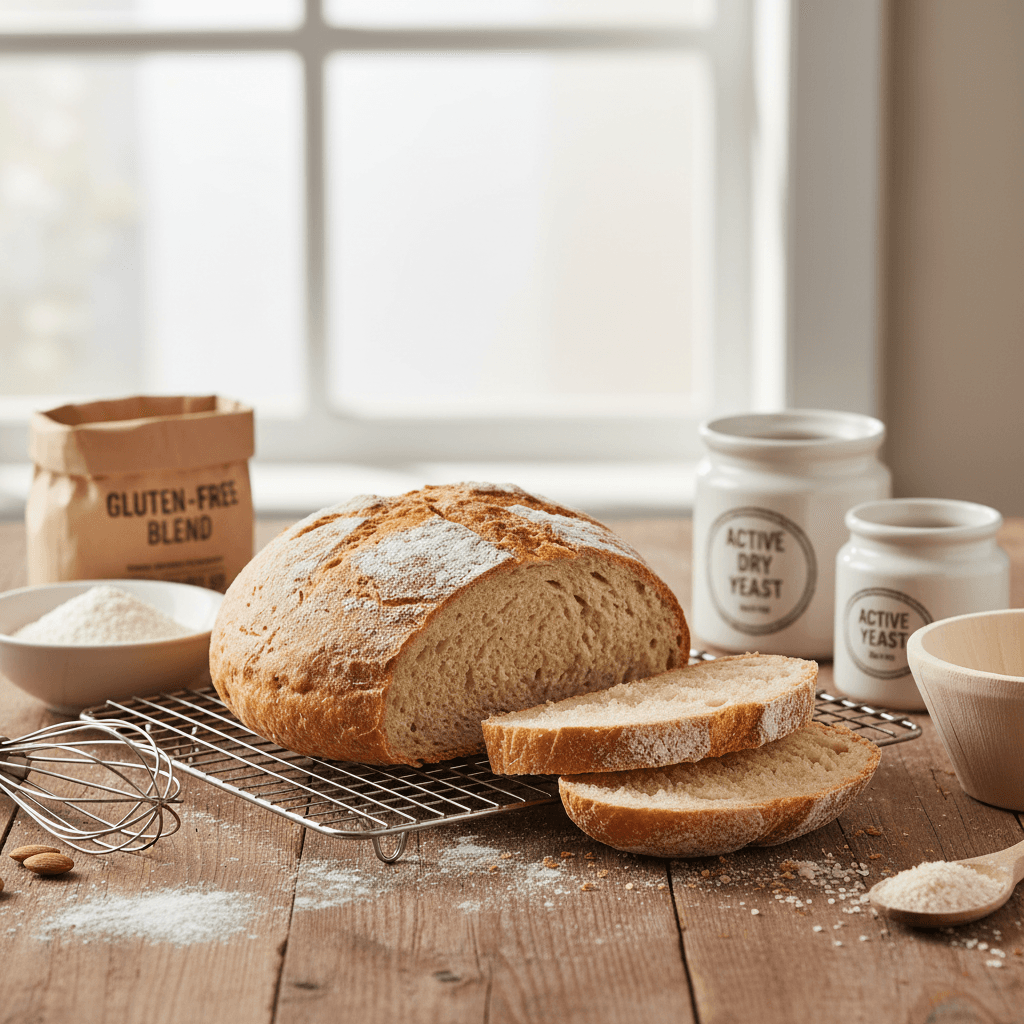
Finding a gluten-free bread mix that actually produces something you want to eat can feel like a gamble — especially when you're staring at a wall of options and every box promises "amazing texture." We've compared the popular options and narrowed it down to seven mixes built to deliver real bread: soft, sliceable, and worth the effort.
Quick-pick summary: the best gluten-free bread mixes at a glance
| Mix | Best for | Texture | Difficulty |
|---|---|---|---|
| King Arthur Gluten Free Bread Mix | Overall best | Soft, sandwich-ready | Easy |
| Bob's Red Mill Homemade Wonderful GF Bread Mix | Budget pick | Hearty, slightly dense | Easy |
| Pamela's Bread Mix | Bread machines | Light, airy | Easy |
| gfJules Bread Mix | Closest to wheat bread | Pillowy soft | Moderate |
| Simple Mills Artisan Bread Mix | Clean ingredients | Rustic, grain-free | Easy |
| Krusteaz Gluten Free Honey Cornbread Mix | Quick bread / cornbread | Moist, tender crumb | Very easy |
| Chebe All-Purpose Gluten-Free Bread Mix | Rolls, wraps, and buns | Shapeable manioc dough, not a loaf | No yeast or rise time |
Key takeaways
- King Arthur Gluten Free Bread Mix is the most reliable all-around option, producing a soft loaf that slices cleanly for sandwiches.
- Look for mixes that include psyllium husk or xanthan gum — these binders replace gluten's structural role and prevent crumbling.
- Bread machine mixes and oven mixes are not always interchangeable; check the label before committing.
- Most gluten-free bread mixes benefit from extra eggs, oil, or vinegar to improve moisture and rise — don't skip add-ins listed on the box.
- If your bread turns out gummy in the center or dry and crumbly, the fix is usually bake time or hydration, not a different mix.
- Price per loaf ranges from about $3 to $10 depending on the brand and bag size.
What to look for when buying a gluten-free bread mix
Before we get into specific products, here's what separates a good gluten-free bread mix from one that'll leave you with a dense, crumbly doorstop. If you're new to gluten-free baking, these are the things that actually matter.
Binder type and amount
Gluten is the protein network that gives wheat bread its stretch and chew. Without it, your bread needs a stand-in. The best mixes include xanthan gum, guar gum, or psyllium husk powder already in the blend. If a mix doesn't include a binder, you'll need to add one yourself — and getting the ratio wrong is one of the most common reasons gluten-free bread fails. We have a full breakdown of xanthan gum vs guar gum if you want to understand the differences.
Flour blend composition
The best mixes use a combination of flours and starches rather than relying on a single grain. A typical winning formula includes a base flour (like brown rice flour or sorghum flour), a starch for lightness (like tapioca starch or potato starch), and sometimes a protein-rich flour for structure. Mixes that are all rice flour tend to be gritty. Mixes that are all starch tend to be gummy. You want a balanced blend.
Certification and cross-contamination
If you have celiac disease, look for mixes that are certified gluten-free, not just labeled "gluten-free." Certification means the product has been independently tested to contain fewer than 10-20 ppm of gluten, depending on the certifying body. This matters because some facilities process wheat products on the same lines. Our guide to setting up a gluten-free baking kitchen covers cross-contamination in more detail.
Required add-ins
Some mixes are truly "just add water," while others require eggs, oil, butter, yeast, or vinegar. Neither approach is better — but you should know what you're signing up for before you start. Mixes that require yeast will need a rise time and produce a more traditional bread texture. Quick-bread style mixes use baking powder and come together faster.
If you're just getting started with gluten-free baking, our Confident Gluten-Free Baker Toolkit walks you through the fundamentals so you understand why these ingredients matter and how to troubleshoot when things go sideways.
1. King Arthur Gluten Free Bread Mix — best overall
King Arthur's gluten-free bread mix is our top pick because it consistently produces a soft, well-risen loaf with a tender crumb that actually works for sandwiches. It's the mix we recommend to anyone who's new to gluten-free baking and just wants something reliable.
The blend uses rice flour, tapioca starch, and potato starch with xanthan gum already included. You'll need to add yeast, eggs, butter, and warm water. The dough is a thick batter rather than a shapeable dough — which is totally normal for gluten-free bread, even if it feels strange at first.
Pros:
- Certified gluten-free from a trusted brand
- Soft, sandwich-friendly texture with minimal grittiness
- Xanthan gum is pre-blended, so no measuring tiny amounts
- Works well in both a loaf pan and a bread machine
- Widely available in grocery stores and online
Cons:
- Requires yeast, eggs, and butter — not a pantry-only mix
- Some batches can taste slightly rice-heavy if overbaked
- Not the cheapest option per loaf
If you want one dependable mix to start with, make it the King Arthur Gluten Free Bread Mix.
2. Bob's Red Mill Homemade Wonderful Gluten Free Bread Mix — best budget pick
Bob's Red Mill is the best gluten-free bread mix if you're watching your budget. It produces a heartier, slightly denser loaf than King Arthur, but at a significantly lower price point — with a mild whole-grain flavor.
The blend includes garbanzo bean flour, potato starch, tapioca flour, sorghum flour, and fava bean flour. Xanthan gum is included. You add yeast, eggs, oil, and warm water. If you've read our Bob's Red Mill vs King Arthur comparison, you'll know both brands are solid — they just have different personalities.
Pros:
- Affordable — often under $5 per bag
- Good nutritional profile thanks to bean flours adding protein and fiber
- Certified gluten-free with dedicated gluten-free facility
- Produces a satisfying, hearty loaf great for toast
Cons:
- Bean flour base can have a slightly "beany" aftertaste for some people (check our guide on fixing strange aftertaste if this bothers you)
- Denser crumb — not ideal if you want a light, fluffy sandwich bread
- Rise can be inconsistent if your yeast or water temperature is off
The Bob's Red Mill Homemade Wonderful Bread Mix is a great starting point if you want to try gluten-free bread baking without a big investment.
3. Pamela's Bread Mix — best for bread machines
Pamela's Bread Mix was specifically designed with bread machines in mind, and it shows. The dough consistency and rise timing are calibrated for the typical bread machine cycle, producing a light, airy loaf with a golden crust.
The blend is based on brown rice flour, tapioca starch, and sweet rice flour, with xanthan gum included. You add yeast, eggs, oil, and warm water. It also works in a standard oven, but the bread machine results are where this mix really shines.
Pros:
- Optimized for bread machines — set it and forget it
- Light, airy texture with a pleasant mild flavor
- No bean flours, so no beany aftertaste
- Certified gluten-free
Cons:
- Can be harder to find in stores — easier to order online
- Slightly more expensive than Bob's Red Mill
- Oven-baked loaves don't rise quite as well as bread machine versions
If you already own a bread machine or are thinking about getting one, the Pamela's Bread Mix is the one to try first.
4. gfJules Bread Mix — closest to wheat bread texture
If your main goal is bread that tastes and feels like the wheat bread you remember, gfJules is the mix that comes closest. The texture is pillowy soft with a fine, even crumb — no grittiness, no gumminess, no weird aftertaste.
The proprietary blend avoids rice flour entirely, using a combination of tapioca starch, potato starch, cornstarch, and a few other starches. It includes xanthan gum. You add yeast, eggs, oil, sugar, and warm water. The recipe is a bit more involved than some other mixes, but the results justify the extra steps.
Pros:
- Remarkably close to wheat bread in texture and taste
- No rice flour means zero grittiness
- Works for sandwich bread, dinner rolls, and even cinnamon rolls
- Certified gluten-free and free from top allergens
Cons:
- Premium price — about $9-10 per bag
- Requires more add-ins and slightly more technique
- Only available online for most people
The gfJules Bread Mix is worth the splurge if texture is your top priority.
5. Simple Mills Artisan Bread Mix — best clean-ingredient option
Simple Mills takes a completely different approach by skipping grains entirely. Their artisan bread mix is based on almond flour, arrowroot, flax meal, and tapioca starch, making it grain-free and paleo-friendly in addition to gluten-free. It contains almonds.
The result is a denser, more rustic loaf with a nutty flavor. It's not going to fool anyone into thinking it's a traditional sandwich bread, but it works well in its own right — especially toasted with butter or as a base for avocado toast.
Pros:
- Clean, recognizable ingredients — no gums (it does contain arrowroot and tapioca starch)
- Grain-free and paleo-friendly
- Quick bread style — no yeast, no rise time needed
- Rich, nutty flavor that works great toasted
Cons:
- Dense, heavy texture — not a sandwich bread replacement
- Higher in calories and fat due to almond flour base
- Not ideal for bread machine use
- Smaller loaf size than yeast-risen mixes
If you're interested in the almond flour approach, you might also enjoy our comparison of almond flour vs coconut flour for baking. The Simple Mills Artisan Bread Mix is a great option for anyone who prefers minimal processing.
6. Krusteaz Gluten Free Honey Cornbread Mix — best quick bread
Okay, cornbread isn't technically "bread" in the sandwich sense, but Krusteaz's gluten-free honey cornbread mix is so good and so easy that it deserves a spot here. If you need bread on the table in 30 minutes with almost no effort, this is the answer.
The mix uses rice flour, corn flour, and cornmeal with a honey flavor that's sweet without being overwhelming. You just add eggs, milk, and oil. That's it.
Pros:
- Ready in about 25-30 minutes total
- Extremely beginner-friendly — almost impossible to mess up
- Moist, tender crumb with pleasant sweetness
- Very affordable
Cons:
- It's cornbread, not sandwich bread — different use case
- Contains corn, which some gluten-free eaters also avoid
- Not certified gluten-free by a third party (though labeled GF)
The Krusteaz Gluten Free Honey Cornbread Mix is perfect for weeknight dinners or when you just need something warm and bready without the fuss.
7. Chebe All-Purpose Gluten-Free Bread Mix — best for rolls, wraps, and buns
Chebe takes a different route from every other mix on this list. Instead of a rice, bean, or almond flour blend, its All-Purpose Bread Mix is made from manioc (tapioca) flour and modified manioc starch, with cream of tartar, sea salt, and baking soda. There's no yeast, so there's no rise time. Chebe describes the dough as strong enough to shape into tortillas and wraps, buns, bread bowls, calzones, and turnovers, so think rolls and flatbreads rather than a sliceable sandwich loaf.
Chebe says the mix is certified gluten-free by GFCO, and its ingredient list has no corn, dairy, egg, potato, rice, tree nuts, soy, peanuts, sugar, or yeast. You add egg or an egg substitute when you make the dough. If you're managing other allergies, note Chebe's disclosure that the mix is made on shared equipment with corn, dairy, potato, rice, tree nuts, and soy under a cleaning and allergen-control program.
Pros:
- Certified gluten-free by GFCO
- Grain-free: no corn, rice, or potato in the ingredients
- No yeast and no rise time
- Shapeable dough for rolls, wraps, buns, and calzones
Cons:
- Doesn't make a sandwich-style loaf
- Needs egg or an egg substitute
- Made on shared equipment with corn, dairy, potato, rice, tree nuts, and soy
- Small 7.5 oz bags; Chebe's own site sells them as an 8-pack case
If you want gluten-free rolls or wraps rather than a loaf, the Chebe All-Purpose Gluten-Free Bread Mix is worth a look. If you'd rather bake a yeasted loaf with psyllium husk as the binder, we've done a thorough comparison of the best psyllium husk brands for gluten-free bread.
How to get the best results from any gluten-free bread mix
Even the best mix can produce disappointing bread if a few key details are off. Here's what matters most.
Measure ingredients by weight, not volume
Gluten-free flours and mixes pack differently than wheat flour. A cup of one brand's mix might weigh significantly more or less than another's. If your mix includes weight measurements, use them. A simple kitchen scale makes a huge difference in consistency.
Don't skip the vinegar
Many gluten-free bread recipes call for a tablespoon of apple cider vinegar. This isn't optional — the acid strengthens the protein structure in the batter and helps the bread rise higher. If your mix's instructions include it, use it.
Let the bread cool completely before slicing
This is the hardest rule to follow, but it matters. Gluten-free bread continues to set its structure as it cools. Cutting into it too early almost guarantees a gummy center. Give it at least an hour on a wire rack.
Watch your rise carefully
Gluten-free bread dough should rise until it just crests the top of the pan — not double in size like wheat bread. Over-proofing causes the loaf to collapse. If your bread has poor rise, check your yeast freshness and water temperature first.
Frequently asked questions
What is the best gluten-free bread mix for beginners?
King Arthur Gluten Free Bread Mix is the best option for beginners because it's widely available, includes xanthan gum in the blend, and produces consistent results with clear instructions. If you're brand new to gluten-free baking, we also recommend checking out our easiest gluten-free bread recipes for additional guidance.
Can you use a bread machine with gluten-free bread mix?
Yes, many gluten-free bread mixes work in bread machines, but you should choose a mix specifically designed or tested for bread machine use. Pamela's Bread Mix is our top pick for bread machines. Most machines have a gluten-free cycle with a single rise and shorter bake time, which works better than the standard cycle. See our full post on whether you need a bread machine for gluten-free bread for more details.
Why is my gluten-free bread mix turning out gummy?
Gummy gluten-free bread is almost always caused by underbaking or cutting into the loaf before it has fully cooled. Use an instant-read thermometer — the internal temperature should reach 205-210 degrees Fahrenheit. Let the loaf cool on a wire rack for at least one hour before slicing. Our guide to fixing gummy centers covers this in depth.
Are gluten-free bread mixes safe for celiac disease?
Mixes that are certified gluten-free by organizations like GFCO are tested to contain fewer than 10 ppm of gluten and are generally considered safe for people with celiac disease. Always check the label for certification rather than relying on a "gluten-free" claim alone. King Arthur, Bob's Red Mill, and gfJules all carry third-party gluten-free certification.
How do you store gluten-free bread to keep it fresh?
Gluten-free bread stales faster than wheat bread because it lacks gluten's moisture-trapping network. For same-day eating, keep it in a bread bag at room temperature. For longer storage, slice the loaf and freeze individual slices in a zip-top bag — they toast beautifully straight from the freezer. Our guide on preventing quick staling has more tips.

Written by
Co-founder, BakingSubs
Co-founder of BakingSubs, where he turns the science of ingredient substitutions into tested, reliable guidance for home bakers.
Related Posts
Bake with Confidence
See all
Confident Gluten-Free Baker Toolkit
The science-based system that replaces gluten's seven invisible jobs so your baking turns out soft, fluffy, and foolproof — every time.

Gluten-Free Recipe Vault
Instant access to our complete library of proven gluten-free recipes — no waiting, no guesswork, just results that work tonight.

Fix Your Gluten-Free Bread
Learn the 3-step formula to make bread rise and stay soft, discover why your loaves collapse, and get a tested sandwich bread recipe that actually works.