


No, you don't need a bread machine to make great gluten-free bread — but there are situations where one genuinely helps. Let's break down when a bread machine makes sense, when your oven is the better choice, and what actually matters most for getting a good loaf.
Key takeaways
- A bread machine is not required for gluten-free bread — many excellent loaves are baked in a standard oven with a good loaf pan.
- Bread machines shine for convenience and consistency, especially if you bake bread multiple times a week.
- Oven baking gives you more control over crust, shape, and baking time — which matters more with gluten-free doughs.
- The gluten-free setting on a bread machine skips the second rise and punch-down, which is important since GF doughs can't handle that.
- Technique, hydration, and binder choice matter far more than whether you use a machine or an oven.
- An instant-read thermometer is the single most useful tool for gluten-free bread regardless of your baking method.
What a bread machine actually does for gluten-free bread
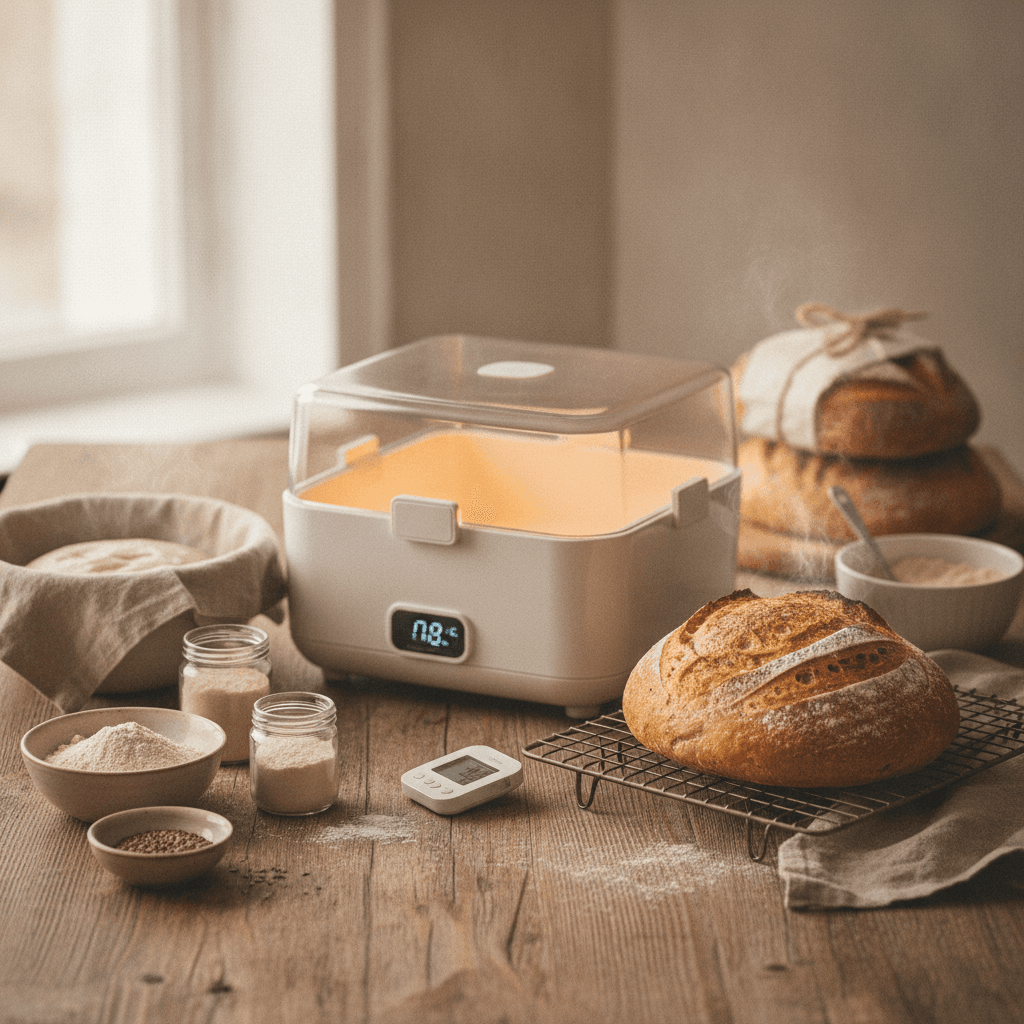
A bread machine automates mixing, rising, and baking in one enclosed container. For gluten-free bread specifically, the key advantage is that it handles the entire process hands-off — you add ingredients, press a button, and walk away.
Most modern bread machines have a dedicated gluten-free cycle. This cycle is designed with a single rise (no punch-down), shorter mixing time, and adjusted bake temperatures. That matters because gluten-free doughs behave very differently from wheat doughs. They're more like thick batters, and they rely on binders like xanthan gum or psyllium husk rather than gluten networks for structure. A second rise and punch-down — standard in regular bread cycles — would collapse a gluten-free loaf entirely.
The machine also maintains consistent warmth during rising, which can be genuinely helpful if your kitchen runs cold or drafty. Temperature consistency during proofing is one of the biggest factors in getting gluten-free bread to rise properly.
When a bread machine makes sense
A bread machine is worth considering if you bake gluten-free bread frequently and value convenience over customization. Here's when it genuinely earns its counter space:
- You bake bread 2+ times per week. The time savings add up fast when you're not monitoring rise times and oven temperatures.
- You're new to gluten-free baking. Machines reduce the number of variables you need to manage, which means fewer failed loaves while you're learning.
- Your kitchen environment is unpredictable. If your home is cold, humid, or you don't have a reliable oven, the enclosed environment of a bread machine provides consistency.
- You want fresh bread with minimal effort. Some machines have delay timers, so you can wake up to a warm loaf.
If any of those describe you, a machine like the Zojirushi BB-HAC10 with its dedicated gluten-free cycle is a solid investment. The Cuisinart CBK-200 is another popular option at a lower price point.
Whether you use a machine or an oven, the technique matters more than the tool. If you want to build a strong foundation in gluten-free baking — understanding hydration, binders, and how different flours behave — our Confident Gluten-Free Baker Toolkit walks you through all of it step by step.
When oven baking is the better choice
Oven baking gives you significantly more control, and for gluten-free bread, control often translates to better results. Here's why many experienced GF bakers prefer the oven:
- Better crust. Bread machines produce a softer, paler crust. If you want a crispy, golden exterior, the oven wins every time.
- Shape flexibility. You're not limited to the machine's loaf pan shape (usually tall and narrow). With a good loaf pan designed for gluten-free bread, you can get sandwich-friendly slices.
- Temperature control. Many gluten-free bread recipes benefit from starting at a higher temperature and then reducing it. Bread machines don't offer that flexibility.
- You can monitor the bake. Gluten-free bread is notoriously tricky — it can look done on the outside while being gummy in the middle. With an oven, you can check internal temperature easily.
For oven baking, we strongly recommend using an instant-read thermometer. Gluten-free bread is done when the internal temperature hits 205-210°F (96-99°C). This one tool eliminates most of the guesswork.
Bread machine vs. oven for gluten-free bread: side-by-side comparison
Here's how the two methods stack up across the factors that matter most for gluten-free baking:
| Factor | Bread machine | Oven baking |
|---|---|---|
| Convenience | High — add ingredients and walk away | Moderate — requires monitoring |
| Crust quality | Soft, pale | Crispy, golden (adjustable) |
| Loaf shape | Tall, narrow (machine-specific) | Any shape you want |
| Temperature control | Limited to preset cycles | Full control |
| Rise consistency | Excellent (enclosed, warm) | Depends on kitchen environment |
| Learning curve | Lower | Moderate |
| Cost | $80-$300+ for machine | Just need a loaf pan ($15-$40) |
| Best for | Frequent, hands-off baking | Best possible texture and crust |
Why technique matters more than the tool
Here's the truth that doesn't get said enough: the method you use to bake gluten-free bread matters far less than how well you understand gluten-free dough. We've seen people make incredible bread in a $100 machine and terrible bread in a $500 oven — and vice versa.
The factors that actually determine whether your loaf turns out well are:
- Hydration. Gluten-free bread doughs need more liquid than wheat doughs. Getting this right prevents both dense loaves and overly sticky dough.
- Binder selection. Xanthan gum and psyllium husk behave very differently, and using the wrong one (or the wrong amount) is a common cause of texture problems.
- Accurate measuring. Gluten-free baking is less forgiving than wheat baking. A kitchen scale makes a bigger difference than any appliance choice.
- Knowing when it's done. Internal temperature is the only reliable indicator. Neither visual cues nor time alone are trustworthy for GF bread.
If your bread is collapsing, crumbling, or coming out gummy, the issue is almost certainly technique — not whether you used a bread machine or an oven.
Tips for using a bread machine with gluten-free recipes
If you do decide to go the bread machine route, these tips will help you get better results:
- Only use the gluten-free cycle. Never use the standard bread cycle — the double rise will ruin your loaf.
- Scrape the corners. Open the lid during the first few minutes of mixing and use a rubber spatula to push flour from the corners into the paddle. GF batters are thick and don't always incorporate fully on their own.
- Warm your liquids. Use liquids around 110°F (43°C) to give the yeast a head start, especially if your kitchen is cool.
- Remove the paddle before baking starts. If your machine allows it, pull the mixing paddle out after the rise cycle. This prevents the large hole at the bottom of the loaf.
- Check internal temperature. Even with a machine, open the lid in the last few minutes and check with a thermometer. Aim for 205-210°F.
Tips for oven-baking gluten-free bread
For oven bakers, these practices make the biggest difference:
- Preheat fully. Give your oven at least 20 minutes to reach temperature. An oven thermometer helps confirm accuracy — many ovens run 25°F off.
- Use the right pan. A smaller loaf pan (8x4 inches) gives GF bread the support it needs to rise up rather than spread out.
- Create a warm proofing environment. Turn your oven on to its lowest setting for 2 minutes, turn it off, and proof your dough inside with the door closed.
- Tent with foil. If the top is browning too fast, tent loosely with aluminum foil for the last 15-20 minutes.
- Let it cool completely. This is critical. Gluten-free bread continues setting its structure as it cools. Cutting too early almost guarantees a gummy center.
Frequently asked questions
Can you make gluten-free bread in a regular bread machine without a gluten-free setting?
You can, but it's risky. The main issue is that standard bread cycles include a second rise with a punch-down, which will collapse gluten-free dough. If your machine lets you customize the cycle to a single rise, it can work. Otherwise, look for a machine with a dedicated gluten-free program.
Is bread machine gluten-free bread as good as oven-baked?
It depends on what you value. Bread machine loaves tend to have a softer crust and a slightly denser crumb. Oven-baked bread generally has better crust and more control over texture. For everyday sandwich bread, many people find machine bread perfectly good. For the best possible loaf, oven baking gives you more tools to work with. Either way, understanding texture problems helps you troubleshoot both methods.
What is the best bread machine for gluten-free bread?
The Zojirushi BB-HAC10 is widely considered the best option for gluten-free baking due to its reliable gluten-free cycle and consistent heating. The Cuisinart CBK-200 is a strong mid-range alternative. Both have dedicated GF settings that skip the problematic second rise.
Why does my gluten-free bread from a bread machine come out gummy?
The most common cause is underbaking. Bread machines follow preset times that may not be long enough for your specific recipe or flour blend. Check the internal temperature — if it's below 205°F, the bread needs more time. Too much liquid or not enough binder can also cause gumminess. Our gluten-free bread troubleshooting guide covers this and 14 other common issues.
Do you need special ingredients to make gluten-free bread in a bread machine?
You need the same ingredients as oven-baked gluten-free bread: a gluten-free flour blend, a binder (xanthan gum or psyllium husk), yeast, liquid, fat, sugar, and salt. The machine doesn't change the recipe — it just automates the process. Make sure your flour blend is designed for bread, not just general baking.

Written by
Co-founder, BakingSubs
Co-founder of BakingSubs, where he turns the science of ingredient substitutions into tested, reliable guidance for home bakers.
Related Posts
Bake with Confidence
See all
Confident Gluten-Free Baker Toolkit
The science-based system that replaces gluten's seven invisible jobs so your baking turns out soft, fluffy, and foolproof — every time.

Gluten-Free Recipe Vault
Instant access to our complete library of proven gluten-free recipes — no waiting, no guesswork, just results that work tonight.

Fix Your Gluten-Free Bread
Learn the 3-step formula to make bread rise and stay soft, discover why your loaves collapse, and get a tested sandwich bread recipe that actually works.