

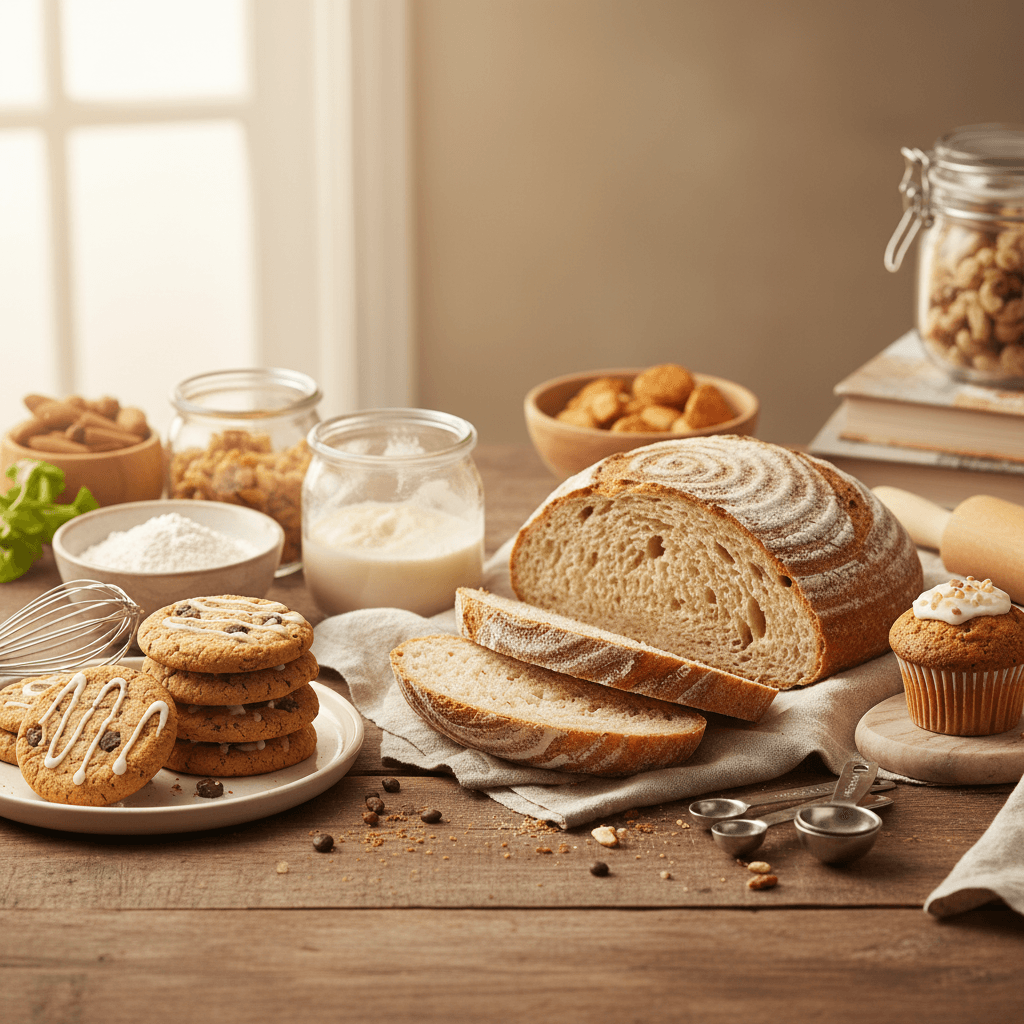
If you're wondering which gluten-free baked goods are worth selling, you're asking the right question. Not all products are created equal when it comes to profit margins, and choosing the wrong items can leave you exhausted with little to show for it. Here's what actually makes money — with real numbers, honest margins, and no hype.
Key takeaways
- Gluten-free baked goods command a 30-60% pricing premium over conventional products, and customers expect to pay it.
- The highest-margin gluten-free products to sell are decorated cookies, cupcakes, and quick breads — not elaborate custom cakes.
- A realistic side hustle income from gluten-free home baking is $500-$2,000/month; replacing a full-time income typically means $3,000-$6,000/month.
- Gluten-free customers are among the most loyal in the cottage food world — once they trust you, they reorder consistently.
- Ingredient costs are higher for gluten-free baking, but your pricing should reflect that, not absorb it.
- Batch production of 3-5 core products is far more profitable than offering a huge menu.
Why gluten-free products have a built-in pricing advantage
Gluten-free customers are used to paying more — and they're willing to do it. A loaf of gluten-free bread at the grocery store runs $6-$9 compared to $3-$4 for conventional bread. That pricing expectation carries directly into the cottage food and home bakery market, which means you don't have to compete on price the way conventional bakers do.
The real advantage goes deeper than pricing, though. People with celiac disease or serious gluten sensitivities have extremely limited options for fresh-baked goods. Most commercial bakeries can't guarantee a gluten-free environment, and grocery store options taste like cardboard. When someone finds a home baker they trust to keep them safe, they become a repeat customer for years. A large share of a trusted gluten-free baker's monthly revenue can come from repeat orders — that kind of loyalty is rare in any business.
Your flour costs will be higher than a conventional baker's, but your selling prices more than compensate. A batch of gluten-free cupcakes that costs $8-$12 in ingredients can sell for $36-$48 retail. That's the math that makes this work.
The most profitable gluten-free products to sell from home
Not every gluten-free product is equally profitable. The best items to sell share three traits: they're batch-friendly, they hold up well for delivery or pickup, and they have high perceived value relative to ingredient cost. Here's how the most popular options stack up.
| Product | Typical ingredient cost per unit | Typical selling price | Profit margin | Batch efficiency |
|---|---|---|---|---|
| Decorated sugar cookies (dozen) | $3-$5 | $30-$60 | 75-85% | High |
| Cupcakes (dozen) | $5-$8 | $36-$54 | 70-80% | High |
| Quick breads (banana, pumpkin, zucchini) | $3-$5 | $12-$18 | 65-75% | Very high |
| Brownies/bars (dozen) | $4-$6 | $24-$36 | 70-80% | Very high |
| Sandwich bread loaves | $3-$5 | $10-$14 | 55-70% | High |
| Custom decorated cakes | $15-$30 | $60-$150 | 50-65% | Low |
| Muffins (dozen) | $4-$6 | $24-$36 | 70-75% | High |
| Pie (whole) | $8-$14 | $30-$45 | 55-65% | Medium |
The standout winners are decorated cookies, cupcakes, and brownies/bars. They have the best combination of high margins, batch efficiency, and shelf stability. Custom cakes look impressive on paper, but the labor hours eat into your margin fast — a cake that takes 4 hours to decorate at a $60 profit means you're earning $15/hour before overhead.
Why decorated cookies are the profit king
Decorated gluten-free sugar cookies consistently deliver the highest margins in home baking. A single cookie can cost $0.25-$0.40 in ingredients and sell for $3-$5 each. The key is that customers are paying for the decoration and the skill, not just the cookie itself. Holiday sets, wedding favors, and birthday themes all command premium pricing.
The other advantage is that cookie dough freezes beautifully. You can prep dough in bulk, cut and bake as orders come in, and decorate in batches. If you're new to gluten-free baking and want to understand the fundamentals, start here — getting your base recipe right is everything.
Quick breads and loaves: the steady income builders
Quick breads like banana bread and pumpkin bread won't make you rich on a single sale, but they build consistent weekly income. They're fast to produce, the ingredient cost is low, and gluten-free customers crave them because the store-bought versions are terrible. A home baker producing 20 loaves per week at $14 each is pulling in $280/week from one product alone — and it might take 3-4 hours of actual work.
Sandwich bread is a slightly different story. The margins are tighter, but the reorder rate is extraordinary. People who find a good gluten-free sandwich bread will order weekly without fail. It becomes almost subscription-like income.
If you're still building out your gluten-free baking setup, our guide to gluten-free baking essentials at every budget covers exactly what you need without overspending. And if you want a structured approach to mastering gluten-free recipes before selling them, the Confident Gluten-Free Baker Toolkit walks you through the science behind substitutions so your products are consistently excellent — which is what keeps customers coming back.
Realistic income expectations for a gluten-free home bakery
Let's be honest about the numbers, because too many "start a home bakery" articles make it sound like you'll be earning six figures by month three. Here's what's actually realistic.
Side hustle level: $500-$2,000 per month
Most home bakers reach $500/month within 2-3 months of launching if they're consistent. Getting to $1,000-$2,000/month typically takes 4-8 months of building a customer base. At this level, you're probably baking 10-15 hours per week and managing another 3-5 hours of admin, marketing, and customer communication.
A typical side hustle week might look like: 24 cupcakes ($90), 2 dozen decorated cookies ($80), 10 loaves of quick bread ($140), and a batch of brownies ($30). That's $340/week or about $1,360/month, with roughly $300-$400 in ingredient costs.
Full-time income replacement: $3,000-$6,000 per month
Replacing a full-time income is absolutely possible, but it requires treating this like a real business from day one. Bakers at this level have 3-5 core products they've perfected, a reliable base of repeat customers, and efficient batch production systems. They're baking 25-35 hours per week and spending another 5-10 hours on the business side.
The path from $1,500/month to $4,000/month is usually about systems, not more products. It's about streamlining your production, raising prices appropriately, and building the kind of customer relationships where people order every week without you having to chase them.
What most people don't tell you
Here's the honest part: the first month is often discouraging. You might make $50-$200 while you're figuring things out. Your early batches might not be perfect. You'll underprice yourself. You'll spend too long on orders that should have been simple. This is normal, and it doesn't mean the business model is broken — it means you're learning.
The bakers who succeed are the ones who push through that awkward early phase, refine their processes, and commit to 3-5 products they can make exceptionally well. The ones who quit usually tried to offer everything to everyone and burned out.
How to maximize your profit margins on gluten-free products
Your margins live and die by three things: ingredient sourcing, production efficiency, and pricing confidence. Here's how to optimize each one.
Buy ingredients in bulk and track costs obsessively
Gluten-free flours are expensive at retail — a bag of almond flour or a quality brown rice flour can run $8-$12 for a small bag. But buying in bulk (25lb bags from restaurant suppliers or wholesale clubs) can cut your flour costs by 40-60%. The same applies to sugar, butter, and chocolate.
Track every ingredient cost per recipe. Know exactly what each cupcake, cookie, or loaf costs you to produce. If you don't know your costs, you can't price profitably — and you'll end up working for less than minimum wage without realizing it.
Limit your menu to high-margin, batch-friendly items
The biggest margin killer in home baking is offering too many products. Every new item means different ingredients to stock, different production timelines, and more waste. A focused menu of 3-5 core items plus 1-2 rotating seasonal specials is usually the most profitable setup.
Focus on products where one batch yields many sellable units. A single batch of brownie batter can produce 24 brownies in under an hour. Compare that to a custom cake that takes 3-4 hours for one sale. The math strongly favors batch production.
Price based on value, not just cost
A common mistake is pricing your products at 2x ingredient cost. For gluten-free home baking, you should be targeting 3-4x ingredient cost at minimum, and often more for decorated or specialty items. Your customers aren't just paying for ingredients — they're paying for a safe product they can trust, made in a dedicated environment, by someone who understands their dietary needs.
If a gluten-free decorated cookie costs you $0.35 to make and you sell it for $1, you're leaving money on the table. The market price for decorated gluten-free cookies is $3-$5 each. Price accordingly.
Products to avoid when starting out
Some gluten-free products sound appealing but are profit traps, especially for new home bakers.
- Elaborate custom cakes — High ingredient cost, massive time investment, difficult to transport, and customers often have unrealistic expectations. Save these for when you're established and can charge $150+.
- Gluten-free croissants and laminated pastries — Technically impressive but incredibly time-consuming. The labor hours destroy your margin unless you can charge $6-$8 per croissant (and have the skills to deliver consistently).
- Products with short shelf life — Anything that must be consumed within 24 hours limits your production flexibility and increases waste. Gluten-free baked goods already stale faster than conventional ones, so choose recipes that hold up for 2-3 days minimum.
- Copycat store products — Trying to compete with packaged gluten-free brands on their own products is a losing game. Your advantage is fresh, homemade quality — lean into it.
Getting your first customers without a huge following
You don't need 10,000 Instagram followers to build a profitable gluten-free home bakery. In fact, local connections usually matter more than social media algorithms.
Start with your immediate network — friends, family, coworkers, neighbors. Offer samples of your best 2-3 products. Then ask those people to spread the word. Gluten-free communities are tight-knit, and word travels fast when someone finds a trustworthy baker.
Local celiac support groups (both in-person and on Facebook) are goldmines. Farmers markets are another excellent channel — the booth fee is a real cost, but the face-to-face interaction builds trust faster than any online post.
If you're going to invest in professional-grade equipment, do it after you've validated demand with your first 20-30 orders. Don't spend $2,000 on a stand mixer before you've made your first $500.
Essential equipment and startup costs
You can start a gluten-free home bakery for surprisingly little if you already bake at home. Here's a realistic breakdown of what you'll need beyond basic kitchen equipment.
| Category | Budget startup | Comfortable startup |
|---|---|---|
| Cottage food license/permit | $0-$75 | $0-$75 |
| Initial ingredient stock | $100-$150 | $200-$300 |
| Packaging and labels | $30-$50 | $75-$150 |
| Additional baking pans/tools | $50-$100 | $150-$300 |
| Food scale (essential for GF baking) | $15-$25 | $25-$50 |
| Marketing materials | $0-$25 | $50-$100 |
| Total | $195-$425 | $500-$975 |
If you're building out your baking setup from scratch, our baking starter kit guide covers every essential. The key for a gluten-free home bakery is having a dedicated set of tools that never touch gluten — this is non-negotiable for your customers' safety and your reputation.
The cross-contamination factor: your competitive moat
Here's something many aspiring home bakers overlook: if your kitchen is entirely gluten-free, that's a massive competitive advantage. Commercial bakeries that offer "gluten-free options" alongside wheat products can never guarantee zero cross-contamination. A dedicated gluten-free home kitchen can.
This matters enormously to celiac customers, who represent your most loyal and highest-value customer segment. They'll pay premium prices and order consistently from a baker they trust to keep them safe. Make your dedication to a gluten-free environment a central part of your marketing — it's not just a nice detail, it's the reason many customers will choose you over every other option.
If you're still baking with conventional flours at home, you'll need to decide whether to go fully gluten-free or maintain strict separation protocols. For most home bakers targeting the celiac and gluten-sensitive market, going fully gluten-free is the smarter business move.
Frequently asked questions
How much can you realistically make selling gluten-free baked goods from home?
Most home bakers earn $500-$2,000 per month as a side hustle, working 10-15 hours per week on baking and a few more on business tasks. Full-time income replacement of $3,000-$6,000 per month is achievable within 6-12 months for bakers who treat it as a real business with consistent production and a focused menu of 3-5 high-margin products.
What gluten-free baked goods have the highest profit margins?
Decorated sugar cookies consistently deliver the highest margins at 75-85%, followed by cupcakes and brownies/bars at 70-80%. These products combine low ingredient costs with high perceived value and excellent batch efficiency. Quick breads also perform well at 65-75% margins with very high production efficiency. You can learn more about gluten-free baking fundamentals to ensure consistent quality in your products.
Do you need a special license to sell gluten-free baked goods from home?
In most US states, you can sell baked goods from home under cottage food laws, which typically require a basic permit or registration costing $0-$75. Requirements vary significantly by state — some have annual sales caps, labeling requirements, or restrictions on which products you can sell. Always check your specific state's cottage food regulations before investing in supplies.
Is it worth selling gluten-free bread from a home bakery?
Gluten-free sandwich bread has tighter margins (55-70%) than cookies or cupcakes, but it generates extremely consistent reorder income. Customers who find a good gluten-free bread baker tend to order weekly, creating almost subscription-like revenue. It's worth adding to your lineup once you've mastered the recipe, since avoiding common texture issues is critical for customer retention.
How do you price gluten-free baked goods for a home bakery?
Price at 3-4x your ingredient cost at minimum, and higher for decorated or specialty items. Gluten-free customers expect to pay a premium — typically 30-60% more than conventional baked goods — because they understand the higher ingredient costs and the value of a safe, dedicated gluten-free kitchen. Never price based on what conventional bakers charge; your market is different and your customers value different things.
Ready to turn this into a real plan?
If you've read this far, you're clearly serious about building income from gluten-free baking — not just daydreaming about it. The products, margins, and numbers above give you the foundation, but the difference between bakers who actually hit $2,000-$4,000/month and those who stall out at a few hundred dollars usually comes down to having a system for getting and keeping customers.
Want to see the exact path from first order to stable income? This free masterclass is taught by a home baker who built a full-time income in 3 months — and shows you how to get consistent repeat customers without relying on social media.

Written by
Co-founder, BakingSubs
Co-founder of BakingSubs, where he turns the science of ingredient substitutions into tested, reliable guidance for home bakers.
Related Posts
Bake with Confidence
See all
Confident Gluten-Free Baker Toolkit
The science-based system that replaces gluten's seven invisible jobs so your baking turns out soft, fluffy, and foolproof — every time.

Gluten-Free Recipe Vault
Instant access to our complete library of proven gluten-free recipes — no waiting, no guesswork, just results that work tonight.

Fix Your Gluten-Free Bread
Learn the 3-step formula to make bread rise and stay soft, discover why your loaves collapse, and get a tested sandwich bread recipe that actually works.