

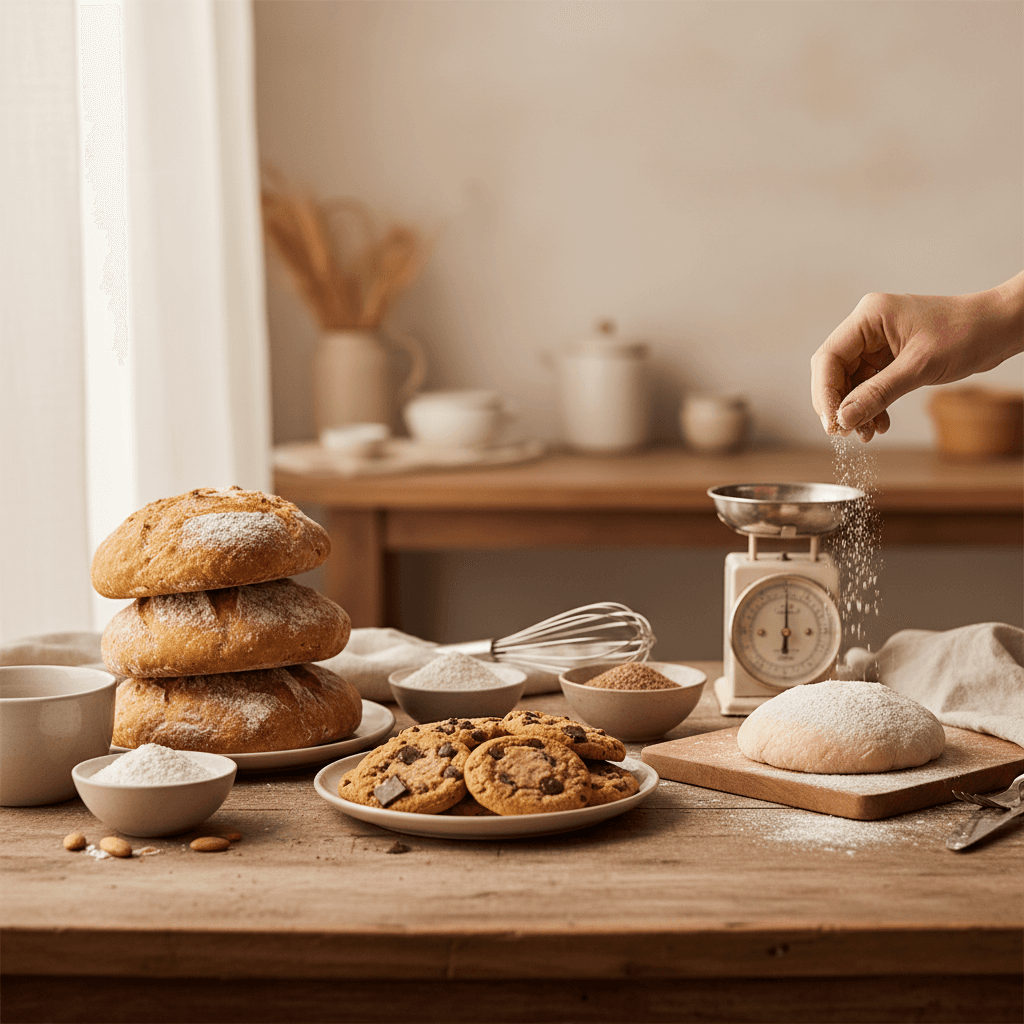
Gluten-free baked goods should cost more than conventional ones — and your customers already know that. The problem isn't your prices. It's how you're communicating the value behind them.
This guide breaks down exactly why gluten-free pricing deserves a premium, how to calculate what you should actually charge, and the specific language that makes customers feel good about paying more.
Key takeaways
- Gluten-free ingredients cost 2-4x more than their conventional counterparts, and your pricing needs to reflect that from day one.
- Celiac and gluten-sensitive customers already expect higher prices — they pay premiums at every grocery store and restaurant, and they rarely push back on fair pricing.
- The biggest pricing mistake home bakers make is starting too low, which trains customers to undervalue your work and makes it nearly impossible to raise prices later.
- Communicating the "why" behind your prices (dedicated equipment, specialty ingredients, cross-contamination prevention) turns a cost into a selling point.
- Gluten-free niches like wedding cakes and holiday orders command the highest premiums because so few bakers serve them reliably.
- Your pricing formula should include ingredient cost, labor, overhead, and a profit margin — not just what feels "fair."
Why gluten-free baked goods genuinely cost more to make
The price difference starts at the ingredient level and compounds from there. A five-pound bag of all-purpose flour runs about $3-5. A comparable gluten-free blend? $8-15, sometimes more. That's before you factor in the specialty starches, binders like xanthan gum, and higher-quality flours like almond flour or brown rice flour that many recipes require.
But ingredients are only part of the story. Here's what actually drives your costs up:
- Ingredient premiums: Gluten-free flours, starches, and binders cost 2-4x more than wheat-based equivalents. Specialty items like psyllium husk and tapioca starch add up fast.
- Cross-contamination prevention: If you're running a truly gluten-free kitchen, you need dedicated equipment, separate storage, and careful sourcing. That's an overhead cost conventional bakers don't carry.
- Recipe development time: Gluten-free recipes take longer to perfect. You can't just swap flour 1:1 — you need to understand how different starches and binders interact. (Our gluten-free baking guide covers why this matters so much.)
- Smaller batch sizes: Many gluten-free ingredients have shorter shelf lives, so you're buying in smaller quantities and losing some economies of scale.
- Testing and quality control: Troubleshooting issues like gritty texture, dry crumbly results, or gummy centers takes time and wasted batches that conventional bakers never deal with.
When you add all of this up, your cost per item is legitimately 30-60% higher than a conventional baker's. Your prices need to reflect that reality, not hide from it.
What gluten-free customers actually think about pricing
Here's the thing most new home bakers don't realize: gluten-free customers are already conditioned to pay more. They pay $7-9 for a loaf of bread at the grocery store. They pay surcharges at restaurants for GF pasta or pizza crust. They've been doing this for years, and they don't resent it — they just want the product to actually be good and actually be safe.
This is the single biggest advantage of the gluten-free niche. Your target customer has high price tolerance and fierce loyalty. When someone with celiac disease finds a baker they trust — someone who understands cross-contamination, who uses quality ingredients, who delivers consistent results — they don't price-shop. They tell every person in their celiac support group, every friend in their gluten-free Facebook community, and every family member who's been looking for a safe birthday cake.
If you're building a gluten-free home bakery, you're entering a market with less local competition and more word-of-mouth potential than almost any other baking niche. That's pricing power. Use it.
If you already have the baking skills and want to build the business side, our free Home Bakery Pro masterclass walks you through getting consistent orders and building sustainable income — without relying on social media. Check out the free masterclass here.
How to calculate your gluten-free pricing (with real numbers)
Stop guessing and start using a formula. Here's the approach we recommend, and it's the same one covered in our complete guide to pricing baked goods for a home bakery.
The pricing formula
Price = (Ingredient Cost + Labor + Overhead) x Profit Multiplier
Let's walk through each piece with a real example — a batch of 12 gluten-free cupcakes:
| Cost Category | What It Includes | Example Amount |
|---|---|---|
| Ingredient cost | All ingredients for the batch (GF flour blend, sugar, eggs, butter, frosting, xanthan gum, etc.) | $12.00 |
| Labor | Your time at a fair hourly rate ($20-30/hr for skilled baking). Include prep, baking, decorating, cleanup. | $15.00 (45 min at $20/hr) |
| Overhead | Packaging, utilities, equipment depreciation, insurance, labels, delivery costs | $5.00 |
| Total cost | $32.00 | |
| Profit multiplier | Multiply total cost by 1.3-1.5 for healthy margins | x 1.4 |
| Batch price | $44.80 | |
| Per cupcake price | $3.75 |
That $3.75 per cupcake is your floor. For decorated cupcakes, specialty flavors, or custom orders, you should be charging $4.50-6.00 each. Compare that to the $2.50-3.00 a conventional baker might charge — that premium is completely justified by your costs and expertise.
The "market rate" trap
Don't price based on what other home bakers in your area charge for conventional goods. That's comparing apples to oranges. Instead, look at what gluten-free bakeries (online and local) charge, what GF items cost at specialty grocery stores, and what your actual costs are. You'll almost always find that your calculated price is well within what the market already accepts.
How to communicate your pricing without apologizing
This is where most home bakers stumble. They know their prices are higher, so they lead with an apology: "I know it's a lot, but..." or "Sorry, gluten-free ingredients are just expensive." Stop doing that. Apologizing signals that you think your prices are unfair, and it plants doubt in your customer's mind.
Instead, lead with value. Here's how:
Frame your pricing around safety and expertise
Your customers aren't just buying a cupcake. They're buying the peace of mind that comes from a baker who understands celiac disease, who maintains a dedicated gluten-free kitchen, and who has invested in learning the science of gluten-free baking. That's worth a premium, and you should say so — confidently.
Example language for your menu, website, or order form:
- "All items are baked in a 100% dedicated gluten-free kitchen with no risk of cross-contamination."
- "We use premium gluten-free flour blends and real butter — never fillers or shortcuts."
- "Every recipe has been tested and refined to deliver the taste and texture you deserve."
Be transparent about what goes into each item
You don't need to share your exact recipe, but a brief note about your ingredients builds trust. Something like: "Our chocolate cake uses a custom blend of brown rice flour, tapioca starch, and potato starch, plus Dutch-process cocoa and real vanilla." Customers who've been eating mediocre GF products for years will immediately recognize that you care about quality.
Use tiered pricing to anchor higher values
Offer a standard version and a premium version. When a customer sees a "signature" cupcake at $5.50 next to a "classic" at $4.00, the $4.00 option suddenly feels like a deal — and many people will choose the $5.50 anyway. This is basic pricing psychology, and it works especially well for custom orders and holiday specials.
Where the biggest pricing premiums are in gluten-free baking
Not all gluten-free products carry the same margin. If you want to maximize your income, focus on the items where the premium is highest and competition is lowest.
| Product Category | Typical GF Premium Over Conventional | Why It Commands Higher Prices |
|---|---|---|
| Wedding and celebration cakes | 50-100%+ higher | Very few bakers offer reliable GF cakes for weddings. Couples will pay significantly more for a baker they trust. |
| Holiday and seasonal items | 40-60% higher | Holidays create urgency and emotional value. GF customers desperately want to participate in traditions. |
| Custom decorated cookies | 30-50% higher | Decorated cookies are already premium; GF versions have almost no local competition. |
| Bread and rolls | 25-40% higher | GF bread is notoriously bad from stores. A good homemade loaf builds repeat customers fast. |
| Everyday items (muffins, brownies) | 20-35% higher | Lower per-item premium, but high volume potential and easy to batch produce. |
Wedding cakes deserve special attention. A conventional home baker might charge $3-5 per serving for a wedding cake. A gluten-free wedding cake? $6-10+ per serving is completely normal, because the couple's alternative is hoping a standard bakery can "figure it out" — and most celiac families have been burned by that before. If this interests you, our guide to the most profitable gluten-free items to sell breaks down the numbers in more detail.
How to raise prices on existing customers
If you've already been selling at prices that are too low, you can absolutely raise them. Here's how to do it without losing your customer base:
- Give advance notice. Let customers know 2-4 weeks before the increase takes effect. A simple message works: "Starting [date], our prices will be updated to reflect current ingredient costs and the quality you've come to expect."
- Explain the why, briefly. One or two sentences about rising ingredient costs or your investment in better equipment is enough. Don't over-explain.
- Raise incrementally if needed. A 15-20% increase is usually absorbed without pushback. If you need to go higher, do it in two stages a few months apart.
- Add value at the same time. Introduce new flavors, upgrade your packaging (our home bakery packaging guide has great ideas), or offer a loyalty discount for repeat orders. This softens the increase.
- Don't negotiate. If someone pushes back, be kind but firm. "I understand — my prices reflect the premium ingredients and dedicated gluten-free kitchen that keep my products safe and delicious." The right customers will stay.
Here's the truth: the customers you lose to a price increase were never your best customers anyway. The celiac community, the parents of kids with gluten sensitivity, the health-conscious buyers who've tried every GF product on the shelf — they'll stay. And they'll keep referring you to others.
Pricing mistakes that keep gluten-free home bakers broke
These are common in the home bakery community, and they're all fixable:
- Pricing based on feelings instead of math. "That feels like too much" is not a pricing strategy. Run the numbers using the formula above.
- Not counting your own labor. If you're not paying yourself at least $20/hour, you're running a very expensive hobby, not a business. Our post on whether you can make money selling baked goods from home gets real about what sustainable margins look like.
- Matching conventional baker prices. You are not competing with the person selling $15 wheat flour birthday cakes. You're in a different market with different costs and different customers.
- Offering too many discounts. Friends-and-family discounts, first-order discounts, holiday discounts — they all eat your margin. Be generous with quality, not with price cuts.
- Underpricing custom orders. Custom work takes more time, more communication, and more risk of waste. It should cost more, not less, than your standard menu items.
Frequently asked questions
How much more should gluten-free baked goods cost compared to regular ones?
Gluten-free baked goods typically command a 25-60% premium over conventional equivalents, depending on the product. Simple items like muffins and brownies sit at the lower end, while specialty items like wedding cakes and custom decorated cookies can be 50-100% higher. This premium is justified by higher ingredient costs, dedicated equipment, and the specialized expertise required to bake gluten-free reliably.
Do gluten-free customers actually pay higher prices without complaining?
Yes — and this is one of the biggest advantages of the gluten-free niche. Customers with celiac disease or gluten sensitivity are already accustomed to paying premiums at grocery stores and restaurants. They understand that safe, quality GF products cost more to produce. What they care about most is safety, taste, and consistency. If you deliver on those, price resistance is minimal.
What is the best pricing formula for a gluten-free home bakery?
Start with your total cost per batch (ingredients + labor at $20-30/hour + overhead for packaging, utilities, and equipment), then multiply by 1.3-1.5 for a healthy profit margin. This gives you a price that covers your real costs and pays you fairly. For a detailed walkthrough with real numbers, see our complete guide to pricing baked goods for a home bakery.
How do I justify higher prices to customers who think my baked goods are too expensive?
Lead with value, not apology. Explain that you use premium gluten-free ingredients, maintain a dedicated GF kitchen to prevent cross-contamination, and have invested significant time in perfecting your recipes. Most customers who push back on price aren't your target market — the gluten-free community values safety and quality and will gladly pay for a baker they trust.
What gluten-free baked goods have the highest profit margins?
Wedding and celebration cakes offer the highest margins, often 50-100% above conventional cake pricing, because very few bakers serve this market reliably. Custom decorated cookies and holiday seasonal items also carry strong premiums. For a full breakdown, check out our guide to the most profitable gluten-free items to sell.
You already know how to bake gluten-free — here's the next step
Pricing is one piece of the puzzle. The other piece is building a steady stream of orders so you're not constantly hustling for the next customer. If you want to turn your gluten-free baking skills into consistent income, our free Home Bakery Pro masterclass shows you exactly how — without relying on social media or guessing at what works.

Written by
Co-founder, BakingSubs
Co-founder of BakingSubs, where he turns the science of ingredient substitutions into tested, reliable guidance for home bakers.
Related Posts
Bake with Confidence
See all
Confident Gluten-Free Baker Toolkit
The science-based system that replaces gluten's seven invisible jobs so your baking turns out soft, fluffy, and foolproof — every time.

Gluten-Free Recipe Vault
Instant access to our complete library of proven gluten-free recipes — no waiting, no guesswork, just results that work tonight.

Fix Your Gluten-Free Bread
Learn the 3-step formula to make bread rise and stay soft, discover why your loaves collapse, and get a tested sandwich bread recipe that actually works.