
Best millet flour for gluten-free baking: 6 brands compared for grind, protein, and value
Compare 6 millet flour brands for gluten-free baking. See protein content, grind fineness, certification, price per pound, and which brand works best for your recipes.

Malik
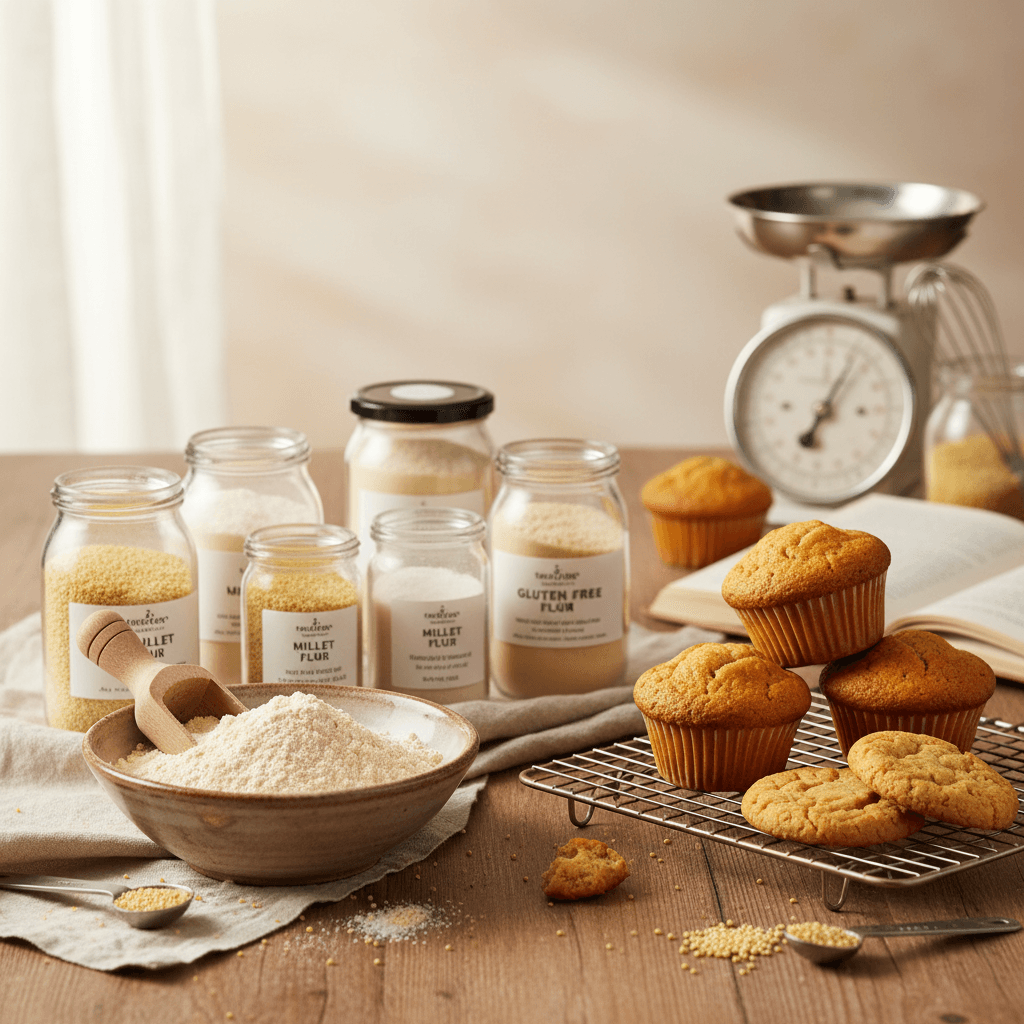
Millet flour is one of the most underrated flours in gluten-free baking — mild, slightly sweet, and versatile enough for everything from sandwich bread to birthday cake. But not all millet flour is created equal, and the brand you pick can mean the difference between a tender crumb and a gritty disappointment. Here are six brands compared side by side so you can pick the right one.
Key takeaways
- Millet flour adds a mild, slightly sweet flavor and a light golden color to gluten-free baked goods without the bitterness of some other whole-grain flours.
- Grind fineness matters more than almost anything — coarser grinds cause gritty textures, especially in cakes and cookies.
- Protein content in millet flour ranges from about 3g to 5g per quarter cup depending on the brand, which affects structure and browning.
- Millet flour works best as 20-30% of a gluten-free flour blend, paired with starches and a binder like xanthan gum or psyllium husk.
- Price per pound varies significantly — from under $2 to over $5 — and the most expensive option is not always the best fit.
- Gluten-free status varies by brand: Arrowhead Mills is labeled certified gluten-free, Bob's Red Mill mills in a dedicated gluten-free facility and batch-tests, and the others are labeled gluten-free without a certification we could confirm. If you are baking for celiac disease, check the current package for a certified gluten-free mark.
What makes millet flour useful in gluten-free baking
Millet flour is milled from tiny, round millet grains that have been a staple in African and Asian cuisines for thousands of years. In gluten-free baking, it fills a specific role: it provides whole-grain nutrition and a mild, almost buttery flavor without the heaviness of brown rice flour or the bitterness of buckwheat flour.
Nutritionally, millet flour brings moderate protein (around 11g per 100g), some fiber, and a good amount of iron and B vitamins. It has a light yellow color that gives baked goods a warm, golden hue — think cornbread vibes without the corn flavor.
Where millet flour really shines is in blends. It does not have enough structure to work alone (no gluten, after all), but when you combine it with a starch like arrowroot powder or tapioca starch and a binder, it produces a tender crumb that is remarkably close to wheat-based baking. If you are building your own blends, our homemade gluten-free flour blend recipe walks through the ratios that actually work.
If you are still getting comfortable with how different flours behave in gluten-free recipes, the Confident Gluten-Free Baker Toolkit covers flour selection, blend building, and troubleshooting in one place. It is a solid shortcut if you are tired of guessing.
What to look for when choosing a millet flour brand
Before we get into specific brands, here are the factors that actually matter when you are comparing millet flour for baking:
- Grind fineness: This is the single biggest differentiator. A fine, powdery grind disappears into batters and doughs. A coarser grind creates a gritty texture that no amount of extra liquid will fix.
- Gluten-free certification: Millet itself is naturally gluten-free, but cross-contamination during milling is common. Look for certified gluten-free or a clear statement about dedicated facilities.
- Protein content: Higher protein means slightly better structure and more Maillard browning. It varies more than you would expect between brands.
- Taste: Most millet flour is mild and slightly sweet, but some brands have a faintly bitter or grassy aftertaste — usually from the hull not being fully removed.
- Price per pound: Since millet flour is typically used as part of a blend (not the sole flour), price per pound matters for keeping your overall baking costs reasonable.
6 best millet flour brands for gluten-free baking compared
We compared each flour on protein, grind, gluten-free certification, and price. Here is how they stack up:
| Brand | Protein (per 1/4 cup) | Grind | Certified GF | Price per lb (approx.) | Best for |
|---|---|---|---|---|---|
| Bob's Red Mill | 4g | Medium-fine | Labeled GF (in-house tested, dedicated GF facility) | $2.50 | All-purpose baking, blends |
| Anthony's Goods | 4g | Fine | Labeled GF (batch tested, not third-party certified) | $2.00 | Budget-friendly baking, large batches |
| Arrowhead Mills | 3g | Medium | Yes (labeled certified GF) | $3.00 | Pancakes, quick breads |
| Authentic Foods | 5g | Very fine | Labeled GF (check package for certification) | $4.50 | Cakes, delicate pastries |
| To Your Health Sprouted | 4g | Fine | Labeled GF (check package for certification) | $5.00 | Nutrition-focused baking, bread |
| Great River Organic | 4g | Medium-coarse | Not confirmed (check package) | $3.50 | Rustic breads, hearty muffins |
Bob's Red Mill millet flour
Bob's Red Mill Millet Flour is the one you will find in most grocery stores, and for good reason — it is reliable, affordable, and labeled gluten-free. Bob's mills its gluten-free products in a dedicated gluten-free facility and batch-tests them with an ELISA gluten assay. The grind is medium-fine, which works well in most recipes but can occasionally feel slightly textured in very delicate cakes. At around $2.50 per pound, it is a solid everyday choice.
It is best suited to muffins, quick breads, and multi-flour blends. If you are new to millet flour, this is a safe place to start.
Anthony's Goods millet flour
Anthony's Goods Millet Flour is the budget pick. At roughly $2.00 per pound when bought in bulk, it is the most affordable option on this list. The grind is fine — finer than Bob's Red Mill — which is unusual at this price point.
Anthony's batch-tests for gluten rather than carrying a formal certification, so if you are baking for someone with celiac disease, check their current testing documentation. For general gluten-free baking, it is our pick for large batch baking where cost adds up fast.
Arrowhead Mills millet flour
Arrowhead Mills Millet Flour is organic and widely available, but the grind is noticeably coarser than the top two options. It works fine in pancakes and heartier quick breads where a little texture is welcome, but we would not reach for it when making layer cakes or tender cookies.
The protein content is slightly lower at 3g per quarter cup, and Arrowhead Mills labels it certified gluten-free.
Authentic Foods millet flour
Authentic Foods Millet Flour is the premium pick, and it has the finest grind on this list — very fine and powdery, so it blends smoothly into batters. If you have been struggling with gritty results in cakes or pastries, this flour will likely solve the problem.
At 5g protein per quarter cup, it also provides the most structure of any brand here, which helps with rise and browning. The trade-off is price — at around $4.50 per pound, it costs nearly twice as much as Anthony's. Worth it for special-occasion baking, but probably overkill for everyday muffins.
To Your Health Sprouted millet flour
To Your Health Sprouted Millet Flour is the nutrition-focused option. Sprouting the millet before milling increases nutrient bioavailability and gives the flour a slightly sweeter, more complex flavor. The grind is fine, and it is labeled gluten-free; check the current package for a certification mark if you are baking for celiac disease.
It is a good fit for bread recipes, where its deeper flavor suits longer fermentation. It is the most expensive option at about $5.00 per pound, so it makes most sense in recipes where the flavor really comes through.
Great River Organic millet flour
Great River Organic Millet Flour is stone-ground and organic, which gives it a rustic character. The grind is the coarsest on this list — medium-coarse — so it adds visible texture to baked goods. That is a feature, not a bug, if you are making rustic bread or hearty muffins.
Great River lists it as naturally gluten-free, but we could not confirm that this millet flour carries a gluten-free certification, and the company also mills wheat, rye, and barley flours. Great River itself notes that naturally gluten-free is not the same as certified gluten-free. If you are baking for celiac disease, check the package for a certified gluten-free mark before using it, or choose a brand whose certification you can confirm.
Which millet flour brand is best for different recipes
The right brand depends on what you are baking. Here is a quick reference:
| Recipe type | Best brand pick | Why |
|---|---|---|
| Cakes and cupcakes | Authentic Foods | Superfine grind prevents grittiness in delicate crumb |
| Sandwich bread | To Your Health Sprouted or Bob's Red Mill | Good structure and flavor depth for bread |
| Muffins and quick breads | Bob's Red Mill or Anthony's | Reliable results at a reasonable price |
| Cookies | Anthony's Goods or Authentic Foods | Fine grind for smooth dough; budget vs. premium |
| Pancakes and waffles | Arrowhead Mills | Slightly coarser texture works well here |
| Rustic artisan bread | Great River Organic | Coarse grind adds character and chew |
If you are making gluten-free waffles, a good waffle maker matters just as much as the flour you choose.
How to use millet flour in a gluten-free flour blend
Millet flour works best as part of a blend, not as a standalone flour. Use it at about 20-30% of the total flour weight, combined with a lighter starch and a whole-grain or protein-rich flour for balance.
A simple starting blend that works well:
- 25% millet flour
- 25% brown rice flour
- 30% tapioca starch
- 20% potato starch
You will also need a binder — about 1 teaspoon of xanthan gum per cup of flour blend for most recipes. If you are making bread, psyllium husk is often a better choice for structure.
Understanding what gluten does in baking helps you understand why these blends need both a starch component and a protein component to work properly. Millet flour covers the protein and flavor side of the equation.
Tips for getting the best results with millet flour
A few tips for baking with millet flour:
- Sift coarser brands before using. If you are working with Arrowhead Mills or Great River and want a smoother result, sifting removes the largest particles. You will lose a small amount of flour, but the texture improvement is worth it.
- Toast it lightly for deeper flavor. Spread millet flour on a sheet pan and toast at 325F for 8-10 minutes, stirring once. This brings out a nutty, almost caramel flavor that works well in cookies and banana bread.
- Store it in the fridge or freezer. Millet flour contains natural oils that can go rancid at room temperature. Sealed in the fridge, it lasts 3-4 months; in the freezer, up to 6 months.
- Weigh your flour. Millet flour packs differently depending on grind fineness, so cup measurements are unreliable across brands. A kitchen scale eliminates this variable entirely.
If you are just starting out with gluten-free baking, our complete beginner's guide covers all the foundational techniques you need.
Frequently asked questions
Is millet flour good for gluten-free baking?
Yes, millet flour is excellent for gluten-free baking. It has a mild, slightly sweet flavor that blends well with other flours, and it provides moderate protein for structure. It works best as 20-30% of a gluten-free flour blend rather than used alone, and it is especially good in muffins, quick breads, cakes, and sandwich bread.
Does millet flour taste bitter?
Most high-quality millet flour has a mild, slightly sweet and nutty flavor with no bitterness. Bitter or grassy off-flavors usually come from the hull not being fully removed or from flour that has gone rancid. Storing millet flour in the fridge or freezer and buying from reputable brands prevents this. If you are experiencing strange aftertaste in your baking, the flour freshness could be the culprit.
Can I substitute millet flour for all-purpose flour?
You cannot do a straight 1:1 swap of millet flour for all-purpose flour because millet flour lacks gluten and behaves differently on its own. However, you can use millet flour as part of a gluten-free blend that replaces all-purpose flour. Our guide on how to convert any recipe to gluten-free explains the process step by step.
What is the best millet flour brand for celiac disease?
For celiac disease, choose a brand with certified gluten-free status or rigorous third-party testing. Arrowhead Mills labels its millet flour certified gluten-free, and Bob's Red Mill mills its gluten-free products in a dedicated gluten-free facility and batch-tests them. Authentic Foods and To Your Health Sprouted label their millet flours gluten-free; check the current package for a certification mark. Avoid brands milled in shared facilities with wheat unless they provide batch-level test results.
How much does millet flour cost compared to other gluten-free flours?
Millet flour typically costs between $2.00 and $5.00 per pound depending on the brand, which is comparable to other specialty gluten-free flours like sorghum or buckwheat flour. It is more expensive than white rice flour but less expensive than almond flour or cassava flour. Buying in bulk from brands like Anthony's Goods brings the cost down significantly.

Written by
Co-founder, BakingSubs
Co-founder of BakingSubs, where he turns the science of ingredient substitutions into tested, reliable guidance for home bakers.
Related Posts
Bake with Confidence
See all
Confident Gluten-Free Baker Toolkit
The science-based system that replaces gluten's seven invisible jobs so your baking turns out soft, fluffy, and foolproof — every time.

Gluten-Free Recipe Vault
Instant access to our complete library of proven gluten-free recipes — no waiting, no guesswork, just results that work tonight.

Fix Your Gluten-Free Bread
Learn the 3-step formula to make bread rise and stay soft, discover why your loaves collapse, and get a tested sandwich bread recipe that actually works.