

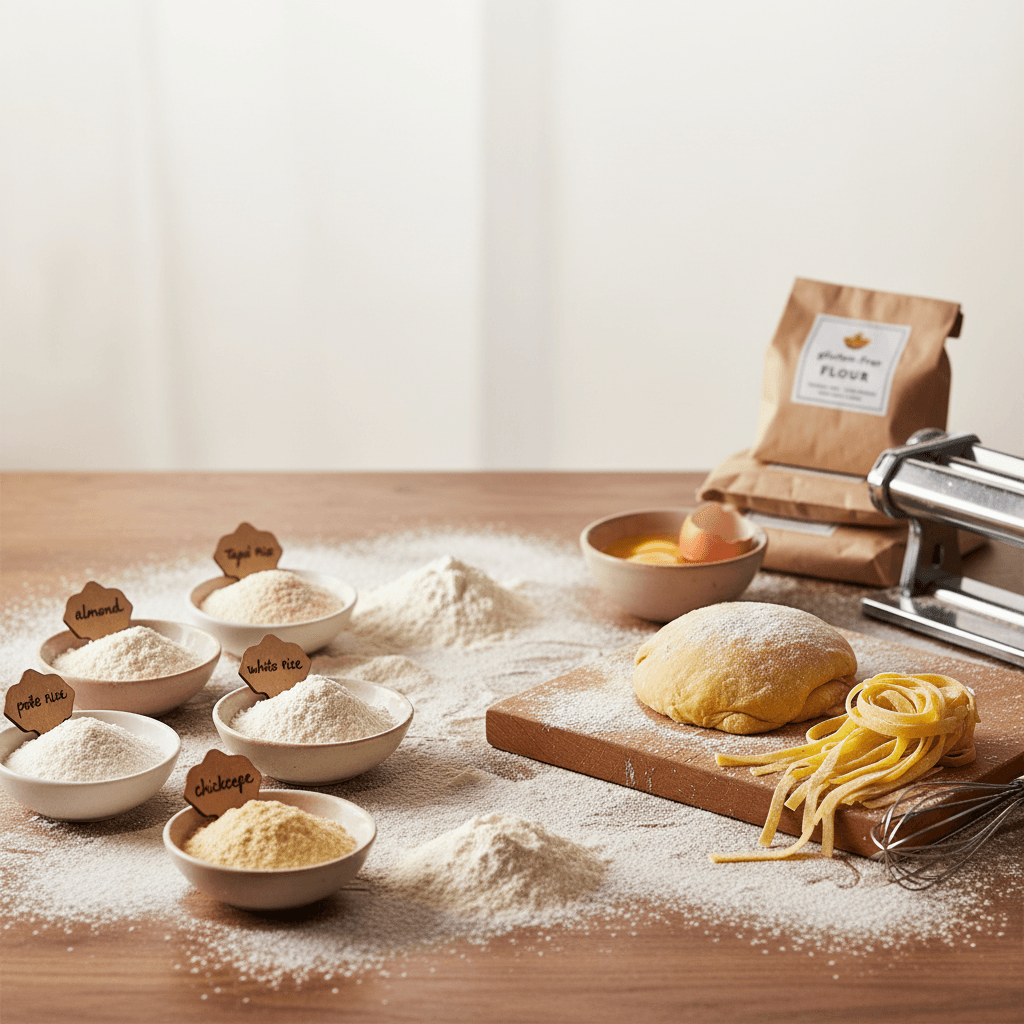
Making gluten-free pasta that doesn't fall apart in the pot or turn into a gummy mess comes down to one thing: choosing the right flour. Here's what actually works, why it works, and which specific brands we recommend.
Key takeaways
- The best gluten-free flour for pasta combines a starch (like tapioca or cornstarch) with a protein-rich flour (like brown rice or buckwheat) to mimic gluten's stretch and bite.
- Single-flour pastas rarely work well — blending two or three flours gives you the best texture, rollability, and flavor.
- Xanthan gum or psyllium husk is essential for binding gluten-free pasta dough and preventing it from crumbling apart.
- Eggs are the secret weapon in gluten-free pasta — they add protein structure, elasticity, and richness that flour alone can't provide.
- Pre-made gluten-free flour blends can work for pasta, but only if they contain the right starch-to-flour ratio and don't include leaveners.
- Hydration matters more in gluten-free pasta than wheat pasta — expect to adjust water amounts based on humidity and the specific flours you use.
Why gluten-free pasta flour is different from other baking flours
Pasta needs a flour that creates a smooth, pliable dough capable of being rolled thin without tearing, and that holds its shape during boiling. In wheat pasta, gluten handles all of this — it provides stretch, chew, and structural integrity. Without it, we need to engineer those properties through a combination of the right flours, starches, and binders.
The ideal gluten-free pasta flour delivers three things: enough protein to create structure, enough starch to provide smoothness and pliability, and a neutral-to-pleasant flavor that doesn't overpower your sauce. That's why most successful gluten-free pasta recipes use a blend rather than a single flour.
If you're still building out your gluten-free ingredient collection, our gluten-free baking pantry checklist covers the essentials you'll want on hand.
The 7 best gluten-free flours for pasta, ranked
Here's how these flours compare for fresh pasta, both individually and in blends.
| Flour | Best for | Texture contribution | Use alone? |
|---|---|---|---|
| Brown rice flour | All-purpose pasta base | Mild flavor, slight chew, good structure | No — needs starch |
| Tapioca starch | Elasticity and stretch | Chewy, slightly translucent, pliable | No — too gummy alone |
| Cassava flour | Simple two-ingredient doughs | Smooth, slightly chewy, neutral | Yes, with eggs |
| Buckwheat flour | Soba-style noodles | Earthy, nutty, tender | Partially — needs support |
| Cornstarch | Smoothing agent in blends | Silky, delicate, light | No |
| Semolina-style blends (corn + rice) | Shaped pasta | Firm, holds ridges well | As a blend, yes |
| Almond flour | Low-carb pasta | Dense, crumbly, rich | No — very fragile |
1. Brown rice flour — the best all-around base
Brown rice flour is the workhorse of gluten-free pasta. It has a mild, slightly nutty flavor that doesn't compete with sauces, and it provides enough protein (about 4-5g per quarter cup) to give your noodles real structure. The key is using a finely ground version — coarse brown rice flour will give you gritty pasta that no one wants to eat.

Bob's Red Mill Brown Rice Flour, 24oz (Pack of 4) - Non GMO, Whole Grain, Vegan, Kosher
Check price on Amazon →We recommend the Bob's Red Mill Stone Ground Brown Rice Flour for its consistent grind and wide availability. For an even finer texture, Authentic Foods Superfine Brown Rice Flour gives you smoother noodles. Check out our best rice flour for gluten-free baking comparison for a deeper dive into brands.
Pros: Neutral flavor, good structure, widely available, affordable.
Cons: Can be gritty if not superfine, needs a starch blended in for pliability.
Best ratio for pasta: Use brown rice flour as 60-70% of your blend, with tapioca starch making up the rest.
2. Tapioca starch — the elasticity engine
Tapioca starch is what gives gluten-free pasta its stretch and chew. Without it (or a similar starch), your dough will crack and crumble when you try to roll it. Tapioca creates a slightly translucent, elastic quality that mimics the bite of traditional pasta remarkably well.
You never want to use tapioca starch alone — it would produce a gummy, sticky mess. But at 30-40% of a flour blend, it transforms brittle rice flour dough into something you can actually roll through a pasta machine.
Pros: Creates excellent chew and stretch, neutral flavor, inexpensive.
Cons: Gummy if overused, no nutritional value on its own, can make pasta sticky if the ratio is off.
3. Cassava flour — the closest to a one-flour solution
Cassava flour is unique because it's a whole-root flour (not a pure starch like tapioca, even though both come from cassava). It contains both starch and fiber, which means it can create a surprisingly workable pasta dough with just eggs and salt added. The texture is smooth and slightly chewy — not identical to wheat pasta, but genuinely pleasant.
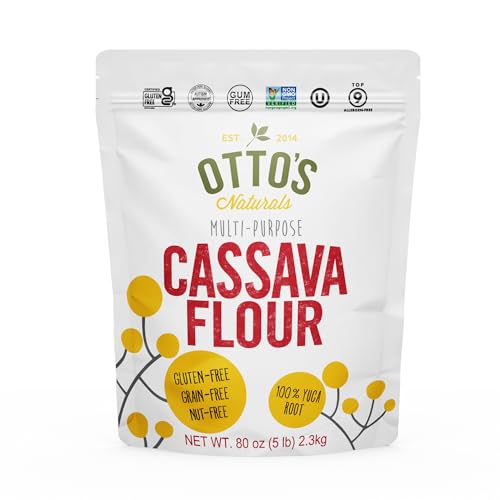
Otto's Naturals Multi-Purpose Cassava Flour, 5 LB.
Check price on Amazon →The brand matters a lot here. A strong pick is Otto's Naturals Cassava Flour, which is consistently fine and smooth. Some cheaper brands are grainier and produce dough that tears easily.
Pros: Works as a near-solo flour, smooth texture, grain-free and nut-free.
Cons: Expensive, slightly starchier mouthfeel than wheat pasta, brand quality varies widely.
If you're working on building your gluten-free skills across different recipes, the Confident Gluten-Free Baker Toolkit walks you through flour selection and ratios for all kinds of baking — including pasta.
4. Buckwheat flour — for soba and rustic noodles
Buckwheat flour is naturally gluten-free despite its misleading name, and it makes incredible soba-style noodles with a distinctive earthy, nutty flavor. It has more protein than most gluten-free flours (about 6g per quarter cup), which helps with structure.
The challenge is that buckwheat dough is fragile. Traditional soba makers use a small percentage of wheat flour for binding, but we can replace that with tapioca starch and xanthan gum. A 70% buckwheat, 30% tapioca starch blend with a half teaspoon of xanthan gum per cup of flour produces noodles that hold together beautifully.
Pros: High protein, distinctive flavor, traditional soba appeal, nutritious.
Cons: Strong flavor isn't for everyone, fragile without starch support, can be bitter if over-toasted.
5. Cornstarch — the smoothing agent
Cornstarch on its own won't make pasta, but it's an excellent secondary starch in blends. It creates a silkier, more delicate texture than tapioca starch — think angel hair rather than fettuccine. If you find tapioca-heavy blends too chewy, swapping some of the tapioca for cornstarch can lighten things up.
Pros: Very smooth texture, widely available, inexpensive.
Cons: Less elastic than tapioca, can make pasta too delicate if overused.
6. Corn and rice semolina-style blends — for shaped pasta
If you want to make shaped pasta like penne, fusilli, or orecchiette, you need a flour with some grit and firmness to hold those shapes. A blend of fine corn flour and rice flour mimics the texture of semolina and holds ridges and shapes during boiling. Several commercial blends are designed specifically for this purpose.
The Caputo Fioreglut is a popular Italian blend that many gluten-free pasta makers swear by for shaped pasta. It contains corn starch, rice starch, and added fiber, and it behaves remarkably like traditional semolina in a pasta extruder.
Pros: Holds shapes well, firm texture, good for extruded pasta.
Cons: Corn flavor can come through, harder to find, more expensive than DIY blends.
7. Almond flour — for low-carb pasta (with caveats)
Almond flour gets mentioned a lot in low-carb and keto pasta recipes, but we want to be honest: it produces a fundamentally different product. Almond flour pasta is dense, crumbly, and rich. It can work for lasagna sheets or wide noodles where you don't need much flexibility, but it won't roll thin or hold up to boiling the way grain-based flours do.
If you go this route, you'll need extra eggs (usually 2-3 per cup of flour) to bind everything. Our best almond flour for baking guide covers which brands have the finest grind, which matters a lot for pasta smoothness.
Pros: High protein, low carb, rich flavor.
Cons: Crumbly, can't roll thin, heavy texture, nut allergy concern.
Our recommended flour blend for everyday gluten-free pasta
This is the blend we recommend for fettuccine, tagliatelle, and lasagna sheets:
- 1 cup (140g) superfine brown rice flour
- 1/2 cup (60g) tapioca starch
- 2 tablespoons (15g) cornstarch
- 1 teaspoon xanthan gum
- 1/2 teaspoon salt
- 3 large eggs
- 1 tablespoon olive oil
This produces a soft, pliable dough that rolls well and holds its shape in boiling water. The brown rice flour provides structure, the tapioca gives stretch, and the cornstarch smooths everything out. We recommend weighing your ingredients with a kitchen scale — gluten-free flours vary wildly in density, and volume measurements can throw off your ratios.
Can you use a pre-made gluten-free flour blend for pasta?
Yes, but not all blends work. The best pre-made blend for pasta is one that contains rice flour and tapioca starch as its primary ingredients, without any added leaveners (baking powder or baking soda). Leaveners will make your pasta puff up and fall apart in the water.
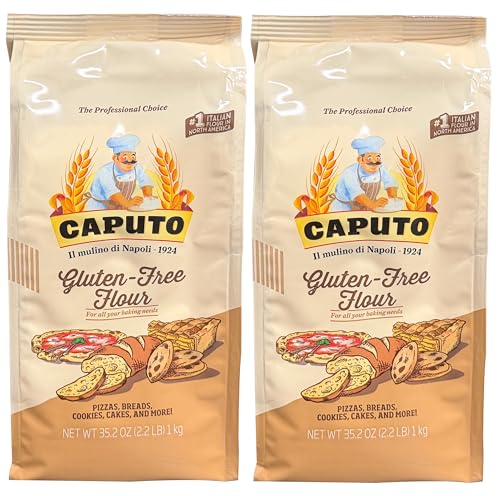
Antico Molino Napoli Antimo Caputo Pizza Flour, Gluten Free, 2 Pound (Pack of 2)
Check price on Amazon →Our best gluten-free flour blend brands compared guide breaks down what's in each major brand. For pasta specifically, Bob's Red Mill 1-to-1 Baking Flour works in a pinch, though homemade blends give you more control over texture. King Arthur Measure for Measure is another option, but it contains a small amount of leavener, so results can be slightly puffy.
The role of binders in gluten-free pasta
Without gluten, your pasta dough needs something to hold it together. Eggs are the primary binder — their proteins coagulate during cooking and create a network that replaces gluten's structural role. Most gluten-free pasta recipes call for more eggs per cup of flour than traditional wheat pasta does.
Beyond eggs, you'll want either xanthan gum or psyllium husk in your dough. Xanthan gum at about 1 teaspoon per cup of flour blend adds elasticity without affecting flavor. Psyllium husk (about 1 tablespoon per cup) creates a slightly more robust, chewier noodle — it's especially good for thicker pasta shapes. You can learn more about these binders on our gluten-free baking guide.
Tips for making gluten-free pasta that doesn't fall apart
Even with the right flour, technique matters. Here are the tips that make the biggest difference:
- Rest the dough for 30 minutes. This gives the starches time to hydrate fully. Gluten-free dough that hasn't rested will crack when you roll it.
- Roll it thicker than you think. Gluten-free pasta should be slightly thicker than wheat pasta — about setting 5-6 on most pasta machines rather than the thinnest setting.
- Use plenty of starch for dusting. Tapioca starch or cornstarch works better than rice flour for preventing sticking during rolling.
- Salt the water generously and keep it at a rolling boil. Gluten-free pasta needs aggressive boiling to set the starches quickly on the outside, which prevents sticking and mushiness.
- Cook for less time than you expect. Fresh gluten-free pasta typically cooks in 2-4 minutes. Overcooking is the number one reason homemade gluten-free pasta turns gummy.
- Don't rinse it. Toss cooked pasta directly with sauce — the surface starch helps the sauce cling.
If you've struggled with gummy textures in other gluten-free baking, the same principles apply to pasta: don't overwork the dough, and don't overcook.
Frequently asked questions
What is the best gluten-free flour to make fresh pasta at home?
A blend of superfine brown rice flour (about 65%), tapioca starch (about 25%), and cornstarch (about 10%) with xanthan gum produces the best results for most pasta shapes. This combination gives you structure, stretch, and smoothness. Single flours rarely work well on their own — cassava flour is the exception, but even it benefits from adding a bit of tapioca starch.
Can I use regular gluten-free all-purpose flour for pasta?
You can, but check the ingredients first. Avoid any blend that contains baking powder or baking soda, as leaveners will cause your pasta to puff and disintegrate in boiling water. Blends based on rice flour and tapioca starch (like Bob's Red Mill 1-to-1) work reasonably well. See our flour blend comparison for specific brand recommendations.
Why does my gluten-free pasta fall apart when boiling?
The most common causes are too little binder (add more eggs or xanthan gum), not enough starch in the flour blend (increase tapioca starch), or overcooking. Fresh gluten-free pasta only needs 2-4 minutes in rapidly boiling, well-salted water. Also make sure you're resting your dough for at least 30 minutes before rolling — unhydrated dough crumbles easily.
Is buckwheat flour good for gluten-free pasta?
Buckwheat flour is excellent for soba-style noodles and rustic pasta with an earthy, nutty flavor. It has more protein than most gluten-free flours, which helps with structure. Blend it with about 30% tapioca starch and add xanthan gum for the best results. Just confirm your buckwheat flour is certified gluten-free, as it's often processed in facilities that also handle wheat.
Do I need a pasta machine for gluten-free pasta?
A pasta machine makes rolling much easier and more consistent, but it's not strictly necessary. You can roll gluten-free pasta dough between two sheets of parchment paper with a rolling pin. The dough is softer and more forgiving than wheat pasta dough, so hand-rolling actually works quite well. A Marcato Atlas 150 pasta machine is a solid investment if you plan to make pasta regularly.

Written by
Co-founder, BakingSubs
Co-founder of BakingSubs, where he turns the science of ingredient substitutions into tested, reliable guidance for home bakers.
Related Posts
Bake with Confidence
See all
Confident Gluten-Free Baker Toolkit
The science-based system that replaces gluten's seven invisible jobs so your baking turns out soft, fluffy, and foolproof — every time.

Gluten-Free Recipe Vault
Instant access to our complete library of proven gluten-free recipes — no waiting, no guesswork, just results that work tonight.

Fix Your Gluten-Free Bread
Learn the 3-step formula to make bread rise and stay soft, discover why your loaves collapse, and get a tested sandwich bread recipe that actually works.