
How to start a gluten-free subscription box from your home bakery: recurring revenue that actually stabilizes your income
Learn how to start a gluten-free subscription box from your home bakery. Covers pricing, legal requirements, finding subscribers, and building recurring revenue.

Malik
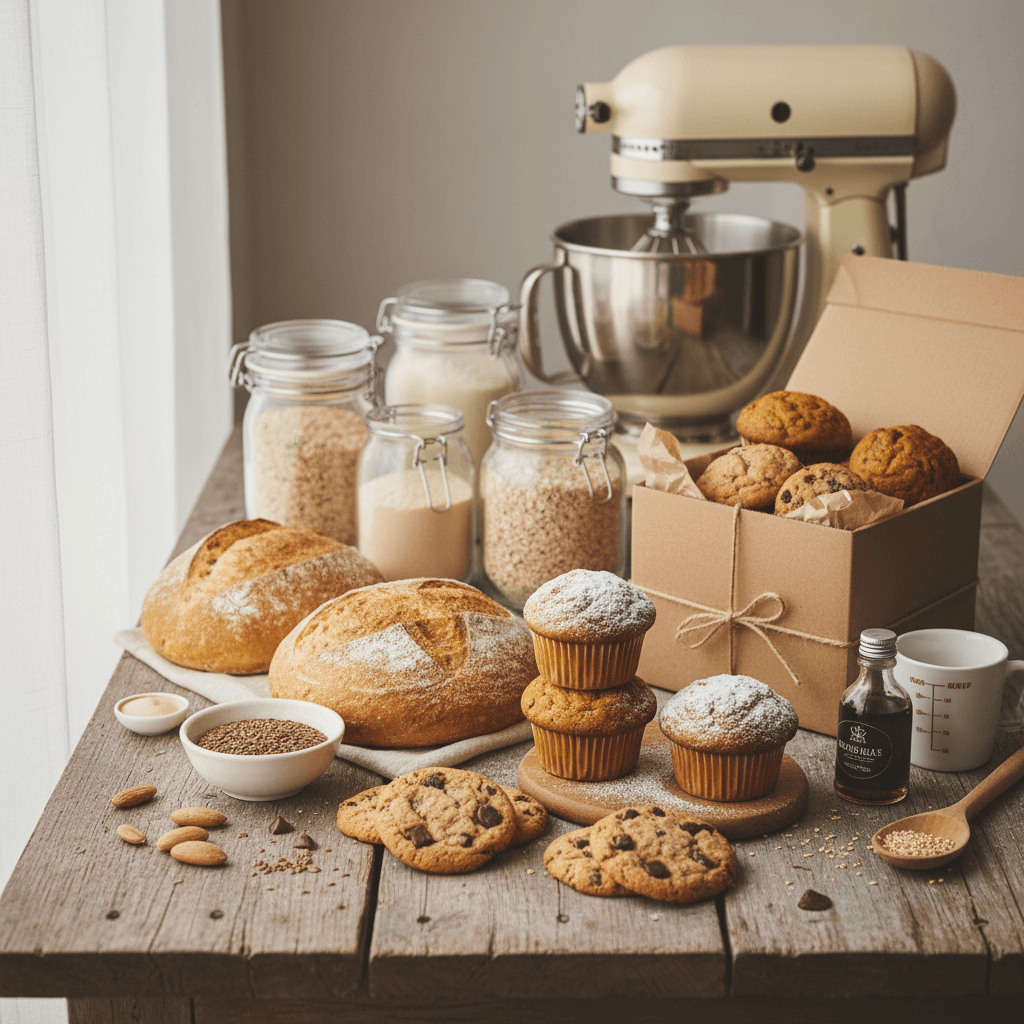
A gluten-free subscription box is one of the smartest moves a home baker can make because it turns unpredictable one-off orders into reliable, recurring monthly revenue. Here's exactly how to plan, price, launch, and grow a subscription box from your home bakery — even if you're starting small.
Key takeaways
- A subscription box model gives your home bakery predictable monthly income instead of feast-or-famine order cycles.
- Gluten-free customers are among the most loyal subscribers because they have so few reliable options — once they trust your baking, they stay.
- You can start with as few as 10 subscribers and scale gradually without needing commercial space or employees.
- Subscription boxes let you batch-produce on a schedule you control, which is far more efficient than filling custom orders.
- Pricing should reflect the premium nature of gluten-free ingredients and your expertise — GF customers expect to pay more and rarely push back when the quality is there.
- Recurring revenue makes it dramatically easier to forecast ingredient costs, plan your baking schedule, and grow sustainably.
Why a subscription box is the ideal revenue model for a gluten-free home bakery
Most home bakers live on a rollercoaster of busy weeks and dead weeks. One month you're drowning in holiday orders, the next you're posting on social media hoping someone bites. A subscription box flips that dynamic entirely — you know exactly how many boxes ship each month, which means you can buy ingredients in bulk, batch your baking days, and actually plan your life.
The gluten-free niche makes this model even more powerful for a few specific reasons. First, there's far less local competition. Most home bakers stick to standard recipes, which means the GF subscription space is wide open in most markets. Second, gluten-free customers have a higher price tolerance. They're already paying $7 for a loaf of bread at the grocery store — they understand specialty ingredients cost more and they don't haggle. Third, the celiac and gluten-sensitive community is fiercely loyal. When someone with celiac disease finds a baker they trust, they tell every person in their support group. Word of mouth in this community spreads faster than almost any other niche.
If you haven't already mapped out the basics of running a GF home bakery, our complete guide to starting a gluten-free home bakery covers licensing, kitchen setup, and everything else you need before launching any product line.
How to design your gluten-free subscription box
The best subscription boxes have a clear theme and a consistent format so subscribers know what to expect while still getting excited each month. Here are the most common approaches that work well for GF home bakers:
Choose your box format
| Box format | What's included | Best for | Typical price range |
|---|---|---|---|
| Curated variety box | 4-6 different baked goods each month | Bakers with a wide recipe range | $35-$55/month |
| Signature item box | One hero product (e.g., a different bread each month) plus 1-2 extras | Bakers known for one category | $25-$40/month |
| Seasonal/holiday box | Themed items matching the season or upcoming holiday | Bakers who want creative freedom | $40-$65/month |
| Baking kit box | Pre-measured dry mixes with instructions | Bakers in states with stricter cottage food laws | $30-$45/month |
The curated variety box tends to be the easiest starting point because it gives you flexibility. If one recipe doesn't work out during testing, you swap in something else. The baking kit approach is worth considering if your state's cottage food laws restrict shipping of finished baked goods — dry mixes often fall under different regulations.
Pick items that ship well and stay fresh
Not everything in your repertoire belongs in a subscription box. You need items that hold up during transit and still taste great 2-3 days after baking. Strong candidates include cookies, biscotti, scones, quick breads, brownies, granola, and dry mixes. Items to avoid (at least initially): anything with fresh cream, custard fillings, or delicate frosting that can't handle being jostled.
If you're building your recipe repertoire, understanding how gluten-free baked goods stale faster than conventional ones — and how to prevent it — is essential for subscription box success. Techniques like adding extra fat, using hydrating starches like tapioca starch, and wrapping items properly can extend shelf life significantly.
If you want a structured approach to mastering gluten-free baking techniques and troubleshooting, the Confident Gluten-Free Baker Toolkit walks you through the science behind texture, rise, and shelf life so your subscription box items are consistently excellent.
How to price a gluten-free subscription box from a home bakery
Pricing is where most home bakers undercharge, and it's the single biggest threat to your subscription box surviving past month three. Your price needs to cover ingredients, packaging, shipping, your time, and still leave a margin that makes the business worth running.
Calculate your true cost per box
Start by costing out every item in the box individually. Gluten-free flours like almond flour and specialty starches cost 3-5x more than conventional all-purpose flour — this is a fact, not something to apologize for. Add up:
- Ingredient cost for every item in the box
- Packaging — box, tissue paper, individual wrapping, labels, and any inserts
- Shipping — get actual quotes from USPS, UPS, and FedEx for your box dimensions and weight
- Your labor — track how long it takes to bake, cool, wrap, box, and ship, then pay yourself at least $20-25/hour
- Platform fees — if you use a subscription management tool, factor in the monthly cost and per-transaction fees
A good rule of thumb: your retail price should be at least 3x your ingredient cost, and ideally 4x once you include all other expenses. If your ingredients cost $12 per box, you should be charging $40-$50 minimum. For a deeper dive into pricing strategy, our complete guide to pricing baked goods for a home bakery breaks this down with real numbers.
Communicate value instead of apologizing for price
Gluten-free customers already know specialty products cost more. You don't need to justify your prices — you need to communicate what makes your box worth it. Lead with quality, safety (dedicated GF kitchen, no cross-contamination), and the convenience of having fresh, handmade GF treats delivered monthly. Your marketing should say "here's what you're getting" not "sorry it costs this much."
Legal requirements for shipping a gluten-free subscription box
Shipping baked goods across state lines adds a layer of complexity beyond standard cottage food sales. Cottage food laws typically cover in-person, in-state sales only. If you plan to ship subscription boxes to other states, you'll likely need a food handler's permit, a licensed kitchen (or your home kitchen approved under your state's specific regulations), and proper labeling that meets FDA requirements.
Check your state's home bakery license requirements first. Some states allow interstate shipping under cottage food with certain restrictions, while others require a separate license. Allergen labeling is non-negotiable for GF products — you must clearly list all ingredients and include allergen warnings.
If your state's laws are restrictive for shipping finished goods, the baking kit/dry mix model is a smart workaround. Pre-measured GF flour blends with recipe cards often fall under different (less restrictive) food regulations.
How to find subscribers for your gluten-free box
The gluten-free community is tight-knit and actively looking for trustworthy bakers. Here are the most effective channels to reach them:
Tap into the celiac and gluten-free community directly
- Local celiac support groups — most cities have them, and members are always looking for safe food sources. Attend a meeting, bring samples, and leave cards.
- Gluten-free Facebook groups — there are hundreds of regional and national GF groups. Participate genuinely (answer questions, share tips) before mentioning your box. Many groups have specific days for small business promotion.
- Health food store bulletin boards — post a flyer at your local natural foods co-op or health food store. These are frequented by exactly your target customer.
- Partner with local nutritionists and dietitians — practitioners who work with celiac patients and gluten-sensitive clients are constantly asked for food recommendations. Offer them a free box so they can taste your products, then ask if they'd be willing to refer clients.
- Farmers markets as a funnel — selling at a local farmers market is one of the best ways to convert in-person customers into subscribers. Let people taste your baking, then hand them a card with a subscription sign-up link.
For more strategies on building your customer base, our guide on how to get customers for a home bakery covers 15 proven approaches that work for both in-person and online sales.
Use your existing order customers
If you're already filling custom orders, your current customers are the warmest leads for a subscription. Send a simple email or text: "I'm launching a monthly GF box — would you like first access?" Offering a small discount for the first month or a "founding subscriber" perk can drive initial sign-ups fast.
How to manage production and shipping efficiently
The beauty of a subscription model is that you control the timeline. Unlike custom orders where someone needs a birthday cake by Saturday, you set the baking and shipping schedule.
Batch everything
Pick one or two baking days per month where you produce all subscription box items. This is dramatically more efficient than baking individual orders throughout the week. You can buy ingredients in larger quantities (which lowers your per-unit cost), use your oven more efficiently, and get into a rhythm.
Create a packing station
Set up an assembly-line process: all boxes laid out, all items organized, pack everything at once. Pre-print shipping labels the night before. This sounds simple, but it's the difference between packing 20 boxes in an hour versus three hours.
Ship on the same day each month
Consistency builds trust. If subscribers know their box ships on the first Tuesday of every month, they look forward to it. Use USPS Priority Mail for most domestic shipments — it's typically the best balance of speed and cost for the size and weight of baked goods boxes.
How to scale from 10 subscribers to 100
Start small. Ten subscribers is a perfectly legitimate launch. It lets you work out the kinks — packaging issues, shipping damage, recipe tweaks — before you're managing a large operation.
Shopify
Recurring billing, shipping labels and customer self-service in one place, which is what breaks first past a dozen subscribers. Free to try.
Start a free trial →Affiliate link. We may earn a commission at no cost to you.To scale, focus on these levers:
- Referral incentives — give current subscribers a discount or free item for every new subscriber they refer. GF customers talk to each other constantly.
- Seasonal limited-edition boxes — offer a special holiday box (think Easter or Thanksgiving themes) at a higher price point to attract one-time buyers who may convert to monthly subscribers.
- Gift subscriptions — make it easy for people to buy a 3-month or 6-month subscription as a gift. This is especially popular around the holidays and brings in customers who might not have found you otherwise.
- Upgrade your packaging — as you grow, invest in branded boxes and professional labels. Our guide to home bakery packaging has ideas at every budget level.
As you approach 50-100 subscribers, you'll want to think about whether your home kitchen can handle the volume. Our post on how to scale a home bakery business covers the decision points around equipment upgrades, hiring help, and potentially moving to a commercial kitchen.
Sample subscription box lineup for your first three months
Here's what a curated variety box might look like to give you a concrete starting point:
| Month | Theme | Items (5-6 per box) |
|---|---|---|
| Month 1 | Welcome box | Chocolate chip cookies (6), lemon poppy seed loaf, cinnamon sugar biscotti (4), brownie squares (4), snickerdoodles (4) |
| Month 2 | Comfort classics | Banana bread loaf, peanut butter cookies (6), blueberry scones (4), fudge brownies (4), oatmeal raisin cookies (4) |
| Month 3 | Seasonal surprise | Pumpkin bread loaf, maple pecan shortbread (6), apple cinnamon muffins (4), ginger molasses cookies (4), cranberry orange biscotti (4) |
Rotate items each month so subscribers always get something new, but bring back favorites periodically based on feedback. Ask subscribers what they loved — a quick survey or even a reply-to-this-email prompt works great.
Frequently asked questions
Can you ship a gluten-free subscription box under cottage food laws?
It depends on your state. Many cottage food laws only cover in-person, in-state sales, which means shipping may require a separate license or food handler's permit. Check your state's cottage food laws carefully. If shipping finished goods isn't allowed, consider offering dry baking mix kits instead, which often fall under different regulations.
How much should I charge for a gluten-free subscription box?
Most successful GF subscription boxes from home bakers charge between $35 and $55 per month, depending on the number of items and shipping costs. Your price should be at least 3-4x your ingredient cost to cover packaging, shipping, labor, and profit. Gluten-free customers understand premium pricing — focus on communicating value rather than discounting.
How many subscribers do I need to make a gluten-free subscription box profitable?
You can be profitable with as few as 15-20 subscribers if your pricing is right. At $45 per box with a $15 cost of goods (ingredients plus packaging), that's $30 margin per box. Twenty subscribers would generate $600 in monthly margin before shipping and labor. As you scale, your per-box cost drops because you can buy ingredients in bulk.
What gluten-free baked goods ship best in a subscription box?
Cookies, biscotti, brownies, quick breads, scones, and granola all ship well because they hold their texture for several days. Avoid anything with fresh cream, delicate frosting, or custard fillings. Using techniques that extend shelf life — like adding extra fat and moisture-retaining starches — keeps items tasting fresh on arrival.
Do I need insurance for a gluten-free subscription box business?
Yes, we strongly recommend it. Liability insurance protects you if a customer has an allergic reaction or claims your product made them sick. This is especially important when dealing with allergen-sensitive products like gluten-free baked goods. Most home bakery insurance policies cost $200-$500 per year and are well worth the peace of mind.
Ready to turn your gluten-free baking into consistent income?
You already know how to bake gluten-free. The missing piece is turning that into consistent orders and real income. The free Home Bakery Pro masterclass shows you exactly how — without relying on social media.

Written by
Co-founder, BakingSubs
Co-founder of BakingSubs, where he turns the science of ingredient substitutions into tested, reliable guidance for home bakers.
Related Posts
Bake with Confidence
See all
Confident Gluten-Free Baker Toolkit
The science-based system that replaces gluten's seven invisible jobs so your baking turns out soft, fluffy, and foolproof — every time.

Gluten-Free Recipe Vault
Instant access to our complete library of proven gluten-free recipes — no waiting, no guesswork, just results that work tonight.

Fix Your Gluten-Free Bread
Learn the 3-step formula to make bread rise and stay soft, discover why your loaves collapse, and get a tested sandwich bread recipe that actually works.