

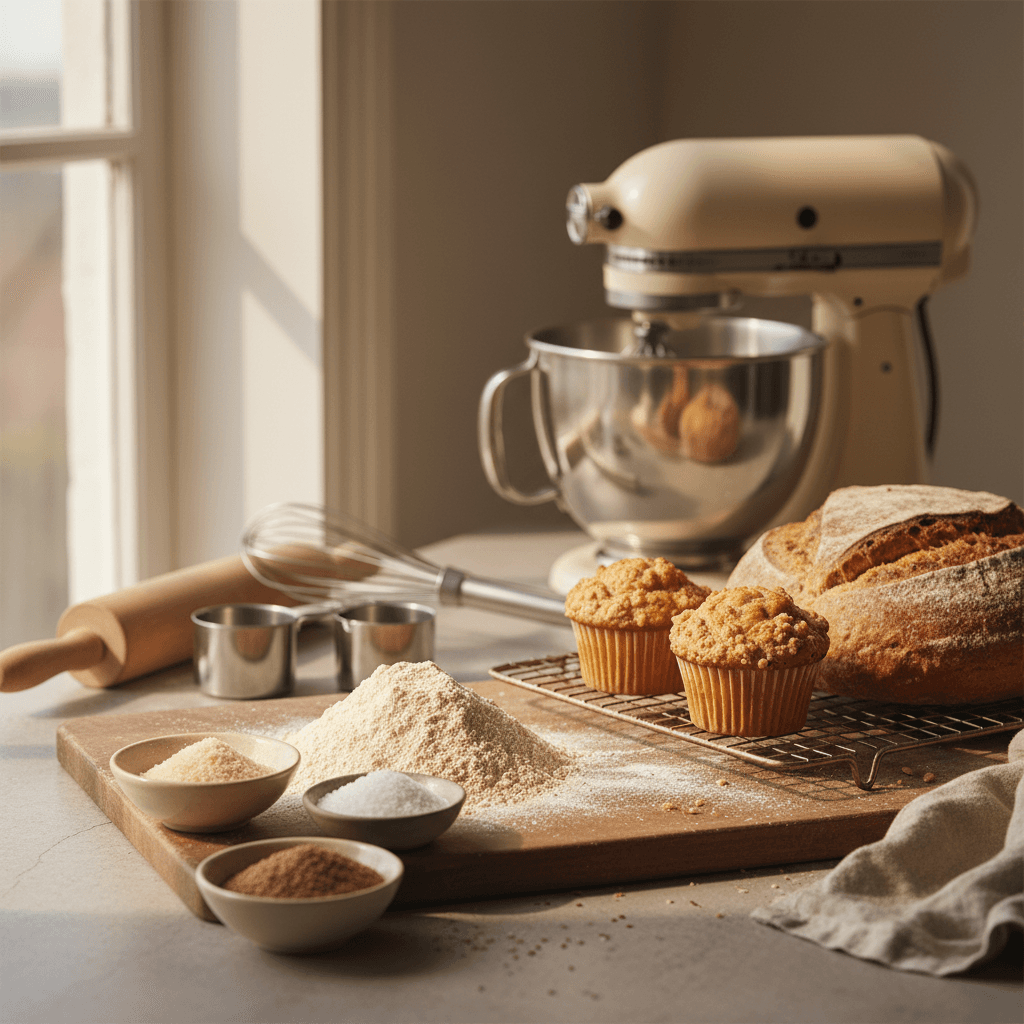
Scaling a home bakery sounds exciting until you realize most advice out there is vague motivational fluff. This post covers the real numbers — what you can actually earn, which products give you the best margins, and what scaling looks like at each stage so you can decide if it's worth pursuing.
Key takeaways
- A side-hustle home bakery can realistically generate $500–$2,000/month, while a full-time replacement income typically falls in the $3,000–$6,000/month range depending on your market and product mix.
- Gluten-free and specialty baked goods command a significant pricing premium — often 40–80% more than conventional items — and customers in this niche are exceptionally loyal once they trust your products.
- Your highest-margin items are almost always cookies, bars, and decorated sugar cookies, not custom cakes — despite what Instagram might suggest.
- Scaling is not just about baking more. It requires systems for ordering, production batching, and customer retention that most home bakers never build.
- The biggest bottleneck for most home bakers is not finding customers — it's handling the volume once demand picks up without burning out.
What a home bakery actually earns at each stage
Let's start with honest numbers because this is where most people get misled. A home bakery earning $500–$2,000 per month is operating as a solid side hustle — maybe 10–20 hours per week of baking, packaging, and customer communication on top of your regular life. That range is realistic within your first 3–6 months if you're consistent and strategic about your product lineup.
Replacing a full-time income — let's call that $3,000–$6,000 per month — requires a fundamentally different approach. You're not just baking more; you're running a business with systems. Most home bakers who hit this level are working 30–40 hours per week and have streamlined their menu to a handful of high-margin, repeatable items.
Here's what the income progression typically looks like:
| Stage | Monthly revenue | Hours/week | What it takes |
|---|---|---|---|
| Testing the waters | $200–$500 | 5–10 | Friends, family, word of mouth, a few repeat customers |
| Established side hustle | $500–$2,000 | 10–20 | Consistent weekly orders, a focused menu, basic systems |
| Full-time replacement | $3,000–$6,000 | 30–40 | Production batching, pre-orders, repeat customer base, streamlined operations |
| Growth mode | $6,000+ | 40+ | Wholesale accounts, farmers markets, possibly hiring help or moving to a commercial kitchen |
The jump from side hustle to full-time is where most people either level up or burn out. It's not a smooth ramp — it's a structural shift in how you operate.
Which baked goods have the best profit margins
Not all baked goods are created equal when it comes to profitability. The items that look most impressive on social media are often the worst for your bottom line. Custom decorated cakes, for example, can take 4–8 hours of labor for a single order. Unless you're charging $150+ (and your market supports that), your effective hourly rate can drop below minimum wage.
Here's a realistic margin breakdown for common home bakery items:
| Product | Typical ingredient cost | Typical selling price | Approximate margin | Labor intensity |
|---|---|---|---|---|
| Decorated sugar cookies (dozen) | $3–$5 | $30–$60 | 70–85% | High (but batchable) |
| Brownies/bars (dozen) | $2–$4 | $18–$30 | 75–85% | Low |
| Cookies (dozen) | $2–$4 | $15–$25 | 70–80% | Low |
| Quick breads/loaves | $2–$4 | $10–$18 | 65–75% | Low |
| Cupcakes (dozen) | $4–$7 | $24–$42 | 65–75% | Medium |
| Custom layer cakes | $10–$20 | $50–$150 | 50–70% | Very high |
Notice a pattern? The simpler, more batchable items tend to have the best margins and the lowest labor per unit. Brownies and bars are the unsung heroes of home bakery profitability. You can make huge batches with relatively little hands-on time, and they package and transport easily.
When you're thinking about stocking your bakery kitchen efficiently, it helps to have the right equipment from the start. Our guide to the best baking equipment from budget to professional covers what's actually worth investing in at each stage of growth.
Why gluten-free home bakers have a pricing advantage
If you're baking gluten-free, you have a built-in competitive advantage that conventional bakers don't. Gluten-free customers already expect to pay more — they're used to seeing $7 loaves of bread and $6 boxes of cookies at the grocery store. When you show up with fresh, homemade gluten-free baked goods that actually taste good, they're not going to flinch at premium pricing.
Here's what makes the gluten-free niche particularly strong for home bakers:
- Pricing premium: You can typically charge 40–80% more than the conventional equivalent, and customers consider it fair because they know specialty ingredients cost more.
- Extreme loyalty: People with celiac disease or serious gluten sensitivity have very few options they trust. Once they find a baker who understands gluten-free baking and takes cross-contamination seriously, they become repeat customers for years.
- Less competition: Most home bakers stick to conventional recipes. The gluten-free market is underserved in most areas, which means less price pressure and more demand.
- Higher ingredient costs are offset by higher prices: Yes, almond flour and specialty starches cost more than all-purpose flour. But your customers expect that and your pricing reflects it. Margins can actually be better than conventional baking when you price correctly.
The key is positioning yourself as a specialist, not a generalist who also happens to offer a gluten-free option. Specialists command higher prices and attract more loyal customers.
If you're serious about building a gluten-free home bakery, having a rock-solid understanding of ingredients and common pitfalls is essential. Our guide to stocking a gluten-free baking pantry on a budget can help you get your ingredient costs under control from day one.
The systems that actually let you scale
Here's the uncomfortable truth: most home bakers who burn out weren't bad at baking. They were bad at running a business. Scaling a home bakery requires building systems that let you handle more volume without proportionally more work. Without them, every new customer just means more chaos.
Production batching
This is the single biggest lever for scaling. Instead of making each order individually, you batch similar items together. If you have six orders that all include chocolate chip cookies, you make one massive batch and portion it out. This can cut your per-order production time by 40–60%.
A focused, repeatable menu
The bakers who scale successfully almost always have a tight menu — maybe 8–12 items that they rotate seasonally. Every new menu item adds complexity to your ordering, inventory, and production. When you're starting out, it's tempting to say yes to every custom request. When you're scaling, that's a recipe for burnout.
Pre-order systems
Taking orders on a rolling basis means you're constantly context-switching between customer communication, baking, and delivery. Pre-order systems — where customers order by a set deadline for a set delivery day — let you batch your entire week. Many successful home bakers take orders Sunday through Wednesday and bake/deliver Thursday through Saturday.
Ingredient sourcing and bulk buying
As your volume increases, your ingredient costs should decrease. Buying flour, sugar, and butter in bulk can reduce your ingredient costs by 15–25%. For gluten-free bakers, this matters even more because specialty flours like brown rice flour and tapioca starch have significant price breaks at larger quantities. Knowing which ingredients are worth the premium and which aren't keeps your costs in check without sacrificing quality.
What most people get wrong about scaling
The most common mistake is thinking that scaling means doing more of what you're already doing. It doesn't. Scaling means changing how you work so that doubling your output doesn't double your hours.
Here are the traps we see home bakers fall into most often:
- Saying yes to everything. Custom orders are flattering but often terrible for margins. A custom cake that takes 6 hours earns you less per hour than a batch of brownies you can make in your sleep.
- Underpricing to get customers. This is the fastest way to burn out. You'll attract price-sensitive customers who aren't loyal and who will leave the moment they find something cheaper. Price for the value you provide, especially if you're baking gluten-free or allergen-friendly.
- Relying entirely on social media for orders. Social media is unpredictable. The bakers with stable income have built direct customer relationships — email lists, text lists, or pre-order systems — that don't depend on an algorithm deciding to show their post.
- Upgrading equipment too early. You don't need a commercial mixer to hit $2,000/month. A solid home setup handles more volume than most people think. If you're curious about what's actually worth upgrading and when, our guide to professional baking equipment worth investing in breaks it down honestly.
- Not tracking numbers. If you don't know your cost per item, your hourly rate, and your profit margin on each product, you're guessing. And guessing doesn't scale.
A realistic timeline for scaling
We're not going to tell you this happens overnight, because it doesn't. Here's what a realistic scaling timeline looks like for someone who's consistent and strategic:
Months 1–3: You're finding your products, testing recipes, and getting your first customers (usually friends, family, and their networks). Revenue: $200–$800/month. This phase is about learning what sells and what doesn't, not about profit.
Months 3–6: You've identified your top 3–5 sellers and started building a regular customer base. You're implementing basic systems — a pre-order form, consistent baking days, maybe a simple email or text list. Revenue: $800–$2,000/month.
Months 6–12: This is where the real scaling happens. You're batch-producing, buying in bulk, and your repeat customer rate is climbing. You may be adding a farmers market or wholesale account. Revenue: $2,000–$4,000/month.
Year 2+: If you've built strong systems and a loyal customer base, you're in the $3,000–$6,000+/month range. At this point, you're deciding whether to stay home-based or explore a commercial kitchen, and whether to bring on help.
Notice that the first few months are slow. That's normal. The bakers who succeed are the ones who use that time to build systems instead of just chasing individual orders.
Frequently asked questions
How much can you realistically make with a home bakery?
A side-hustle home bakery typically generates $500–$2,000 per month working 10–20 hours per week. Replacing a full-time income ($3,000–$6,000/month) is possible but requires 30–40 hours per week, strong systems, and a focused menu of high-margin items. These numbers vary significantly by market, product mix, and pricing strategy.
What baked goods have the highest profit margin for a home bakery?
Cookies, brownies, and bars consistently have the highest profit margins — often 70–85% — because they're inexpensive to make, easy to batch-produce, and transport well. Decorated sugar cookies can command premium prices ($30–$60 per dozen) despite low ingredient costs. Custom cakes, despite their high price tags, often have lower effective margins once you account for labor hours.
Is a gluten-free home bakery more profitable than a regular one?
In many markets, yes. Gluten-free baked goods command a 40–80% pricing premium over conventional equivalents, and customers expect to pay more. The gluten-free niche also has less competition and higher customer loyalty. While ingredient costs are higher, the pricing premium typically more than compensates, resulting in equal or better margins.
How do you get consistent orders for a home bakery without social media?
The most reliable methods are building a direct customer list (email or text), implementing a weekly pre-order system, and encouraging word-of-mouth referrals. Farmers markets and local community groups also drive consistent traffic. Social media can supplement these efforts, but bakers who rely on it exclusively often experience unpredictable income swings.
What equipment do you need to scale a home bakery?
For most home bakers scaling to $2,000–$4,000/month, a standard home kitchen with a reliable stand mixer, quality sheet pans, a digital scale, and proper cooling racks is sufficient. The bigger investment is in systems — pre-order software, packaging supplies in bulk, and food-safe storage. Equipment upgrades like a commercial-grade mixer or convection oven become worthwhile once you're consistently maxing out your current setup's capacity.
Ready to build a home bakery that actually pays you?
If you've read this far, you're not looking for fluff — you want a real path forward. Scaling a home bakery is absolutely doable, but it takes more than good recipes. It takes the right systems, the right pricing, and a clear plan for getting consistent repeat customers.
Want to see the exact path from first order to stable income? This free masterclass is taught by a home baker who built a full-time income in 3 months — and shows you how to get consistent repeat customers without relying on social media.

Written by
Co-founder, BakingSubs
Co-founder of BakingSubs, where he turns the science of ingredient substitutions into tested, reliable guidance for home bakers.
Related Posts
Gluten-Free Flour Weight Chart: Grams per Cup for 9 Major Brands (and Why the Spread Is Over 20%)
Best Low Carb Tortillas (2026): 6 Brands Compared by Net Carbs
Best Sugar-Free Cake Mix and Brownie Mix (2026): 14 Options Ranked by Net Carbs, Sweetener, and Price
Bake with Confidence
See all
Confident Gluten-Free Baker Toolkit
The science-based system that replaces gluten's seven invisible jobs so your baking turns out soft, fluffy, and foolproof — every time.

Gluten-Free Recipe Vault
Instant access to our complete library of proven gluten-free recipes — no waiting, no guesswork, just results that work tonight.

Fix Your Gluten-Free Bread
Learn the 3-step formula to make bread rise and stay soft, discover why your loaves collapse, and get a tested sandwich bread recipe that actually works.