

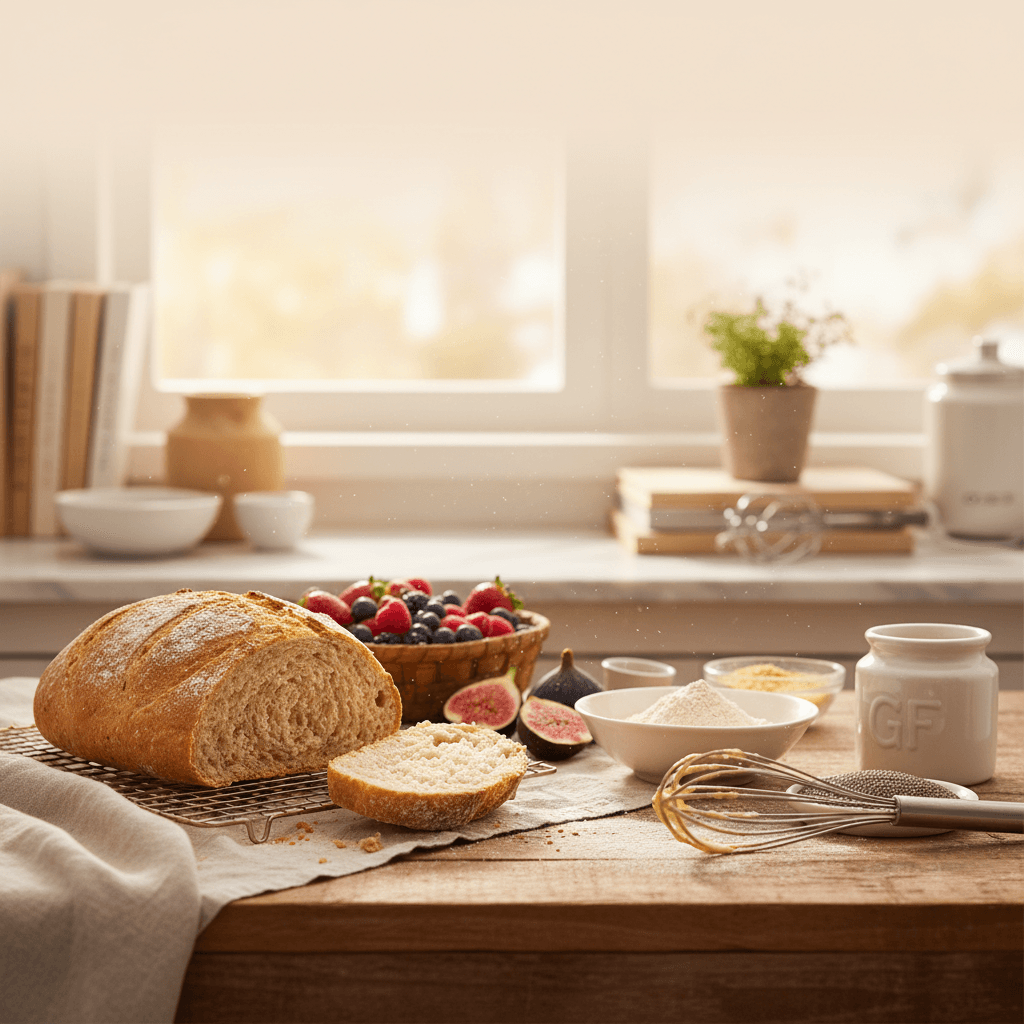
Finding gluten-free customers locally is easier than you think — because they're already desperately searching for you. The GF community is tight-knit, fiercely loyal, and willing to pay premium prices once they trust a baker. Here's exactly how to get in front of them.
Key takeaways
- Gluten-free customers are more loyal and less price-sensitive than general baked goods customers — once they find a reliable baker, they stick around and tell everyone they know.
- Local celiac support groups, GF-specific Facebook groups, and health food stores are the highest-converting channels for finding your first customers.
- Partnering with local nutritionists, dietitians, and gastroenterologists creates a steady referral pipeline you can't get from social media.
- Farmers markets let you build trust face-to-face, which matters enormously to people who've been burned by cross-contamination.
- The gluten-free niche has far less local competition than general baking — most areas have zero dedicated GF home bakers.
- Word of mouth spreads faster in the GF community than almost any other food niche because safe options are so scarce.
Why gluten-free customers are the best niche for home bakers
Before we dive into tactics, let's talk about why this niche is so powerful. Gluten-free customers aren't just "nice to have" — they're arguably the most profitable and loyal customer base a home baker can build.
Here's what makes them different from general baked goods customers:
| Factor | General baked goods customers | Gluten-free customers |
|---|---|---|
| Price sensitivity | High — they compare you to grocery store prices | Low — they already expect to pay more and understand why |
| Loyalty | Moderate — they'll switch for convenience | Extremely high — once they trust you, they don't leave |
| Word of mouth | Occasional | Aggressive — they actively share finds with their community |
| Local competition | Heavy — every home baker sells cookies and cakes | Minimal — most areas have zero dedicated GF bakers |
| Market growth | Flat | Growing — celiac diagnosis rates and GF-by-choice trends keep rising |
If you're already baking gluten-free and wondering whether to specialize, the answer is almost always yes. The economics are simply better. We cover the full financial picture in our guide on the most profitable gluten-free items to sell, and the margins consistently beat conventional baked goods.
If you already know your way around almond flour, cassava flour, and the common gluten-free baking challenges, you have a serious head start. The missing piece is getting the right people to know you exist. That's what the rest of this post is about.
Ready to turn your gluten-free baking skills into a real business? Our free Home Bakery Pro masterclass walks you through building consistent orders and sustainable income — without relying on social media algorithms.
1. Join local celiac and gluten-free support groups
Celiac support groups are the single highest-value channel for finding gluten-free customers locally. These groups exist in most mid-sized cities and larger, and members are constantly asking each other for safe food recommendations.
Start by searching for your city or county plus "celiac support group" on Google and Facebook. The Celiac Disease Foundation and the Gluten Intolerance Group both maintain chapter directories. Many groups meet monthly at hospitals, community centers, or churches.
Here's how to approach them without being pushy:
- Attend a meeting first. Introduce yourself as a gluten-free home baker. Listen to what people struggle with — it's almost always finding safe bread, birthday cakes, and holiday treats.
- Offer to bring samples. Nothing builds trust faster than letting people taste your work. Bring ingredient lists and be ready to answer questions about your kitchen setup and cross-contamination practices.
- Ask if you can leave business cards or flyers. Most groups have a resource table or bulletin board.
- Offer to do a short presentation. Topics like "how to read labels" or "setting up a safe GF kitchen" position you as an expert, not just a salesperson.
One meeting can generate five to ten customers, and each of those customers will tell others. This is the flywheel that makes the GF niche so powerful.
2. Get active in gluten-free Facebook groups for your area
Almost every metro area has at least one local GF Facebook group, and many have several. Search for "[your city] gluten-free," "[your city] celiac," or "[your state] gluten-free." These groups typically have hundreds or thousands of members actively looking for safe food options.
The key is to be genuinely helpful before you promote anything. Answer questions about safe restaurants, share tips about which grocery stores carry the best GF products, and participate in conversations. When someone asks "does anyone know where I can get a safe GF birthday cake?" — that's your moment.
Most group admins are fine with local business recommendations as long as you're transparent and not spammy. Some groups have dedicated days for business posts or vendor directories. Follow the group rules and you'll be welcomed.
3. Partner with local nutritionists and dietitians
Registered dietitians and nutritionists who work with celiac and gluten-intolerant clients are one of the most underused referral sources for GF home bakers. Their clients are constantly asking them where to find safe baked goods.
Here's how to build these relationships:
- Search for dietitians in your area who specialize in food allergies, celiac disease, or digestive health.
- Email or call and introduce yourself. Explain that you run a dedicated gluten-free home bakery and would love to be a resource for their clients.
- Offer to drop off a sample box with your menu and business cards.
- Ask if they'd be willing to keep your cards in their waiting room or include your info in their new-client packets.
This works because the recommendation comes from a trusted health professional. When a dietitian tells a newly diagnosed celiac patient "here's a local baker who makes safe GF bread," that's essentially a guaranteed customer.
4. Connect with gastroenterologists' offices
Gastroenterologists diagnose celiac disease, and their offices see a steady stream of patients who are suddenly navigating a completely new way of eating. Many of these patients feel overwhelmed and don't know where to start.
The approach is similar to working with dietitians. Call the office, explain what you do, and ask if you can leave brochures or business cards in the waiting room. Some offices maintain resource lists for newly diagnosed patients — getting on that list is pure gold.
You don't need to be pushy. A simple one-page flyer that says "Dedicated gluten-free home bakery — safe for celiac" with your contact info and a few menu highlights is enough. Include a note about your kitchen practices and how you prevent cross-contamination.
5. Sell at farmers markets with clear GF signage
Farmers markets are one of the best places to build a local customer base because they let people see, taste, and talk to you directly. For gluten-free customers, that face-to-face interaction is especially important — they need to trust that your products are truly safe.
Make your GF specialization impossible to miss:
- Use large, clear signage that says "100% Gluten-Free" or "Dedicated Gluten-Free Bakery."
- Have ingredient lists printed and available for every product.
- Be ready to explain your kitchen setup and how you avoid cross-contamination.
- Offer samples generously — GF customers who taste something delicious become customers on the spot.
We break down the best products to bring in our guide on the best baked goods to sell at farmers markets. Spoiler: GF items often outsell conventional ones because there's so little competition at most markets.
6. Post on health food store bulletin boards
Natural food stores, co-ops, and specialty health food shops are magnets for gluten-free shoppers. Most of these stores have community bulletin boards near the entrance or checkout area.
Create a simple, professional flyer with a tear-off tab at the bottom. Include your bakery name, what you specialize in (dedicated gluten-free), your contact info, and how to order. Refresh the flyer every few weeks so it stays visible.
Some health food stores will also let you leave business cards at the register or include your flyer in shopping bags. It never hurts to ask. If the store doesn't carry fresh GF baked goods (most don't), you're filling a gap their customers already want filled.
7. Build relationships with local allergy-friendly restaurants
Restaurants that offer gluten-free menus often struggle with GF desserts. Bread and baked goods are the hardest things to do well in a kitchen that also handles wheat flour. That's your opening.
Approach local restaurants that already market GF options and offer to supply them with GF baked goods — bread, rolls, desserts, whatever fits their menu. This can become a wholesale relationship that provides steady, predictable income.
Even if a restaurant isn't ready to buy wholesale, many will let you leave business cards or recommend you to customers who ask about GF bakeries.
8. Offer free samples at community events
Health fairs, school wellness events, community festivals, and charity walks are all opportunities to get your products in front of people. Look for events that attract health-conscious attendees — celiac awareness walks, food allergy fundraisers, and gluten-free expos are perfect.
Even general community events work well if you have clear GF branding. Set up a small table with samples, business cards, and a sign-up sheet for your email or text list. The goal is to get contact information so you can follow up.
9. Create a simple Google Business Profile
When someone searches "gluten-free bakery near me" or "gluten-free cakes [your city]," you want to show up. A Google Business Profile is free and puts you on the map — literally.
Set up your profile with:
- Your bakery name and the phrase "gluten-free" in your business description.
- Your service area (the cities and neighborhoods you deliver to or serve).
- Photos of your products.
- Your ordering process and contact information.
- A request for reviews from happy customers (reviews are the single biggest factor in local search ranking).
This is one of the few digital tactics that works without social media, and it compounds over time as you collect reviews. If you're not sure about the legal side of operating your home bakery, check our guide on cottage food laws for home bakers to make sure your listing is compliant.
10. Ask every customer for referrals (and make it easy)
Gluten-free customers talk to each other. A lot. When someone with celiac disease finds a baker they trust, they tell their celiac support group, their GF Facebook group, their family, and their friends. Your job is to make that sharing as easy as possible.
After every order, include a few extra business cards and a note that says something like: "Know someone who eats gluten-free? I'd love to bake for them too." You can also offer a small referral incentive — a free cookie with their next order, or a discount after three referrals.
Word of mouth in the GF community is faster and more effective than any ad you could run. One satisfied customer can easily generate three to five new ones within a month.
11. Partner with local schools and parent groups
Parents of children with celiac disease or gluten intolerance are always looking for safe options for school events, birthday parties, and class celebrations. Many feel stressed about finding treats their child can eat safely.
Connect with local parent-teacher organizations, allergy-aware parent groups, and school nurses. Offer to be the go-to baker for GF treats at school events. This builds a reliable stream of repeat orders around the school calendar — back to school, Halloween, holiday parties, Valentine's Day, and end-of-year celebrations.
If you need recipe inspiration for these occasions, we have guides for gluten-free Halloween treats for kids and gluten-free Valentine's Day desserts that can double as menu ideas.
12. List yourself in gluten-free directories and apps
Several apps and websites help GF consumers find safe food options near them. The most popular include Find Me Gluten Free, the Celiac Disease Foundation's resource directory, and local GF dining guides. Getting listed is usually free or very inexpensive.
Create a complete profile with photos, your menu highlights, ordering information, and details about your dedicated GF kitchen. Encourage customers to leave reviews on these platforms — they carry enormous weight in the GF community.
How to communicate your value (and why you should never apologize for your prices)
One of the biggest advantages of selling to gluten-free customers is that they understand why your products cost more. They buy almond flour and arrowroot powder themselves — they know these ingredients are expensive.
Instead of apologizing for higher prices, lean into the value you provide:
- Safety. You bake in a dedicated GF environment. That's something most bakeries and restaurants can't offer.
- Quality. You've solved the common problems — dry, crumbly texture, grittiness, strange aftertastes — that plague most GF baked goods.
- Convenience. You save them hours of baking and the frustration of failed recipes.
- Peace of mind. For celiac customers, this isn't a preference — it's a medical necessity. That peace of mind is worth paying for.
For a deeper dive into setting prices that reflect your true costs and value, read our complete guide on how to price baked goods for a home bakery.
Frequently asked questions
How do I find gluten-free customers in a small town?
Even small towns have celiac and gluten-intolerant residents — roughly 1 in 100 people has celiac disease, and many more avoid gluten by choice. Start with your local health food store bulletin board, any nearby gastroenterologist or dietitian offices, and Facebook groups for your county or region. In smaller communities, word of mouth spreads even faster because there are fewer options.
Do gluten-free customers really pay more without pushing back?
Yes. Gluten-free customers already spend significantly more on groceries because GF ingredients cost two to three times more than conventional ones. They understand the pricing and don't compare your GF bread to a $3 loaf at the grocery store. As long as the quality is there, price resistance is minimal compared to general baked goods customers.
What's the fastest way to get my first gluten-free customers?
Attend a local celiac support group meeting with samples. This is consistently the fastest path to your first paying customers. One meeting can generate five to ten orders, and those customers will refer others within weeks. If there's no local group, post in your area's GF Facebook group with a genuine, helpful introduction.
How do I prove my baked goods are safe for celiac customers?
Be transparent about your kitchen setup, ingredient sourcing, and cross-contamination prevention practices. Share your ingredient lists openly, explain that you bake in a dedicated gluten-free environment, and be ready to answer detailed questions. Customers with celiac disease will ask — and they should. Your willingness to answer builds the trust that turns first-time buyers into lifelong customers.
Should I sell only gluten-free or offer regular baked goods too?
If you're targeting the celiac community, selling only gluten-free is a major advantage. Celiac customers are wary of kitchens that also handle wheat flour because of cross-contamination risk. A dedicated GF kitchen is a selling point you should emphasize in all your marketing. It's also simpler to manage inventory and recipes when you focus on one niche. We walk through the full business case in our guide on how to start a gluten-free home bakery.
You already know how to bake gluten-free — here's the missing piece
You have the skills. You understand the ingredients, the techniques, and the challenges that most bakers never figure out. The piece that turns all of that into consistent orders and real income is a system — not more social media posts.
Join the free Home Bakery Pro masterclass and learn exactly how to build a sustainable home bakery with steady customers and reliable revenue — without depending on algorithms or going viral.

Written by
Co-founder, BakingSubs
Co-founder of BakingSubs, where he turns the science of ingredient substitutions into tested, reliable guidance for home bakers.
Related Posts
Bake with Confidence
See all
Confident Gluten-Free Baker Toolkit
The science-based system that replaces gluten's seven invisible jobs so your baking turns out soft, fluffy, and foolproof — every time.

Gluten-Free Recipe Vault
Instant access to our complete library of proven gluten-free recipes — no waiting, no guesswork, just results that work tonight.

Fix Your Gluten-Free Bread
Learn the 3-step formula to make bread rise and stay soft, discover why your loaves collapse, and get a tested sandwich bread recipe that actually works.