
How to take custom cake orders from home: a complete system for managing requests, pricing, and delivery
Learn how to take custom cake orders from home with a proven system for order forms, pricing, deposits, and delivery that protects your time and profits.

Malik
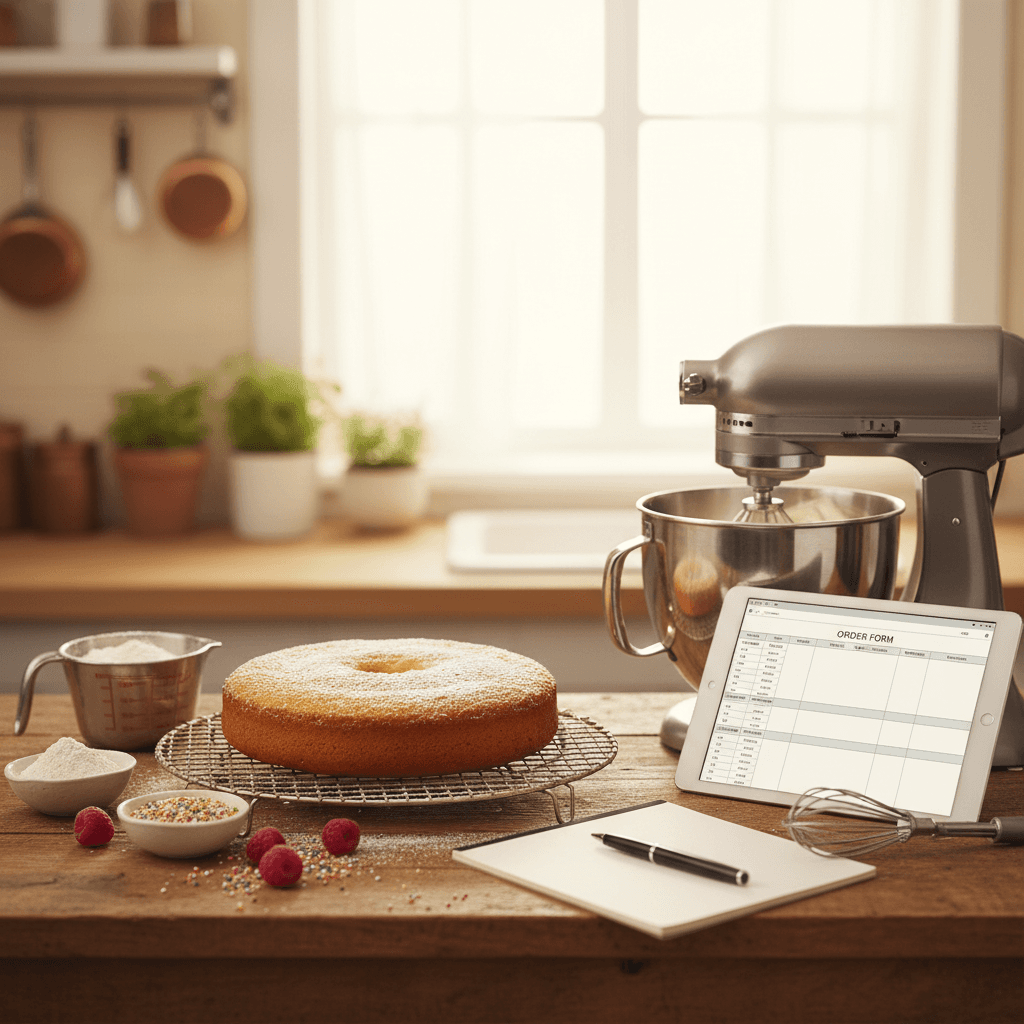
Taking custom cake orders from home can be one of the most profitable things you do as a home baker, but without a clear system, it quickly becomes a stress spiral of back-and-forth messages, underpriced orders, and last-minute surprises. This guide walks you through the exact process of setting up a custom cake order system that protects your time, your profits, and your sanity.
Key takeaways
- A structured order form eliminates 80% of the back-and-forth messaging that eats your time on custom cake inquiries.
- Requiring a non-refundable deposit (typically 50%) before you start any work protects you from cancellations and no-shows.
- Setting a minimum order lead time (7-14 days for most custom cakes) prevents rushed jobs that hurt quality and your margins.
- Pricing custom cakes by the serving, not by the hour, makes it easier for customers to understand and easier for you to stay profitable.
- A written order confirmation that both you and the customer agree to acts as a contract and prevents "but I thought it would look like..." disputes.
- Most successful home cake bakers limit the number of custom orders they take per week to maintain quality and avoid burnout.
Why custom cake orders need a different system than standard menu items
Custom cakes are fundamentally different from selling cookies or bread by the dozen. Every order involves a design conversation, ingredient planning, and timeline coordination that your regular menu items don't require. Without a dedicated system, you'll spend more time messaging customers than actually baking.
The biggest mistake we see home bakers make is treating custom cakes like everything else on their menu. They answer DMs at all hours, quote prices off the top of their head, and start baking without a deposit. That's a recipe for burnout and lost money. The system we're laying out here fixes all of that.
If you're still in the early stages of setting up your home bakery, make sure you've covered the legal basics first. Our guide on cottage food laws for home bakers covers what you need to know about selling from home in your state, including whether custom cakes are allowed under your specific cottage food law.
If you're looking for a structured approach to building a profitable home baking business, check out our free Home Bakery Pro masterclass. It covers how to get consistent orders and build a sustainable home bakery, which is exactly the foundation you need before scaling into custom work.
Step 1: Create a custom cake order form that does the work for you
The single most important thing you can do is create a standardized order form. This eliminates the endless back-and-forth of "what size do you need?" and "when is the event?" because you collect everything upfront.
Your custom cake order form should capture:
- Customer name and phone number (not just Instagram handle)
- Event date and pickup/delivery time
- Number of servings needed (not just "a big cake")
- Cake flavor and filling preferences
- Frosting type (buttercream, fondant, cream cheese, etc.)
- Design description or inspiration photos (limit to 3 reference images)
- Dietary restrictions or allergens
- Budget range
- How they heard about you
You can build this form for free using Google Forms, or use a dedicated tool. If you're handling more than a few orders per week, an order management app designed for home bakers can automate much of this process and keep everything organized in one place.
Where to put your order form
Link your order form everywhere: your Instagram bio, your Facebook page, your website, and even in your auto-reply messages. The goal is to funnel every inquiry through the form instead of answering random DMs. If you don't have a website yet, our comparison of the best website builders for home bakery businesses can help you get one set up quickly.
Step 2: Set your custom cake pricing structure
Pricing custom cakes is where most home bakers leave the most money on the table. The key principle: price by the serving, then add for complexity. This gives customers a clear starting point and gives you room to charge appropriately for elaborate designs.
Base pricing by serving count
Here's a realistic starting framework for home bakery custom cakes. Your actual numbers will vary based on your area and ingredient costs, but this gives you a baseline.
| Cake size | Approximate servings | Base price range (buttercream) | Base price range (fondant) |
|---|---|---|---|
| 6-inch round (2 layers) | 10-12 | $45-$65 | $65-$85 |
| 8-inch round (2 layers) | 20-24 | $70-$100 | $100-$140 |
| 10-inch round (2 layers) | 35-40 | $110-$150 | $150-$200 |
| Half sheet | 40-48 | $120-$160 | $170-$220 |
| 2-tier (6" + 8") | 30-36 | $150-$200 | $200-$280 |
| 3-tier (6" + 8" + 10") | 65-80 | $275-$400 | $375-$550 |
Add-on pricing for design complexity
On top of your base price, charge separately for design elements that require extra time and skill:
- Custom color matching: $10-$20
- Hand-piped details or borders: $15-$30
- Fondant figures or toppers: $20-$50+ depending on complexity
- Fresh flowers (arranged by you): $15-$25 plus cost of flowers
- Edible image printing: $10-$15
- Specialty flavors or fillings: $10-$20 per flavor
For a deeper dive into making sure your prices actually cover your costs and pay you fairly, read our complete guide on how to price baked goods for a home bakery. The formula there works perfectly for custom cakes when you factor in your design time.
Step 3: Establish your order policies before you need them
Clear policies aren't just about protecting yourself. They actually make customers feel more confident because they know exactly what to expect. Write these down and include them on your order form, your website, and your order confirmation.
Essential policies for custom cake orders
- Minimum lead time: 7-14 days for most custom cakes, 4-8 weeks for wedding cakes. Rush orders (if you accept them) should carry a 25-50% surcharge.
- Deposit requirement: 50% non-refundable deposit to secure the date. Balance due 48 hours before pickup or delivery.
- Cancellation policy: Deposit is non-refundable. Cancellations within 72 hours of the event date owe the full balance if ingredients have been purchased.
- Design changes: Free changes up to 7 days before the event. Changes within 7 days may incur additional charges or may not be possible.
- Delivery fees: Free pickup. Delivery within 10 miles: $15-$25. Beyond 10 miles: $2-$3 per additional mile.
- Tastings: Offer a tasting box of 2-3 flavors for $15-$25 (credit toward the order if they book).
Step 4: Build your consultation and confirmation process
Once a customer submits your order form, here's the workflow that keeps everything smooth and professional.
The consultation
Review the form, then schedule a 15-20 minute consultation. This can be a phone call, video chat, or in-person meeting. During the consultation:
- Confirm the event details and serving count
- Discuss the design in detail, referencing their inspiration photos
- Be honest about what's achievable within their budget
- Offer alternatives if their vision exceeds their budget ("Instead of a 3-tier fondant cake, we could do a 2-tier buttercream with a fondant topper and it would look just as stunning")
- Give them a firm quote
The order confirmation
After the consultation, send a written order confirmation that includes:
- Customer name and event date
- Cake size, flavor, filling, and frosting
- Detailed design description (be specific: "white buttercream with blush pink rosettes on top, gold sprinkle border on bottom tier")
- Total price with itemized breakdown
- Deposit amount and due date
- Balance due date
- Pickup or delivery details
- Your cancellation and change policies
Ask the customer to reply with "confirmed" or sign the document. This is your contract. It doesn't need to be fancy, but it needs to exist in writing.
Step 5: Manage your production schedule
One of the fastest ways to burn out on custom cakes is taking too many orders. We recommend starting with a hard cap on how many custom cake orders you accept per week.
Realistic weekly capacity for a home baker
| Your situation | Recommended max custom cake orders per week |
|---|---|
| Baking part-time alongside another job | 1-2 |
| Baking part-time with other menu items | 2-3 |
| Baking full-time, custom cakes only | 4-6 |
| Baking full-time with other menu items | 2-4 |
Block out your production calendar. For a typical custom cake, plan for:
- Day 1: Bake cake layers (can be done 2-3 days ahead and refrigerated, or frozen up to 2 weeks ahead)
- Day 2: Crumb coat, make fillings, prepare any fondant decorations
- Day 3 (day before event): Final decorating, assembly, and refrigeration
- Event day: Final touches and pickup/delivery
If you're juggling custom cakes alongside a regular menu, having the right menu structure is critical so you're not spread too thin.
Step 6: Handle delivery and presentation
A gorgeous custom cake that arrives damaged is worse than a plain cake that arrives perfect. Your delivery and presentation process matters as much as your decorating skills.
Pickup best practices
- Have the customer bring a flat, stable surface for their car (a non-slip shelf liner on the floor of the backseat works great)
- Carry the cake to their car yourself
- Show them the cake before they leave so they can confirm it matches their expectations
- Take a photo together with the cake for your portfolio (and their social media)
Delivery best practices
- Use a flat car surface with non-slip liner
- Never put a cake on a car seat, always the floor
- Bring a small touch-up kit: extra frosting in a piping bag, a small offset spatula, and paper towels
- Deliver assembled cakes chilled whenever possible
- For tiered cakes, consider assembling on-site
Professional packaging makes a huge difference in how your cakes arrive and how customers perceive your business. Our guide to home bakery packaging ideas and supplies covers options at every budget level.
Step 7: Follow up and build repeat business
The order isn't done when the cake is delivered. Your follow-up process is what turns a one-time custom cake customer into someone who orders from you for every birthday, anniversary, and holiday.
- Day of the event: Send a quick text: "Hope the cake is a hit at the party! Would love to see a photo if you get one."
- 2 days after: Ask if they'd be willing to leave a review (Google, Facebook, or wherever you get the most visibility).
- Add them to your customer list: Note their preferences, family birthdays, and event dates so you can reach out proactively next year.
- Share their photos: With permission, post event photos to your social media and tag them.
Building a repeat customer base is the foundation of a sustainable home bakery. If you want more strategies for growing your customer list, our post on how to get customers for a home bakery has 15 proven tactics.
Common mistakes to avoid when taking custom cake orders from home
We've seen these trip up home bakers over and over. Avoid them and you'll be ahead of 90% of your competition.
- Quoting prices without seeing the full design request. Always use your order form first. A "simple" cake in the customer's mind might involve hand-painted details.
- Not charging for tastings. Free tastings attract people who are just browsing. A $20 tasting box that credits toward the order attracts serious buyers.
- Skipping the written confirmation. Verbal agreements lead to "I thought it was going to be blue, not teal" disputes. Get it in writing every time.
- Underestimating decorating time. A two-tier cake with detailed piping can take 4-6 hours of decorating alone. Track your time on the first few orders so you can price accurately going forward.
- Saying yes to everything. If a design is beyond your skill level, it's better to refer them to another baker than to deliver something that damages your reputation.
Frequently asked questions
How far in advance should customers order a custom cake from a home bakery?
Most home bakers require 7-14 days minimum notice for custom cakes, and 4-8 weeks for wedding cakes or highly elaborate designs. Setting a firm minimum lead time protects your schedule and ensures you can source specialty ingredients. Rush orders within your minimum timeframe should carry a 25-50% surcharge to compensate for the disruption to your production schedule.
How much deposit should I charge for custom cake orders?
A 50% non-refundable deposit is the industry standard for custom cake orders from home bakeries. This covers your ingredient costs and secures the date on your calendar. The remaining balance should be due 24-48 hours before pickup or delivery. For wedding cakes or orders over $300, some bakers split payments into thirds: deposit, midpoint payment, and final balance.
Do I need a contract for custom cake orders from home?
Yes, you need a written agreement for every custom cake order. It doesn't have to be a formal legal document, but it should clearly state the cake details, price, deposit terms, cancellation policy, and design specifics. An email confirmation that the customer replies "confirmed" to can serve as a basic contract. Check your state's cottage food laws for any specific requirements around order documentation.
How do I handle custom cake orders that exceed my skill level?
Be honest with the customer and offer alternatives. You can suggest a simpler design that achieves a similar look, recommend a more experienced baker in your area, or propose a compromise like using a professional cake topper instead of a hand-sculpted fondant figure. Building a referral network with other local bakers helps everyone, and those bakers will often send orders your way in return.
Should I offer delivery for custom cakes from my home bakery?
Offering delivery is a great way to increase your order value, but always charge for it. A typical fee structure is free pickup, $15-$25 for delivery within 10 miles, and $2-$3 per additional mile. Factor in your time, gas, and the risk of transporting a decorated cake. For tiered or very delicate cakes, some bakers charge a setup fee of $25-$50 to assemble on-site, which also reduces transport risk.

Written by
Co-founder, BakingSubs
Co-founder of BakingSubs, where he turns the science of ingredient substitutions into tested, reliable guidance for home bakers.
Related Posts
Bake with Confidence
See all
Confident Gluten-Free Baker Toolkit
The science-based system that replaces gluten's seven invisible jobs so your baking turns out soft, fluffy, and foolproof — every time.

Gluten-Free Recipe Vault
Instant access to our complete library of proven gluten-free recipes — no waiting, no guesswork, just results that work tonight.

Fix Your Gluten-Free Bread
Learn the 3-step formula to make bread rise and stay soft, discover why your loaves collapse, and get a tested sandwich bread recipe that actually works.