
How to sell baked goods at craft fairs: a complete guide with real numbers and proven strategies
Learn how to sell baked goods at craft fairs with real numbers on costs, pricing, and revenue. Covers booth setup, inventory planning, and turning buyers into repeat customers.

Malik
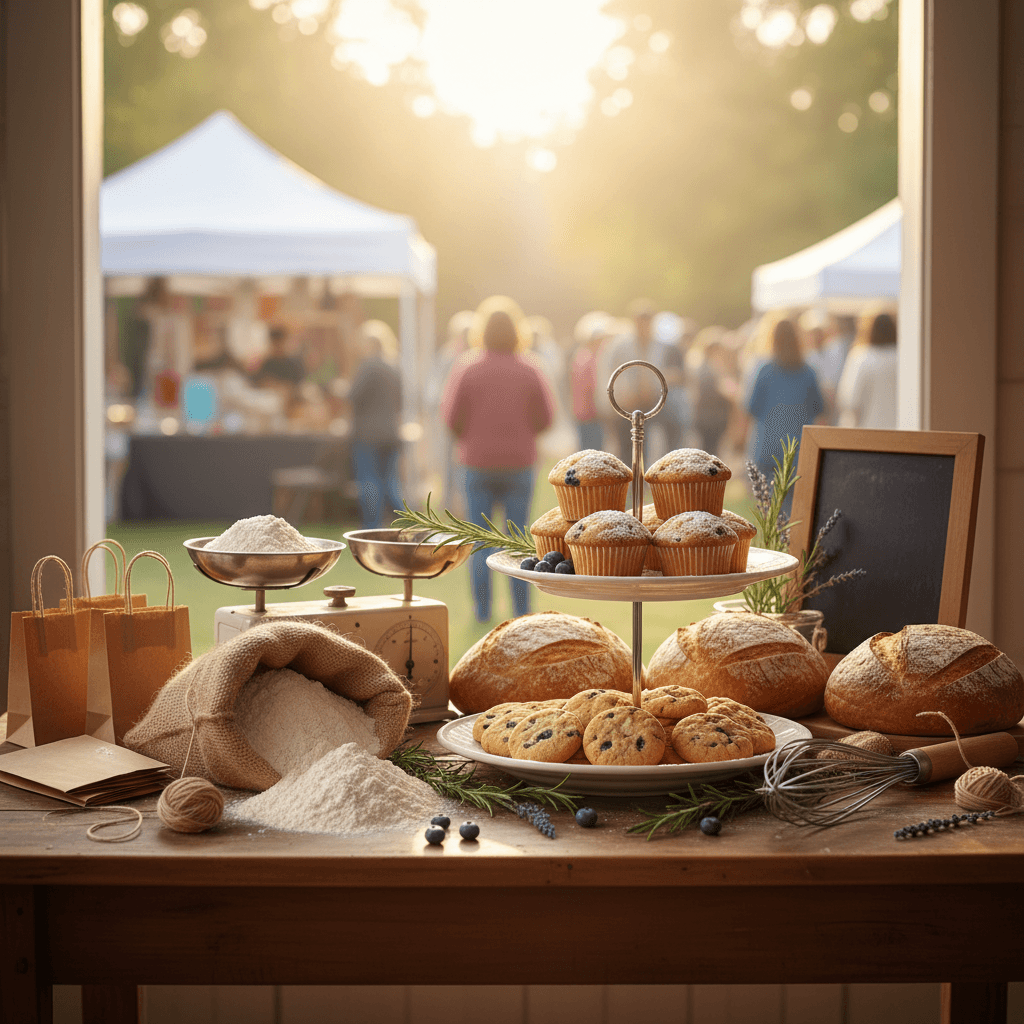
Craft fairs can be one of the most profitable sales channels for a home bakery — if you show up prepared. This guide covers everything from choosing the right events and calculating your costs to setting up a booth that actually moves product.
Key takeaways
- A single craft fair can generate $300 to $2,000+ in revenue depending on event size, your product mix, and your booth setup.
- Booth fees typically range from $50 to $300, so you need to sell enough to cover costs and still profit — budget at least 3x your total expenses in projected sales.
- Items priced between $3 and $12 sell fastest at craft fairs because they hit the impulse-buy sweet spot.
- Your display and packaging do at least half the selling for you — professional presentation is non-negotiable.
- Offering samples can increase your conversion rate by 40% or more, but check your state's cottage food and sampling rules first.
- Collecting emails and social media follows at the fair turns one-time buyers into repeat customers.
Why craft fairs are worth it for home bakers
Craft fairs put you directly in front of people who came to buy handmade goods — you don't have to convince them to support small businesses because that's literally why they're there. Unlike farmers markets that run weekly, craft fairs are concentrated events (often seasonal) where shoppers are in a spending mood and looking for unique finds.
The economics can be compelling. A well-attended holiday craft fair with 2,000+ visitors can easily generate $800 to $1,500 in sales for a prepared baker. Even smaller community events with 200 to 500 attendees can net you $200 to $500 after expenses. The key word there is "prepared" — showing up with the wrong products, bad pricing, or a lackluster display is the fastest way to lose money.
If you're still in the early stages of building your home bakery, our complete guide to starting a home bakery business covers the foundational steps you'll want in place before your first event.
How to choose the right craft fair for your baked goods
Not all craft fairs are created equal, and picking the wrong one is the most common mistake new vendors make. Here's what to evaluate before you commit:
Event size and foot traffic
Ask the organizer for attendance numbers from previous years. Events with fewer than 200 attendees are risky for food vendors because you need volume to make your prep time worthwhile. Aim for events that draw at least 500 people, especially when you're starting out and still testing your product lineup.
Vendor mix and competition
Check the vendor list. If three other bakers are already signed up, your sales will be split. Look for events where you'd be one of only one or two food vendors — your booth becomes a destination rather than a choice. Specialty niches like gluten-free baking give you a huge advantage here because you're not competing with every other cookie baker in the room.
Booth fees and what's included
Booth fees vary wildly. Here's what to expect:
| Event type | Typical booth fee | Expected attendance | Revenue potential |
|---|---|---|---|
| Small community fair | $25–$75 | 100–500 | $150–$500 |
| Mid-size seasonal fair | $75–$200 | 500–2,000 | $400–$1,200 |
| Large holiday market | $150–$400 | 2,000–10,000 | $800–$2,500+ |
| Multi-day festival | $200–$500+ | 5,000+ | $1,500–$4,000+ |
Always ask what's included in the fee — table, chairs, electricity, and tent/canopy can add $50 to $150 in rental costs if they're not provided.
Location and timing
Holiday craft fairs (October through December) consistently outperform spring and summer events for baked goods. People are shopping for gifts, hosting gatherings, and more willing to spend. Indoor events are generally better for baked goods because weather won't affect your product quality or customer traffic.
What sells best at craft fairs (and what to skip)
The products that sell best at craft fairs are grab-and-go items priced for impulse buying. This is not the place for custom cakes or elaborate decorated cookies that need a week's lead time.
Top sellers for craft fair bakers
- Cookies — individually wrapped or in small packs of 3–6. Price range: $2–$8. These are your volume drivers.
- Brownies and bars — easy to package, easy to eat. Price range: $3–$5 each.
- Mini loaves and quick breads — banana bread, pumpkin bread, lemon loaf. Price range: $6–$12.
- Gift boxes and sampler packs — curated assortments in attractive packaging. Price range: $15–$30. These are your profit drivers.
- Seasonal specialties — peppermint bark, gingerbread, holiday-themed treats. These create urgency.
What doesn't sell well
- Full-size cakes (too expensive for impulse buys, hard to transport)
- Anything that needs refrigeration (logistical nightmare at most venues)
- Items without clear labeling (people skip what they can't identify)
If you're focused on the gluten-free niche, check out our guide to the best gluten-free items to sell at farmers markets — the product strategy overlaps significantly with craft fairs.
If you're looking for a structured approach to building your product lineup and baking with confidence, the Confident Gluten-Free Baker Toolkit walks you through the fundamentals so every batch comes out consistent — which matters a lot when you're prepping 200 cookies for a weekend event.
How to price baked goods for craft fairs
Price too low and you'll sell out fast but barely break even. Price too high and you'll drive home with unsold inventory. The sweet spot requires knowing your actual costs.
Calculate your true cost per item
Your cost isn't just ingredients. Here's the full picture:
- Ingredient cost — weigh and price everything that goes into a recipe
- Packaging cost — bags, boxes, labels, ribbon, stickers
- Booth fee — divide by your expected number of items sold
- Labor — pay yourself at least $15–$20/hour for prep, baking, and event time
- Other expenses — gas, table coverings, display supplies, signage
A good rule of thumb: your selling price should be at least 3x your ingredient cost, and ideally 4x when you factor in all overhead. Our complete guide to pricing baked goods for a home bakery breaks this down in detail with real formulas you can use.
Use tiered pricing to maximize revenue
Offer items at multiple price points so every customer finds something in their budget:
| Price tier | Examples | Purpose |
|---|---|---|
| $2–$5 | Individual cookies, brownies, small bags | Low-barrier impulse buys, high volume |
| $6–$12 | Mini loaves, cookie 6-packs, specialty items | Mid-range, strong profit margin |
| $15–$30 | Gift boxes, sampler platters, large loaves | Premium purchases, highest per-sale profit |
Bundle pricing works incredibly well at craft fairs. "3 cookies for $10" (when individual cookies are $4) gives customers a perceived deal while increasing your average transaction size.
How to set up a craft fair booth that sells
Your booth has about 3 seconds to catch someone's attention as they walk by. Here's how to make those seconds count.
Display height and visual interest
The biggest mistake new vendors make is laying everything flat on a table. Use risers, cake stands, tiered displays, and vertical signage to create visual depth. Your display should have at least 3 levels of height — table level, mid-level (6–12 inches up), and eye-level signage.
Signage that sells
Every product needs a clear sign with the name, price, and key details (like "gluten-free" or "contains nuts"). Use fonts large enough to read from 4–5 feet away. Your business name and banner should be visible from across the room.
Professional packaging matters
At a craft fair, your packaging IS your product presentation. Individually wrapped items in clear bags with branded labels look professional and signal quality. People will pay more for something that looks like a gift. Our guide to home bakery packaging ideas and supplies covers affordable options that look premium.
Branded labels and stickers are a small investment that makes a huge difference. If you haven't set up your branding yet, our roundup of the best labels and branding supplies for home bakers can help you get started without spending a fortune.
Tablecloth and overall aesthetic
Skip the plain white tablecloth. Use a fabric that complements your brand colors and falls to the floor (hiding storage underneath). Keep your display clean and uncluttered — a crowded table looks cheap, while a curated display looks artisan.
Legal requirements for selling baked goods at craft fairs
Before you book a booth, make sure you're legal. Most craft fairs require vendors to comply with local food safety regulations, and some have their own additional requirements.
Cottage food laws and permits
In most states, selling baked goods at craft fairs falls under cottage food laws. However, the rules vary significantly — some states require permits, some have annual sales caps, and some restrict which products you can sell. Check our complete guide to cottage food laws for home bakers to understand what applies in your state.
Labeling requirements
Most states require cottage food products to include:
- Product name
- Ingredient list (in descending order by weight)
- Allergen information
- Your name and address
- A "Made in a home kitchen" disclaimer (required in many states)
- Net weight or quantity
Insurance
Some craft fair organizers require vendors to carry liability insurance. Even when it's not required, it's worth considering — a basic policy runs $200 to $400 per year and protects you if someone has an allergic reaction or other issue. Read more in our guide to home bakery insurance and what it actually covers.
How to accept payments at a craft fair
Cash-only booths leave money on the table — literally. Studies show that customers spend 20–30% more when they can pay with a card. You need to accept both cash and cards.
Payment setup essentials
- Cash box — start with at least $50–$75 in small bills and coins for making change ($1s, $5s, and quarters)
- Card reader — Square, PayPal Zettle, or another mobile POS system that works with your phone
- Venmo/Cash App — some customers prefer these, so have a QR code displayed
- Signage — clearly display which payment methods you accept
If you haven't chosen a payment system yet, our comparison of the best point of sale systems for home bakeries breaks down fees, features, and which ones work best for in-person events.
How much inventory to bring to a craft fair
This is the question every new vendor agonizes over, and the honest answer is that your first event will be a learning experience. But here's a framework to start with:
The math behind inventory planning
Estimate conservatively: assume you'll sell to 10–15% of attendees. For a fair with 1,000 visitors, that's 100–150 transactions. If your average transaction is $8, that's $800–$1,200 in sales.
Work backward from there:
- If your average item price is $5, you need 160–240 individual items
- Bring 20% more than you think you'll sell — running out early means lost revenue
- Have a plan for leftovers (freeze, donate, sell at a discount in the last hour)
Product mix strategy
Don't bring equal quantities of everything. Follow the 50/30/20 rule:
- 50% of your inventory should be your proven best seller (usually cookies)
- 30% should be your mid-range items (mini loaves, bar assortments)
- 20% should be premium gift items (boxes, samplers)
How to turn craft fair customers into repeat buyers
The real value of a craft fair isn't the single-day revenue — it's the customers you capture for ongoing sales. Every person who buys from you should have a way to find you again.
Email list collection
Set up a simple sign-up sheet or tablet at your booth. Offer an incentive: "Sign up for our email list and get 10% off your next order." Even collecting 20–30 emails per event adds up fast over a season of fairs.
Business cards and social media
Include a business card or small flyer in every bag. Make sure it has your website, Instagram handle, and how to place custom orders. If you don't have a website yet, our comparison of the best website builders for home bakery businesses can help you get one up quickly.
Custom order conversations
Craft fairs are prime territory for booking custom orders — birthday cakes, holiday platters, wedding dessert tables. Have a simple order form or at least a way to collect contact info from interested customers. Mention that you take custom orders on your signage.
For more strategies on building a customer base beyond events, our guide on how to get customers for a home bakery covers 15 proven approaches.
Craft fair day checklist
Here's everything you need to bring on event day. Print this out and check it off the night before:
Products and food safety
- All baked goods, properly packaged and labeled
- Extra packaging materials (bags, boxes, labels)
- Samples (if allowed) with toothpicks, napkins, and a small sign
- Ingredient lists for customer questions
- Hand sanitizer and food-safe gloves
Booth setup
- Table (if not provided)
- Tablecloth
- Display risers, cake stands, and props
- Business banner or sign
- Price signs for every product
- Extension cord (if you need power)
Sales and marketing
- Cash box with change ($50–$75 minimum)
- Card reader and charged phone
- Business cards
- Email sign-up sheet or tablet
- Custom order forms
- Social media QR code
Personal supplies
- Water and snacks for yourself
- Comfortable shoes (you'll be standing for hours)
- Weather-appropriate clothing for outdoor events
- Phone charger or battery pack
Common mistakes to avoid when selling at craft fairs
We've seen these trip up home bakers over and over. Avoid them and you're already ahead of most vendors:
- Underpricing — craft fair shoppers expect artisan prices. Don't race to the bottom.
- No samples — if your state allows it, samples are your single best sales tool.
- Hiding behind the table — stand up, make eye contact, greet people. A friendly vendor outsells a shy one every time.
- Ignoring the weather — for outdoor events, have a plan for heat (chocolate melts), wind (secure your signage), and rain (waterproof covers).
- Not tracking what sells — keep a simple tally of what sells and what doesn't. This data is gold for your next event.
- Skipping the follow-up — email your new sign-ups within 48 hours while they still remember you.
Frequently asked questions
How much money can you make selling baked goods at a craft fair?
Most home bakers make between $200 and $1,500 per craft fair, depending on event size, product mix, and pricing. After subtracting booth fees, ingredients, packaging, and your time, a realistic profit margin is 40–60% of gross sales. A baker selling at a mid-size holiday fair with $800 in sales might take home $350–$500 in profit.
Do you need a license to sell baked goods at craft fairs?
In most states, selling baked goods at craft fairs falls under cottage food laws, which may or may not require a license or permit. Requirements vary significantly by state — some require registration, some need a food handler's certificate, and some have no permit requirement at all. Check our home bakery license requirements by state guide for specifics.
What baked goods sell the fastest at craft fairs?
Individually packaged cookies are consistently the fastest sellers at craft fairs, followed by brownies, bars, and mini quick breads. Items priced between $3 and $8 move the quickest because they're in the impulse-buy range. Gift boxes and sampler packs in the $15–$25 range sell well during holiday fairs when people are shopping for gifts.
How far in advance should you apply for craft fairs?
Apply 2–4 months before the event for popular fairs, and 4–6 months ahead for large holiday markets. The best events fill up quickly, especially for food vendors since most fairs limit the number of bakers they accept. Start researching events in January for the following holiday season.
Can you sell gluten-free baked goods at craft fairs?
Absolutely — gluten-free baked goods can be a major competitive advantage at craft fairs because most other bakers aren't offering them. You'll attract customers who rarely find safe options at events, and they tend to be loyal repeat buyers. Just make sure your labeling clearly states "gluten-free" and lists all ingredients. Our guide on selling gluten-free cookies as a home business covers how to stand out in this niche.

Written by
Co-founder, BakingSubs
Co-founder of BakingSubs, where he turns the science of ingredient substitutions into tested, reliable guidance for home bakers.
Related Posts
Bakery Recipe Cost Sheet: How to Cost a Recipe in 6 Steps (With a Table You Can Copy)
Home Bakery Order Form Template: A Copy-Paste Layout That Cuts Mistakes by Half
Cottage Food Label Requirements and Template: What Every State Demands (With a Copy-Paste Layout)
Bake with Confidence
See all
Confident Gluten-Free Baker Toolkit
The science-based system that replaces gluten's seven invisible jobs so your baking turns out soft, fluffy, and foolproof — every time.

Gluten-Free Recipe Vault
Instant access to our complete library of proven gluten-free recipes — no waiting, no guesswork, just results that work tonight.

Fix Your Gluten-Free Bread
Learn the 3-step formula to make bread rise and stay soft, discover why your loaves collapse, and get a tested sandwich bread recipe that actually works.