

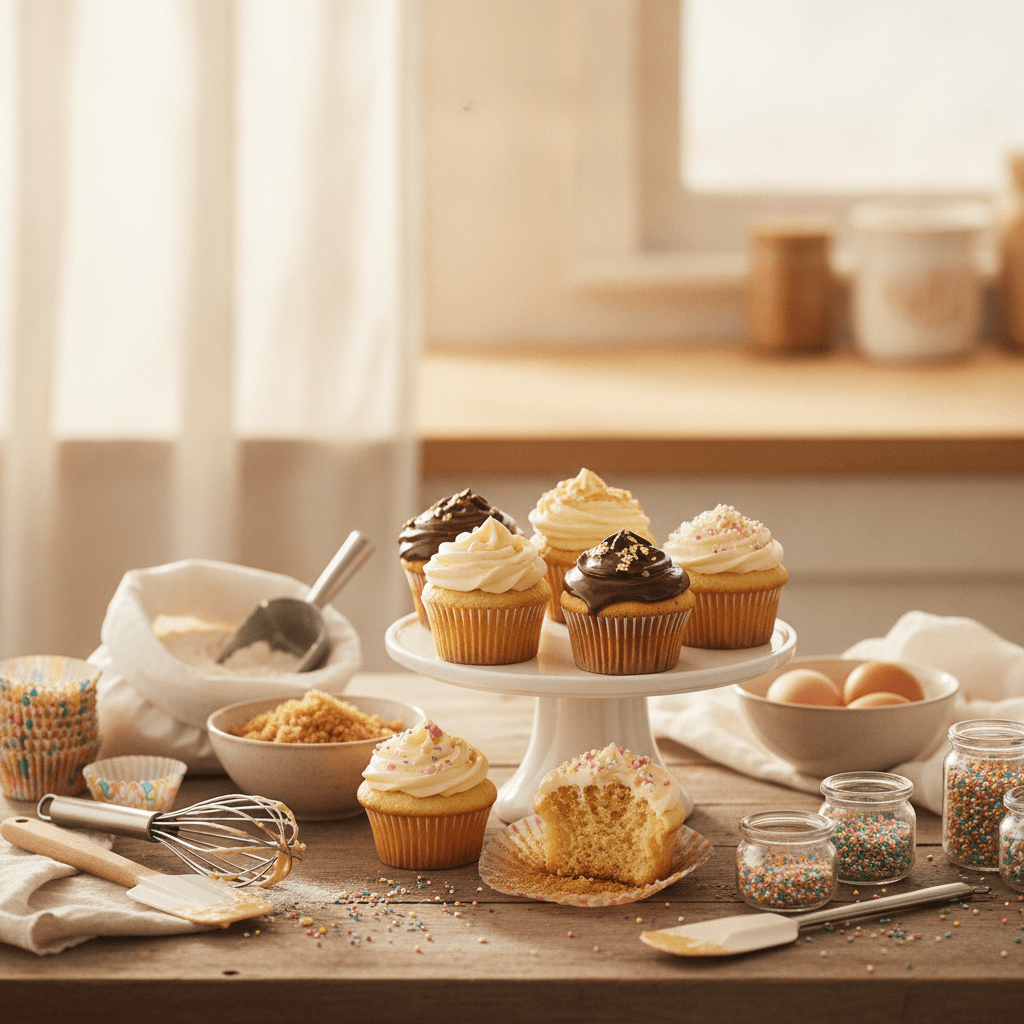
A good cupcake business name sells before anyone tastes a thing. Here are 32 ideas sorted by style, plus how to check that a name is actually yours to use.
Key takeaways
- A cupcake business name works hardest when people can say it out loud and spell it from memory.
- Punny names grab attention online, but they can feel dated once a trend passes.
- A DBA, short for "doing business as," lets you operate under a name in your state. It does not stop someone else from using that name in another state.
- The USPTO's trademark database is free to search, and checking it before you commit helps catch a federal conflict early.
- Pick a name that still fits if you add cookies, cakes, or catering later.
- Before you print a single box, check your state's business registry, run a domain search, and look up the name on social media.
Punny cupcake business names
Puns work best when they're built around how cupcakes are made, not just the word "cupcake." A pun gets shared and remembered, but it can box you in later if you add wedding cakes or bread. Keep the pun short enough to fit on a cake box label.
- Batter Up Cupcakes. A baseball term for raw batter, good for a baker who sells team treats and school fundraisers. Pair it with a simple baseball logo so the pun lands fast.
- Whisked Away Cupcakes. Plays on the mixing tool and the feeling of being swept off your feet, which suits wedding and gift orders. Print "whisked straight to your door" on delivery boxes.
- Sift Happens Cupcakes. A play on a common phrase, built around the sifting step in baking. Save the joke for packaging and captions, since some clients read it as unprofessional on invoices.
- Icing on the Top. Flips a familiar saying to point at the frosting, which explains the product in four words. Say your flavor names out loud first, since some combinations sound awkward together.
- Crumbs of Comfort. Pairs a baking word with a feeling, which helps with gift and sympathy orders built around comfort flavors like banana and spice. Keep the logo simple so the name carries the warmth.
- Sprinkle Me Silly. Leans into fun and color for kids' parties and birthdays, best for a baker whose photos are bright and loaded with sprinkles. Skip it if you also sell wedding cupcakes.
- Piece of Cake Cupcakery. Combines a common idiom with cupcakery, a word some bakers use instead of "bakery," for an easy, no-fuss feel. Spell cupcakery clearly in your logo so it reads correctly.
Elegant and upscale cupcake business names
An elegant name helps if you price for weddings, corporate orders, or a boutique storefront. These names skip jokes and lean on texture, light, and craft instead.
- The Cupcake Atelier. "Atelier" is the French word for a workshop, often used in fashion and craft to signal custom work. Use it only if your pricing matches that premium tone.
- Velvet Crumb Cupcakes. Pairs a texture word with the crumb inside the cake, good for a baker who specializes in red velvet or chocolate stout. Keep the branding simple and dark to match.
- Gilded Frosting Co. "Gilded" means coated in gold, suggesting a finished, polished look for a baker who does detailed piping or metallic accents. Save it for a portfolio that actually shows that detail.
- Maison du Cupcake. "Maison" is French for "house," a pattern bakeries borrow for a boutique feel, aimed at event planners and higher price points. Confirm the French reads correctly before you commit.
- The Sugared Petal. Pairs sugar with a flower image, suited to a baker who does buttercream flowers or floral flavors like lavender and rose. Register the matching Instagram handle early, since floral names get taken fast.
- Ivory Lane Cupcakes. "Ivory" suggests a soft, neutral palette that photographs well for weddings, while "Lane" adds a sense of place. Pair it with a muted, minimal logo.
Whimsical and playful cupcake business names
Whimsical names work for bakers whose cupcakes already look like a kids' party, with tall swirls, bright colors, and candy on top. The name should match the first photo a new customer sees.
- Sprinkle Factory. A playful, high-output name for a baker who sells by the dozen for parties and school events. Keep a few flavors sprinkle-free, since allergy questions come up often with decorated toppings.
- Frosted Fox Cupcakes. Pairing a fun animal with "frosted" gives you a mascot for logos, stickers, and gift tags. Pick an animal that's easy to draw simply, since it will end up small on a box lid.
- The Cupcake Jar. Points at a specific format, a cupcake served in a jar instead of a wrapper, for a baker who already ships jarred desserts. Make sure your packaging actually uses jars.
- Buttercream Dreams. Leans on the most requested frosting for a baker whose buttercream is the real selling point. Say exactly what's in it on your menu, since the name invites that question.
- Sugar Cloud Cupcakes. "Cloud" suggests a light, airy texture, which works if your sponge is genuinely light rather than dense. Avoid the name if your style runs dense and rich.
- Rainbow Whisk Bakery. Combines color with the mixing tool, good for a baker whose signature item is ombre or rainbow-layered cupcakes. Feature that cupcake first in your photos.
- The Tiny Oven. Names the reality of baking from a home kitchen, in a warm, unapologetic way. Use the phrase home-based in your bio too, since cottage food buyers often search that term directly.
Locally-flavored cupcake business names
A name tied to your town or neighborhood helps with local search and word of mouth. These patterns work with almost any place name, so swap in your own street, park, or neighborhood.
- Main Street Cupcake Co. Uses the most common street name in small towns, good for a baker who sells mainly to neighbors and local pickup. Swap in your real street or town name for an exact search match.
- River Bend Bakeshop. Fits a baker near a river, creek, or bend in the road worth naming, without pointing at one specific business. Check that no other local food business already uses that landmark name.
- Oak Hollow Cupcakes. Pairs a common tree name with a geographic feature, a pattern that works in most wooded or suburban areas. Swap in your real neighborhood name if one like this exists nearby.
- Harbor Light Cupcakery. Suits a baker near a coast, lake, or marina, without naming a real landmark that might belong to someone else. Pair it with photography that actually shows the water.
- [Your Town] Cupcake Co. Using your actual town name directly helps with local search terms like "[town] cupcakes." Check your state's business name registry first, since direct town names get reused often.
- Corner Oven Cupcakes. Suggests a small, neighborhood spot without naming one actual corner or address. Keep the name even if you move, since "corner" here is a feeling, not an address.
Descriptive cupcake business names
Descriptive names skip metaphor and tell customers exactly what they're getting. They tend to read well in search results, since people often search using plain words like "small batch" or "scratch-made."
- Small Batch Cupcake Co. Small batch tells customers you make limited quantities by hand, which matches how cottage food operations actually work. Use the exact phrase in your website copy, since people search that term directly.
- The Cupcake Studio. "Studio" suggests a workspace for custom design work, good for a baker who takes custom orders rather than selling a fixed menu. Show photos of custom work on your site to back it up.
- Classic Crumb Cupcakes. Classic tells customers not to expect trendy flavors, good for a baker who focuses on vanilla, chocolate, and red velvet done well. Keep one true classic flavor always in stock.
- Pure Buttercream Cupcakes. Pure signals real butter and simple ingredients over shortcuts like shortening-based frosting. List your real ingredients on the menu, since the name invites that question.
- Scratch-Made Cupcakes. Scratch-made tells customers you're not starting from a boxed mix, useful for a baker competing with grocery store bakeries on quality. Explain what the term means on your site in one sentence.
- The Daily Cupcake. Suggests fresh cupcakes baked on a regular schedule, good for a baker who takes standing weekly orders or sells at a market stall. Set real days you actually bake to match the word daily.
How to choose a cupcake business name
A strong name passes four tests, in this order. If a name fails one, move on to your next pick rather than talking yourself into it.
- Say it out loud to someone who hasn't seen it written. If they can't repeat it back correctly, it's too hard for people to search for later.
- Check it on your state's business name registry. The Small Business Administration's naming guide lists four ways to register a name: an entity name with the state, a trademark, a DBA, or a domain. Most small businesses only need to register with state and local offices. The SBA says that typically costs under $300 total.
- Search the USPTO's trademark database before you commit. The USPTO's own search training shows how to search this free database for conflicts before you file, though it notes a search alone does not replace a full clearance search.
- Confirm the domain and social handles are free. A name can clear your state registry and still be unusable online if someone already holds the matching handle.
A DBA, short for "doing business as," only registers your name locally. It does not block anyone else from using the same name in another state, because a DBA is a local filing, not a nationwide claim on the name. One business-formation guide puts typical DBA filing fees between $10 and $150, depending on the state.
Say a home baker in Ohio files a DBA for Sprinkle Cloud Cupcakes. That filing does not stop a baker in Texas from using the same name, since DBA records are local, not federal. This is a hypothetical example, not a real business. A federal trademark is the only registration that protects a name across the whole country. Even then, it only covers the specific goods and services listed on the application.
Skip names that rhyme with cupcake, like wordplay built on -ake or -cake endings. These are the first names most people think of. They're more likely to already be in use somewhere, even if a quick search doesn't turn up a conflict yet. A plainer, more specific name is usually safer and easier to own.
Once you've picked a name, claim it on a free Google Business Profile right away. Work through the rest of the legal steps in our home bakery business checklist before you take your first order. For a longer list of ideas and a deeper look at checking availability, see our bakery name ideas guide. If you haven't settled on pricing yet either, a cupcake pricing worksheet and our home bakery pricing calculator help you set per-dozen prices before your first sale.
Frequently asked questions
How do I know if a cupcake business name is already taken?
Check three places: your state's business name registry, the USPTO's trademark database, and a plain web and social media search for the exact name. None of these searches guarantees a clear name on its own. Running all three catches most conflicts.
Do I need an LLC before I name my cupcake business?
No. You can operate as a sole proprietor under your own legal name with no registration at all, according to the SBA. If you want to use a different name, or want the liability protection an LLC offers, see our guide to starting a home bakery business for the full setup order.
Can I use my own name for a cupcake business?
Yes, and it's one of the few options that needs no name registration at all. Dana's Cupcakes or Priya Bakes are both examples of this pattern. The tradeoff is that a personal name doesn't say what you sell or where you're located, so it relies more on word of mouth.
How much does it cost to register a business name?
The SBA says most small businesses register their name with state and local offices for under $300 total. A DBA filing alone often runs between $10 and $150 depending on the state, according to one business-formation guide. A federal trademark application costs more and is a separate, optional step.
What makes a good cupcake business name?
A good name is easy to say out loud, easy to spell from memory, and still fits if you add cookies or cakes later. It should also clear a basic search of your state registry and the USPTO database before you print anything. Avoid names that rhyme with cupcake, since those are the most likely to already be taken.
Sources

Written by
Co-founder, BakingSubs
Co-founder of BakingSubs, where he turns the science of ingredient substitutions into tested, reliable guidance for home bakers.
Related Posts
Bake with Confidence
See all
Confident Gluten-Free Baker Toolkit
The science-based system that replaces gluten's seven invisible jobs so your baking turns out soft, fluffy, and foolproof — every time.

Gluten-Free Recipe Vault
Instant access to our complete library of proven gluten-free recipes — no waiting, no guesswork, just results that work tonight.

Fix Your Gluten-Free Bread
Learn the 3-step formula to make bread rise and stay soft, discover why your loaves collapse, and get a tested sandwich bread recipe that actually works.