
How to Reduce Sugar in Baking Without Artificial Sweeteners (7 Methods That Preserve Texture)
Learn how to reduce sugar in baking without artificial sweeteners using 7 practical methods — from straight reductions to fruit purees and flavor amplifiers that preserve texture.

Malik
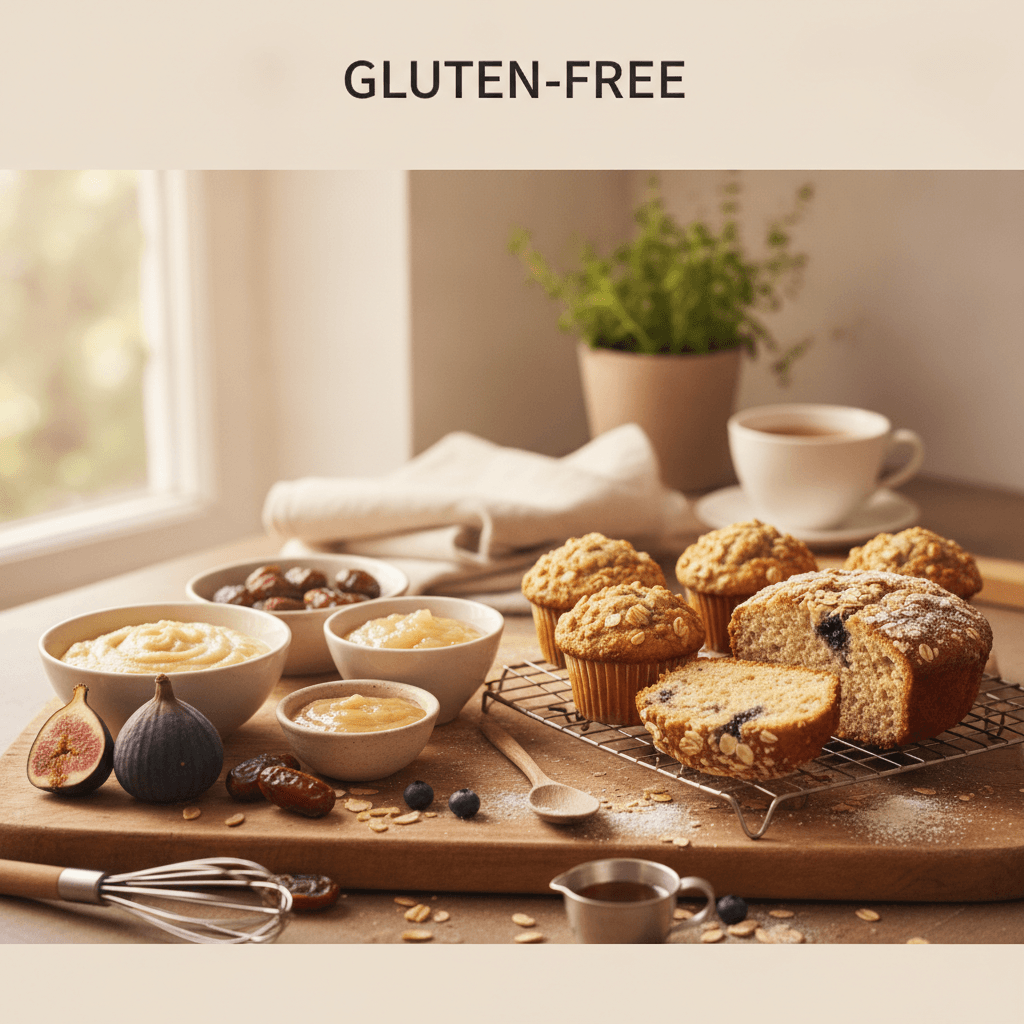
Sugar does far more than sweeten baked goods — it controls moisture, browning, spread, and crumb tenderness. Cutting it without a plan usually means dry, pale, dense results. Here are seven methods that reduce sugar while keeping your bakes worth eating, all without reaching for artificial sweeteners.
Key takeaways
- Most baked goods tolerate a 25% sugar reduction with no other changes — beyond that, you need compensating strategies for moisture, browning, and tenderness.
- Fruit purees like applesauce and mashed banana add moisture and sweetness but require liquid reductions elsewhere in the formula.
- Date paste is one of the most effective natural sugar replacements for dense baked goods like brownies and muffins, though it struggles in crisp cookies.
- Vanilla extract, cinnamon, and citrus zest amplify perceived sweetness without adding sugar — a trick professional bakers use routinely.
- Sugar's structural role (spread, browning, crumb tenderness) is harder to replace than its sweetness, which is why texture breaks before flavor does.
Why sugar is harder to replace than most bakers think
Sugar serves at least five structural functions in baking beyond sweetness. It's hygroscopic, meaning it attracts and holds water — that's why sugar-reduced cakes dry out faster. It lowers the temperature at which eggs and starches set, giving cakes a tender crumb instead of a rubbery one. It feeds yeast in bread. It caramelizes and triggers Maillard browning on crusts. And in cookies, dissolved sugar re-crystallizes during cooling to create that satisfying snap.
Remove 50% of the sugar from a standard cookie recipe and you'll notice the cookies barely spread, brown unevenly, and taste more like biscuits than cookies. That's not a sweetness problem — it's a structural one. Understanding this is the first step to making smart reductions. For a deeper look at what sugar actually does in your formulas, the sugar functions guide breaks down each role in detail.
Method 1: The straight reduction (simpler than you think)
The easiest approach is simply using less sugar without substituting anything. Most standard recipes are sweeter than they need to be, and a 25% reduction is generally undetectable in cakes, muffins, and quick breads. A recipe calling for 200g of granulated sugar, for example, will typically perform well with 150g.
Beyond 25%, things start to shift. At a 33% reduction, you'll notice paler crusts and slightly denser crumb. At 50%, most baked goods lose noticeable tenderness and moisture. The ceiling depends on the category:
| Baked good | Safe reduction range | What breaks first |
|---|---|---|
| Muffins & quick breads | 25–33% | Crust browning, slight dryness |
| Cakes (butter-based) | 20–25% | Crumb tenderness, volume |
| Drop cookies | 15–25% | Spread, crispness, browning |
| Brownies | 25–40% | Fudgy texture (becomes cakey) |
| Yeast breads | 50–100% | Browning only (sugar is minimal anyway) |
If you're reducing sugar beyond the safe range, you'll need one of the compensating methods below. For a broader look at what goes wrong and how to fix it, see why low sugar baking fails (and 6 substitutes that actually fix texture).
Method 2: Applesauce as a partial sugar replacement
Unsweetened applesauce brings natural sweetness from fructose, adds moisture from its water content, and contributes a small amount of pectin that helps with structure. It works best as a partial replacement — generally up to about half the sugar in muffins, quick breads, and snack cakes.
The catch: applesauce is roughly 88% water by weight. Swapping it 1:1 for sugar floods the batter with liquid. The standard adjustment is to reduce other liquids in the recipe (milk, water, oil) by a proportional amount. Expect a denser, moister crumb — which is a feature in banana bread but a problem in angel food cake.
Applesauce also doesn't caramelize the way sugar does, so expect paler tops. A light brush of milk or a sprinkle of turbinado sugar on top before baking can compensate. For a full breakdown of what changes and what breaks, this applesauce as sugar replacement guide covers the details.
Method 3: Date paste for dense, rich baked goods
Date paste — made by blending soaked, pitted dates with water — is one of the more effective natural sugar replacements for brownies, energy bars, muffins, and dense cakes. Dates are naturally high in fructose and glucose, and the fiber in the fruit helps retain moisture in baked goods.
Where date paste shines: brownies. The dense, fudgy texture of a brownie actually benefits from the moisture and binding that date paste provides. For example, sweetening a brownie recipe with 50% date paste and 50% coconut sugar gives it a deeper, almost caramel-like flavor.
Where date paste struggles: anything that needs to be crisp or light. Thin cookies, meringues, and chiffon cakes are poor candidates. The fiber in dates traps moisture, which is the opposite of what you want in a snickerdoodle. Date paste also darkens baked goods noticeably — fine for chocolate items, less ideal for a vanilla sponge. For ratios and application-specific guidance, the date paste as sugar substitute guide goes much deeper.
Method 4: Mashed banana for sweetness and binding
One medium banana (about 120g) contains roughly 14g of natural sugars, mostly as the banana ripens and starches convert to fructose and glucose. Riper bananas — the ones with heavy brown spotting — are significantly sweeter than yellow ones and work better as sugar replacements.
Banana works well in muffins, pancakes, quick breads, and oatmeal cookies. It adds moisture, binding (thanks to its starch and pectin content), and a recognizable flavor that pairs well with chocolate, nuts, cinnamon, and peanut butter. The limitation is obvious: everything tastes like banana. If that's not what you want, choose a different method.
Banana also increases density. Cakes made with banana as a sugar replacement tend to be heavier and don't rise as high. Compensating with an extra half teaspoon of baking powder per cup of flour can help, but there's a ceiling — too much leavener creates a bitter, soapy taste. More on the tradeoffs in the banana as sugar substitute guide.
Method 5: Honey and maple syrup (still sugar, but less of it)
Honey and maple syrup are not sugar-free — they're liquid sugars with slightly different compositions. Honey is roughly 80% sugars by weight (primarily fructose and glucose), and maple syrup is about 67% sugars (primarily sucrose). So why include them here?
Because fructose is sweeter than sucrose gram for gram. Honey's higher fructose content means you can use less of it to achieve similar perceived sweetness. A common starting point is using about 2/3 to 3/4 the amount of honey compared to the granulated sugar called for. That's a meaningful caloric and sugar reduction, even though it's not elimination.
Practical adjustments when using liquid sweeteners:
- Reduce other liquids by about 3 tablespoons per cup of honey or maple syrup used
- Add 1/4 teaspoon of baking soda per cup of honey to neutralize its natural acidity
- Lower oven temperature by about 25°F (roughly 15°C) — liquid sugars brown faster than granulated sugar
Honey works particularly well in soft cookies, gingerbread, and quick breads. Maple syrup is excellent in oatmeal cookies and spice cakes. Both add distinct flavors that may or may not be welcome depending on the recipe. For more on choosing between natural sweetener options, see the natural sweeteners for low sugar baking roundup.
Method 6: Flavor amplifiers that trick your palate
This is the method most home bakers overlook, and it's arguably the most useful one. Certain flavors make your brain perceive more sweetness than is actually present. Professional pastry chefs use this routinely — it's why a pinch of salt in caramel makes it taste sweeter, not saltier.
The most effective sweetness amplifiers:
- Vanilla extract: Multiple sensory studies have shown that vanilla aroma enhances perceived sweetness. Using 1.5 to 2 times the vanilla called for in a recipe can offset a noticeable sugar reduction. Pure vanilla extract works better than imitation for this purpose.
- Cinnamon: Cinnamon's warm flavor profile registers as "sweet" even though it contains no sugar. It's especially effective in oatmeal cookies, apple cakes, and spice muffins. A quarter teaspoon increase can make a 20% sugar reduction less noticeable.
- Citrus zest: Lemon and orange zest brighten flavors and create a perception of sweetness through contrast. Zest the fruit directly into your sugar before mixing — the oils released by rubbing zest into sugar crystals distribute flavor more evenly.
- Almond extract: Even 1/4 teaspoon adds a sweetness impression that's disproportionate to the amount used. Works well in sugar cookies, pound cakes, and anything with stone fruit.
- Salt: A small pinch (not enough to taste salty) suppresses bitterness and amplifies sweetness. If your reduced-sugar bake tastes flat rather than sweet, try adding an extra 1/8 teaspoon of fine sea salt before adding more sugar back.
These amplifiers work best in combination with a straight reduction (Method 1). Cut sugar by 25%, increase vanilla and add a pinch more salt, and most people won't notice the difference.
Method 7: Combining approaches for bigger reductions
No single method handles a 50%+ sugar reduction gracefully. But combining two or three methods can get you there without wrecking texture. Here's how that looks in practice:
For a muffin recipe calling for 150g of granulated sugar:
- Use 75g sugar (50% reduction)
- Add 60g unsweetened applesauce (compensates moisture and adds mild sweetness)
- Reduce milk by 3 tablespoons (offsets applesauce liquid)
- Increase vanilla to 1.5 teaspoons
- Add 1/2 teaspoon cinnamon
The result is a muffin that's noticeably less sweet than the original but still moist, well-browned, and pleasant to eat. It won't taste identical — reduced-sugar baking never does — but it avoids the dry, cardboard quality that makes people give up on the whole idea.
The same approach works with other fruit purees. For blueberry muffins, for example, you might cut granulated sugar from 200g to 100g and add 80g of date paste plus extra vanilla.
What to expect: an honest look at the tradeoffs
Reducing sugar without artificial sweeteners means accepting certain changes. Being honest about them helps you set realistic expectations:
| Change | Why it happens | Can you fix it? |
|---|---|---|
| Paler crust | Less sugar available for caramelization and Maillard reaction | Partially — brush with milk or egg wash, or sprinkle coarse sugar on top |
| Denser crumb | Sugar tenderizes gluten and aerates with fat during creaming | Partially — slightly increase leavener, don't overmix |
| Faster staling | Sugar is hygroscopic and holds moisture; less sugar means faster moisture loss | Partially — store wrapped tightly, add fruit purees for moisture |
| Less cookie spread | Dissolved sugar acts as a liquid at oven temperatures, promoting spread | Minimally — flatten dough before baking |
| Reduced shelf life | Sugar inhibits microbial growth; less sugar means faster spoilage | Refrigerate or freeze; consume within 2–3 days |
None of these are dealbreakers, but pretending they don't exist leads to disappointment. The common sugar substitution mistakes page covers the most frequent errors and how to avoid them.
Which baked goods respond best to sugar reduction
Not all categories are equally forgiving. Here's a realistic ranking:
Most forgiving: Muffins, quick breads, banana bread, brownies, oatmeal cookies. These are dense, moist formats where sugar's structural role is less critical. You can often cut 30–40% with combined methods and still get good results.
Moderately forgiving: Butter cakes, pound cakes, soft drop cookies. Sugar plays a bigger structural role here (especially in creaming), so 20–25% is a safer ceiling unless you're compensating with purees.
Least forgiving: Meringues, macarons, angel food cake, thin crisp cookies, caramel, toffee, candy. Sugar is the primary structural ingredient in these. Reducing it fundamentally changes what they are. A meringue with 50% less sugar isn't a meringue — it's a flat, weepy foam.
If you're working with cookies specifically, the sugar substitutes for baking cookies guide breaks down how each swap changes the final result across different cookie types.
A note on "natural" vs. "artificial" — the line is blurrier than you think
This post focuses on methods that avoid artificial sweeteners like aspartame, sucralose, and acesulfame potassium. But it's worth noting that some sweeteners marketed as "natural" — like stevia and monk fruit extract — undergo significant processing. Whether they count as "natural" or "artificial" depends on your personal definition.
Stevia and monk fruit are zero-calorie, plant-derived sweeteners that can be effective in certain applications, but they come with their own texture challenges (they don't provide bulk, browning, or moisture the way sugar does). If you're open to using them, they work best in combination with some real sugar rather than as full replacements. The choosing sugar alternatives guide can help you sort through the options based on what you're baking.
Frequently asked questions
How much sugar can you remove from a recipe before it affects texture?
Most recipes tolerate a 25% sugar reduction with no other changes. Beyond that, you'll start to notice paler crusts, denser crumb, and faster staling. The exact threshold depends on the type of baked good — muffins and brownies are more forgiving than cookies and cakes. Combining a partial reduction with flavor amplifiers like extra vanilla or cinnamon can push the limit closer to 33% without noticeable quality loss.
Can you use applesauce to replace all the sugar in a recipe?
No. Applesauce works as a partial sugar replacement — generally up to about half the sugar in moist baked goods like muffins and quick breads. Replacing all the sugar with applesauce floods the batter with excess moisture and removes the structural benefits sugar provides (browning, crispness, crumb tenderness). For more detail on what changes, see the applesauce as sugar replacement guide.
Does reducing sugar change baking time or temperature?
Reducing granulated sugar usually doesn't require temperature changes. However, if you're substituting liquid sweeteners like honey or maple syrup, lowering the oven temperature by about 25°F (15°C) helps prevent over-browning, since liquid sugars caramelize faster than granulated sugar. Baking time may also need slight adjustment — less sugar can mean a slightly firmer batter that sets faster.
What is the best natural sugar substitute for cookies?
There's no single best option because cookies depend heavily on sugar for spread, crispness, and browning. For soft, chewy cookies, a combination of reduced sugar plus honey or date paste works reasonably well. For crisp cookies, sugar's role is harder to replicate naturally — a straight 20–25% reduction with extra vanilla is often the most reliable approach. The sugar substitutes for cookies post compares seven options side by side.
Do reduced-sugar baked goods go stale faster?
Yes. Sugar is hygroscopic — it attracts and holds water molecules, which keeps baked goods moist over time. With less sugar, moisture escapes more quickly, and baked goods can become dry and crumbly within a day or two. Wrapping tightly in plastic wrap, storing in airtight containers, and using moisture-adding substitutes like fruit purees can slow the process, but reduced-sugar bakes are generally best consumed within 2–3 days or frozen for longer storage.

Written by
Co-founder, BakingSubs
Co-founder of BakingSubs, where he turns the science of ingredient substitutions into tested, reliable guidance for home bakers.
Related Posts

Bake with Confidence
See all
Confident Gluten-Free Baker Toolkit
The science-based system that replaces gluten's seven invisible jobs so your baking turns out soft, fluffy, and foolproof — every time.

Gluten-Free Recipe Vault
Instant access to our complete library of proven gluten-free recipes — no waiting, no guesswork, just results that work tonight.

Fix Your Gluten-Free Bread
Learn the 3-step formula to make bread rise and stay soft, discover why your loaves collapse, and get a tested sandwich bread recipe that actually works.