

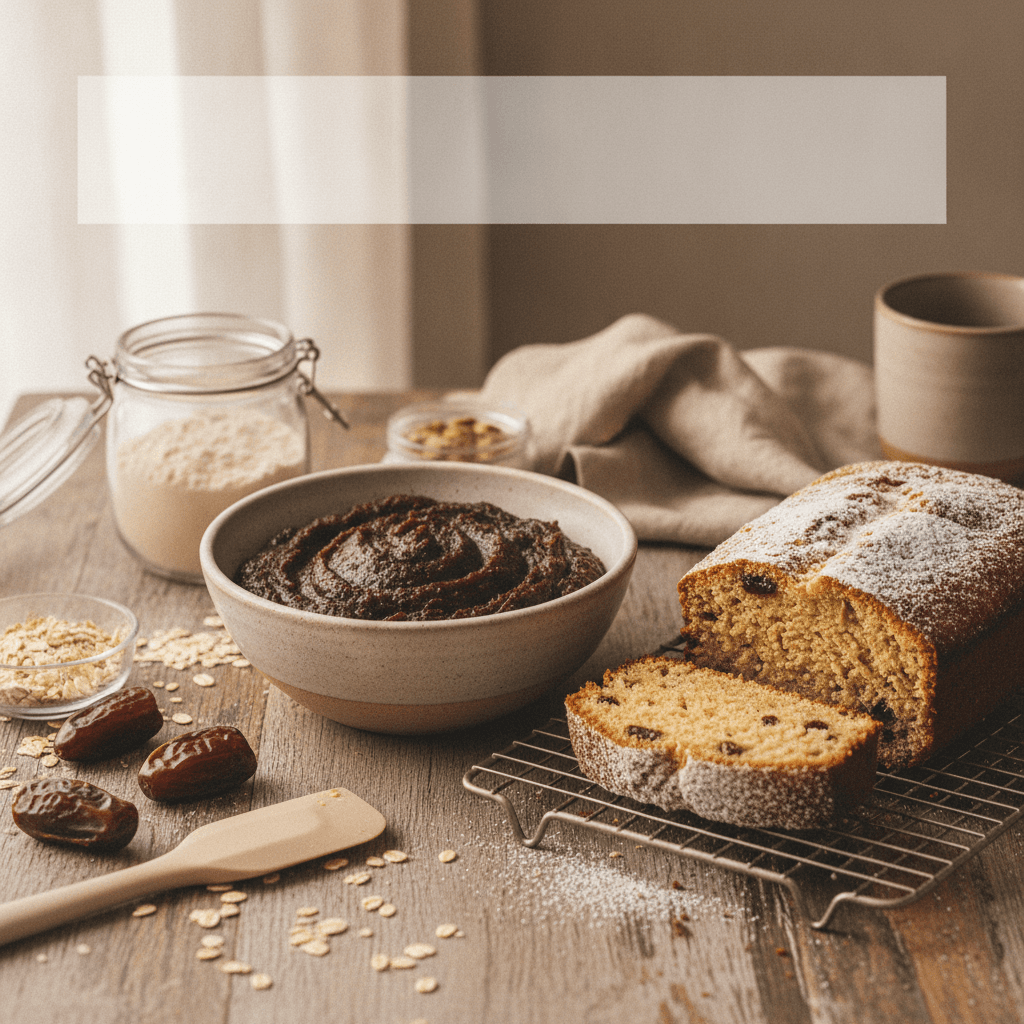
Date paste replaces granulated sugar in many baked goods, but it changes moisture, texture, and browning in ways most swap charts never mention. Here is what happens inside the batter and how to adjust so your results hold up.
Key takeaways
- Date paste adds significant moisture to batters — roughly 30% of its weight is water — which means you need to reduce other liquids or increase dry ingredients to compensate.
- It works best in dense, moist baked goods like muffins, banana bread, and brownies. Crisp cookies and light sponge cakes are the hardest categories to convert.
- Date paste browns faster than granulated sugar because of its fructose content, so lowering oven temperature by about 25°F (15°C) helps prevent over-darkening.
- You cannot swap date paste 1:1 by volume with white sugar. The general starting point is about two-thirds cup of date paste per one cup of granulated sugar, then adjusting to taste.
- Date paste does not cream with butter the way crystalline sugar does, which eliminates the air incorporation step that gives cakes and cookies their lift.
- It pairs naturally with warm spices (cinnamon, cardamom, nutmeg) and chocolate — its caramel-like flavor can clash with delicate citrus or vanilla-forward recipes.
What date paste actually does in a batter (vs. what sugar does)
Granulated sugar does more than sweeten. It provides structure, tenderizes, retains moisture, and helps with browning. Date paste covers some of those roles but not all of them, and understanding the gap is the only way to get a good result.
Sugar crystals physically cut tiny air pockets into softened butter during creaming. That mechanical aeration is what gives a butter cake its fine, even crumb. Date paste is a smooth puree — it cannot create those air pockets. If you just dump date paste into a recipe that relies on creaming, the cake will be denser and flatter than expected.
On the other hand, date paste is excellent at holding moisture. Dates are high in natural sugars (glucose, fructose, and sucrose) plus soluble fiber, which traps water and keeps baked goods soft for days. Banana bread made with date paste instead of brown sugar often stays moist a full day longer than the sugar version, because the fiber network slows staling.
The browning difference
Fructose caramelizes at a lower temperature than sucrose. That means anything sweetened with date paste will brown faster and darker. A batch of muffins that bakes perfectly at 375°F with white sugar may scorch at the same temperature with date paste. The common adjustment is to drop the oven temperature by about 25°F and add a few minutes to the bake time. Watch the edges — they will tell you when to pull the pan.
Which baked goods work best with date paste
Not every recipe is a good candidate. The table below ranks common baked goods by how well they handle a full date-paste swap.
| Baked good | Swap difficulty | Why |
|---|---|---|
| Banana bread / zucchini bread | Easy | Already moist and dense; flavor complements dates |
| Brownies | Easy | Fudgy texture benefits from extra moisture; chocolate masks date flavor |
| Muffins (bran, oat, carrot) | Easy | Sturdy crumb absorbs extra moisture well |
| Oat bars / granola bars | Easy | Date paste acts as a binder; no leavening concerns |
| Pancakes / waffles | Moderate | Works if you reduce milk slightly; may brown faster on the griddle |
| Drop cookies (oatmeal, peanut butter) | Moderate | Softer, chewier result; will not get crisp edges |
| Layer cakes | Hard | No creaming = less lift; crumb is noticeably denser |
| Sugar cookies / shortbread | Very hard | Relies on sugar for structure and snap; date paste makes them soft and cakey |
| Meringues / angel food cake | Not recommended | Sugar stabilizes whipped egg whites; date paste cannot do this |
If you are baking gluten-free, the moisture from date paste can actually help. Gluten-free batters often turn out dry and crumbly, and the extra water plus fiber in date paste counteracts that tendency. Just be careful not to overcorrect — too much moisture in a gluten-free batter can cause gummy centers.
How to make date paste and what to look for in store-bought
Homemade date paste is straightforward: soak pitted Medjool dates in hot water for 15–30 minutes, then blend until smooth. The ratio of dates to water varies depending on how thick you want the paste, but a common starting point is about one cup of pitted dates to one-third cup of soaking water. You want a consistency similar to peanut butter — thick enough to hold its shape on a spoon but smooth enough to incorporate into batter.
Medjool dates are the standard choice because they are softer, larger, and have a more pronounced caramel flavor than Deglet Noor dates. Deglet Noor dates work but produce a slightly drier, less sweet paste, so you may need to add a tablespoon or two more water.
Store-bought date paste (sometimes labeled "date syrup paste" or "date spread") is available from brands like Joolies and Date Lady. Check the ingredient list — the only ingredient should be dates, possibly with a small amount of water. Avoid products with added sugars or oils, which defeat the purpose of using dates as a sweetener.
The conversion ratio and how to adjust liquids
There is no universal 1:1 swap because date paste is less sweet per gram than granulated sugar and contains water that sugar does not. The widely used starting point is roughly two-thirds cup of date paste for every one cup of granulated sugar. From there, taste the batter and adjust.
Because date paste brings moisture, you need to compensate. For every cup of date paste you add, reduce other liquids in the recipe by about two to three tablespoons. In a muffin recipe calling for one cup of milk, that might mean using three-quarters cup instead. The exact amount depends on how thick your paste is — thicker paste means less water to account for.
If the batter still seems too wet after adjusting liquids, add a tablespoon or two of extra flour (or arrowroot powder if you are baking gluten-free) to absorb the excess. This is preferable to reducing liquid further, which can make the batter too stiff to mix evenly.
Flavor impact: when dates help and when they clash
Date paste has a strong caramel-molasses flavor that is not neutral. It works beautifully with:
- Chocolate — brownies, chocolate chip cookies, chocolate cake
- Warm spices — cinnamon, cardamom, ginger, nutmeg, cloves
- Nut-forward recipes — pecan bars, walnut banana bread, almond flour muffins
- Dark fruits — figs, raisins, dried cherries
It clashes with:
- Delicate citrus — lemon bars, orange chiffon cake (the date flavor overwhelms the brightness)
- Vanilla-forward recipes where you want a clean, simple sweetness
- White or light-colored baked goods — date paste turns everything a deep tan or brown
If you are making something where the date flavor would be distracting, consider blending date paste with a more neutral sweetener like applesauce or agave nectar to dilute the flavor while still reducing refined sugar overall.
How date paste compares to other sugar substitutes
Date paste is one of several whole-food sweeteners bakers reach for. Here is how it stacks up against the most common alternatives.
| Sweetener | Moisture added | Flavor impact | Best for |
|---|---|---|---|
| Date paste | High | Strong caramel / molasses | Dense, moist baked goods |
| Honey | Moderate | Floral, varies by source | Quick breads, glazes, soft cookies |
| Maple syrup | High | Distinct maple flavor | Pancakes, oat bars, spice cakes |
| Applesauce | Very high | Mild, slightly fruity | Muffins, snack cakes, reducing fat simultaneously |
| Coconut sugar | None | Mild butterscotch | 1:1 dry swap in almost any recipe |
| Mashed banana | High | Strong banana flavor | Banana bread, smoothie muffins |
The biggest advantage of date paste over liquid sweeteners like honey or maple syrup is its fiber content, which helps bind moisture into the crumb rather than pooling at the bottom of the pan. The biggest disadvantage is its strong flavor — coconut sugar is far more versatile if you need a neutral swap. For a deeper look at how different sweeteners affect texture, see our guide on low-sugar baking substitutes that actually fix texture.
Common mistakes when baking with date paste
Understanding what goes wrong helps you avoid it. These are the patterns that show up most often when bakers switch to date paste.
Not blending the paste smooth enough
Chunks of date in a batter create dense pockets and uneven sweetness. If your blender leaves visible pieces, push the paste through a fine-mesh strainer or add another tablespoon of water and blend again. A Vitamix or similar high-speed blender handles this easily; a standard blender may need more soaking time to soften the dates first.
Using the same oven temperature
As mentioned above, fructose browns faster. Bakers who skip the temperature reduction end up with a burnt exterior and underdone center. Drop the temp by 25°F, extend the bake by 3–5 minutes, and use the toothpick test rather than relying on color to judge doneness.
Ignoring the moisture math
Date paste is roughly 30% water by weight. If you add a full cup of paste without reducing milk, eggs, or other liquids, the batter will be too wet. The result is a sunken center or a gummy layer — problems that are especially common in gluten-free baking where there is no gluten network to absorb the slack.
Trying to cream it with butter
This is the single most common structural failure. Creaming requires sugar crystals. Date paste has none. If a recipe depends on creaming for lift, you have two options: add a teaspoon of extra baking powder to compensate for lost aeration, or accept a denser crumb. For cakes where lightness matters, a partial swap (half sugar, half date paste) is usually a better strategy than a full replacement.
A contrarian take: date paste is not always the healthier choice
Date paste is often marketed as a "healthy" sugar substitute, but the calorie and sugar content per serving is comparable to the granulated sugar it replaces. Dates are roughly 66% sugar by weight (a mix of glucose and fructose), and the fiber content — while beneficial — does not eliminate the glycemic impact. A tablespoon of date paste and a tablespoon of brown sugar deliver a similar amount of total sugars.
Where date paste genuinely wins is in micronutrient density: it contains potassium, magnesium, and small amounts of iron and B vitamins that refined sugar does not. It also avoids the processing involved in refining sugarcane. But if someone tells you date paste is "sugar-free" or "zero glycemic impact," that is not accurate. It is a less-processed sweetener with some nutritional advantages — not a free pass to double the amount.
This matters if you are choosing between sugar alternatives and your primary goal is reducing sugar intake. In that case, using less sweetener overall — rather than swapping one sweetener for another at the same volume — is the more effective strategy. For more on how sugar alternatives affect texture and structure, check out common sugar substitution mistakes.
Storage and shelf life
Homemade date paste keeps in an airtight container in the refrigerator for about two weeks. It can also be frozen in ice cube trays for up to three months — each cube is roughly two tablespoons, which makes portioning for recipes easy. Thaw in the refrigerator overnight or microwave for 15–20 seconds before using.
Store-bought date paste typically lasts longer due to commercial processing, but check the label. Once opened, refrigerate and use within the timeframe specified by the manufacturer — usually four to six weeks.
Baked goods made with date paste tend to stay moist longer than their sugar-based counterparts, thanks to the fiber and hygroscopic properties of the natural sugars. Muffins and quick breads often taste better on day two than day one, as the moisture redistributes through the crumb overnight.
Frequently asked questions
Can I use date paste instead of sugar in any baking recipe?
No. Date paste works well in moist, dense baked goods like muffins, banana bread, and brownies. It does not work in recipes that rely on sugar crystals for structure — meringues, angel food cake, and crisp sugar cookies will fail with a date paste swap. For those recipes, consider a dry alternative like coconut sugar or a partial swap where you replace only half the sugar with date paste.
How much date paste equals one cup of sugar?
The common starting ratio is about two-thirds cup of date paste per one cup of granulated sugar. Date paste is less sweet than refined sugar, so you may want to taste the batter and adjust. You also need to reduce other liquids in the recipe by two to three tablespoons to account for the water content in the paste.
Does date paste change the color of baked goods?
Yes, noticeably. Date paste is dark brown, and it will turn any batter a deep tan or brown color. This is fine for chocolate recipes, spice cakes, and dark muffins, but it makes date paste a poor choice for white cakes, lemon bars, or anything where a light color matters.
Is date paste better than honey or maple syrup for baking?
It depends on the recipe. Date paste has more fiber than honey or maple syrup, which helps it bind moisture into the crumb rather than making things soggy. However, its strong caramel flavor limits its versatility. Honey and maple syrup are better for recipes where you want a lighter, more neutral sweetness. All three add moisture and require liquid adjustments. See our guide to choosing sugar alternatives for a side-by-side breakdown.
Can I use date paste in gluten-free baking?
Yes, and it can actually help. Gluten-free baked goods often suffer from dryness and crumbling, and the extra moisture and fiber in date paste counteracts those issues. Just be careful not to add too much — excess moisture in gluten-free batters can cause gummy centers. Reduce other liquids slightly and consider adding a tablespoon of arrowroot powder to absorb any extra water.

Written by
Co-founder, BakingSubs
Co-founder of BakingSubs, where he turns the science of ingredient substitutions into tested, reliable guidance for home bakers.
Related Posts
Bake with Confidence
See all
Confident Gluten-Free Baker Toolkit
The science-based system that replaces gluten's seven invisible jobs so your baking turns out soft, fluffy, and foolproof — every time.

Gluten-Free Recipe Vault
Instant access to our complete library of proven gluten-free recipes — no waiting, no guesswork, just results that work tonight.

Fix Your Gluten-Free Bread
Learn the 3-step formula to make bread rise and stay soft, discover why your loaves collapse, and get a tested sandwich bread recipe that actually works.