

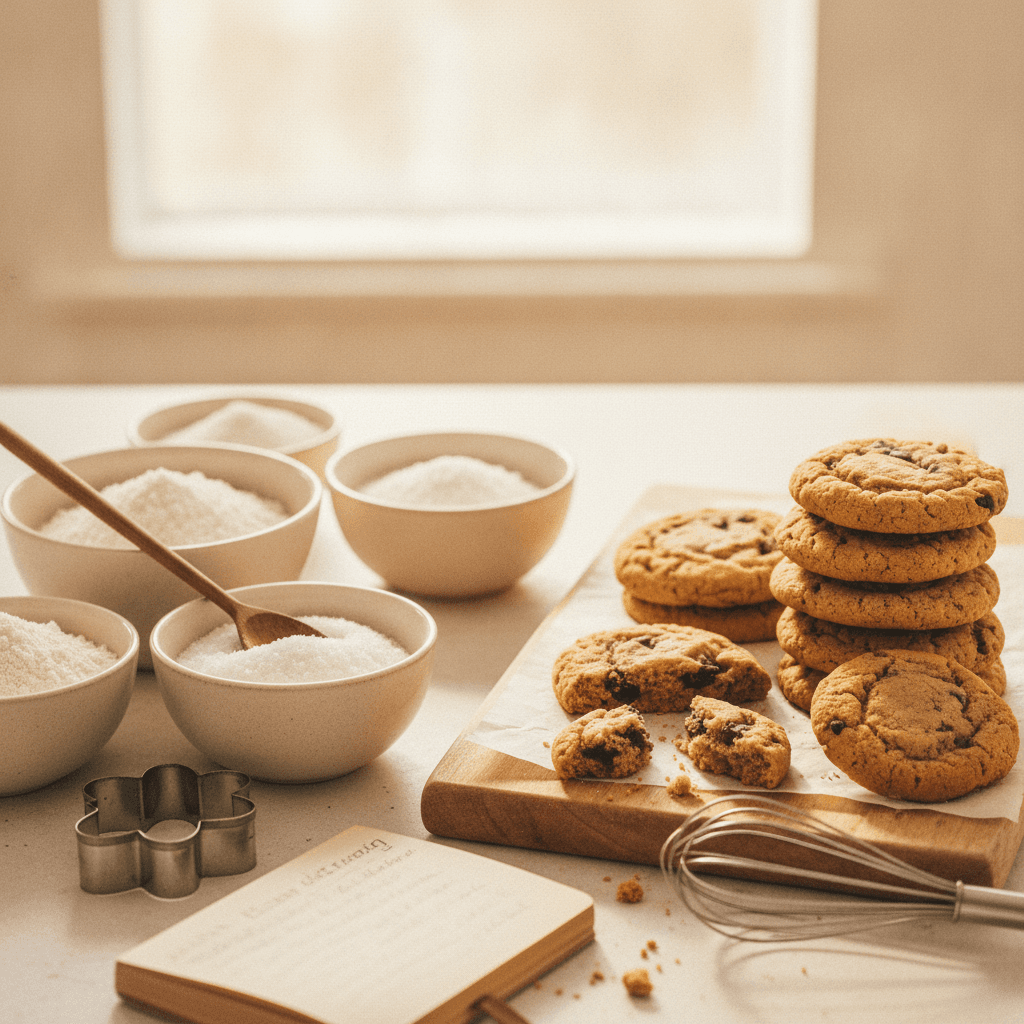
Picking a keto-friendly sugar substitute sounds simple until your cookies spread into flat discs, your cake collapses, or your brownies taste like you licked a metal spoon. Each substitute behaves differently in batter, and the wrong pick for the wrong bake can ruin an afternoon's work.
Here's a breakdown of seven common keto-friendly sugar substitutes, what each one actually does in baked goods, and which ones to avoid for specific applications.
Key takeaways
- Erythritol, allulose, monk fruit, stevia, xylitol, inulin, and chicory root fiber are the most widely used keto-friendly sugar substitutes in baking — but they are not interchangeable.
- Allulose is the only common keto sweetener that browns, caramelizes, and retains moisture similarly to sugar, making it the most versatile option for baked goods.
- Erythritol can recrystallize as baked goods cool, producing a gritty or crunchy texture — especially problematic in cookies and thin bars.
- Stevia and monk fruit are extremely concentrated, so they cannot replace sugar's bulk. They need a bulking agent (like erythritol or allulose) to maintain structure.
- Xylitol is toxic to dogs — a critical consideration if you're baking at home and have pets or sell to customers who do.
- Understanding what sugar actually does in baking beyond sweetness is the key to picking the right substitute.
Why sugar substitutes behave differently than sugar in baking
Sugar does far more than sweeten. It tenderizes gluten, feeds yeast, retains moisture, enables Maillard browning, and stabilizes whipped eggs. When you swap it out, you're removing a structural ingredient, not just a flavor. That's why a keto sweetener that tastes perfect in coffee can completely fail in a cake batter.
The role of sugar in baking is worth understanding before you commit to any substitute. Each of the seven options below handles sugar's secondary functions — moisture, browning, bulk, crystallization — differently, and that's what determines success or failure in a given bake.
The 7 keto-friendly sugar substitutes compared
| Sweetener | Sweetness vs. sugar | Glycemic index | Browns? | Bulk (1:1 swap)? | Best for | Worst for |
|---|---|---|---|---|---|---|
| Erythritol | ~70% | 0 | No | Close (slightly less sweet) | Cakes, muffins, frostings | Thin cookies, chewy bars |
| Allulose | ~70% | 0 | Yes | Yes | Cookies, brownies, caramel, ice cream | Recipes needing firm set (it stays soft) |
| Monk fruit blend | Varies by blend | 0 | Depends on bulking agent | Only if blended with erythritol or allulose | General baking when blended | Any recipe if using pure extract (no bulk) |
| Stevia blend | 200–300x (pure) | 0 | No | Only if blended with bulking agent | Beverages, light sweetening in tandem with another sub | Sole sweetener in cakes, cookies, bread |
| Xylitol | ~100% | ~7 | Slightly | Yes | Muffins, quick breads | Any home with dogs; yeast-risen breads |
| Inulin / chicory root fiber | ~10% | 0 | Yes | Adds bulk but not sweetness | Fiber boost, browning aid alongside another sweetener | Sole sweetener (not sweet enough) |
| Bocha Sweet (kabocha extract) | ~100% | 0 | Yes | Yes | Cookies, brownies, general 1:1 swaps | Budget-conscious bakers ($18–$22 per lb) |
Erythritol: the most popular pick (with a hidden flaw)
Erythritol is the default keto sweetener for a reason — it's widely available, has zero glycemic impact, and measures close to a 1:1 ratio with sugar. Brands like Swerve and Lakanto (which blends erythritol with monk fruit) dominate the keto baking aisle.
The hidden flaw is recrystallization. As baked goods cool, erythritol can form crunchy crystals on the surface and throughout the crumb. This is especially noticeable in thin cookies, biscotti, and anything that cools to room temperature and sits for a few hours. The cooling effect — that minty-cold sensation on the tongue — also intensifies in some applications.
Where erythritol works well: cakes and muffins with enough fat and moisture to mask the cooling sensation, and frostings that get eaten quickly. Where it struggles: drop cookies, shortbread, and anything you plan to store overnight. If you've ever bitten into a keto cookie that tasted sandy, erythritol recrystallization is almost certainly the culprit.
Powdered vs. granulated erythritol
Powdering erythritol in a blender before baking reduces (but doesn't eliminate) the grittiness. If you're committed to erythritol, this step is non-negotiable for cookies and frostings. A 30-second pulse in a high-speed blender turns granulated erythritol into a powdered-sugar consistency that dissolves more readily in batters.
Allulose: the closest thing to sugar (with one caveat)
Allulose is a rare sugar — it occurs naturally in small quantities in figs, raisins, and wheat — that the body absorbs but doesn't metabolize for energy. It has zero glycemic impact and is classified as not a sugar by the FDA for nutrition labeling purposes.
What makes allulose special for baking is that it behaves like sugar in nearly every functional way. It browns via the Maillard reaction. It caramelizes. It retains moisture and keeps baked goods soft for days. It dissolves cleanly without recrystallization. For cookies, brownies, and anything where chewiness and browning matter, allulose outperforms every other keto sweetener.
The caveat: allulose keeps things soft. Very soft. If you need a cookie that snaps or a bar that holds a clean edge, allulose alone won't get you there. It also costs more than erythritol — typically $8–$12 per pound compared to $5–$8 for erythritol. And in large quantities (more than about 35–40 grams at once for some people), it can cause digestive discomfort.
For a home baker selling keto cookies, switching from an erythritol sweetener like Swerve to allulose is one way to head off complaints about a gritty texture. On keto chocolate chip cookies priced at $36 per dozen, an ingredient cost increase of roughly $1.50 per batch is modest. If you're pricing cookies for a home bakery, factoring in the higher cost of allulose is important — but so is factoring in fewer returns and more repeat orders.
Monk fruit: concentrated sweetness that needs a partner
Pure monk fruit extract is roughly 150–200 times sweeter than sugar. You cannot use it as a 1:1 replacement — a teaspoon of pure monk fruit extract would make an entire cake inedibly sweet. That's why virtually every monk fruit product sold for baking is a blend, usually monk fruit extract combined with erythritol or allulose as a bulking agent.
Lakanto Golden, for example, is monk fruit plus erythritol and is designed to measure cup-for-cup like brown sugar. The baking behavior of these blends depends entirely on the bulking agent, not the monk fruit. So when someone says "I bake with monk fruit," the real question is: monk fruit blended with what?
If the blend uses erythritol, expect the same recrystallization issues described above. If it uses allulose, expect softer, moister results. Read the ingredient list, not just the front label.
Stevia: great in coffee, tricky in baked goods
Stevia is 200–300 times sweeter than sugar and has zero calories and zero glycemic impact. It's derived from the leaves of the Stevia rebaudiana plant and has been used as a sweetener for centuries in South America.
The challenge in baking is threefold. First, stevia has no bulk — you can't replace a cup of sugar with a cup of stevia without losing the structural volume that sugar provides. Second, some stevia products have a bitter or licorice-like aftertaste, especially at higher concentrations. Third, stevia doesn't brown, caramelize, or retain moisture.
Stevia works best as a supporting sweetener — a small amount blended with erythritol or allulose to boost sweetness without adding more bulk. Using stevia as the sole sweetener in cakes, cookies, or bread almost always produces disappointing results. If you're troubleshooting dry, crumbly textures in gluten-free baking, a pure stevia swap could be making the problem worse by removing sugar's moisture-retention function.
Xylitol: the 1:1 swap with a serious safety warning
Xylitol measures and tastes almost exactly like sugar. It's a sugar alcohol derived from birch bark or corn cobs, and it has a glycemic index of about 7 (compared to sugar's 65). For baking purposes, it's one of the easiest swaps — same volume, similar sweetness, and it dissolves cleanly.
However, xylitol is extremely toxic to dogs. Even small amounts can cause a rapid, dangerous drop in blood sugar and liver failure in dogs. If you bake at home with pets, or if you sell baked goods to customers who have dogs, this is a critical safety consideration. Clear labeling is essential. The ASPCA lists xylitol as one of the most dangerous substances for dogs.
Xylitol also doesn't caramelize the way sugar does, and it doesn't feed yeast — so it won't work in traditional yeast-risen breads or rolls. For quick breads, muffins, and cakes, it performs well.
Inulin and chicory root fiber: the bulk builders
Inulin and chicory root fiber aren't really sweeteners — they're about 10% as sweet as sugar. Their value in keto baking is as bulking agents and browning aids. Inulin is a prebiotic fiber that adds body to batters and helps achieve Maillard browning that erythritol and stevia can't deliver.
The most effective use of inulin is in combination with a concentrated sweetener like stevia or monk fruit extract. The inulin provides the bulk and browning; the concentrated sweetener provides the taste. This combination avoids the recrystallization problems of erythritol while keeping costs lower than an all-allulose approach.
The downside: inulin is a prebiotic fiber, and in larger amounts (generally above 10–15 grams per serving), it can cause bloating and gas. If you're selling keto baked goods, this is worth noting to customers.
Bocha Sweet: the premium newcomer
Bocha Sweet is derived from kabocha squash extract. It measures 1:1 with sugar, browns, and doesn't have the cooling effect of erythritol or the extreme softness of allulose. On paper, it's the most sugar-like keto sweetener available.
The barrier is price. At $18–$22 per pound, it's roughly three to four times the cost of erythritol. For home bakers selling keto products, that cost difference can significantly affect margins. If you're already tracking your home bakery profitability numbers, run the per-unit ingredient cost before committing to Bocha Sweet for a full product line.
Which substitute works best for specific baked goods
There is no single best keto sweetener. The right choice depends on what you're baking.
Cookies
Allulose is the strongest choice for chewy cookies. Erythritol-based sweeteners tend to recrystallize and produce a gritty texture, especially in thin cookies that cool quickly. If you want a crisper cookie, a blend of allulose and a small amount of inulin can help firm up the edges while keeping the center soft.
Cakes and cupcakes
Erythritol blends (like Swerve) work reasonably well in cakes because the higher moisture content and fat in cake batter help mask the cooling effect. Allulose also works but may produce a denser, moister crumb. If you're pricing cupcakes for sale and offering a keto option, erythritol blends keep ingredient costs lower while still delivering acceptable results.
Brownies
Allulose is the clear winner. Brownies depend on fudgy moisture and Maillard browning — both of which allulose delivers and erythritol doesn't. Erythritol brownies often develop a dry, chalky texture after cooling.
Bread
Most keto bread recipes use minimal sweetener, so the choice matters less. Allulose or a monk fruit blend works fine. Avoid xylitol in any recipe that relies on yeast, since xylitol doesn't feed yeast the way sugar does.
Choosing the right substitute when you're also baking gluten-free
Many keto bakers are also gluten-free, since almond flour and coconut flour — two staples of keto baking — are naturally gluten-free. But stacking a sugar substitute on top of a flour substitute introduces compounding variables. Almond flour already produces denser, moister baked goods than wheat flour, so pairing it with allulose (which also increases moisture) can result in underbaked centers.
If you're using almond flour, erythritol or a monk fruit-erythritol blend may actually perform better than allulose because they don't add extra moisture. Conversely, if you're using cassava flour or another starchier gluten-free flour that tends to dry out baked goods, allulose's moisture retention becomes an advantage.
The interaction between your flour and your sweetener matters as much as either ingredient alone. If you're troubleshooting gummy centers in gluten-free baking, switching from allulose to an erythritol blend (or reducing allulose by 25% and making up the sweetness with a few drops of stevia) is a practical fix.
A contrarian take: sometimes the best keto sweetener is less sweetener
Most keto baking advice focuses on replicating the exact sweetness level of conventional recipes. But here's the thing — many conventional recipes are oversweetened to begin with. A standard American chocolate chip cookie recipe calls for more sugar by weight than flour. Reducing sweetness by 20–30% from the original recipe, regardless of which substitute you use, often produces a better-tasting keto baked good because it lets the butter, vanilla, chocolate, and other flavors come through instead of being buried under sweetness.
This approach also reduces the side effects that come with large quantities of sugar alcohols — the cooling sensation of erythritol, the digestive issues of allulose and inulin, and the aftertaste of stevia all become less noticeable at lower concentrations. If your keto cookies taste "off," try using 70% of the sweetener the recipe calls for before switching to an entirely different product.
Frequently asked questions
What is the best keto-friendly sugar substitute for baking cookies?
Allulose is generally the best keto-friendly sugar substitute for cookies because it browns, retains moisture, and doesn't recrystallize the way erythritol does. Erythritol-based sweeteners can produce a gritty, sandy texture in cookies as they cool. If you prefer a crisper cookie, blending allulose with a small amount of inulin can help firm up the texture.
Can you substitute erythritol 1:1 for sugar in baking?
Erythritol measures close to 1:1 with sugar by volume, but it's only about 70% as sweet, so some bakers add a small amount of stevia or monk fruit extract to bridge the sweetness gap. Erythritol also doesn't brown or caramelize, so baked goods may look paler than expected. Powdering it before use helps reduce grittiness. For a deeper understanding of what you're replacing, see our guide on choosing sugar alternatives.
Is xylitol safe for baking if you have dogs?
Xylitol is extremely toxic to dogs — even small amounts can be life-threatening. If you have dogs at home or sell baked goods to customers who might have dogs, xylitol is a risky choice. Allulose, erythritol, and monk fruit blends are all safer alternatives in households with pets.
Why do my keto baked goods taste bitter or have an aftertaste?
Bitterness usually comes from stevia, especially at higher concentrations, or from certain brands of monk fruit extract that use lower-purity mogrosides. Switching brands, reducing the amount of sweetener, or blending two sweeteners together (such as erythritol plus a small amount of monk fruit) can reduce or eliminate the aftertaste. Our guide on common sugar substitute mistakes covers additional troubleshooting steps.
Can I use keto sugar substitutes in yeast bread?
Most keto sugar substitutes do not feed yeast. Sugar's role in yeast bread is partly to provide food for fermentation, and sweeteners like erythritol, allulose, and xylitol won't do that. In most keto bread recipes, the amount of sweetener is small enough that this doesn't matter — yeast can feed on trace starches in the flour. But if a recipe relies on sugar to drive a significant rise, a keto substitute won't produce the same result.

Written by
Co-founder, BakingSubs
Co-founder of BakingSubs, where he turns the science of ingredient substitutions into tested, reliable guidance for home bakers.
Related Posts

Bake with Confidence
See all
Confident Gluten-Free Baker Toolkit
The science-based system that replaces gluten's seven invisible jobs so your baking turns out soft, fluffy, and foolproof — every time.

Gluten-Free Recipe Vault
Instant access to our complete library of proven gluten-free recipes — no waiting, no guesswork, just results that work tonight.

Fix Your Gluten-Free Bread
Learn the 3-step formula to make bread rise and stay soft, discover why your loaves collapse, and get a tested sandwich bread recipe that actually works.