

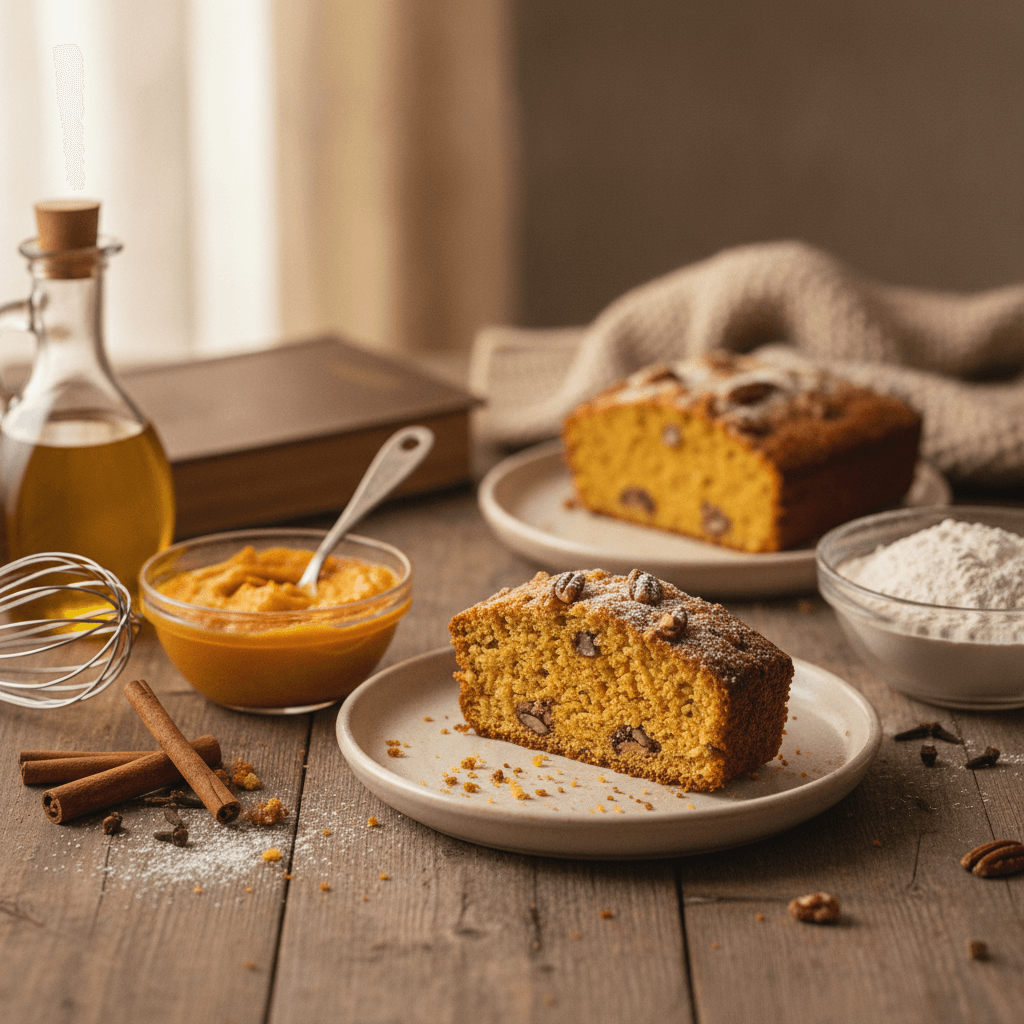
Pumpkin puree can replace some or all of the oil in muffins, quick breads, and cakes — but it changes moisture, density, and browning in ways that catch most bakers off guard. Here's what actually happens when you swap it in, which ratios hold up, and where the substitution falls apart.
Key takeaways
Pumpkin puree replaces oil at a roughly 3:4 ratio (3/4 cup puree for every 1 cup oil) for most quick breads and muffins, though a 1:1 swap works in recipes that are already dense.
The swap cuts fat significantly but adds moisture, which can make baked goods gummy if you don't reduce other liquids or adjust bake time.
Pumpkin puree works best in recipes that already have strong flavors — spice cakes, chocolate brownies, banana bread — where its earthy sweetness blends in rather than sticking out.
It performs poorly in butter-dependent recipes like pie crusts, shortbread, and laminated pastries where fat creates flaky layers.
Color shifts are real: expect darker golden-orange crumbs, which can look underdone or overdone depending on the recipe.
Shelf life shortens by roughly a day compared to oil-based versions because puree introduces more water activity.
Why pumpkin puree works as an oil replacement
Oil's main job in baked goods is to coat flour proteins and starch granules, keeping the crumb tender and moist. Pumpkin puree does some of this — it's about 90% water with natural pectin and fiber that mimic the tenderizing effect of fat. The pectin in pumpkin creates a gel-like network that holds moisture inside the crumb, which is why a pumpkin-substituted muffin can still feel moist on day one even with much less fat.
But puree is not fat. It doesn't coat proteins the same way, so gluten development increases slightly. That's why bakers who swap 100% of the oil sometimes end up with a chewier, denser product than they expected. The fiber in pumpkin also absorbs liquid, which changes the batter consistency — it gets thicker and scoops differently than an oil-based batter.
This is a similar dynamic to using applesauce as a replacement in baking — fruit and vegetable purees share the same strengths (moisture, natural sweetness) and the same weaknesses (no fat coating, extra water).
The ratio that holds up across most recipes
The most commonly cited and widely reliable ratio is 3/4 cup pumpkin puree for every 1 cup of oil. This accounts for the extra moisture pumpkin brings without making the batter too wet. For a recipe calling for 1/2 cup oil, that translates to about 6 tablespoons of pumpkin puree.
A full 1:1 swap — same volume of puree as oil — works in recipes that are already quite dense or that have other drying ingredients. Think brownies with cocoa powder, or almond flour-based muffins where the flour absorbs extra liquid. But in a standard white-flour muffin or cake, a 1:1 swap often overshoots on moisture.
Partial replacement is usually smarter
Replacing 50–75% of the oil with pumpkin puree and keeping the rest as actual oil gives you the best of both worlds: reduced fat, maintained tenderness, and a crumb that still feels familiar. For example, a 50/50 split in pumpkin spice muffins — 1/4 cup canola oil plus 1/4 cup pumpkin puree in place of 1/2 cup oil — keeps the muffins close to the original recipe.
Full replacement is fine for recipes where density is a feature, not a flaw. Pumpkin bread, for instance, is supposed to be dense and moist. A carrot cake already relies on shredded vegetables for body. But a light vanilla cupcake? Keep at least half of the original oil.
Where pumpkin puree works well as an oil substitute
Recipe type | Replacement level | Notes |
|---|---|---|
Muffins (spiced or chocolate) | 75–100% | Works well; slight density increase is barely noticeable |
Quick breads (banana, pumpkin, zucchini) | 75–100% | Natural pairing; flavor blends seamlessly |
Brownies | 50–100% | Fudgier texture; cocoa masks pumpkin flavor |
Spice cakes | 50–100% | Complementary flavor; crumb stays moist |
Pancakes and waffles | 50–75% | Slightly denser; works if you like thick pancakes |
Vanilla cake or cupcakes | 25–50% max | Higher amounts change flavor and make crumb gummy |
Sugar cookies | Not recommended | Cookies spread differently; texture becomes cakey |
Pie crust or pastry | Not recommended | Fat is structural here; puree can't create flaky layers |
Notice the pattern: the denser and more strongly flavored the original recipe, the more oil you can replace. Delicate, light, or flaky baked goods don't tolerate the swap well.
What changes when you use pumpkin puree instead of oil
Texture gets denser
This is the biggest change. Oil keeps crumbs light and separated. Pumpkin puree adds bulk and moisture without the same lubricating effect, so the crumb compresses more. In a muffin, this might mean the difference between an airy top and a slightly flat, moist top. It's not necessarily bad — many people prefer a denser, more substantial muffin — but it's a real change.
Flavor shifts toward earthy-sweet
Pumpkin puree has a mild, earthy sweetness that's noticeable in plain batters. In a chocolate or spice recipe, it disappears. In a lemon cake or vanilla cupcake, it doesn't. If you're making something where the flavor profile needs to stay clean and neutral, pumpkin puree is the wrong substitute. Applesauce or Greek yogurt would be better choices for neutral-flavored recipes.
Color changes are dramatic
Pumpkin puree is bright orange. It will tint your crumb. A white cake becomes golden-orange. Chocolate baked goods hide it well. Anything with warm spices (cinnamon, nutmeg, ginger) looks natural with the color shift. But if you're making a pale sugar cookie or a white birthday cake, the orange tint is going to be obvious and potentially unwelcome.
Browning happens faster
The natural sugars in pumpkin puree caramelize at oven temperatures, which means the exterior browns faster than an oil-based version. If you're baking at 375F or higher, check your muffins or bread about 5 minutes earlier than the original recipe suggests. A toothpick test is more reliable than color when pumpkin puree is involved, because the top may look done (dark golden) while the center is still underset.
Shelf life drops slightly
Oil-based baked goods stay moist for days because fat doesn't evaporate. Pumpkin puree adds water-based moisture, which evaporates faster and also raises the water activity inside the crumb — meaning staling and potential mold growth happen sooner. Expect to lose roughly a day of counter-top freshness compared to the oil version. Refrigerating extends this, but refrigeration also accelerates starch retrogradation (staling), so it's a tradeoff. Freezing is the best option for longer storage.
Common mistakes when swapping pumpkin puree for oil
Using pumpkin pie filling instead of plain puree
This is the most common error and it wrecks the recipe. Pumpkin pie filling contains added sugar, spices, and thickeners. Plain pumpkin puree — sometimes labeled "100% pumpkin" — is just cooked, mashed pumpkin. The two are not interchangeable. If you accidentally grab pie filling, your batter will be too sweet, too thick, and oddly spiced.
Not reducing other liquids
If the recipe calls for milk, buttermilk, or water in addition to oil, and you swap the oil for pumpkin puree, you've just added a significant amount of extra liquid. Reduce other wet ingredients by about 2–3 tablespoons per cup of puree used. This isn't an exact science — it depends on how wet your specific puree is — but skipping this step is how you end up with a gummy, underbaked center.
Overmixing the batter
Because pumpkin puree is thicker than oil, bakers tend to mix longer to incorporate it fully. But more mixing means more gluten development, especially in wheat-flour batters. Mix just until the puree is distributed — streaks of orange are fine; they'll disappear in the oven. This is especially important in gluten-free baking where gummy centers are already a common problem.
Expecting the same rise
Oil-based batters are lighter, so they rise more easily. Pumpkin puree batters are heavier, which means leaveners have to work harder. If you're doing a full oil replacement, consider adding an extra 1/4 teaspoon of baking powder per cup of flour to compensate. This isn't always necessary — it depends on the recipe — but it helps in lighter cakes and muffins.
How pumpkin puree compares to other oil substitutes
Pumpkin puree isn't the only fruit or vegetable puree that can stand in for oil. Here's how it stacks up against the most common alternatives:
Substitute | Best for | Flavor impact | Texture impact |
|---|---|---|---|
Pumpkin puree | Spice cakes, muffins, quick breads | Earthy-sweet, noticeable in plain recipes | Denser, moister |
Most cakes, muffins, quick breads | Mild sweetness, more neutral than pumpkin | Slightly denser, very moist | |
Mashed banana | Banana bread, chocolate recipes | Strong banana flavor | Dense, very moist |
Cakes, muffins where tang is acceptable | Tangy, noticeable | Tender, slightly springy | |
Chocolate recipes, brownies | Mild, easily masked by cocoa | Creamy, dense |
Avocado works as a butter substitute partly because it actually contains fat, which gives it an advantage over pumpkin puree in terms of tenderness. Banana brings its own set of tradeoffs — it's a stronger flavor than pumpkin and adds more sugar. Applesauce is probably the most versatile of the group because its flavor is the most neutral, but pumpkin puree has the edge in fall-flavored baking and recipes where density is desirable.
Tips for getting the best results
Use canned pumpkin puree for consistency. Homemade puree varies wildly in moisture content depending on the pumpkin variety and how long you cook it. Canned puree is standardized, so your results will be more repeatable. If you do use homemade, drain it through cheesecloth for 15–20 minutes first to remove excess water.
Pair it with warm spices. Cinnamon, nutmeg, ginger, and cloves all complement pumpkin's natural flavor. Even if the original recipe doesn't call for spices, adding 1/4 teaspoon of cinnamon can make the pumpkin flavor feel intentional rather than accidental.
Drop the oven temperature by 10–15F. Because pumpkin puree browns faster, reducing the oven temperature slightly and extending the bake time by a few minutes helps you get an evenly baked interior without an overly dark crust.
Weigh your puree if possible. A cup of pumpkin puree can weigh anywhere from 225g to 260g depending on how tightly you pack it. Using a kitchen scale like the OXO Good Grips 11lb removes that variable. For the 3:4 ratio, about 170–195g (3/4 cup) of pumpkin puree replaces 1 cup of oil, which weighs about 218g.
Let the baked goods cool completely before judging. Pumpkin-substituted baked goods often feel underdone when warm because of the extra moisture. They firm up significantly as they cool. Give muffins at least 20 minutes on a wire rack before cutting into one.
A contrarian take: sometimes the oil is worth keeping
There's a widespread assumption that replacing oil with puree is always a health upgrade. But oil isn't the villain many recipes make it out to be. A standard muffin recipe uses about 1/3 cup of oil spread across 12 muffins — that's only about 1 1/3 teaspoons of oil per muffin. The calorie savings from swapping that to pumpkin puree are real but modest, and the tradeoff in texture and shelf life is significant.
If you're baking for a crowd or selling at a farmers market, the oil version will hold up better on the table and taste more familiar to customers. Save the pumpkin puree swap for personal baking where you control the timeline from oven to plate, or for recipes where pumpkin flavor is already part of the plan.
Frequently asked questions
Can you replace all the oil with pumpkin puree in a cake recipe?
You can, but the results depend on the type of cake. Dense cakes like spice cake or carrot cake handle a full swap well. Lighter cakes — vanilla, white, or angel food — become noticeably denser and may develop a gummy texture. For light cakes, replace only 50% of the oil and keep the rest as actual fat for a better crumb.
Does pumpkin puree change the taste of baked goods?
Yes. Pumpkin puree adds a mild earthy sweetness that's noticeable in plain or lightly flavored recipes. In chocolate, spice, or strongly flavored batters, most people can't detect it. If you want a neutral oil substitute with less flavor impact, applesauce is generally a better choice.
What is the ratio of pumpkin puree to oil for baking?
The standard ratio is 3/4 cup pumpkin puree for every 1 cup of oil. This accounts for the extra moisture that puree adds. In very dense recipes like brownies or pumpkin bread, a 1:1 swap (equal volumes) also works. For lighter recipes, a partial replacement — 50% puree, 50% oil — gives the most balanced result.
Can you use pumpkin puree instead of butter in baking?
Pumpkin puree can replace butter in some recipes, but it's a bigger change than replacing oil. Butter provides both fat and structure (especially in creamed-butter recipes where air is beaten into the fat). Puree can't replicate that aeration. It works in recipes where butter is melted before mixing — like banana bread or brownies — but fails in recipes that start with creaming butter and sugar together.
How do you store baked goods made with pumpkin puree instead of oil?
Store them in an airtight container at room temperature for up to 2 days, or refrigerate for up to 5 days. They stale faster than oil-based versions because the moisture in puree evaporates more quickly than fat. Freezing works well — wrap individual portions tightly in plastic wrap, then place in a freezer bag. They'll keep for 2–3 months frozen.

Written by
Co-founder, BakingSubs
Co-founder of BakingSubs, where he turns the science of ingredient substitutions into tested, reliable guidance for home bakers.
Related Posts
Bake with Confidence
See all
Confident Gluten-Free Baker Toolkit
The science-based system that replaces gluten's seven invisible jobs so your baking turns out soft, fluffy, and foolproof — every time.

Gluten-Free Recipe Vault
Instant access to our complete library of proven gluten-free recipes — no waiting, no guesswork, just results that work tonight.

Fix Your Gluten-Free Bread
Learn the 3-step formula to make bread rise and stay soft, discover why your loaves collapse, and get a tested sandwich bread recipe that actually works.