

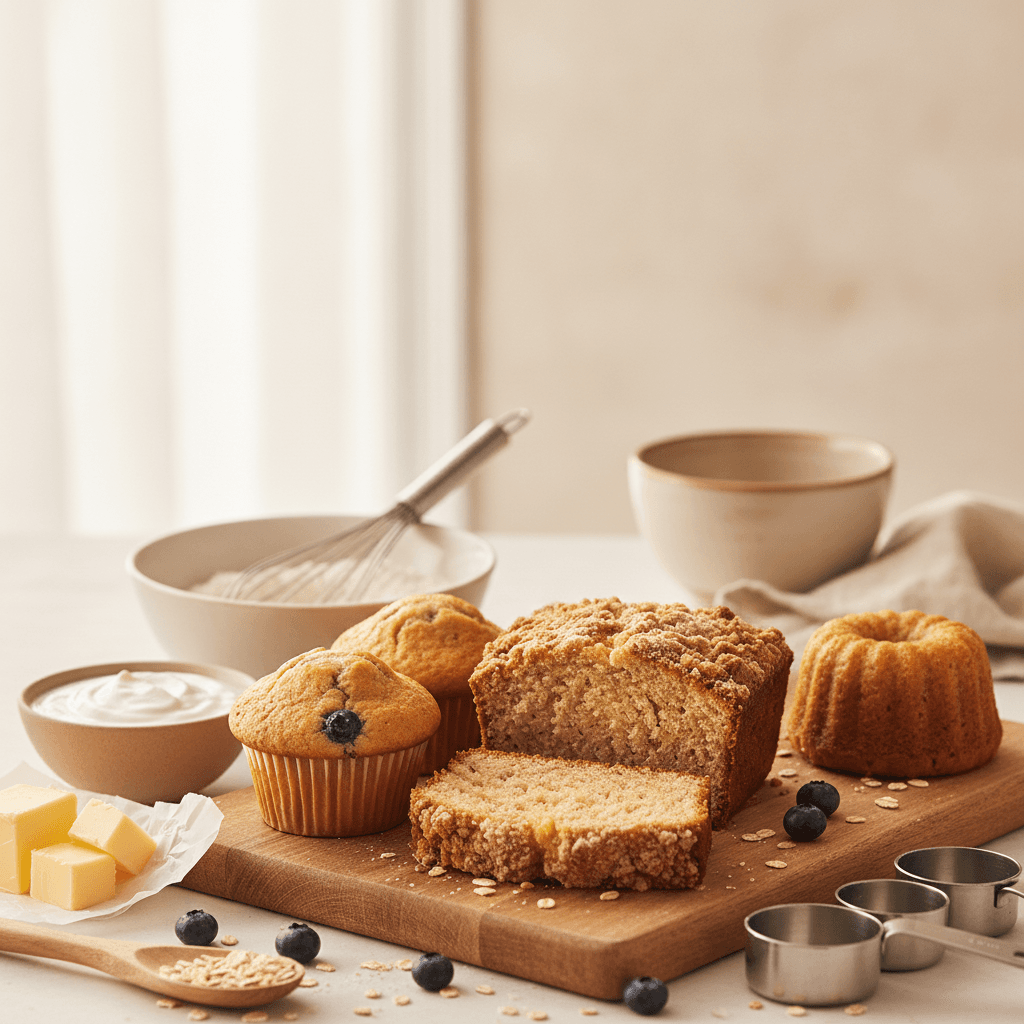
Greek yogurt can replace some or all of the butter in many baked goods — but the swap changes texture, moisture, and flavor in ways that catch people off guard. Here's what actually happens when you make the switch, which ratios hold up, and where yogurt falls flat.
Key takeaways
- Greek yogurt replaces butter at roughly a 1:2 ratio by weight — half the amount of butter, replaced with yogurt — in most quick breads, muffins, and cakes.
- Full-fat Greek yogurt works best because the fat content (roughly 5–10% depending on brand) still contributes tenderness, though less than butter's 80%+ fat.
- Yogurt adds moisture and acidity, which means you may need to reduce other liquids and consider adding a small amount of baking soda to balance the acid.
- Cookies and pie crusts are the worst candidates for a full yogurt swap — butter's solid-fat structure is doing work that yogurt simply cannot replicate.
- A partial swap (replacing half the butter with yogurt) is more forgiving and still cuts saturated fat significantly.
Why Greek yogurt works as a butter substitute at all
Butter does three things in baking: it adds fat for tenderness and mouthfeel, it contributes moisture (butter is roughly 15–20% water), and it creates structure through creaming or lamination. Greek yogurt can partially cover the first two roles. Its protein and fat content add richness, and its water content keeps batters moist. What it cannot do is replicate the solid-fat behavior that makes flaky pastry or crisp cookie edges possible.
The acidity of Greek yogurt (typically around pH 4.0–4.5) is the hidden variable most people overlook. That acidity reacts with baking soda to produce carbon dioxide, which means swapping yogurt into a recipe that already uses baking soda can cause over-leavening. If the original recipe relies on baking powder alone, you may actually get a slightly better rise from the added acid — but only if you account for it.
The right ratio for replacing butter with Greek yogurt
The most commonly cited and reliable starting point is to use half the weight of yogurt compared to the butter called for. So if a recipe calls for 113g (1 stick) of butter, you'd use roughly 56–60g of Greek yogurt. This isn't a universal rule — it's a starting point that works well in muffins, quick breads, and simple cakes.
Why half and not a straight 1:1? Because yogurt is much higher in water and much lower in fat than butter. Going 1:1 floods the batter with moisture and strips out the fat that keeps crumb tender. The result is a gummy, dense product that tastes flat.
| Baked good | Recommended swap ratio (yogurt to butter) | Expected result |
|---|---|---|
| Muffins | Replace up to 100% of butter with half the weight in yogurt | Moist, slightly denser crumb, mild tang |
| Quick breads (banana bread, zucchini bread) | Replace up to 100% of butter with half the weight in yogurt | Very moist, tender, slightly tangy |
| Layer cakes | Replace 50% of butter with half that amount in yogurt | Lighter crumb, less rich flavor |
| Cookies (drop cookies) | Replace no more than 25–50% of butter | Softer, cakier texture; less spread |
| Pie crusts | Not recommended | Tough, no flakiness |
| Scones | Replace no more than 50% of butter | Softer interior, less crisp exterior |
Where Greek yogurt shines as a butter replacement
Muffins and quick breads
These are the best candidates for a yogurt swap because they already rely on the muffin method — wet ingredients stirred into dry — rather than creaming butter with sugar. There's no aerated fat structure to protect, so yogurt slots in without disrupting the fundamental technique. The added moisture from yogurt actually helps these baked goods stay fresh longer, which matters if you're baking for a farmers market booth or selling through the week.
A banana bread made with Greek yogurt instead of butter will be noticeably moister — almost pudding-like in the center if you overbake by even a few minutes less than needed. Pull it when a toothpick comes out with just a few moist crumbs, not wet batter.
Simple cakes and snacking cakes
Sheet cakes, coffee cakes, and single-layer cakes respond well to a partial yogurt swap. The crumb will be slightly more tender and less rich, with a very subtle tang that pairs well with citrus flavors, berries, or warm spices. If you're making a cake that gets frosted with buttercream, the contrast between a lighter yogurt crumb and a rich frosting can actually be more appealing than butter-on-butter.
For layer cakes where structure matters — a stacked three-tier birthday cake, for instance — keep at least half the butter in the recipe. Yogurt alone won't give the crumb enough strength to hold up under the weight of frosting and stacking. If you're pricing and selling custom cakes, structural integrity isn't optional. (For more on that side of things, this pricing framework for birthday cakes covers the business angle.)
Where Greek yogurt fails as a butter replacement
Cookies that need spread and crisp edges
Here's the contrarian take that goes against a lot of the cheerful "yogurt replaces everything!" advice online: yogurt makes bad cookies. Not terrible — but noticeably worse than butter in any cookie where you want crisp edges, chewy centers, or significant spread. Butter melts in the oven and spreads the dough. Yogurt doesn't. The result is a puffy, cake-like cookie that holds its shape too well and lacks the caramelized, toffee-like flavor that browned butter solids create.
If you need to reduce butter in cookies for dietary reasons, a better approach is replacing some butter with a neutral oil like canola oil or avocado oil, which at least maintains the fat content. Yogurt in cookies is a compromise that nobody asked for.
Pie crusts, puff pastry, and anything laminated
Flaky pastry depends on cold, solid fat creating distinct layers as it melts in the oven. Greek yogurt is a liquid at room temperature. There is no version of this swap that produces flakiness. If you see a recipe calling for yogurt in pie crust, it's a fundamentally different product — more like a soft, pliable dough than a traditional flaky crust. That's fine if you know what you're getting, but it's not a substitute for butter in the traditional sense.
Full-fat vs. non-fat Greek yogurt: it matters more than you think
Full-fat Greek yogurt (typically around 5% fat for regular, up to 9–10% for some brands like Fage Total) gives the best results because the fat contributes some of the tenderness you're losing by removing butter. Non-fat Greek yogurt is essentially protein, water, and acid — it will make baked goods tighter, chewier, and more rubbery. The difference is stark enough that it's worth calling out: if you're going to sub yogurt for butter, don't use non-fat. The $0.50–$1.00 price difference between non-fat and full-fat at the grocery store is not worth the texture penalty.
For example, switching from non-fat to full-fat Greek yogurt in a blueberry muffin recipe moves the texture from bouncy toward genuinely tender. That kind of detail matters when you're building repeat business, as covered in this guide to getting repeat customers.
Adjustments you need to make when swapping yogurt for butter
Reduce other liquids
Greek yogurt is roughly 75–80% water. If your recipe already includes milk, buttermilk, or another liquid, reduce it by a few tablespoons to compensate. The exact amount depends on the recipe, but a good starting point is to reduce other liquids by about 2 tablespoons per half cup of yogurt added.
Account for the acidity
Greek yogurt's acidity can throw off leavening balance. If the original recipe uses only baking powder, the added acid from yogurt will react with the sodium bicarbonate component in the baking powder and may give you a slightly higher rise. That's usually fine. But if the recipe already uses baking soda (which needs acid to activate), adding yogurt on top of an existing acid source like buttermilk or lemon juice can cause the batter to over-rise and then collapse. In that case, you might reduce the baking soda by about a quarter teaspoon. For a deeper look at how these leaveners interact, check our baking soda and baking powder pages.
Expect a different browning pattern
Butter contributes milk solids that brown through the Maillard reaction, giving baked goods that golden, toasty color and flavor. Yogurt has some protein that browns, but less fat to carry flavor compounds. Baked goods made with yogurt tend to be paler on top and may lack that buttery aroma. If color matters — say, for a product photo — you can brush the top with a thin layer of melted butter or an egg wash before baking to compensate.
Greek yogurt vs. other butter substitutes
Yogurt isn't the only game in town. Here's how it stacks up against other common butter replacements:
| Substitute | Fat content | Best for | Biggest drawback |
|---|---|---|---|
| Greek yogurt (full-fat) | ~5–10% | Muffins, quick breads, simple cakes | No flakiness, paler color, mild tang |
| Applesauce | ~0% | Quick breads, spice cakes | Adds sweetness and apple flavor; very low fat |
| Avocado | ~15% | Brownies, chocolate cakes | Green color, grassy flavor in light batters |
| Coconut oil | ~100% | Cookies, pie crusts, anything needing solid fat | Coconut flavor (unless refined), different melting point |
| Canola or vegetable oil | ~100% | Cakes, muffins, quick breads | No structure for creaming; greasy if overused |
The key insight: yogurt is best when you want to reduce fat and add moisture simultaneously. If you just want to replace butter with a different fat (for flavor or dietary reasons), oil or coconut oil is a more direct swap. If you want to reduce both fat and calories, yogurt or applesauce are your options — but they change the product more dramatically.
A note for gluten-free bakers
If you're baking gluten-free, the yogurt-for-butter swap gets trickier. Gluten-free batters already tend to be wetter and more fragile than wheat-based ones, and adding the extra moisture from yogurt can push them into gummy territory. The protein in Greek yogurt can help with structure (a welcome bonus when there's no gluten network), but the water content works against you. If you're already troubleshooting gummy centers in gluten-free baking, adding yogurt without reducing other liquids will make the problem worse.
For gluten-free muffins and quick breads, a partial swap — replacing half the butter with yogurt — tends to work better than a full replacement. The remaining butter provides fat for tenderness and flavor, while the yogurt adds moisture and a bit of protein structure.
Frequently asked questions
Can I use Greek yogurt instead of butter in a 1:1 ratio?
No. A 1:1 swap by weight adds too much moisture and too little fat, resulting in dense, gummy baked goods. The standard approach is to use about half the weight of yogurt compared to the butter called for. So for 113g of butter, use roughly 56–60g of Greek yogurt.
Does Greek yogurt change the taste of baked goods?
Yes, but subtly. Full-fat Greek yogurt adds a mild tang similar to buttermilk. In recipes with strong flavors — chocolate, cinnamon, citrus — the tang is barely noticeable. In plain vanilla cakes or sugar cookies, you may detect a slight sourness that some people enjoy and others don't.
Can I use flavored Greek yogurt as a butter substitute?
You can, but flavored yogurts contain added sugar (often 12–18g per serving) that will affect the sweetness and potentially the texture of your baked goods. If you use flavored yogurt, reduce the sugar in the recipe to compensate. Plain, unsweetened Greek yogurt gives you the most control.
Is Greek yogurt a good butter substitute for vegan baking?
No — Greek yogurt is a dairy product. For vegan baking, plant-based options like coconut oil, applesauce, mashed avocado, or vegan butter are better choices. Coconut cream yogurt exists but behaves differently from dairy Greek yogurt in baking.
Will Greek yogurt make my cookies spread less?
Yes. Butter melts during baking and causes cookies to spread. Greek yogurt doesn't melt the same way, so cookies made with yogurt hold their shape more, resulting in puffier, cake-like cookies with less crisp edge definition. If you want traditional cookie texture, keep most or all of the butter.

Written by
Co-founder, BakingSubs
Co-founder of BakingSubs, where he turns the science of ingredient substitutions into tested, reliable guidance for home bakers.
Related Posts
Bake with Confidence
See all
Confident Gluten-Free Baker Toolkit
The science-based system that replaces gluten's seven invisible jobs so your baking turns out soft, fluffy, and foolproof — every time.

Gluten-Free Recipe Vault
Instant access to our complete library of proven gluten-free recipes — no waiting, no guesswork, just results that work tonight.

Fix Your Gluten-Free Bread
Learn the 3-step formula to make bread rise and stay soft, discover why your loaves collapse, and get a tested sandwich bread recipe that actually works.