

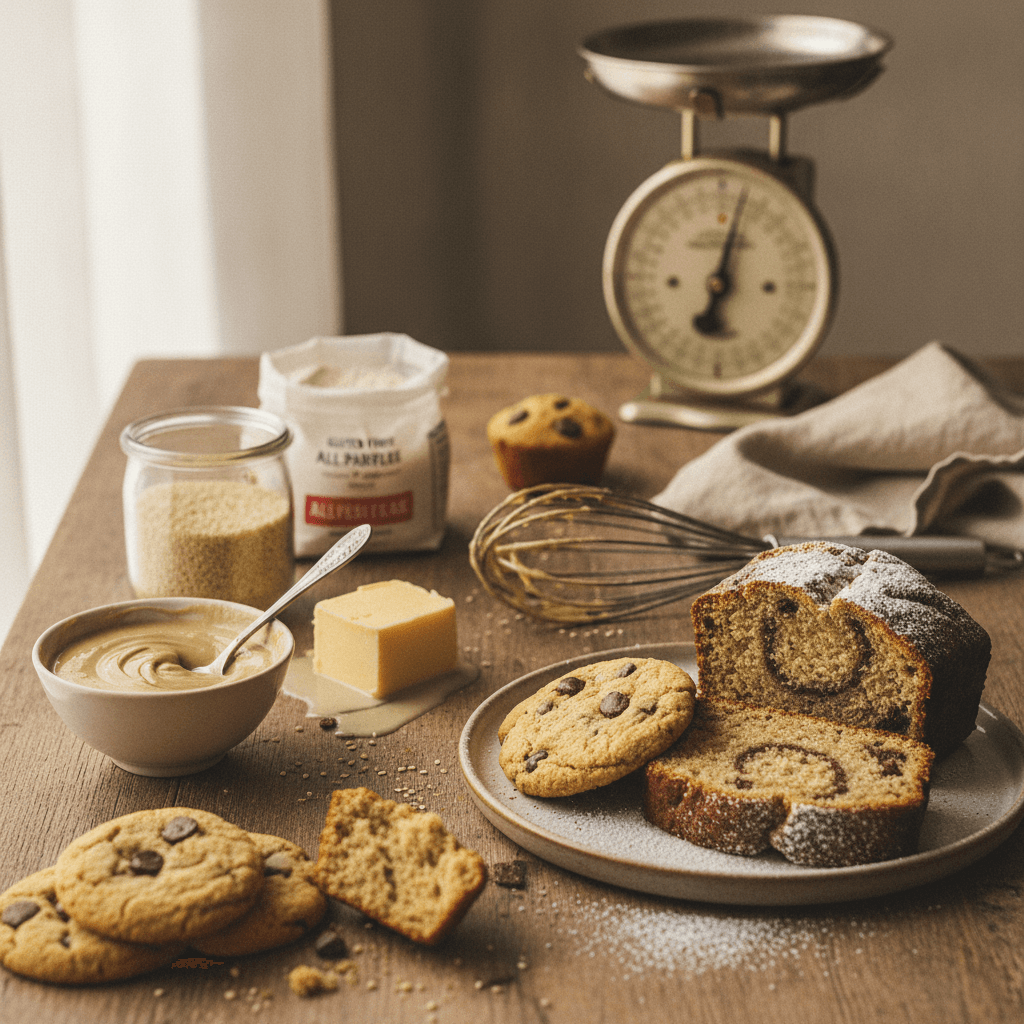
Tahini can replace butter in many baked goods, but it behaves differently in almost every way that matters — moisture, fat content, flavor, and structure all shift. Here's what actually changes and where tahini works best as a swap.
Key takeaways
- Tahini replaces butter at roughly a 1:1 ratio by volume, but its lower fat content (around 50% fat vs. butter's 80%) means denser, moister results in most applications.
- The sesame flavor is not neutral — it ranges from mild and nutty to intensely bitter depending on brand, and it will come through in delicate baked goods like sugar cookies or white cake.
- Tahini works best in brownies, blondies, banana bread, and other baked goods where a rich, earthy flavor is welcome.
- It does not cream with sugar the way butter does, so recipes that depend on creaming for lift (like pound cake) need a leavening adjustment.
- Tahini is naturally dairy-free and vegan, making it a useful swap for plant-based baking when nut allergies rule out almond butter or cashew butter.
What tahini actually is (and why it matters for baking)
Tahini is ground hulled or unhulled sesame seeds — essentially sesame seed butter. The texture is thinner and more pourable than peanut butter or almond butter, which affects how it integrates into batters and doughs. Its fat is predominantly unsaturated, unlike butter's saturated fat, and that difference changes how baked goods set as they cool.
The fat content matters most. Butter is roughly 80% fat and 15-17% water. Tahini sits around 50-55% fat with more protein and fiber. That gap means tahini adds less fat and more structure-building protein to your batter, which can make things denser or chewier than expected.
How tahini changes 5 key things in your bake
1. Fat and moisture balance
Because tahini has significantly less fat than butter, your baked goods will be slightly drier in terms of richness but can feel moister due to tahini's emulsion. If a cookie recipe calls for 113g (one stick) of butter, swapping in 113g of tahini gives you roughly 30% less fat. Some bakers compensate by adding a tablespoon of neutral oil — something like avocado oil or canola oil — to bring the fat level closer to the original.
2. Flavor
This is the most divisive part. Tahini has a distinct sesame flavor that ranges from mildly nutty to assertively bitter. The brand matters enormously here. Soom and Seed + Mill are widely regarded for their smooth, mild flavor. Cheaper tahini made from unhulled seeds tends to taste more bitter and earthy. In a chocolate brownie, that bitterness can actually complement the cocoa. In a vanilla birthday cake, it will clash.
A good rule: if the recipe already has bold flavors — chocolate, warm spices, brown sugar, banana — tahini blends in well. If the recipe is meant to taste like butter and vanilla, tahini will announce itself.
3. Texture and structure
Butter creates tenderness in baked goods partly because its saturated fat coats flour proteins, limiting gluten development. Tahini's unsaturated fat doesn't coat proteins the same way. The result is often a slightly chewier, denser crumb. This is actually a benefit in cookies (think thick, fudgy tahini chocolate chip cookies) but a drawback in airy cakes.
Tahini also cannot be creamed with sugar the way cold butter can. Creaming traps air bubbles that expand during baking, creating lift. If your recipe relies on creaming — classic pound cake, for example — you'll need to increase baking powder by about 25-50% to compensate for lost volume, or switch to a recipe that uses the muffin method (wet into dry) instead.
4. Browning
Tahini contains more protein than butter, and protein drives Maillard browning. Expect baked goods to brown faster and darker on the surface. Dropping your oven temperature by about 10-15°F (roughly 5-8°C) from what the recipe calls for can prevent over-browning, especially for cookies that bake in under 12 minutes.
5. Spread in cookies
Butter melts at a specific temperature range and causes cookies to spread as it liquefies in the oven. Tahini is already liquid at room temperature, so cookies made with tahini tend to spread earlier and flatten more. Chilling the dough for at least 30 minutes before baking helps counteract this. Some bakers also add an extra tablespoon or two of flour to absorb the additional liquid.
Where tahini works well as a butter substitute
| Baked good | How well tahini works | Notes |
|---|---|---|
| Brownies | Excellent | Sesame and chocolate are a natural pairing; dense texture is a benefit |
| Blondies | Very good | Brown sugar and tahini complement each other |
| Banana bread / quick breads | Very good | Strong flavors mask sesame; muffin method avoids creaming issues |
| Cookies (chocolate chip, oatmeal) | Good | Chewier texture; chill dough to control spread |
| Muffins | Good | Works well with spiced or chocolate muffins |
| Pie crust | Poor | Cannot create flaky layers; too liquid at room temperature |
| Pound cake | Poor | Cannot cream; loses signature buttery flavor and airy crumb |
| Puff pastry / laminated doughs | Does not work | Requires solid fat that stays firm during folding |
The pattern is clear: tahini excels in dense, richly flavored baked goods and struggles in anything that needs solid fat for structure or a neutral, buttery flavor.
How to handle the swap ratio
The standard starting point is a 1:1 substitution by weight or volume. Replace 1 cup of butter with 1 cup of tahini. But because of the fat gap, consider these adjustments:
- Add 1-2 tablespoons of oil if the recipe needs more richness. Neutral oils work if you want to avoid adding more sesame flavor.
- Reduce other liquids slightly — tahini's consistency can make batters looser than expected. Cut milk or water by 1-2 tablespoons if the batter looks too thin.
- Stir your tahini thoroughly before measuring. Tahini separates in the jar, and if you scoop from the bottom you'll get a paste that's far too thick, while scooping from the top gives you mostly oil.
If you're working with a recipe that uses melted butter, tahini is almost a drop-in replacement since you don't have to worry about creaming. Recipes that call for softened butter and creaming are harder to adapt — look for a recipe designed for the muffin method instead.
Tahini vs. other butter substitutes
Tahini isn't the only option for replacing butter. Here's how it stacks up against the most common alternatives:
| Substitute | Fat content | Flavor impact | Best for | Biggest limitation |
|---|---|---|---|---|
| Tahini | ~50-55% | Nutty, sesame | Brownies, cookies, quick breads | Cannot cream; strong flavor |
| Coconut oil | ~100% | Mild coconut (refined is neutral) | Most baked goods; solid at room temp | Can make crumb greasy if over-measured |
| Avocado | ~15% | Very mild | Brownies, chocolate cake | Much lower fat; can turn baked goods gummy |
| Greek yogurt | ~0-5% | Tangy | Muffins, quick breads | Very low fat; adds acidity |
| Almond butter | ~50% | Nutty, mild | Cookies, brownies | Tree nut allergen |
If you're choosing between tahini and almond butter, the biggest practical difference is allergen profile. Sesame is now recognized as a major allergen in the US (as of 2023), so neither is allergen-free, but they cover different groups. Tahini is the better choice when tree nut allergies are the concern. Avocado as a butter substitute is another dairy-free option, though it behaves very differently due to its much lower fat content.
For bakers also exploring Greek yogurt as a butter substitute, keep in mind that yogurt and tahini solve different problems. Yogurt cuts fat and adds moisture and tang. Tahini maintains richness and adds protein.
Common mistakes when baking with tahini
Using tahini straight from the fridge without stirring
Cold tahini is thick and clumpy. The oil separates and sits on top. If you measure it without stirring, you'll get an inconsistent product — sometimes too oily, sometimes too dry. Let the jar come to room temperature and stir it until it's smooth and pourable before measuring.
Expecting it to behave like peanut butter
Tahini is thinner and more liquid than peanut butter. Recipes designed for peanut butter already account for its thicker consistency and higher sugar content. Swapping tahini into a peanut butter cookie recipe without adjustments typically produces a flatter, more fragile cookie.
Ignoring the sesame flavor in delicate recipes
A vanilla sponge cake made with tahini will taste like sesame. There's no way around this. If the recipe's flavor profile doesn't welcome sesame, this substitution will disappoint. Stick to recipes where the sesame flavor is either complementary or where other strong flavors dominate.
Over-baking because of faster browning
The higher protein content in tahini means surfaces brown faster. Pull baked goods out when they look just slightly underdone — they'll continue setting as they cool. A baker named Rima, who runs a small dairy-free bakery in Portland, shared in a baking forum that she reduces oven temperature by 15°F for every tahini recipe and pulls cookies at 9 minutes instead of 11 for her standard batch size.
Tahini in gluten-free baking
Tahini pairs well with many gluten-free baking approaches because it adds fat, protein, and binding ability — three things gluten-free batters often lack. In gluten-free brownies or cookies, tahini can help hold the crumb together in a way that oil alone cannot.
However, tahini won't solve the structural problems that come from missing gluten. You'll still need a binder like xanthan gum, arrowroot powder, or a flax egg in most gluten-free recipes. Tahini is a fat replacement, not a structural one.
One area where tahini shines in gluten-free baking is combating the dry, crumbly texture that plagues many gluten-free baked goods. Its emulsified fat and protein help retain moisture better than plain oil, and the sesame flavor can mask some of the off-tastes that certain gluten-free flours produce.
A contrarian take: tahini is better than butter in some cookies
Most substitution advice frames tahini as a compromise — you use it because you can't have butter. But for certain cookies, tahini genuinely produces a better result. Tahini chocolate chip cookies tend to be chewier, with more complex flavor and deeper browning than their butter counterparts. The sesame adds a savory note that balances sweetness in a way that butter doesn't.
This isn't a universal claim. Tahini won't improve a delicate shortbread or a buttery croissant. But in a thick, chewy cookie where you want depth of flavor and a slightly fudgy center, tahini isn't a substitute — it's an upgrade. The key is choosing recipes that play to its strengths rather than forcing it into roles where butter is genuinely better.
Frequently asked questions
Can you replace butter with tahini in any baking recipe?
No. Tahini works well in dense, richly flavored baked goods like brownies, cookies, and quick breads, but it fails in recipes that require solid fat for structure — pie crusts, puff pastry, and laminated doughs. It also cannot be creamed with sugar, so recipes that depend on creaming for lift need modifications like increased baking powder.
What is the ratio for substituting tahini for butter?
Start with a 1:1 swap by weight or volume. Because tahini has less fat than butter (roughly 50% vs. 80%), you may want to add 1-2 tablespoons of neutral oil to compensate for the fat gap, especially in recipes where richness matters. Reduce other liquids by 1-2 tablespoons if the batter seems too thin.
Does tahini make baked goods taste like sesame?
Yes, to varying degrees. In chocolate brownies or spiced banana bread, the sesame flavor blends into the background. In vanilla cake or sugar cookies, it comes through clearly. Brand matters too — tahini made from hulled, lightly roasted seeds (like Soom) tends to be milder than tahini made from unhulled seeds.
Is tahini a good vegan butter substitute for baking?
Tahini is a strong option for vegan baking, especially in recipes where you want richness without coconut flavor. It's dairy-free and adds protein, which can help with structure. However, note that sesame is classified as a major food allergen in the US, so it's not suitable for all dietary needs. For other vegan butter options, avocado and coconut oil are common alternatives.
Why do my tahini cookies spread too much?
Tahini is liquid at room temperature, unlike butter which is solid. This means cookies lose their shape faster in the oven. Chill the dough for at least 30 minutes before baking, and consider adding 1-2 extra tablespoons of flour to absorb excess moisture. Dropping the oven temperature by 10-15°F also helps cookies set before they spread too far.

Written by
Co-founder, BakingSubs
Co-founder of BakingSubs, where he turns the science of ingredient substitutions into tested, reliable guidance for home bakers.
Related Posts

Allulose as Sugar Substitute for Baking: 5 Things That Change (and 2 That Catch Bakers Off Guard)

Erythritol vs Stevia for Baking: 6 Differences That Actually Change Your Results
Allulose vs Erythritol for Baking: 6 Differences That Actually Change Your Results
Bake with Confidence
See all
Confident Gluten-Free Baker Toolkit
The science-based system that replaces gluten's seven invisible jobs so your baking turns out soft, fluffy, and foolproof — every time.

Gluten-Free Recipe Vault
Instant access to our complete library of proven gluten-free recipes — no waiting, no guesswork, just results that work tonight.

Fix Your Gluten-Free Bread
Learn the 3-step formula to make bread rise and stay soft, discover why your loaves collapse, and get a tested sandwich bread recipe that actually works.