

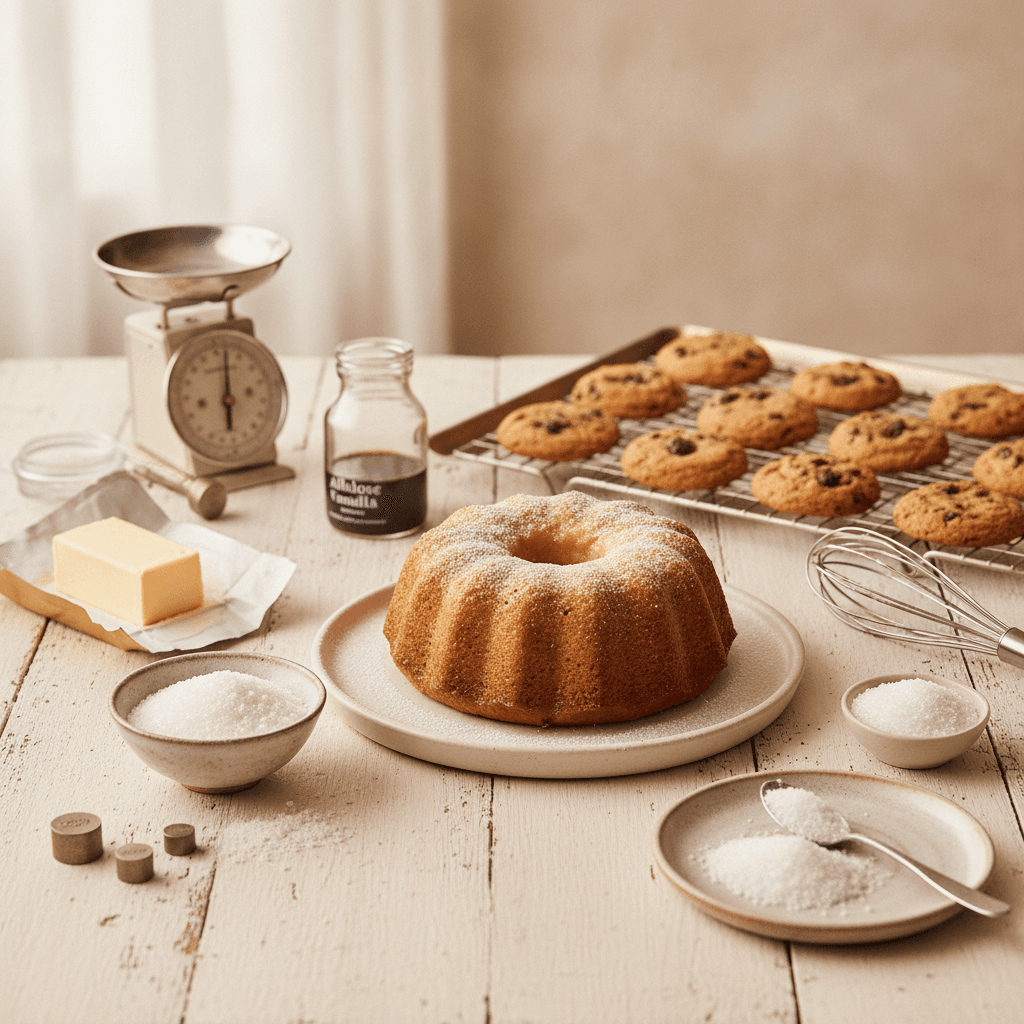
Allulose is the rare sugar substitute that actually behaves like sugar in a mixing bowl — it dissolves, browns, and adds moisture in ways that stevia and monk fruit simply cannot. But it is not a perfect 1:1 swap, and the differences matter more in some baked goods than others.
Here is what actually changes when you use allulose as a sugar substitute for baking, where it works best, and where you need to adjust.
Key takeaways
- Allulose provides about 70% of the sweetness of granulated sugar, so most bakers need to use more of it or pair it with a second sweetener.
- Unlike erythritol or monk fruit blends, allulose browns through the Maillard reaction, making it one of the few low-calorie sweeteners that can produce golden cookies and caramelized crusts.
- Allulose is hygroscopic — it pulls moisture from the air — which keeps baked goods softer for longer but can make some items too moist if you do not reduce other liquids.
- It contributes roughly 0.2–0.4 calories per gram (compared to sugar's 4 calories per gram), and the FDA lets manufacturers count it at 0.4 calories per gram and leave it out of total and added sugars on US nutrition labels.
- Large servings can cause digestive discomfort in some people, particularly above roughly 28 grams (about 0.4 grams per kilogram of body weight) in a single sitting.
What allulose actually is (and why bakers care)
Allulose is a monosaccharide — a simple sugar — that occurs naturally in small amounts in figs, raisins, and maple syrup. Chemically, it is classified as a "rare sugar" because it exists in nature but in tiny quantities. Commercially, it is produced from corn fructose through an enzymatic conversion process.
What makes allulose interesting for baking is that it is a real sugar molecule, not a sugar alcohol (like erythritol) or a high-intensity sweetener (like stevia or monk fruit extract). This matters because sugar does far more than sweeten — it affects browning, moisture retention, spread, and texture. Most alternative sweeteners only handle one of those jobs. Allulose handles most of them, with some important caveats.
5 things that change when you swap sugar for allulose
1. Sweetness drops by about 30%
Allulose is roughly 70% as sweet as sucrose. If a cookie recipe calls for 200 grams of granulated sugar and you use 200 grams of allulose, the result will taste noticeably less sweet. Some bakers compensate by increasing the allulose amount — using about 130% of the sugar weight — but that introduces more moisture and changes the batter consistency.
The more common approach is to keep allulose at a 1:1 weight ratio and add a small amount of a high-intensity sweetener to close the sweetness gap. A tiny amount of monk fruit extract or stevia can bring the perceived sweetness back to sugar-level without altering the bulk or structure that allulose provides.
2. Browning actually happens (and it can happen fast)
This is where allulose separates itself from nearly every other low-calorie sweetener. Erythritol does not brown. Stevia does not brown. Monk fruit does not brown. Allulose does — and it browns more aggressively than regular sugar at the same oven temperature.
Allulose has a lower caramelization point than sucrose. Where granulated sugar begins to caramelize around 160°C (320°F), allulose starts browning at a lower temperature. This means cookies, muffin tops, and quick breads can go from golden to over-browned faster than expected. Many bakers reduce oven temperature by about 25°F (roughly 15°C) when using allulose as the primary sweetener, and check for doneness a few minutes earlier than the original recipe suggests.
The upside is significant: if you have been frustrated by pale, anemic-looking keto cookies made with erythritol blends, allulose can deliver that golden-brown appearance that makes baked goods look (and taste) properly finished.
3. Moisture retention increases
Allulose is more hygroscopic than sucrose, meaning it attracts and holds water more readily. In practice, this shows up as softer, moister baked goods that stay that way longer. A muffin made with allulose tends to resist staling better than one made with erythritol, which can dry out and develop a gritty surface within a day.
The trade-off: in recipes that are already moist — banana bread, pumpkin muffins, some brownies — the extra moisture retention can push the texture toward gummy or underdone. If you are working with a recipe that already includes applesauce, mashed banana, or other high-moisture ingredients, you may need to reduce the liquid by 1–2 tablespoons to compensate.
4. Cookies spread differently
Sugar plays a direct role in how cookies spread during baking. It melts, which allows the dough to flow outward before the structure sets. Allulose melts at a lower temperature than sucrose, which means cookies made with allulose tend to spread more and spread sooner.
For thin, chewy cookies, this is actually a benefit. For cookies where you want height and thickness — like snickerdoodles or sugar cookies — the extra spread can be a problem. Chilling the dough for at least 30 minutes before baking helps counteract this, as does using a slightly higher ratio of flour to fat.
If you are already working with sugar substitutes in cookies, you know that every sweetener changes spread behavior. Allulose is closer to sugar's behavior than most alternatives, but it overshoots on the spread side rather than undershooting.
5. Crystallization does not happen the same way
Granulated sugar crystallizes predictably, which is essential for recipes like meringues, hard candies, and certain frostings. Allulose resists crystallization. It stays in a more syrupy, amorphous state even when cooled. This makes it a poor choice for anything that relies on sugar crystallization for structure — royal icing, pulled sugar, or divinity, for example.
On the other hand, this property makes allulose excellent for soft caramels, ice cream bases, and syrups where you specifically want to prevent crystallization. In cake batters and quick breads, the lack of crystallization is generally neutral — you will not notice a difference.
2 things that catch bakers off guard
The digestive tolerance issue is real
Allulose is generally well tolerated in moderate amounts, but it can cause bloating, gas, or nausea when consumed in larger quantities. Research suggests that most people tolerate up to about 0.4 grams per kilogram of body weight per meal without significant GI issues. For a 70 kg (154 lb) person, that is roughly 28 grams per sitting.
Here is where that matters for baking: a batch of 24 cookies might contain 150–200 grams of allulose total. That works out to roughly 6–8 grams per cookie, so someone who eats 3–4 cookies could be consuming about 19–33 grams of allulose in one sitting, which approaches or passes the threshold where some people start to experience discomfort. This is not unique to allulose — many sugar substitutes have similar limitations — but it is worth knowing before you bring a full batch of allulose brownies to a potluck.
Cost is significantly higher than sugar
Allulose typically costs $8–$15 per pound depending on the brand and format (granulated vs. liquid), compared to roughly $1 per pound for granulated sugar (the U.S. average retail price was $1.02 per pound in August 2026, according to the Bureau of Labor Statistics). That is roughly an 8x–15x price difference. For home bakers making an occasional batch of cookies, the cost is manageable. For anyone baking regularly or running a home baking business, allulose can significantly cut into margins. Our allulose brand comparison breaks down the price per pound of each brand.
Some bakers manage cost by using allulose as a partial replacement — swapping 50% of the sugar for allulose and keeping 50% as regular sugar. This reduces calories and glycemic impact while keeping costs reasonable and preserving more of the original recipe's behavior.
How allulose compares to other sugar substitutes for baking
The question most bakers actually have is not "is allulose good?" but "is it better than what I am already using?" Here is how it stacks up against the most common alternatives on the properties that matter in a baking context.
| Property | Allulose | Erythritol | Monk fruit blend | Stevia blend |
|---|---|---|---|---|
| Sweetness vs. sugar | ~70% | ~60–70% | Varies by blend | Varies by blend |
| Browning | Yes (aggressive) | No | Minimal | No |
| Moisture retention | High | Low (dries out) | Low | Low |
| Cooling aftertaste | None | Noticeable | Possible (most blends are erythritol-based) | Possible bitterness |
| Bulk/volume | 1:1 with sugar | ~1:1 with sugar | Depends on bulking agent | Depends on bulking agent |
| Cookie spread | More than sugar | Less than sugar | Less than sugar | Less than sugar |
| Crystallization | Resists | Crystallizes easily | Depends on blend | Depends on blend |
| Cost per pound | $8–$15 | $4–$8 | $6–$12 | $5–$10 |
| GI tolerance threshold | ~28g (for a 70 kg adult) | ~50g | Depends on bulking agent | Generally high |
The biggest practical advantage allulose has is browning. If you have ever pulled a batch of erythritol-sweetened cookies out of the oven and wondered why they look like they were never baked, allulose solves that specific problem. The biggest practical disadvantage is cost — and for bakers who need large volumes, that can be a dealbreaker.
For a deeper comparison of how these sweeteners perform specifically in cookies, see our breakdown of keto-friendly sugar substitutes for baking.
Where allulose works best in baking
Allulose is not equally good in every application. Here is where it shines and where it struggles.
Strong performers
- Cookies (especially chewy styles): The moisture retention and browning make allulose a natural fit. Chewy chocolate chip cookies are one of the most common success stories with allulose.
- Quick breads and muffins: Banana bread, zucchini bread, and muffins benefit from the moisture retention. Just watch the total liquid content.
- Soft caramels and sauces: The resistance to crystallization makes allulose behave beautifully in caramel sauces and soft candy.
- Ice cream bases: Allulose depresses the freezing point of water, resulting in softer, more scoopable ice cream — similar to how sugar works.
Mediocre to poor performers
- Meringues: Without crystallization, allulose cannot provide the rigid structure that whipped meringue needs. It can work in a soft meringue but will weep and collapse in applications that need a crisp shell.
- Sugar cookies that need to hold shape: The extra spread from allulose's low melting point makes detailed cut-out cookies difficult. Extensive chilling helps but does not fully solve the problem.
- Angel food cake: Recipes that depend on sugar's ability to stabilize whipped egg whites do not translate well to allulose.
- Anything with a crisp sugar coating: Crème brûlée tops, candied nuts, or sugar-crusted pastries need crystallization that allulose cannot deliver.
Practical tips for using allulose in baking
If you are ready to try allulose, these adjustments will save you from the most common problems.
Reduce oven temperature by 25°F (about 15°C). This is the single most important adjustment. Allulose browns faster than sugar, and a standard oven temperature will over-brown the exterior before the interior is done.
Check doneness by internal texture, not color. Because allulose browns so readily, the visual cues you are used to — "bake until golden brown" — will mislead you. A toothpick test or gentle press on the center is more reliable.
Reduce other liquids by 1–2 tablespoons in moist recipes. If your recipe already includes fruit purees, yogurt, or other high-moisture ingredients, the hygroscopic nature of allulose can push things too wet. A small liquid reduction keeps the balance.
Chill cookie dough before baking. At least 30 minutes in the refrigerator helps control the extra spread. For cut-out cookies, freeze the dough for 15–20 minutes after cutting.
Consider blending with a high-intensity sweetener. Using allulose at a 1:1 ratio with sugar for bulk and adding a pinch of monk fruit or stevia to boost sweetness gives you the best of both worlds — proper texture and full sweetness — without increasing the total volume of sweetener. Our guide to natural sweeteners for low-sugar baking covers how to pair sweeteners effectively.
Store allulose-sweetened baked goods in airtight containers. The hygroscopic nature means they will absorb ambient moisture readily. In humid climates, this can make cookies go soft within hours of cooling. An airtight container or zip-top bag keeps the texture where you want it.
The contrarian take: allulose is overhyped for some bakers
Online baking communities tend to present allulose as the "holy grail" of sugar substitutes. And for keto and low-carb bakers who have been struggling with erythritol's cooling aftertaste or stevia's bitterness, it genuinely is a major improvement. But for bakers whose primary goal is simply reducing calories or sugar intake — not eliminating it — a 50/50 blend of regular sugar and allulose often produces better results than going 100% allulose.
The reason is simple: regular sugar still handles crystallization, spread control, and sweetness more predictably. By replacing only half, you cut the sugar content meaningfully while keeping the recipe's original behavior mostly intact. The browning from allulose actually helps compensate for the reduced sugar, and the sweetness gap is much smaller at 50% replacement than at 100%.
For example, a baker selling "reduced sugar" chocolate chip cookies might use a 60/40 sugar-to-allulose ratio. The partial swap keeps the recipe behaving close to the full-sugar version, and allulose's lower caramelization point helps with browning — a practical middle ground between health-conscious marketing and consistent results.
Understanding how to choose a sugar alternative for your specific goals — whether that is keto compliance, calorie reduction, or blood sugar management — matters more than picking the trendiest sweetener.
Frequently asked questions
Can you substitute allulose for sugar 1:1 in baking?
You can use allulose at a 1:1 ratio by weight for sugar in most baking recipes, but the result will be about 30% less sweet. To compensate, many bakers add a small amount of monk fruit or stevia to bring the sweetness up. You will also need to lower your oven temperature by about 25°F to prevent over-browning, since allulose caramelizes at a lower temperature than sugar.
Does allulose taste like sugar?
Allulose has a clean sweetness without the cooling effect of erythritol or the bitter aftertaste that some people detect with stevia. It is widely considered the closest-tasting low-calorie sweetener to sugar, though it is noticeably less sweet — about 70% of sugar's sweetness level. In baked goods, the flavor difference is subtle enough that most people do not identify it as a sugar substitute.
Is allulose safe for people with diabetes?
Allulose has a minimal effect on blood glucose and insulin levels, which is why it has attracted interest from people managing diabetes. The FDA does not require allulose to be counted as a sugar or added sugar on US nutrition labels. However, individual responses can vary, and anyone managing a medical condition should consult their healthcare provider before making significant dietary changes. For more on common sugar substitution mistakes, including overcorrecting for sweetness, see our guide.
Why do my allulose cookies burn on the bottom?
Allulose caramelizes at a lower temperature than regular sugar, so cookies made with allulose brown faster — especially on the bottom where they contact the hot baking sheet. Reducing your oven temperature by 25°F, using a light-colored baking sheet (dark pans absorb more heat), and lining with parchment paper all help prevent bottom burning. Checking cookies 2–3 minutes before the recipe's stated bake time is also a good habit with allulose.
Can you use allulose in bread baking?
Allulose can be used in quick breads and enriched yeast breads where sugar plays a flavoring and browning role. However, in lean yeast breads where sugar feeds the yeast, allulose is not a direct substitute — yeast cannot metabolize allulose the way it metabolizes sucrose or glucose. For low-carb bread baking, allulose works best in combination with other ingredients that support yeast activity or in recipes that use chemical leaveners instead of yeast.

Written by
Co-founder, BakingSubs
Co-founder of BakingSubs, where he turns the science of ingredient substitutions into tested, reliable guidance for home bakers.
Related Posts

Bake with Confidence
See all
Confident Gluten-Free Baker Toolkit
The science-based system that replaces gluten's seven invisible jobs so your baking turns out soft, fluffy, and foolproof — every time.

Gluten-Free Recipe Vault
Instant access to our complete library of proven gluten-free recipes — no waiting, no guesswork, just results that work tonight.

Fix Your Gluten-Free Bread
Learn the 3-step formula to make bread rise and stay soft, discover why your loaves collapse, and get a tested sandwich bread recipe that actually works.