

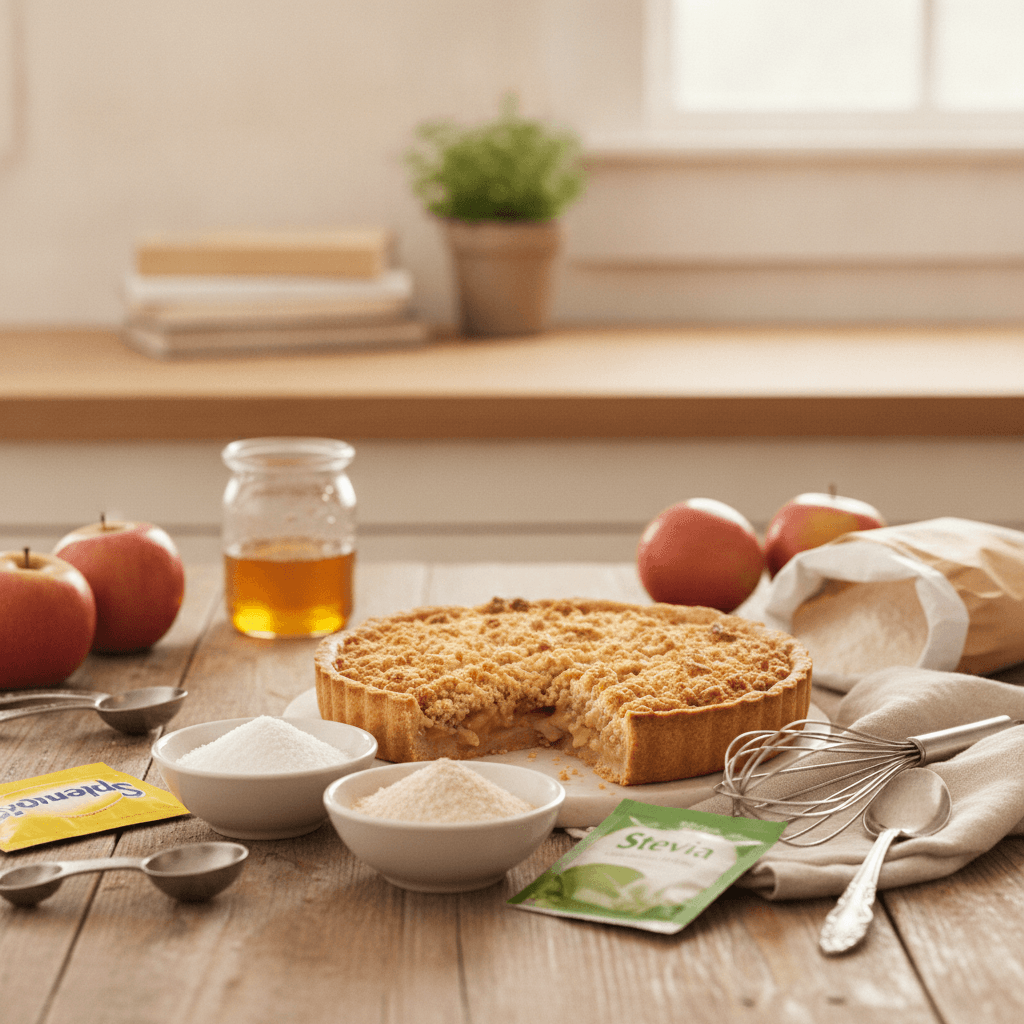
Splenda and stevia get lumped together as "sugar-free sweeteners," but they're chemically nothing alike, and that shows the moment you bake with either one. One is a chlorinated sugar molecule the FDA regulates as a food additive; the other is a plant extract cleared through the GRAS pathway. Here's what the label data, the FDA, and EFSA say about how each one measures, bakes, and behaves in your body.
Key takeaways
- The FDA's own sweetener comparison lists sucralose (Splenda's active ingredient) at about 600 times sweeter than table sugar, and steviol glycosides (stevia's active compounds) at 200 to 400 times sweeter.
- Splenda Original Granulated Sweetener is bulked with maltodextrin so it measures 1 cup for 1 cup of sugar by volume, but a cup weighs only about 25g versus roughly 200g for a cup of real sugar, per King Arthur Baking's ingredient weight chart — a gap that matters if a recipe was ever written by weight.
- Neither sucralose nor steviol glycosides are reducing sugars, so neither browns or caramelizes the way table sugar does; only blends that still contain real sugar or dextrose, like Truvia Cane Sugar Blend, brown normally in the oven.
- Sucralose reached the market as an FDA-approved food additive (ADI of 5 mg/kg body weight per day); steviol glycosides reached it through FDA "no questions" GRAS letters instead, with a JECFA-set ADI of 4 mg/kg body weight per day.
- As of a February 2026 EFSA opinion, the EU has not extended sucralose's approval to the "fine bakery wares" category over unresolved questions about chlorine byproducts at high oven temperatures — while stevia's steviol glycosides have been authorized in that same EU category for years.
- In a head-to-head 8-week clinical trial, type 2 diabetic patients drinking stevia-sweetened tea and those taking sucralose tablets showed no significant difference in fasting blood sugar, HbA1c, insulin, or lipids.
Splenda vs stevia at a glance
| Category | Splenda (sucralose) | Stevia (steviol glycosides) |
|---|---|---|
| Sweetness vs. sugar | ~600x sweeter | 200-400x sweeter |
| Typical retail form | Granulated blend with maltodextrin; packets | Granulated blend with dextrose; liquid drops; powdered extract |
| Swap for 1 cup sugar | 1 cup Splenda Original (by volume) | About 1 tsp pure extract, or roughly 1/3-1/2 cup of a dextrose-blended product |
| Approx. weight per cup | ~25g (vs. ~200g for sugar) | Varies by brand; pure extract is a few grams |
| Calories per serving | Labeled 0 (under 5 cal, FDA's "calorie free" threshold) | Labeled 0 (under 5 cal per packet) |
| Browns in the oven | No — not a reducing sugar | No — not a reducing sugar |
| Cooling mouthfeel | None — not a sugar alcohol | None — not a sugar alcohol |
| US regulatory path | FDA food additive (21 CFR 172.831), ADI 5 mg/kg bw/day | FDA "no questions" GRAS notices, JECFA ADI 4 mg/kg bw/day |
| EU regulatory status | Approved (E955); not yet cleared for fine bakery wares as of 2026 | Approved (E960), including fine bakery wares |
How much sweeter is stevia than Splenda, and what that means for your measuring cups
Steviol glycosides are 200 to 400 times sweeter than table sugar, and sucralose is about 600 times sweeter, according to the FDA's own comparison of high-intensity sweeteners. Both compounds are too concentrated to scoop directly into a batter, which is exactly why every retail product built around them is diluted with something else before it ever reaches your pantry.
Splenda handles that dilution with maltodextrin, a corn-derived starch, so that Splenda Original Granulated Sweetener lists only "maltodextrin, sucralose" as ingredients and, per the manufacturer's conversion chart, measures 1 cup for 1 cup of sugar. Stevia products take a different route: Stevia in the Raw packets are bulked with dextrose, while pure powdered stevia extract needs almost none — the Stevia Cookbook's conversion chart puts 1 teaspoon of powdered extract at the sweetness of a full cup of sugar.
That difference in bulking creates a real problem if you're converting a recipe by weight instead of by volume. Say a recipe calls for 1 cup (200g) of sugar, based on King Arthur Baking's ingredient weight chart. Swap in Splenda Original and you still use 1 cup, but that cup weighs only about 25g — roughly 175g of bulk has disappeared from the batter without being replaced. Our stevia baking conversion guide has gram-level ratios across several stevia products if you need to convert by weight instead of volume.
One more wrinkle worth knowing before you shop: Splenda the company also sells a stevia-based line called "Splenda Stevia," so the brand name on the box doesn't tell you which sweetener is actually inside. Check the ingredient panel for "sucralose" versus "steviol glycosides" rather than assuming from the logo.
Calories and carbs: what a "zero-calorie" label actually means
Both sweeteners are legally allowed to say "zero calories," but that's a labeling threshold, not a literal count. Under 21 CFR 101.60, the FDA lets any food claim "calorie free" if it has fewer than 5 calories per labeled serving. Splenda's granulated sweetener and stevia packets both qualify because of how little maltodextrin or dextrose is in a single scoop or packet — not because those bulking carbohydrates are inherently calorie-free. Scale up to a full cup for a baking recipe, and that "0" per serving stops applying the way it does to a single packet in your coffee.
Does Splenda or stevia affect blood sugar?
Head-to-head, neither moved blood sugar markers more than the other. A randomized, double-blind trial of 34 people with type 2 diabetes gave one group stevia-sweetened tea and another sucralose tablets for 8 weeks and found no significant difference between the groups in fasting glucose, HbA1c, insulin, or lipids.
That doesn't mean either is metabolically invisible on its own, though. A randomized crossover trial in Diabetes Care gave 17 obese adults a sucralose-sweetened drink 10 minutes before a glucose tolerance test and found it raised total plasma insulin response by about 20% versus water, despite containing no sugar itself. Stevia has shown the opposite pattern in other trials — lower post-meal glucose and insulin than sucrose — though results vary by study and dose. If you're managing diabetes, confirm any specific blood sugar claim with your own glucose meter or doctor rather than either product's marketing.
How each one bakes: browning, crystallization, moisture, and cooling effect
Neither Splenda nor stevia will brown a cookie or caramelize into a sauce the way sugar does. Browning in baked goods comes from the Maillard reaction, which requires a reducing sugar reacting with amino acids under heat; sucralose and steviol glycosides both lack the reactive carbonyl group that reaction needs, so chemistry predicts pale, flat-tasting crusts on anything sweetened purely with either one. Real caramelization has the same requirement and the same result — it doesn't happen with either sweetener alone.
This is also why some sugar-replacement products deliberately keep real sugar in the mix. Truvia's Cane Sugar Blend, for instance, lists erythritol, sugar, and stevia leaf extract as ingredients and is marketed as baking and browning "like sugar" — a claim that tracks with the chemistry, since it still contains enough actual sucrose to brown, unlike pure stevia extract or Splenda's maltodextrin-based formula. Neither Splenda nor pure stevia extract produces the cooling mouthfeel associated with sugar alcohols like erythritol or xylitol; that sensation comes from a strongly negative heat of solution specific to sugar alcohols, and neither sucralose nor steviol glycosides are one. See our erythritol vs stevia comparison for how a true sugar-alcohol sweetener stacks up on these same points.
Moisture retention follows the same logic. Sugar is hygroscopic and helps baked goods stay soft over several days, a function covered in more depth on our page on what sugar actually does in baking. Maltodextrin and dextrose don't replicate that moisture-holding behavior at the levels used in Splenda or stevia products, which is one reason recipes built around either sweetener often add extra fat or liquid to compensate.
Digestive tolerance: which one is gentler on your gut
The clearest human data favors stevia, though the picture for sucralose is genuinely mixed rather than settled. A 12-week randomized trial giving healthy adults stevia extract drops daily found no significant change in overall gut microbiota composition or diversity versus a control group. A separate 10-week trial giving healthy young adults just 48 mg of sucralose a day — under 15% of the FDA's acceptable daily intake — found measurable shifts in specific gut bacteria (a roughly 3-fold increase in Blautia coccoides, a decrease in Lactobacillus acidophilus) plus a 32% increase in post-glucose insulin response, changes absent in the water-only control group.
Neither sweetener behaves like the sugar alcohols blamed for baking-related bloating. Erythritol and xylitol are poorly absorbed and fermented by gut bacteria, which drives their well-known laxative effect at high doses; the maltodextrin and dextrose bulking most Splenda and stevia products don't share that fermentation pathway, so digestive complaints are more often about dose or individual sensitivity than the bulking agent itself.
Regulatory status: FDA, GRAS, and EFSA
The two sweeteners took different paths to the grocery shelf. Sucralose went through the FDA's formal food additive petition process, approved for general use in food in 1999 under 21 CFR 172.831, with an ADI of 5 mg/kg body weight per day. Steviol glycosides skipped that process; instead, manufacturers filed GRAS notices, and the FDA has issued "no questions" letters accepting those self-affirmed determinations, with JECFA setting a separate ADI of 4 mg/kg. Whole-leaf stevia and crude stevia extracts are still not permitted in the US — only the highly purified steviol glycosides are.
The EU tells a more surprising story. Steviol glycosides (E960) have been authorized in the "fine bakery wares" category there for years. Sucralose (E955) has not: in a February 2026 opinion, EFSA reconfirmed sucralose's ADI of 15 mg/kg body weight per day as safe but declined to extend its approval into that same category, citing an unresolved data gap on whether prolonged high-heat baking lets chlorine migrate out of the sucralose molecule. As of this year, the EU treats stevia as more baking-cleared than Splenda's sweetener for that specific use — even though the US has allowed sucralose in baked goods since the 1990s.
So which should you use? The verdict
For a straightforward 1:1 swap where you just want the box to say "measures like sugar," Splenda Original is the more literal match. For anyone weighing gut tolerance or EU baking rules more heavily, the human trial data on stevia's gut microbiome and the EU's own bakery-ware approval both lean toward stevia. Neither will brown a crust or hold moisture like real sugar, so if browning matters more than being sugar-free, a blend that still contains real sugar or dextrose, like Truvia Cane Sugar Blend, is the more honest fix. Compare a third option in our monk fruit vs stevia breakdown, check our stevia ingredient page or guide to choosing a sugar alternative before committing a whole recipe, or skip the conversion math with our roundup of sugar-free cake and brownie mixes.
Two products worth checking by label rather than by brand name: Splenda Original Granulated Sweetener for a straight 1:1 sucralose swap, and Stevia in the Raw if you want a dextrose-blended stevia product instead of measuring pure extract by the teaspoon.
Frequently asked questions
Is Splenda or stevia better for baking?
Neither browns or holds moisture the way sugar does, so "better" depends on your priority. Splenda Original measures 1:1 by volume for simple substitutions, while stevia products vary more by brand and may need testing in smaller batches first — see our stevia conversion guide for specific ratios.
Can you substitute stevia for Splenda in a recipe?
Only if you adjust the amount, since they aren't interchangeable cup for cup. Splenda Original measures 1:1 with sugar, while pure stevia extract is roughly 200 to 400 times sweeter and dextrose-blended stevia products fall somewhere in between — check that specific product's own conversion chart before swapping.
Does Splenda or stevia raise blood sugar?
An 8-week trial comparing the two in people with type 2 diabetes found no significant difference in blood sugar, HbA1c, or insulin between a stevia group and a sucralose group. Separately, a clinical trial found sucralose raised post-glucose insulin response by about 20% on its own, so neither sweetener should be assumed to be completely metabolically inert.
Why don't my cookies brown when I use Splenda or stevia?
Because neither sucralose nor steviol glycosides is a reducing sugar, so neither can drive the Maillard browning reaction that gives sugar-based cookies their golden color. Only sweeteners that still contain real sugar or dextrose, like Truvia's cane sugar blend, will brown close to normal.
Is Splenda the same as stevia?
No — Splenda's sweetening ingredient is sucralose, a chlorinated sugar molecule regulated by the FDA as a food additive, while stevia's sweetening ingredients are steviol glycosides extracted from a plant and cleared through the GRAS process. Confusingly, Splenda the brand also sells a stevia-based product line, so check the ingredient label rather than assuming from the box.
Sources
- FDA: Aspartame and Other Sweeteners in Food
- FDA: High-Intensity Sweeteners
- 21 CFR 101.60 — Nutrient content claims for calorie content
- Federal Register: Sucralose food additive approval (1998)
- EFSA: Re-evaluation of sucralose (E 955) as a food additive (2026)
- Commission Regulation (EU) 2023/447 — steviol glycosides, fine bakery wares
- Splenda: Conversion Chart
- Splenda: Granulated Sweetener product page
- In The Raw: Stevia in the Raw Packets
- Stevia.net: Conversion Chart
- King Arthur Baking: Ingredient Weight Chart
- Pepino et al., Diabetes Care (2013): Sucralose Affects Glycemic and Hormonal Responses to an Oral Glucose Load
- Randomized trial: stevia vs. sucralose in type 2 diabetic patients
- 10-week clinical trial: sucralose and gut microbiome/insulin changes
- 12-week trial: stevia consumption and gut microbiota composition
- Erythritol as a sweetener — review (cooling effect / heat of solution)
- My Baking Addiction: Truvia Baking Blend

Written by
Co-founder, BakingSubs
Co-founder of BakingSubs, where he turns the science of ingredient substitutions into tested, reliable guidance for home bakers.
Related Posts

Bake with Confidence
See all
Confident Gluten-Free Baker Toolkit
The science-based system that replaces gluten's seven invisible jobs so your baking turns out soft, fluffy, and foolproof — every time.

Gluten-Free Recipe Vault
Instant access to our complete library of proven gluten-free recipes — no waiting, no guesswork, just results that work tonight.

Fix Your Gluten-Free Bread
Learn the 3-step formula to make bread rise and stay soft, discover why your loaves collapse, and get a tested sandwich bread recipe that actually works.