

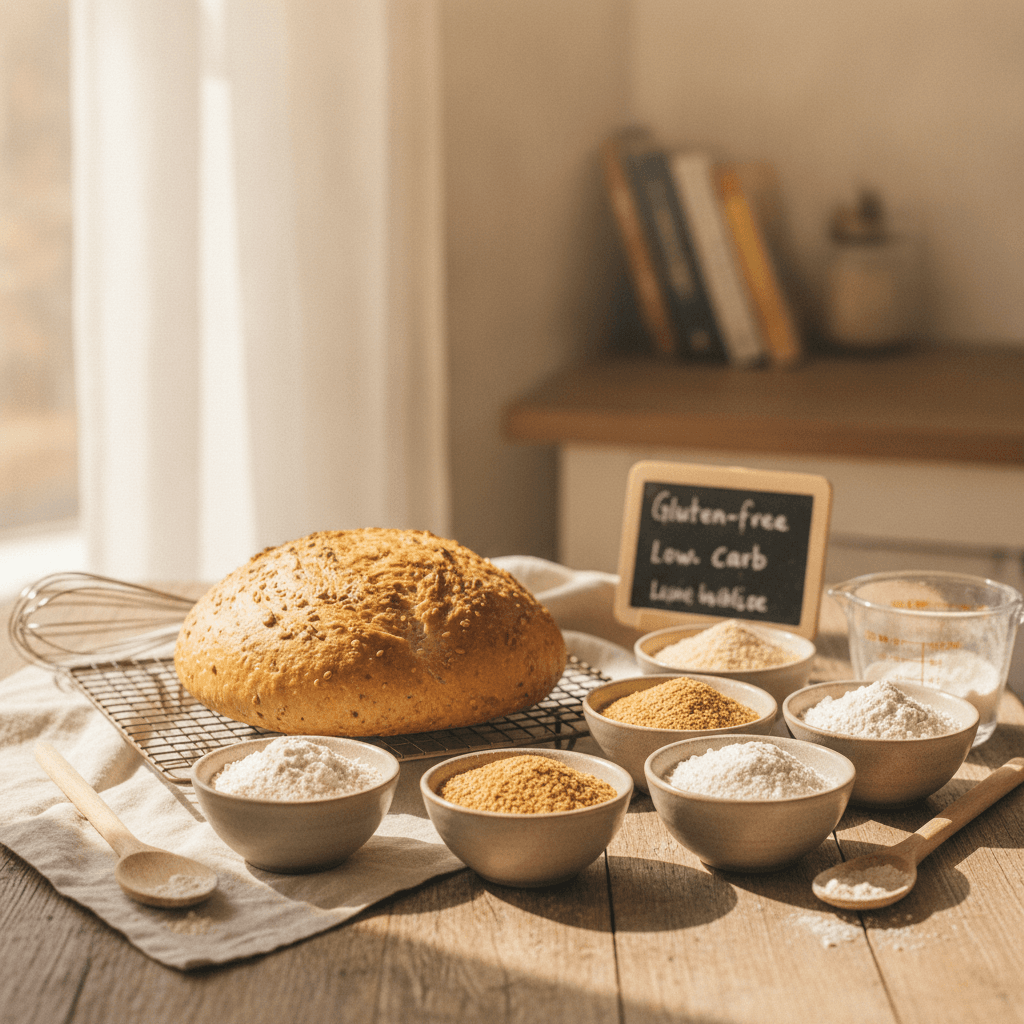
Most low carb flour alternatives behave nothing like wheat flour, and picking one based on carb count alone is the fastest way to end up with a dense, crumbly brick. The flour that works best depends on whether you want sandwich bread, flatbread, or a crusty loaf — and each option has tradeoffs in texture, taste, and cost that matter more than the macros on the label.
Key takeaways
- Almond flour and coconut flour are the two most popular low carb options, but they serve completely different roles and cannot be swapped 1:1.
- Flax meal and psyllium husk are not standalone flours — they are structural binders that most low carb bread recipes depend on.
- Lupin flour has the lowest net carb count of any flour alternative at roughly 1g net carbs per 1/4 cup, but it carries a legume allergy risk.
- Blending two or three low carb flours almost always produces better bread than using a single flour alone.
- Cost per loaf varies dramatically — a loaf made with almond flour can cost $3–$5 in flour alone, while a sunflower seed flour loaf runs closer to $1.50–$2.50.
- Vital wheat gluten is low carb but is not gluten-free — an important distinction for anyone baking for celiac customers.
Why a single low carb flour rarely makes good bread
Wheat flour works for bread because gluten forms an elastic protein network that traps gas from yeast or chemical leaveners. That network is what gives bread its chew, its rise, and its ability to hold a slice shape. No low carb flour replicates this on its own.
Almond flour is high in fat and has no binding capacity. Coconut flour absorbs enormous amounts of liquid but crumbles without extra eggs or binders. Even lupin flour, which has a more neutral flavor and higher protein content, lacks the elasticity that gluten provides.
This is why nearly every successful low carb bread formula uses a blend of flours plus a dedicated binder like psyllium husk or xanthan gum. If your bread is coming out with a dry, crumbly texture, the flour blend or binder ratio is almost certainly the issue — not the oven temperature or the leavener.
The 7 best low carb flour alternatives for bread, compared
Here is a side-by-side comparison of the most commonly used low carb flours. Net carb values are approximate and based on a 1/4 cup (roughly 28g) serving, which is the standard comparison used on most packaging.
| Flour | Approx. net carbs per 1/4 cup | Best for | Biggest drawback | Approx. cost per lb |
|---|---|---|---|---|
| Almond flour | 3g | Soft sandwich bread, flatbreads | Heavy, dense crumb; high fat content | $5–$8 |
| Coconut flour | 6g | Light, airy quick breads | Absorbs 3–4x more liquid than wheat flour; easy to dry out | $4–$7 |
| Flax meal | 0g | Binder/structural component in blends | Strong earthy flavor; goes rancid quickly | $3–$5 |
| Lupin flour | 1g | Yeast breads, pizza dough | Legume allergen; bitter if overused | $8–$14 |
| Sunflower seed flour | 3g | Nut-free bread alternatives | Can turn green from chlorogenic acid reacting with baking soda | $4–$6 |
| Oat fiber (not oat flour) | 0g | Bulking agent in blends | Zero binding power; needs significant support | $3–$5 |
| Vital wheat gluten | 4g | Adding chew and structure to low carb doughs | Contains gluten — not suitable for celiac or gluten-free diets | $3–$6 |
A note on vital wheat gluten: it appears on many low carb bread lists because it is genuinely low in carbohydrates. However, it is pure wheat protein. If you are baking for someone who avoids gluten for medical reasons, this is not an option. For those who are only reducing carbs and have no gluten sensitivity, it can be an effective way to add structure to a dough that otherwise falls apart.
Almond flour: the default choice (and its limits)
Almond flour is the most widely used low carb flour for bread, and for good reason — it has a mild flavor, a fine texture when blanched, and it is available at nearly every grocery store. A 1-pound bag typically runs $5–$8 depending on the brand, with Bob's Red Mill and Anthony's being two of the most common options at retail.
The problem is density. Almond flour is roughly 50% fat by weight, which means bread made entirely from almond flour tends to be heavy and moist rather than light and airy. It also browns faster than wheat flour, so bakers who are not watching their oven closely end up with a dark crust and an underdone center.
For example, if you sell almond flour sandwich loaves at $12 each and your flour cost alone is about $4.50 per loaf, blending almond flour with oat fiber and psyllium husk can stretch the batch without adding carbs. If you are selling low carb bread, that flour cost matters — pricing bread for profit requires knowing your per-loaf ingredient cost down to the dollar.
Coconut flour: the one everyone misuses
Coconut flour is the most absorbent flour in baking. It soaks up roughly three to four times more liquid than wheat flour, which means you need far less of it — and far more eggs or liquid — than you might expect. A common beginner mistake is substituting coconut flour 1:1 for almond flour and ending up with something that resembles a dry sponge.
When used correctly, coconut flour produces a lighter crumb than almond flour because it is lower in fat and higher in fiber. It also has a faint sweetness that works well in quick breads but can be noticeable in savory loaves. For savory bread, blending coconut flour with a more neutral option like lupin flour or sunflower seed flour helps balance the flavor.
One advantage of coconut flour is cost efficiency. Because you use so much less per batch, a $5 bag lasts significantly longer than the same dollar amount of almond flour. For home bakers watching their ingredient costs, this can meaningfully improve margins on low carb products.
Lupin flour: the low carb option most bakers overlook
Lupin flour is made from ground lupin beans and has one of the lowest net carb counts of any flour alternative — approximately 1g net carbs per 1/4 cup serving. It is also high in protein (around 12g per 1/4 cup), which gives it more structural potential than almond or coconut flour.
The downsides are real, though. Lupin is a legume, and people with peanut allergies may also react to lupin — this is a recognized cross-reactivity that the FDA has flagged. If you are selling baked goods, this is a labeling and liability issue worth taking seriously. Additionally, lupin flour has a slightly bitter aftertaste when used in large quantities, so most bakers cap it at 30–40% of their total flour blend.
Lupin flour is harder to find in stores and more expensive online, typically $8–$14 per pound. Brands like Lupina and Miracle Flour are among the more established options in the U.S. market.
Flax meal and psyllium husk: the binders that make low carb bread possible
Neither flax meal nor psyllium husk is a flour in the traditional sense, but they show up in almost every low carb bread recipe because they solve the binding problem that nut and seed flours cannot.
Psyllium husk powder absorbs water and forms a gel that mimics some of gluten's elastic properties. It is the single most important ingredient for getting low carb bread to hold together when sliced. Without it (or a similar binder like xanthan gum), most low carb loaves crumble the moment you try to cut them.
Flax meal (ground flaxseed) adds binding through its mucilaginous fiber and contributes omega-3 fatty acids. However, it has a pronounced earthy, almost nutty flavor that not everyone enjoys. It also goes rancid faster than most flours — storing it in the refrigerator or freezer extends its shelf life from a few weeks at room temperature to several months.
A practical note: whole psyllium husk and psyllium husk powder are not interchangeable. The powder hydrates more evenly and produces a smoother crumb. Using whole husks without grinding them first can result in a gritty texture that is hard to fix after baking.
Sunflower seed flour: the nut-free alternative
For bakers who need to avoid tree nuts — whether for personal allergies or because they are selling to customers with nut allergies — sunflower seed flour is the most practical low carb option. It has a similar fat and protein profile to almond flour, a mild flavor, and costs less per pound in most markets ($4–$6 versus $5–$8 for almond flour).
There is one well-known quirk: sunflower seed flour contains chlorogenic acid, which reacts with baking soda to produce a vivid green color. The bread is perfectly safe to eat, but it looks alarming. Substituting baking powder for baking soda, or adding a small amount of acid like lemon juice or apple cider vinegar, prevents the reaction in most cases.
If you are running a home bakery and considering a nut-free low carb line, sunflower seed flour is worth exploring — but photograph your test batches before committing to selling them. The green tint issue catches many bakers off guard the first time. And if you are thinking about whether to specialize in allergen-friendly baking, low carb plus nut-free is a niche with genuine demand and limited competition.
Why blending flours outperforms any single flour
The most successful low carb bread bakers almost universally use blends rather than single flours. A common starting framework looks something like this:
- Primary flour (50–60% of total): Almond flour, lupin flour, or sunflower seed flour for bulk and flavor
- Secondary flour (20–30%): Coconut flour or oat fiber for lightness and absorbency
- Binder (10–15%): Psyllium husk powder, flax meal, or xanthan gum for structure
This approach lets you compensate for each flour's weaknesses. Almond flour's density gets offset by coconut flour's absorbency. Lupin flour's bitterness gets diluted by a milder primary flour. And the binder holds everything together so the loaf actually slices.
The tradeoff is complexity. Blending three or four specialty flours means more ingredients to stock, more cost to track, and more variables to control. For home bakers selling low carb bread, this means your per-loaf cost calculation needs to account for every component — not just the most expensive one.
A contrarian take: low carb bread does not have to mimic wheat bread
Here is an opinion that goes against most of the advice in low carb baking communities: stop trying to make low carb bread taste and feel exactly like wheat bread. It will not. The chemistry is fundamentally different, and chasing a perfect replica leads to frustration and wasted ingredients.
The best low carb bread results come from leaning into what these flours do well rather than fighting their limitations. Almond flour makes excellent dense, hearty flatbreads. Coconut flour produces surprisingly good quick breads and muffin-style loaves. Lupin flour handles pizza dough better than most alternatives.
Rather than spending $15 in specialty flour trying to replicate a $3 loaf of sandwich bread, consider whether the bread style you are aiming for is actually the best use of these ingredients. Sometimes the answer is a different shape, a different density, or a different serving context altogether.
What to watch out for when buying low carb flours
Not all products labeled "low carb flour" are what they seem. A few things to check:
- Net carbs vs. total carbs: Many low carb flours advertise net carbs (total carbs minus fiber), which is a legitimate calculation but can be misleading if the fiber count is inflated by added ingredients.
- Pre-made blends with fillers: Some commercial low carb flour blends include modified starches, sugar alcohols, or other additives that may affect blood sugar differently than the label suggests. Read the full ingredient list.
- "Keto flour" marketing: This is not a regulated term. Any flour can be marketed as keto-friendly. Compare the actual nutrition facts rather than relying on front-of-package claims.
- Freshness: High-fat flours like almond and flax go rancid. If the flour smells bitter or painty, it is past its prime and will make your bread taste off. Buy from stores with high turnover or order from brands that print production dates.
Frequently asked questions
What is the best low carb flour for bread that tastes like regular bread?
No single low carb flour perfectly replicates wheat bread. The closest results typically come from blends that combine a primary flour like almond or lupin with a binder like psyllium husk powder. Vital wheat gluten adds the most bread-like chew, but it contains gluten and is not suitable for anyone with celiac disease or gluten sensitivity.
Can you use almond flour and coconut flour interchangeably in bread?
No. Coconut flour absorbs roughly three to four times more liquid than almond flour, so substituting one for the other without adjusting the liquid and egg quantities will produce very different results. Coconut flour also produces a lighter, drier crumb while almond flour produces a denser, moister one. They work best when used together in a blend rather than swapped directly.
Why does my low carb bread fall apart when I slice it?
The most common cause is insufficient binding. Low carb flours lack gluten, so without a binder like psyllium husk powder, xanthan gum, or extra eggs, the bread has no internal structure to hold it together. Another frequent issue is slicing the bread before it has fully cooled — low carb loaves need at least 30–45 minutes of cooling time for the crumb to set.
Is oat fiber the same as oat flour?
No. Oat flour is ground from whole oats and contains significant carbohydrates. Oat fiber is made from the outer hull of the oat and is almost entirely insoluble fiber with essentially zero net carbs. They behave very differently in baking — oat fiber adds bulk without binding or flavor, while oat flour contributes starch, flavor, and moisture absorption.
How much does it cost to make a loaf of low carb bread at home?
Ingredient cost varies by flour choice, but most low carb loaves run between $3 and $7 in ingredients. A loaf heavy on almond flour tends toward the higher end ($4.50–$7), while blends that use sunflower seed flour, oat fiber, and flax meal can come in at $2–$3.50. For comparison, a standard loaf of wheat bread costs roughly $0.50–$1.00 in flour. If you are selling low carb bread, factor in these higher ingredient costs when evaluating your margins.

Written by
Co-founder, BakingSubs
Co-founder of BakingSubs, where he turns the science of ingredient substitutions into tested, reliable guidance for home bakers.
Related Posts
Bake with Confidence
See all
Confident Gluten-Free Baker Toolkit
The science-based system that replaces gluten's seven invisible jobs so your baking turns out soft, fluffy, and foolproof — every time.

Gluten-Free Recipe Vault
Instant access to our complete library of proven gluten-free recipes — no waiting, no guesswork, just results that work tonight.

Fix Your Gluten-Free Bread
Learn the 3-step formula to make bread rise and stay soft, discover why your loaves collapse, and get a tested sandwich bread recipe that actually works.