

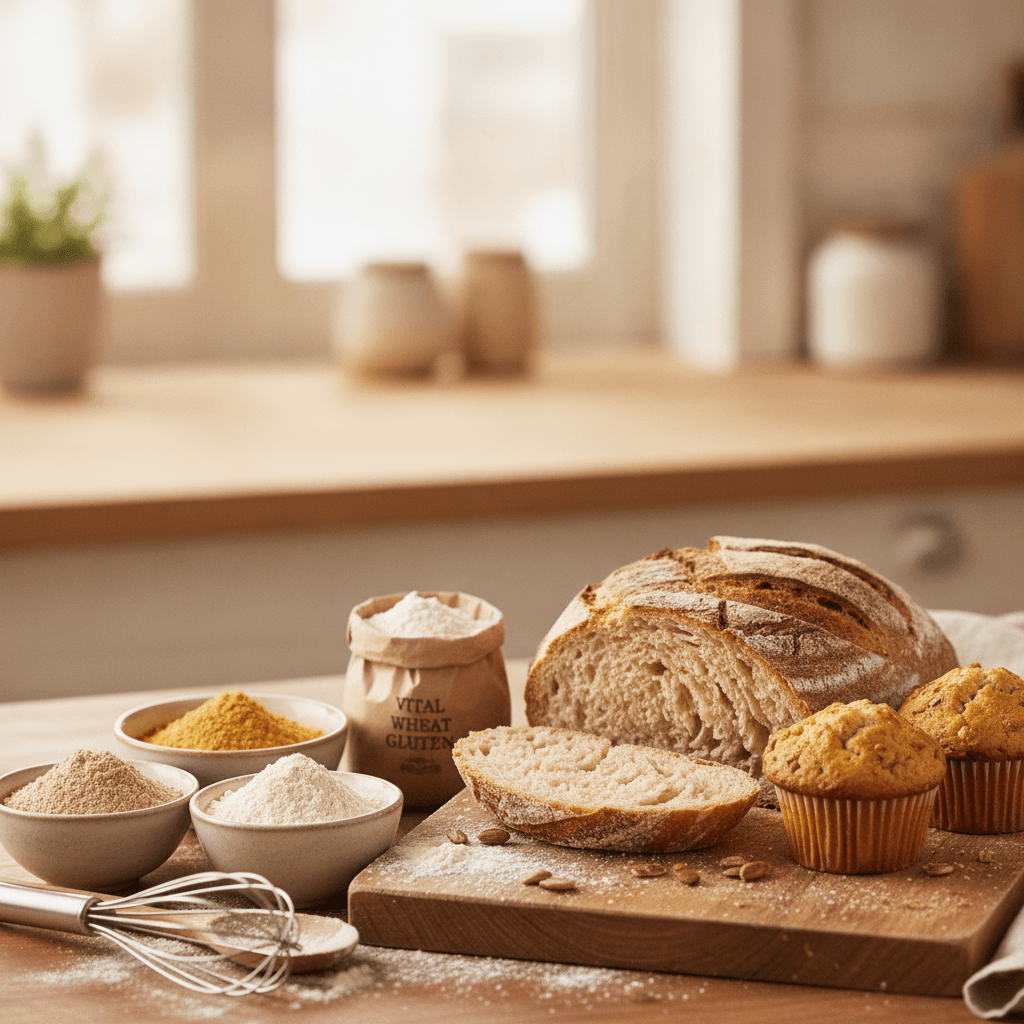
High protein flour — typically bread flour at around 12–14% protein — builds the gluten network that gives bread its chew and structure. But if you're out of it, baking gluten-free, or just want a more nutritious option, several substitutes can deliver comparable or even higher protein content without wrecking your bake.
Here's what actually works, what doesn't, and the tradeoffs nobody warns you about.
Key takeaways
- Vital wheat gluten added to all-purpose flour is the closest 1:1 swap for bread flour in yeasted baking.
- Chickpea flour packs roughly 20–22g of protein per 100g — nearly double that of bread flour — but behaves completely differently in a dough.
- Almond flour is high in protein and fat but has zero gluten, so it needs a binder like aquafaba or eggs to hold structure.
- Spelt flour contains gluten but less of it, so it works for bread but produces a more tender, less chewy crumb.
- Blending two or three of these flours often outperforms using any single substitute alone.
- Protein content alone does not predict baking performance — the type of protein matters just as much.
Why protein content in flour matters for baking
Protein in wheat flour — specifically glutenin and gliadin — forms gluten when hydrated and kneaded. That gluten network traps gas from yeast or chemical leaveners, which is what gives bread its rise and chew. Flour with higher protein produces stronger gluten, which is why bread flour exists as a separate product from all-purpose.
But here's the part that trips people up: not all protein creates gluten. Almond flour has about 21g of protein per 100g, which is higher than bread flour. Yet it cannot form gluten at all. The proteins in almonds are albumins and globulins — completely different molecules. So when you're looking for a high protein flour substitute, you need to ask two questions: how much protein, and what kind?
This distinction is especially important in gluten-free baking, where you're replacing not just protein content but an entire structural system.
7 high protein flour substitutes that actually work
1. All-purpose flour plus vital wheat gluten
All-purpose flour typically runs 10–12% protein. Adding vital wheat gluten — a concentrated wheat protein powder — bumps that up to bread flour territory. A common approach is adding about 1 tablespoon (roughly 9g) of vital wheat gluten per cup of all-purpose flour, which raises the protein content by approximately 2 percentage points.
This is the closest substitute for bread flour in yeasted applications like sandwich bread, pizza dough, and bagels. The texture and rise are nearly indistinguishable. The downside is that vital wheat gluten is not cheap — a 22-ounce bag of Bob's Red Mill Vital Wheat Gluten runs around $8–$10 depending on where you buy it, and you'll go through it fast if you bake bread regularly.
This swap obviously does not work for anyone avoiding gluten.
2. Chickpea flour (garbanzo bean flour)
Chickpea flour is a powerhouse on paper: roughly 20–22g of protein per 100g, plus a solid amount of fiber. It's naturally gluten-free and adds a slightly nutty, earthy flavor to baked goods.
The catch is that chickpea flour is dense, can taste beany if used in large quantities, and absorbs more liquid than wheat flour. Most bakers who use it successfully keep it to about 25–30% of a flour blend rather than using it as a full replacement. It works well in flatbreads, savory muffins, and socca (the traditional chickpea flatbread from Nice, France). In sweet baking, the flavor can clash unless you're pairing it with strong flavors like chocolate or warm spices.
If you've experienced strange aftertaste in gluten-free baking, chickpea flour used at too high a ratio is a common culprit. Toasting it lightly in a dry pan before using can reduce the raw bean flavor significantly.
3. Almond flour
Almond flour contains about 21g of protein per 100g and brings healthy fats along with it. It produces moist, tender baked goods — think macarons, financiers, and quick breads. The fat content (around 50g per 100g) means it behaves nothing like wheat flour structurally.
Because almond flour has no gluten, it needs help from binders. Eggs are the most common partner. In gluten-free baking, aquafaba or flax eggs can fill that role for vegan applications. Almond flour also doesn't absorb liquid the same way starches do, so recipes designed for wheat flour rarely translate well with a straight swap.
Cost is the other factor. A 1-pound bag of blanched almond flour from brands like Blue Diamond or Bob's Red Mill typically costs $7–$12, making it one of the more expensive flour options. For home bakers selling products, that cost adds up fast — something worth tracking if you're watching your ingredient costs and margins.
4. Spelt flour
Spelt is an ancient grain that contains gluten — just less of it, and a weaker version compared to modern wheat. Its protein content is comparable to bread flour (around 12–15%), but the gluten it forms is more fragile and extensible rather than elastic. That means spelt doughs rise well but don't hold their shape as aggressively, producing a softer, more tender crumb.
For bread baking, spelt flour can substitute for high protein wheat flour if you reduce kneading time and handle the dough more gently. Over-kneading spelt breaks down its delicate gluten network and produces a flat, dense loaf. Many bakers use a 50/50 blend of spelt and bread flour to get the best of both worlds — the flavor complexity of spelt with the structural reliability of wheat gluten.
Spelt is not safe for people with celiac disease or wheat allergy, despite being a different species from common wheat. It still contains gluten-forming proteins.
5. Buckwheat flour
Buckwheat flour is gluten-free despite its misleading name (buckwheat is a seed, not a grain) and contains about 12–13g of protein per 100g. It has a distinctive earthy, almost malty flavor that works beautifully in pancakes, crepes, and certain rustic breads.
The protein in buckwheat is notable for being a complete protein — it contains all essential amino acids, which is unusual for a plant-based flour. However, like other non-wheat flours, that protein doesn't form gluten. Buckwheat flour used at 100% produces crumbly, fragile baked goods unless paired with a binder or blended with a starch like arrowroot or tapioca.
A practical blend for gluten-free bread: buckwheat flour at about 40%, a lighter starch at 40%, and a binding agent like psyllium husk or xanthan gum making up the remaining structural support. This approach helps address the dry, crumbly texture that plagues many gluten-free loaves.
6. Oat flour
Oat flour — made from ground rolled or steel-cut oats — contains about 13–17g of protein per 100g depending on the variety. It's naturally gluten-free (though cross-contamination during processing is common, so look for certified gluten-free oat flour if that matters for your situation).
Oat flour produces soft, slightly gummy baked goods when used alone because its beta-glucan fiber absorbs a lot of water. It works best as part of a blend — paired with a starch for lightness and a stronger flour for structure. Cookies, muffins, and quick breads are its sweet spot. Yeasted bread made with 100% oat flour tends to be dense and doesn't rise well, partly because oat protein (avenin) does not form a gluten-like network.
One advantage: oat flour is cheap to make at home. Pulse rolled oats in a blender or food processor for about 30 seconds and you have flour. A Vitamix or similar high-speed blender produces a finer grind than a food processor, which matters for texture in cakes and cookies.
7. Amaranth flour
Amaranth flour is another ancient pseudo-grain flour with roughly 14–16g of protein per 100g. Like buckwheat, it's a complete protein source and naturally gluten-free. The flavor is grassy and slightly peppery — more assertive than rice flour but less intense than buckwheat.
Amaranth flour works well at 15–25% of a flour blend. Going higher than that tends to produce a heavy, almost sticky crumb with a strong flavor that overwhelms delicate baked goods. It pairs well with brown rice flour and tapioca starch in gluten-free bread formulations.
Availability can be an issue. Amaranth flour is less commonly stocked in regular grocery stores compared to almond or oat flour, though it's readily available online.
How to choose the right substitute for your bake
The best high protein flour substitute depends entirely on what you're making. Here's a quick reference:
| Substitute | Protein (per 100g) | Contains gluten? | Best for | Avoid for |
|---|---|---|---|---|
| AP flour + vital wheat gluten | ~12–14g (adjusted) | Yes | Yeasted bread, pizza, bagels | Gluten-free baking |
| Chickpea flour | ~20–22g | No | Flatbreads, savory bakes, blends | Delicate sweet cakes |
| Almond flour | ~21g | No | Macarons, quick breads, cookies | Yeasted bread, nut-free needs |
| Spelt flour | ~12–15g | Yes | Artisan bread, muffins, pancakes | Celiac-safe baking |
| Buckwheat flour | ~12–13g | No | Pancakes, crepes, rustic bread blends | Light, white-crumb cakes |
| Oat flour | ~13–17g | No (if certified) | Cookies, muffins, quick breads | Crusty yeasted loaves |
| Amaranth flour | ~14–16g | No | Blends for GF bread, flatbreads | Solo use above 25% of blend |
The blending strategy that outperforms single-flour swaps
Here's the contrarian take: obsessing over a single high protein flour substitute is usually the wrong approach. The most successful gluten-free and alternative-flour bakers use blends of 2–3 flours plus a starch and a binder. Each component does a different job.
For example, a gluten-free base blend of brown rice flour, oat flour, and tapioca starch can cover most breads, with chickpea flour added when you want more protein and structure in heartier loaves. The reasoning: no single gluten-free flour replicates what wheat does, so you need a team.
This blending approach also helps manage cost. Almond flour at $10 per pound is expensive as a base, but at 20% of a blend, you're using about 2 ounces per loaf — roughly $1.25 in flour cost. Pair it with cheaper oat flour and rice flour, and your total flour cost per loaf stays under $2.50 even with premium ingredients.
For home bakers selling bread, that flour cost matters. A loaf priced at $8 with $2.50 in flour leaves room for other costs, but a loaf with $5 in almond flour alone doesn't. If you're running a bread microbakery, tracking flour cost per unit is one of the fastest ways to protect your margins.
Common mistakes when substituting high protein flour
Three errors come up repeatedly:
Swapping 1:1 by volume without adjusting hydration. High protein flours — especially chickpea and buckwheat — absorb significantly more water than all-purpose or bread flour. If you use the same amount of liquid, you'll get a dry, crumbly result. Start with the same amount of flour and add liquid gradually until the dough or batter reaches the consistency described in your source material.
Assuming high protein means strong structure. As covered above, protein content and gluten-forming ability are two different things. Almond flour has more protein than bread flour but zero structural strength on its own. If you need structure in a gluten-free bake, you need a dedicated binder — xanthan gum, psyllium husk, or eggs — regardless of how much protein your flour contains. Our guide on poor rise in gluten-free baking covers this structural gap in detail.
Ignoring flavor impact. Chickpea, buckwheat, and amaranth flours all have strong, distinctive flavors. Subbing them into a vanilla cake or sugar cookie will change the taste profile dramatically. If you want a neutral flavor, stick with oat flour, white rice flour, or the vital wheat gluten approach (for non-GF baking).
A note on protein quality beyond baking performance
Some bakers seek high protein flour substitutes not for structural reasons but for nutritional ones — they want more protein in their muffins, pancakes, or snack bars. If that's your goal, chickpea flour and almond flour are the clear winners on a gram-for-gram basis. Buckwheat and amaranth have the added advantage of being complete proteins.
Adding a scoop of unflavored protein powder (whey or plant-based) to a standard flour blend is another option, though it changes texture. Whey protein tends to make baked goods denser and drier, so reducing flour by the amount of protein powder added — and increasing liquid slightly — helps compensate.
Frequently asked questions
Can I use all-purpose flour instead of high protein flour?
Yes, for most baking applications. All-purpose flour has slightly less protein than bread flour (about 10–12% versus 12–14%), which means slightly less gluten development. Your bread may be a bit less chewy and slightly shorter in rise, but it will still work. Adding a tablespoon of vital wheat gluten per cup of all-purpose flour closes the gap almost completely.
What is the best gluten-free high protein flour?
Chickpea flour and almond flour have the highest protein content among commonly available gluten-free options, at roughly 20–22g and 21g per 100g respectively. For structure in bread, chickpea flour in a blend with a starch and binder tends to perform better. For cookies and quick breads, almond flour is usually the easier choice.
Does higher protein flour always make better bread?
Not necessarily. Very high protein flour (above 14%) can produce bread that's tough and overly chewy if you're not making something like bagels or high-hydration artisan loaves that benefit from extra gluten strength. Softer breads like brioche or dinner rolls actually perform better with moderate protein flour. Match the protein level to the texture you want.
Can I mix two flour substitutes together?
Absolutely — and in most cases you should, especially in gluten-free baking. Blending two or three flours with complementary properties (one for protein, one for lightness, one for binding) produces better results than any single flour alone. Start with a proven ratio from a trusted source and adjust from there based on your results.
Is spelt flour safe for people with celiac disease?
No. Spelt contains gluten and is not safe for anyone with celiac disease or a diagnosed wheat allergy. While spelt is a different species from common wheat, its proteins still trigger the same immune response in people with celiac. If you need a celiac-safe, high protein flour, look at chickpea, almond, buckwheat, or amaranth flour instead.

Written by
Co-founder, BakingSubs
Co-founder of BakingSubs, where he turns the science of ingredient substitutions into tested, reliable guidance for home bakers.
Related Posts
Bake with Confidence
See all
Confident Gluten-Free Baker Toolkit
The science-based system that replaces gluten's seven invisible jobs so your baking turns out soft, fluffy, and foolproof — every time.

Gluten-Free Recipe Vault
Instant access to our complete library of proven gluten-free recipes — no waiting, no guesswork, just results that work tonight.

Fix Your Gluten-Free Bread
Learn the 3-step formula to make bread rise and stay soft, discover why your loaves collapse, and get a tested sandwich bread recipe that actually works.