
Why Protein Baked Goods Turn Out Dry: 10 Powders Ranked for Baking (With the Fixes That Actually Work)
Protein baked goods turn out dry because protein powder absorbs 2-4x more liquid than flour. We rank 10 powders for baking and share 5 fixes that actually work.

Malik
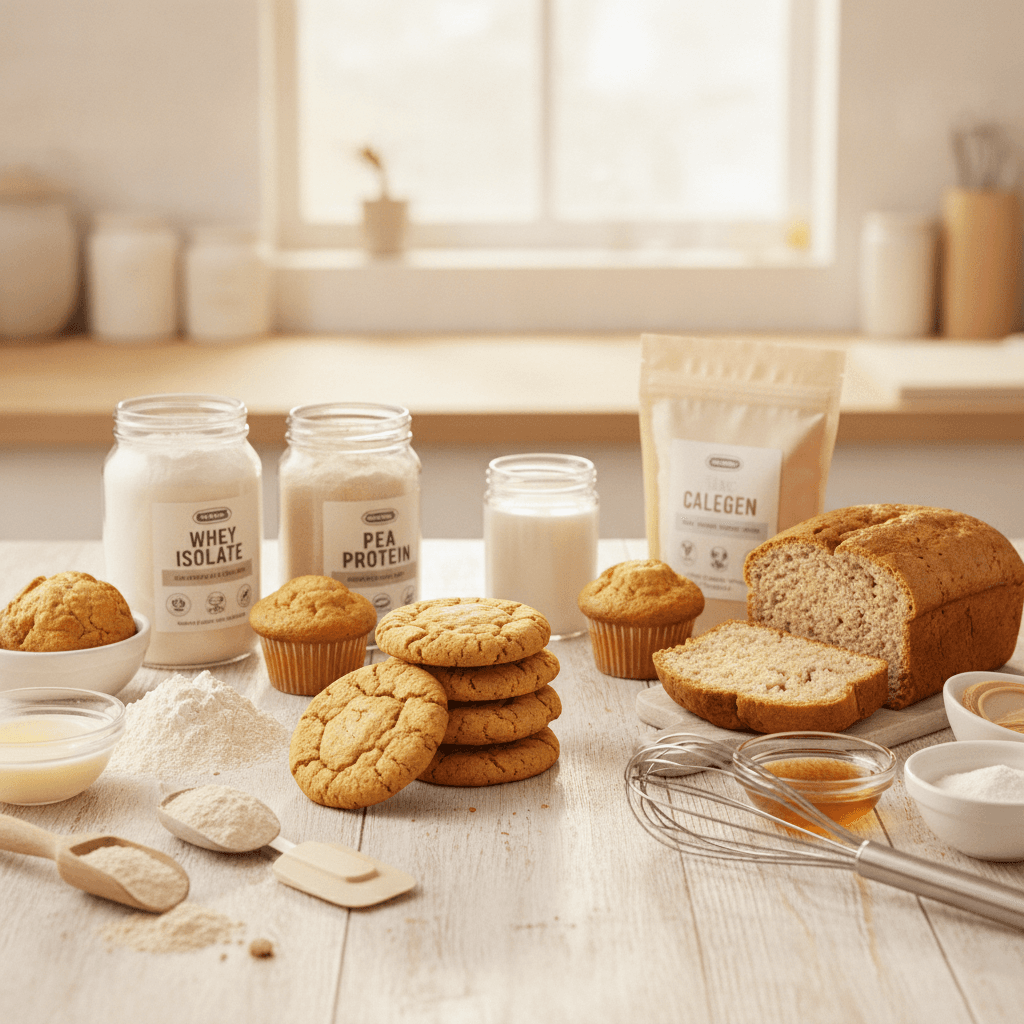
Most protein baked goods turn out dry because protein powder absorbs 2 to 4 times more liquid than flour does, and bakers rarely compensate for that. This is a buying guide: we rank 10 real protein powders by how they perform in an oven, not a shaker bottle, and then walk you through exactly how to fix the dryness, rubberiness, and cratering that send most protein bakes straight to the trash.
Key takeaways
Whey protein isolate absorbs roughly 1.5x its weight in liquid, compared to about 0.6x for all-purpose flour. Failing to add extra liquid is the number-one cause of dry protein bakes.
Unflavored powders outperform vanilla in baking because artificial sweeteners like sucralose and stevia can turn bitter above 350 F (177 C).
Most protein powders should replace no more than 20 to 25% of the flour by weight. Beyond that the crumb turns rubbery regardless of hydration.
Casein and egg white protein create the tightest, driest crumb. Whey concentrate and collagen create the softest, but collagen adds almost no structure.
Adding 1 to 2 tablespoons of fat per 30g scoop of protein powder is the single most effective fix for dryness, ahead of extra liquid alone.
Our ranked verdict: best protein powders for baking
Here is how these 10 powders stack up specifically for oven use. The ranking weighs moisture retention, crumb texture, browning behavior, and flavor neutrality. If you just want the short answer: Naked Whey Unflavored is our top pick for most bakers.

NAKED Whey 2LB 100% Grass Fed Whey Protein Powder - Only 1 Ingredient, Unflavored Whey Protein, NSF Certified, Undenatured, Gluten Free, Soy Free, No GMOs, No Preservatives
Check price on Amazon →Brand | Type | Protein/scoop | Liquid absorption vs flour | Max flour replacement | Browning | Sweetener survives oven? | Buy |
|---|---|---|---|---|---|---|---|
Naked Whey (unflavored) | Whey concentrate | 25g / 30g scoop | ~1.4x | 25% | Golden, even | No sweetener (clean) | |
Isopure Unflavored | Whey isolate | 25g / 29g scoop | ~1.6x | 20% | Pale, slow | No sweetener (clean) | |
Optimum Nutrition Gold Standard (vanilla) | Whey blend | 24g / 31g scoop | ~1.5x | 20% | Golden brown | Sucralose: mild bitterness above 375 F | |
Anthony's Egg White Protein | 25g / 30g scoop | ~2.0x | 15% | Very fast browning | No sweetener (clean) | ||
BulkSupplements Casein | Casein | 26g / 33g scoop | ~2.5x | 15% | Deep golden, fast | No sweetener (clean) | |
Ghost Whey (vanilla) | Whey blend | 25g / 36g scoop | ~1.5x | 20% | Golden | Sucralose: slight off-taste at 375 F+ | |
Ryse Loaded Protein (vanilla) | Whey blend | 25g / 37g scoop | ~1.5x | 20% | Golden | Sucralose + stevia: bitterness likely above 350 F | |
Legion Whey+ (unflavored) | Whey isolate | 22g / 28g scoop | ~1.6x | 20% | Pale | No sweetener (clean) | |
Orgain Organic Plant (vanilla) | Pea/rice blend | 21g / 46g scoop | ~1.8x | 20% | Dark quickly (sugars in blend) | Stevia: can go bitter above 350 F | |
Vital Proteins Collagen Peptides | Collagen | 18g / 20g scoop | ~0.8x | 10% | Minimal browning | No sweetener (clean) |
A few things jump out from this table. Casein and egg white protein absorb the most liquid, which is exactly why bakes made with them turn out the driest. Collagen barely absorbs at all, but it also contributes almost zero structure, so you cannot replace much flour with it. For a deep look at that problem, see our post on collagen powder in baking as a flour supplement.
Why each protein type behaves differently in the oven
Protein powder is not a single ingredient. Whey, casein, egg white, collagen, and plant blends each denature (unfold and bond) at different temperatures, absorb different amounts of water, and create completely different crumb structures. Treating them as interchangeable is the fastest way to ruin a bake.
Whey concentrate vs whey isolate
Whey concentrate (like Naked Whey) retains some fat and lactose, which act as tenderizers in the crumb. It absorbs about 1.4x its weight in liquid. Whey isolate (like Isopure Unflavored) has been stripped of nearly all fat, so it absorbs closer to 1.6x and produces a noticeably drier, tighter crumb. If your recipe calls for "whey protein" without specifying, concentrate will be more forgiving.
Both denature around 160 to 170 F (71 to 77 C), which means they set early in the bake. That early set is why protein muffins often dome and then crater: the outside firms up before the interior finishes rising. We cover the fix below.
Casein: the moisture thief
BulkSupplements Casein absorbs roughly 2.5x its weight in liquid. For context, all-purpose flour absorbs about 0.6x. That is a 4:1 ratio of water demand. If you swap 30g of flour for 30g of casein without adding extra liquid, you are pulling about 57ml of water out of the batter that the flour would have left alone. That is nearly a quarter cup of missing moisture in a single muffin batch.
Casein does brown beautifully and creates a dense, chewy texture that works in protein bars. In cakes and muffins, it almost always produces a dry, hockey-puck result unless you cap it at 15% of total flour weight and add at least 2 tablespoons of extra liquid per 30g scoop.
Egg white protein: structure plus dryness
Anthony's Egg White Protein is essentially dehydrated, powdered egg whites. It absorbs about 2x its weight in liquid and sets into a very firm, almost springy crumb. It browns fast because of the proteins involved in the Maillard reaction. The maximum flour replacement before the texture turns rubbery is around 15%. Going to 20% produces something closer to a protein bar than a muffin.
If you are looking for alternatives to egg white protein that still deliver structure, our guide on egg white substitutes for high protein baking covers six options.
Collagen: soft but structureless
Vital Proteins Collagen Peptides dissolves completely in liquid and barely absorbs any extra moisture (about 0.8x). That sounds ideal until you realize it also contributes almost no structure. Collagen does not denature and set the way whey or egg white does. Replace more than about 10% of your flour with it and the bake will be gummy in the center and prone to collapsing. It will not brown much on its own either. Our full breakdown on why collagen mostly fails as a flour supplement goes deeper on this.
Plant blends (pea, rice, hemp)
Orgain's pea/rice blend absorbs about 1.8x its weight in liquid, which puts it between whey and casein. Plant proteins tend to have a grainier texture and a more assertive flavor. They also brown faster because many blends contain added sugars or fibers. The maximum flour replacement is about 20%, but the flavor usually becomes noticeable before the texture becomes a problem. Hemp protein is even more challenging; we have a dedicated post on hemp protein powder in baking if that is what you are working with.
Unflavored vs vanilla: which one bakers actually need
Unflavored protein powder is almost always the better choice for baking, and here is why: flavored powders contain sweeteners that behave unpredictably in the oven.
Sucralose (found in Optimum Nutrition Gold Standard, Ghost, and Ryse) is heat-stable up to about 350 F (177 C). Above that, it can break down and develop a metallic, bitter edge. Most cookies bake at 350 F, so you might be fine. Muffins and cakes at 375 F? That is where problems start.
Stevia (found in Orgain and some Ryse formulas) is technically heat-stable, but it intensifies in perceived sweetness when concentrated by evaporation during baking. A shake that tastes mildly sweet can produce a muffin that tastes aggressively sweet with a bitter finish.
Monk fruit sweetener is the most heat-stable of the three and rarely turns bitter, but very few mainstream protein powders use it exclusively.
If you do use a flavored powder and want to manage sweetness, our posts on reducing sugar without artificial sweeteners and sugar alcohols in baking can help you balance the overall sweetener load.
The real reason protein baked goods turn out dry (and 5 fixes)
Dryness is the single most common failure in protein baking. It happens because protein powder is not flour. Flour is about 10 to 12% protein and 70 to 75% starch. That starch gelatinizes during baking, trapping moisture and creating a tender crumb. Protein powder is 70 to 90% protein and almost no starch. There is nothing to hold onto the water, so it either gets absorbed by the protein matrix or evaporates.
Fix 1: add extra liquid, but the right amount
For every 30g scoop of protein powder replacing flour, add 2 to 4 tablespoons (30 to 60ml) of extra liquid. The exact amount depends on the powder type. Use the absorption numbers from the table above. Whey concentrate needs the least extra. Casein needs the most.
Fix 2: add fat, not just liquid
This is the fix most protein baking guides skip. Fat coats the protein strands and physically prevents them from bonding too tightly. Add 1 to 2 tablespoons of oil, melted butter, or nut butter per 30g scoop. Adding fat is often more effective at preventing dryness than adding liquid alone.
Fix 3: do not exceed the flour replacement ceiling
The table above lists the maximum percentage of flour each powder can replace. Those numbers are not suggestions. At 30% replacement with whey isolate, the crumb becomes dense and chewy regardless of how much liquid you add. At 40%, it is rubbery. We have a full post on protein powder as flour replacement that goes deeper on the mechanics.
Fix 4: use a moisture-rich add-in
Greek yogurt (about 100g per 30g scoop), mashed banana, pumpkin puree, or shredded zucchini all introduce moisture that releases slowly during baking. These are especially effective with high-absorption powders like casein and egg white protein.
Fix 5: lower the oven temperature by 25 F
Protein sets at a lower temperature than starch gelatinizes. Baking at 325 F instead of 350 F gives the interior more time to cook through before the exterior locks into place. This also reduces the chance of sweetener breakdown in flavored powders.
Troubleshooting: rubberiness, cratering, and gummy centers
Rubbery crumb
Rubberiness means the protein strands have cross-linked too tightly. This happens when you replace too much flour (usually above 25% for whey, 15% for casein or egg white) or when the batter is overmixed. Protein powder develops a network similar to gluten when agitated, so mix until just combined. If you are already at the correct replacement percentage and the crumb is still rubbery, add 1 tablespoon of fat and reduce mixing time to under 30 seconds after the protein is added.
Cratering (dome that collapses)
Cratering happens because protein sets early on the outside while the inside is still rising. The crust locks, the interior pushes up, and then the whole thing falls when the steam escapes. Fix this by lowering oven temperature to 325 F, filling muffin tins only two-thirds full, and avoiding opening the oven door during the first 15 minutes. Using a reliable oven thermometer helps, since many home ovens run 15 to 25 F hotter than the dial says.
Gummy or wet center
This is the opposite problem: the outside looks done but the inside is underdone and gummy. It happens most often with collagen (which adds no structure) and plant blends (which hold moisture in a gel-like matrix). Extend baking time by 3 to 5 minutes, use a Thermoworks instant-read thermometer and pull when the center hits 200 F (93 C), and make sure you are not using too much liquid. If you are working with collagen specifically, keep it at 10% of flour or less and pair it with a structured flour like almond flour.
How to scale protein baking recipes
Scaling protein recipes is trickier than scaling standard ones because the liquid-to-protein ratio matters more than the liquid-to-flour ratio. If you double a recipe, you need to double both the protein powder and the extra liquid you added to compensate for it. Our recipe scaler tool handles the math, but always weigh your protein powder with a kitchen scale rather than using scoops. Scoop weights can vary by a few grams, and in a single-serve muffin recipe that small difference is enough to shift the texture from tender to dry.
Frequently asked questions
Why does protein powder make baked goods dry?
Protein powder absorbs 1.4 to 2.5 times its weight in liquid, compared to about 0.6x for all-purpose flour. When you swap flour for protein powder without adding extra liquid and fat, the powder pulls moisture out of the batter and locks it into a tight protein matrix. The result is a crumb that feels chalky and crumbly. Adding 2 to 4 tablespoons of liquid plus 1 to 2 tablespoons of fat per 30g scoop compensates for this. Our post on how to add protein to baked goods without ruining texture covers seven methods.
Can you replace all the flour with protein powder?
No. Even the most forgiving protein powders (whey concentrate) should replace no more than 25% of total flour by weight. Beyond that, the crumb becomes rubbery because there is not enough starch to gelatinize and create a tender structure. At 100% replacement, you get something closer to a protein bar than a muffin or cake. See our guide on protein powder as flour replacement for the full breakdown.
Does sucralose in protein powder turn bitter when baked?
Sucralose is stable up to about 350 F (177 C). Above that temperature, it can decompose and develop a metallic or bitter aftertaste. If your recipe bakes at 375 F or higher, use an unflavored protein powder or one sweetened with monk fruit instead. Stevia does not turn bitter from heat itself, but it can taste more intensely sweet after baking because moisture evaporation concentrates the flavor.
What is the best protein powder for baking muffins?
Unflavored whey concentrate, specifically Naked Whey Unflavored, is our top pick. It has the lowest liquid absorption of the whey options (about 1.4x), retains some natural fat that tenderizes the crumb, contains no sweeteners that could turn bitter, and browns evenly. Replace up to 25% of the flour by weight and add 2 tablespoons of extra liquid per scoop.
Why do my protein muffins sink in the middle?
Cratering happens because protein denatures and sets at a lower temperature than starch gelatinizes. The outside of the muffin firms up while the inside is still rising from steam and leavening. When that steam escapes, the center collapses. Lower your oven temperature to 325 F, fill tins only two-thirds full, and do not open the oven door for the first 15 minutes. Using a consistent, accurate oven temperature is critical.

Written by
Co-founder, BakingSubs
Co-founder of BakingSubs, where he turns the science of ingredient substitutions into tested, reliable guidance for home bakers.
Related Posts
Bake with Confidence
See all
Confident Gluten-Free Baker Toolkit
The science-based system that replaces gluten's seven invisible jobs so your baking turns out soft, fluffy, and foolproof — every time.

Gluten-Free Recipe Vault
Instant access to our complete library of proven gluten-free recipes — no waiting, no guesswork, just results that work tonight.

Fix Your Gluten-Free Bread
Learn the 3-step formula to make bread rise and stay soft, discover why your loaves collapse, and get a tested sandwich bread recipe that actually works.