

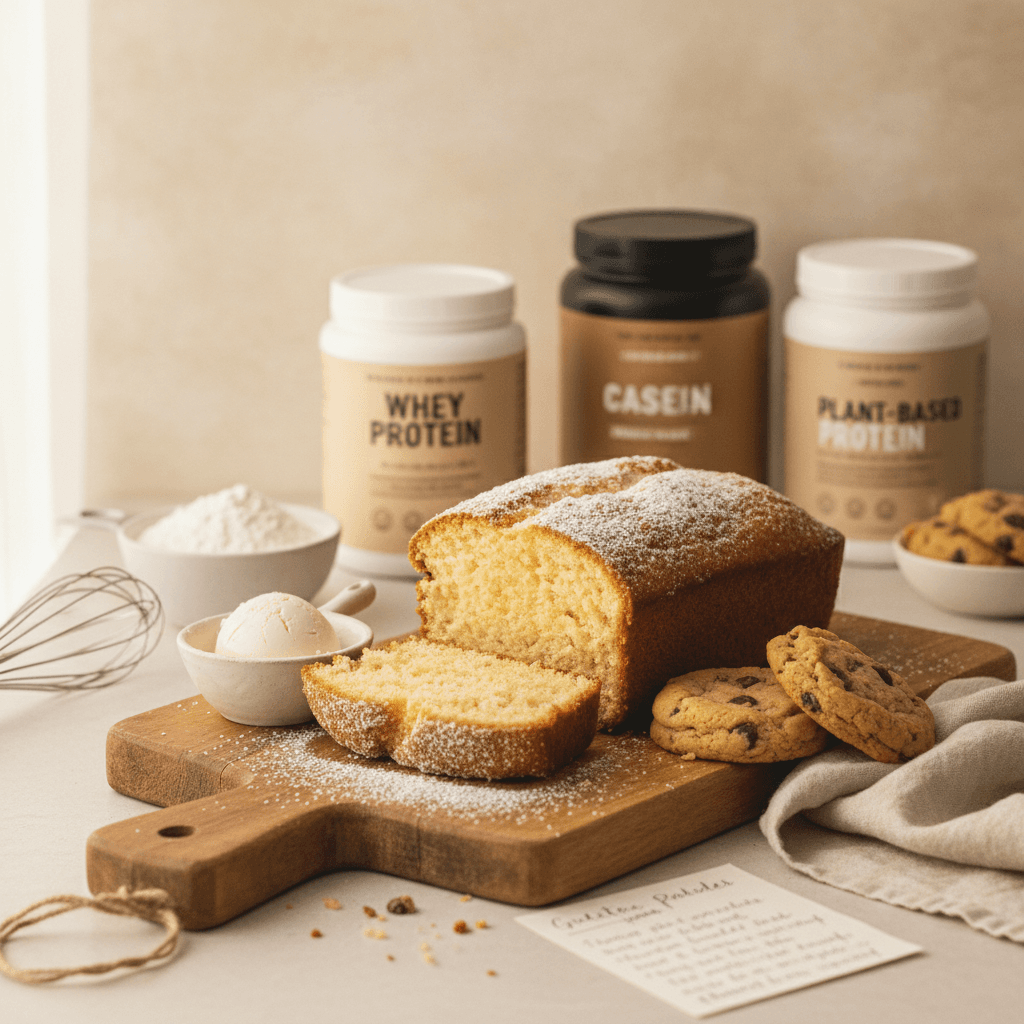
Swapping protein powder for flour sounds like a nutritional upgrade, but the two ingredients behave nothing alike. Protein powder lacks starch, gluten, and the structural scaffolding that flour provides — so a straight swap almost always produces something dense, rubbery, or bone-dry. Here is what actually happens when you make the switch and how to get results worth eating.
Key takeaways
- Protein powder can replace only a portion of flour in most baked goods — typically no more than about one-third of the total flour weight — before texture suffers dramatically.
- Whey protein and casein protein behave differently in batter: whey absorbs more liquid and sets firmer, while casein stays softer and more elastic.
- Plant-based protein powders (pea, rice, hemp) each introduce distinct flavors and textures that need compensating ingredients.
- Adding extra liquid, fat, and a binding agent is usually necessary when protein powder replaces any flour at all.
- Baking temperature often needs to drop by 15–25°F (about 8–14°C) because protein powder browns faster than flour due to the Maillard reaction accelerating with higher protein content.
Why protein powder does not behave like flour
Flour is mostly starch with a smaller percentage of protein, and that starch is what absorbs liquid, gelatinizes during baking, and creates the soft, tender crumb people expect. Protein powder flips that ratio — it is mostly protein with little to no starch. When heated, concentrated protein firms up and tightens, which is why a muffin made with too much protein powder can feel like a hockey puck within 20 minutes of cooling.
There is also the issue of gluten. In wheat flour, gluten proteins form an elastic network that traps gas from leaveners. Protein powder — whether whey, casein, pea, or rice — forms no such network. If you are already baking gluten-free, you are used to compensating for missing gluten with binders like xanthan gum or arrowroot powder. The same principle applies here, but with the added challenge that protein powder also lacks starch.
How much flour you can realistically replace
The general guideline among bakers and sports-nutrition recipe developers is to replace no more than about one-quarter to one-third of the flour with protein powder. Going beyond that threshold tends to produce baked goods that are dry, crumbly, and overly dense. The exact ceiling depends on what you are making:
| Baked good | Practical replacement ceiling | Why the limit exists |
|---|---|---|
| Pancakes and waffles | Up to about 50% | High moisture and fat in the batter compensate for protein powder's drying effect |
| Muffins and quick breads | About 25–33% | Crumb structure relies heavily on starch gelatinization |
| Cookies | About 25–33% | Spread and chewiness depend on sugar-starch interaction |
| Cakes | About 20–25% | Tender crumb requires starch; too much protein creates rubbery texture |
| Yeast breads | About 10–15% | Gluten network is critical; protein powder disrupts it severely |
If you are working with almond flour or cassava flour instead of wheat flour, the same general percentages apply. The starch in those alternative flours is still doing essential structural work.
Whey vs. casein vs. plant-based: how each type performs
Not all protein powders are interchangeable in baking. The source protein determines how the powder absorbs liquid, how it sets when heated, and what flavors it introduces.
Whey protein (concentrate and isolate)
Whey protein isolate absorbs significantly more liquid than wheat flour does — roughly 1.5 to 2 times as much by weight. This means batters made with whey tend to thicken fast and bake up dry unless you add extra liquid. Whey also sets firmly when heated, which is useful in protein bars but problematic in cakes. Whey concentrate contains more fat and lactose than isolate, which can actually help with browning and moisture retention, making it slightly more forgiving in baking.
Casein protein
Casein absorbs liquid more slowly and creates a softer, more elastic texture compared to whey. It works better in applications where you want chewiness — think cookies or soft bars. The downside is that casein can make batters extremely thick and sticky, so working with it requires patience and usually extra fat (oil or butter) to keep things manageable.
Plant-based protein powders
Pea protein is the most common plant-based option and brings a distinctly earthy, slightly bitter flavor that can be hard to mask. Rice protein is milder but produces a grittier texture. Hemp protein adds a nutty taste and greenish color. Blends that combine two or three plant proteins tend to perform better than single-source options because they balance flavor and texture shortcomings. If you are also avoiding dairy, plant-based powders pair well with almond milk or cashew milk as the liquid component.
5 fixes that rescue protein powder baking
Knowing the problems is only useful if you know how to solve them. These five adjustments address the most common failures.
1. Add more liquid than you think you need
Because protein powder absorbs more liquid than flour, you need to increase the liquid in your recipe. A reasonable starting point is to add about 1 to 2 tablespoons of extra liquid for every 30 grams of protein powder you are using in place of flour. The liquid can be milk, water, yogurt, or even applesauce — the latter adds moisture and a touch of sweetness without making the batter too thin.
2. Increase the fat
Fat coats protein strands and prevents them from forming a tough, rubbery network. If your original recipe calls for 2 tablespoons of oil, try 3 when you are substituting protein powder for part of the flour. Melted coconut oil, avocado oil, and melted butter all work. Greek yogurt or mashed avocado can also contribute fat while adding moisture.
3. Use a binder
Without starch or gluten providing structure, you need something to hold everything together. Xanthan gum (about 1/4 teaspoon per cup of total dry ingredients) is the most common choice. Eggs are natural binders and emulsifiers — adding an extra egg or egg yolk to a protein-powder-heavy recipe often makes a noticeable difference in cohesion and moisture. If you are baking vegan, aquafaba or a flax egg can fill this role.
4. Lower the oven temperature
Protein powder browns faster than flour because of the Maillard reaction — the chemical reaction between amino acids and sugars that creates browning. When you pack more protein into a batter, that reaction accelerates. Dropping your oven temperature by 15–25°F (about 8–14°C) from what the original recipe calls for helps prevent a dark, over-baked exterior while the interior is still gummy. You may also need to extend baking time by a few minutes to compensate.
5. Let it cool completely before judging
This is the fix most people skip. Protein-powder baked goods often feel soft and fragile straight out of the oven but firm up considerably as they cool. Cutting into a protein muffin at 5 minutes will give you a gummy, disappointing center. Waiting 20–30 minutes lets the proteins finish setting and the residual moisture redistribute. Denser bakes like protein brownies can need as long as 40 minutes of cooling to reach the right texture, so don't write off a batch too early.
Flavor masking strategies that actually work
Unflavored protein powder tastes chalky. Flavored protein powder often tastes artificial. Neither is ideal in baked goods where you want the flavor of chocolate, vanilla, or banana to come through cleanly.
Cocoa powder is the single best flavor mask for protein powder. Using 2–3 tablespoons of natural cocoa in a batch of brownies or chocolate muffins buries most off-flavors from whey or pea protein. Vanilla extract (real, not imitation) at slightly higher than normal amounts — about 1.5 teaspoons instead of 1 teaspoon — also helps. Spices like cinnamon, cardamom, and ginger are strong enough to compete with protein powder's background taste.
If you are using a flavored protein powder (chocolate or vanilla), reduce or eliminate any added sugar in the recipe. Most flavored powders contain sweeteners — either sugar, stevia, or sucralose — and doubling up creates an unpleasantly sweet result that also browns too quickly.
A contrarian take: sometimes protein powder is the wrong tool
Here is an opinion that goes against the grain of most fitness-baking content: for many bakers, protein powder is not the best way to add protein to baked goods. Almond flour, for example, contains roughly 21 grams of protein per cup and behaves far more predictably in baking because it also brings fat and some fiber. Buckwheat flour provides about 12–15 grams of protein per cup and adds an earthy, nutty flavor that works beautifully in pancakes and quick breads. Even adding a few tablespoons of almond butter or sunflower seed butter to a recipe boosts protein without the texture problems that protein powder introduces.
The protein-powder-as-flour-replacement trend is driven more by supplement marketing than by baking logic. If your goal is higher protein in your baked goods and you are not trying to hit specific macronutrient targets for athletic training, whole-food protein sources will give you better flavor, better texture, and fewer headaches.
Common mistakes when baking with protein powder
These are the errors that turn a promising experiment into something destined for the trash:
- Replacing 100% of the flour. This almost never works outside of very specific mug-cake-style single-serving recipes with enough eggs and fat to compensate.
- Using the same baking time and temperature. Protein powder changes how fast the exterior sets and browns. Ignoring this leads to burnt outsides and raw centers.
- Overmixing the batter. Protein powder can make batters gummy when overworked. Mix until just combined — the same advice that applies to any quick bread or muffin batter, but even more critical here.
- Not accounting for sweeteners in flavored powders. A chocolate protein powder with stevia plus a full measure of sugar in the recipe creates an aggressively sweet product that also browns unevenly.
- Skipping the extra liquid. Dry, crumbly results are the number-one complaint, and they are almost always caused by not adding enough moisture to offset protein powder's absorption. If your gluten-free bakes are coming out dry and crumbly, this is likely the culprit.
What about selling protein-powder baked goods from a home bakery?
If you run a home bakery and are considering adding high-protein baked goods to your menu, there are a few practical considerations. First, ingredient costs are higher — protein powder typically costs $0.50 to $1.50 per serving, which adds up fast compared to flour at roughly $0.05 to $0.15 per equivalent amount. That cost difference needs to be reflected in your pricing. If you are already working through whether your home bakery is actually profitable, adding a premium ingredient without adjusting prices is a fast way to erode margins.
Second, labeling matters. Customers with dairy allergies need to know if you are using whey or casein. Customers avoiding artificial sweeteners need to know what is in your flavored protein powder. Transparency is not optional — it is a legal and ethical requirement.
Third, consider whether high-protein baked goods are a genuine niche in your market or just a trend. Specializing versus offering variety is a real strategic decision, and protein baking is a niche that appeals to a specific audience (gym-goers, macro-trackers) rather than a broad one.
Frequently asked questions
Can you replace all the flour with protein powder in baking?
In most recipes, no. Replacing 100% of the flour with protein powder produces baked goods that are dense, rubbery, and dry because protein powder lacks the starch that flour provides for structure and moisture. The practical ceiling for most baked goods is about one-quarter to one-third of the total flour. Pancakes and waffles can tolerate up to about half because they contain more liquid and fat.
Does protein powder change baking temperature?
Yes. Protein powder browns faster than flour due to the Maillard reaction, so you typically need to lower your oven temperature by 15–25°F (8–14°C) compared to the original recipe. You may also need to extend baking time slightly to ensure the center is fully set.
Which protein powder is best for baking?
Whey protein concentrate is generally the most forgiving option because it contains some fat and lactose that help with browning and moisture. Casein works well in chewy applications like cookies and bars. For dairy-free baking, a blend of pea and rice protein tends to perform better than either one alone, balancing flavor and texture. Unflavored powders give you the most control over the final taste.
Why are my protein powder muffins so dry?
Protein powder absorbs significantly more liquid than flour. If you swap protein powder in without adding extra liquid — milk, yogurt, applesauce, or even water — the batter will be too dry before it even hits the oven. Adding 1 to 2 tablespoons of extra liquid per 30 grams of protein powder and increasing the fat in the recipe usually solves this. Also, make sure you are letting the muffins cool fully before cutting into them, as they continue to set and redistribute moisture as they cool.
Is protein powder or almond flour better for high-protein baking?
Almond flour is easier to work with because it behaves more like traditional flour — it contains fat, fiber, and protein in a ratio that produces predictable results. Protein powder delivers more protein per gram but requires significant recipe adjustments. If your priority is baking ease and flavor, almond flour is the better choice. If you need to maximize protein per calorie for specific dietary goals, protein powder may be worth the extra effort.

Written by
Co-founder, BakingSubs
Co-founder of BakingSubs, where he turns the science of ingredient substitutions into tested, reliable guidance for home bakers.
Related Posts
Bake with Confidence
See all
Confident Gluten-Free Baker Toolkit
The science-based system that replaces gluten's seven invisible jobs so your baking turns out soft, fluffy, and foolproof — every time.

Gluten-Free Recipe Vault
Instant access to our complete library of proven gluten-free recipes — no waiting, no guesswork, just results that work tonight.

Fix Your Gluten-Free Bread
Learn the 3-step formula to make bread rise and stay soft, discover why your loaves collapse, and get a tested sandwich bread recipe that actually works.