

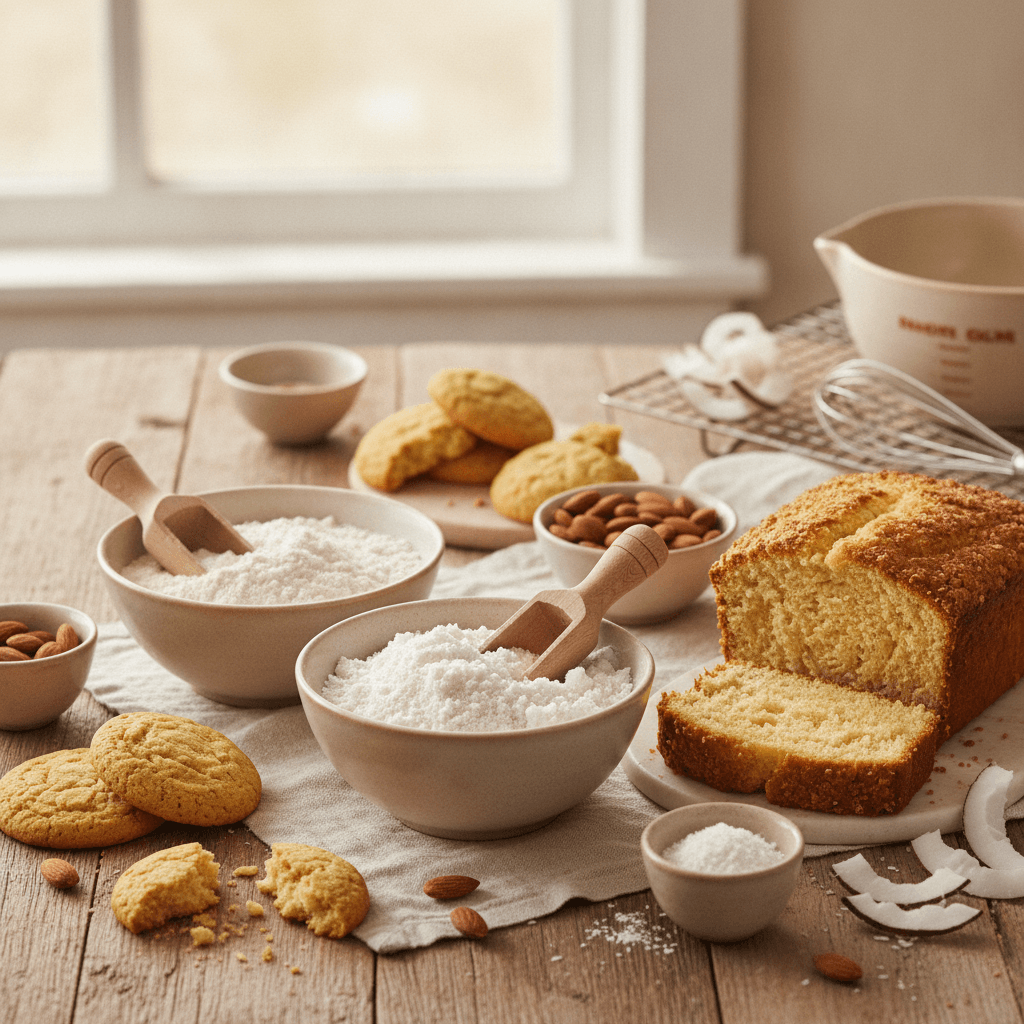
Almond flour and coconut flour are the two most common flours in keto baking, but they behave so differently that swapping one for the other without adjustments will wreck a batch. Here's what actually matters when choosing between them — and when to use both.
Key takeaways
- Coconut flour absorbs roughly three to four times more liquid than almond flour, so recipes are never interchangeable at a 1:1 ratio.
- Almond flour produces denser, moister results that work well for cookies, pie crusts, and quick breads.
- Coconut flour creates lighter, more cake-like textures but requires significantly more eggs or other binders.
- Cost per usable cup favors coconut flour because a little goes a long way — a single bag stretches across many batches.
- Blending both flours often outperforms using either one alone, balancing moisture, structure, and flavor.
Why you can't just swap one for the other
The single biggest mistake keto bakers make is treating almond flour and coconut flour as interchangeable. They are not. Coconut flour is dramatically more absorbent — roughly three to four times more than almond flour. That means a recipe calling for 2 cups of almond flour might only need about half a cup of coconut flour, plus additional eggs or liquid to compensate.
This isn't a minor tweak. If you dump a full cup of coconut flour into a recipe designed for almond flour, you'll get something dry, crumbly, and borderline inedible. The reverse — using almond flour where coconut flour was intended — gives you a wet, flat mess that never sets properly.
The absorption difference comes down to fiber content. Coconut flour contains substantially more fiber per gram than almond flour, and that fiber acts like a sponge. Understanding this single property explains most of the behavior differences between the two flours. For more on why gluten-free bakes turn out dry and crumbly, our troubleshooting guide covers the common culprits.
How almond flour behaves in keto baking
Almond flour is simply blanched almonds ground into a fine powder. It brings fat, protein, and minimal carbohydrates to a bake — which is why it became the default flour in keto circles.
What almond flour does well
Almond flour excels at producing moist, tender baked goods with a rich, slightly buttery flavor. It's the easier flour to work with because it behaves more like traditional wheat flour in terms of liquid ratios. Cookies, pie crusts, pancakes, and muffins all translate well to almond flour. The fat content (roughly 14g per quarter cup) keeps things from drying out, and the texture is forgiving — overmixing won't ruin your bake the way it can with wheat flour.
For example, if you sell keto brownies at $4.50 each using almond flour as the base for its fudgy, dense texture, ingredient cost might run about $1.10 per brownie, with almond flour accounting for roughly 60% of that.
Where almond flour falls short
Almond flour can't produce light, fluffy textures on its own. It lacks the starch and structure-building properties of wheat flour, so cakes and breads tend to come out dense and flat. It also browns faster than you'd expect — drop your oven temperature by about 25°F compared to a wheat-based recipe, or you'll end up with dark edges before the center sets.
The other limitation is cost. A 1-pound bag of blanched almond flour from brands like Bob's Red Mill or Anthony's typically runs $8 to $12, and keto recipes use a lot of it — often 2 to 3 cups per batch. That adds up fast, especially if you're baking for a home bakery where ingredient costs directly eat into margins.
How coconut flour behaves in keto baking
Coconut flour is made from dried, defatted coconut meat. It's higher in fiber, lower in fat, and far more absorbent than almond flour — which makes it both powerful and tricky to use.
What coconut flour does well
Coconut flour shines when you want a lighter, airier crumb. It works beautifully in cakes, light muffins, and anything where you want lift rather than density. Because it absorbs so much liquid, a small amount goes a long way — recipes rarely call for more than a third to a half cup of coconut flour per batch.
That absorbency also makes coconut flour the more economical choice per recipe. A 1-pound bag typically costs $5 to $8, and because you use so much less per batch, a single bag can last through many more bakes than an equivalent bag of almond flour. For home bakers tracking profitability down to the ingredient level, this cost difference matters.
Coconut flour is also free of tree nuts under current FDA labeling rules (since January 2025, the FDA no longer lists coconut as a tree nut), which makes it a common choice for nut-free baking. Coconut allergy does exist, though, so anyone with a tree nut or coconut allergy should check with their allergist first, and if you sell baked goods, list coconut in your ingredients. That's a significant market advantage if you sell baked goods — nut-free keto options are hard to find.
Where coconut flour falls short
Coconut flour is unforgiving. Get the liquid ratio wrong by even a small margin and the texture suffers dramatically. Most coconut flour recipes require a high number of eggs — sometimes 6 or more per batch — because the eggs provide both moisture and structural binding that the flour desperately needs.
There's also the flavor issue. Coconut flour has a mild but noticeable coconut taste that works in some bakes (banana bread, tropical-flavored muffins) and clashes with others (savory breads, chocolate cakes where you want pure cocoa flavor). Some bakers find the taste neutral enough to ignore; others find it distracting. This is genuinely subjective, and worth considering based on what you're making.
If you're troubleshooting coconut flour bakes that come out gummy in the center, the issue is almost always too much moisture relative to the flour's absorption capacity. Our guide on fixing gummy centers in gluten-free baking walks through the mechanics.
Side-by-side comparison
| Property | Almond flour | Coconut flour |
|---|---|---|
| Main ingredient | Blanched almonds | Dried, defatted coconut meat |
| Liquid absorption | Low — similar to wheat flour | Very high — 3-4x more than almond flour |
| Typical amount per recipe | 1.5 to 3 cups | 0.25 to 0.5 cups |
| Texture produced | Dense, moist, fudgy | Light, airy, cake-like |
| Flavor | Mild, slightly nutty/buttery | Mild coconut undertone |
| Egg requirement | Standard (2-3 per batch) | High (often 4-6+ per batch) |
| Allergen concern | Tree nut | Coconut (not on FDA's tree nut list since January 2025; ask an allergist if you have a nut or coconut allergy) |
| Approximate cost per bag (1 lb) | $8 to $12 | $5 to $8 |
| Cost per recipe (typical batch) | Higher (uses more flour) | Lower (uses less flour) |
| Best for | Cookies, crusts, brownies, pancakes | Cakes, light muffins, bread |
When to blend both flours (and why it often works better)
Here's a contrarian take that goes against most keto baking advice: using either flour alone is usually a compromise. Blending almond and coconut flour in the same recipe often produces better results than either flour solo.
The logic is straightforward. Almond flour brings moisture, fat, and density. Coconut flour brings absorbency, fiber, and lift. Combined, they balance each other's weaknesses. A blend can give you a crumb that's moist but not heavy, structured but not dry.
A common starting ratio is roughly 3 parts almond flour to 1 part coconut flour. This gives you the moisture and workability of almond flour with just enough coconut flour to add structure and reduce that overly dense quality. From there, you can adjust based on the specific bake — more coconut flour for lighter results, less for denser ones.
For example, a muffin recipe that uses about 1.5 cups almond flour and a third cup coconut flour per batch, instead of pure almond flour, needs less of the more expensive flour per dozen. If you're selling at markets, those small per-batch savings compound — pricing baked goods for farmers markets is all about understanding these margins.
Choosing based on what you're baking
The right flour depends entirely on the end product. Here's a practical breakdown:
Cookies and bars
Almond flour wins here. Keto cookies need fat and density to hold their shape and deliver that satisfying chew. Coconut flour cookies tend to be cakey and crumbly — fine if that's what you want, but most people expect a cookie to be dense and rich. If you're making chocolate chip cookies, almond flour with a tablespoon or two of arrowroot powder for binding produces a more traditional texture.
Cakes and cupcakes
Coconut flour has the edge for anything that should be light and spongy. The high egg count that coconut flour demands actually works in your favor here — those eggs create structure and lift that mimics a wheat-based cake. Just be generous with your leavener. If your cakes aren't rising, our guide on troubleshooting poor rise in gluten-free baking covers the most common fixes.
Pie crusts and tart shells
Almond flour, no contest. A good keto pie crust needs to press into a pan, hold its shape, and have a slightly crumbly-but-cohesive texture. Almond flour's fat content makes this almost effortless — mix it with melted butter and a pinch of salt, press it in, and bake. Coconut flour crusts tend to crack and fall apart.
Bread and rolls
This is where a blend really shines. Pure almond flour bread is dense and heavy — more like a brick than a loaf. Pure coconut flour bread can be spongy and eggy. A blend of both, combined with generous eggs and sometimes psyllium husk powder for elasticity, produces the closest thing to real bread texture you'll get in keto baking.
Pancakes and waffles
Either flour works, but almond flour is more forgiving for beginners. Coconut flour pancakes require precise liquid ratios and tend to be fragile on the griddle. Almond flour pancakes hold together better and flip more easily.
The cost math for home bakers selling keto
If you're selling keto baked goods — whether through a specialized home bakery or at markets — flour cost is one of your biggest line items. Here's how the numbers typically break down:
A standard keto cookie recipe using 2.5 cups of almond flour costs roughly $5 to $7 in flour alone, depending on brand and where you buy. The same recipe reformulated with a 3:1 almond-to-coconut blend might use 1.75 cups almond flour and about a quarter cup coconut flour, dropping flour cost to roughly $3.50 to $5.
Over 50 batches per month, that $2 per-batch savings adds up to $100 — real money for a home operation. And if you can reformulate certain products to use mostly coconut flour (muffins, cakes), the savings grow further.
Buying in bulk makes a significant difference too. A 5-pound bag of almond flour from Costco or Amazon typically runs $18 to $25, compared to $8 to $12 for a 1-pound bag at a grocery store. If you're baking regularly, bulk purchasing is one of the simplest ways to improve margins.
Storage and shelf life differences
Almond flour is higher in fat, which means it goes rancid faster than coconut flour. An opened bag of almond flour stored in the pantry will stay fresh for a few weeks at best. Refrigerated, it lasts a few months. Frozen, it can last six months to a year.
Coconut flour is more shelf-stable because it's lower in fat. An opened bag stored in a cool, dry pantry typically lasts several months without going off. It still benefits from refrigeration, but it's less urgent than with almond flour.
If you buy almond flour in bulk (which you should, given the cost savings), portion it into airtight containers and freeze what you won't use within a couple of weeks. Nothing ruins a batch faster than rancid nut flour — and you often won't notice the off flavor until the bake is done.
Frequently asked questions
Can I substitute coconut flour for almond flour in a keto recipe?
Not at a 1:1 ratio. Coconut flour absorbs three to four times more liquid than almond flour. As a general guideline, replace 1 cup of almond flour with roughly a quarter cup of coconut flour, plus an additional egg per quarter cup of coconut flour added. The texture and flavor will still differ from the original recipe, so expect some experimentation. For more detail on working with almond flour substitutions, check our ingredient guide.
Which flour is better for keto — almond or coconut?
Neither is universally better. Almond flour works best for dense, moist bakes like cookies and crusts. Coconut flour works best for lighter bakes like cakes and muffins. Many experienced keto bakers use a blend of both to get the best texture. Your choice should depend on what you're making, not on which flour is "better" in the abstract.
Why are my coconut flour baked goods so dry?
Coconut flour's extreme absorbency is almost certainly the cause. The flour continues to absorb moisture even after mixing, so batters that look perfect can dry out during baking. Adding more eggs, increasing liquid (heavy cream or almond milk work well in keto contexts), or letting the batter rest for 5 to 10 minutes before baking — so the flour fully hydrates — can help. If your bakes are consistently dry, you may simply need more liquid than the recipe calls for.
Is coconut flour cheaper than almond flour for keto baking?
Per recipe, yes — usually significantly cheaper. Although the per-bag price difference isn't dramatic ($5-$8 for coconut vs. $8-$12 for almond per pound), coconut flour recipes use a fraction of the volume. A recipe that calls for 2.5 cups of almond flour might only need a third cup of coconut flour, making the per-batch flour cost roughly 40-60% lower with coconut flour.
Does almond flour taste like almonds in baked goods?
Blanched almond flour has a mild, slightly nutty flavor that most people describe as neutral to pleasant. It's not as pronounced as almond extract — you won't bite into a muffin and think "almonds." In heavily flavored bakes (chocolate, cinnamon, lemon), the almond flavor is virtually undetectable. Coconut flour has a similarly subtle flavor, though some people pick up a mild coconut note, especially in plainer bakes.

Written by
Co-founder, BakingSubs
Co-founder of BakingSubs, where he turns the science of ingredient substitutions into tested, reliable guidance for home bakers.
Related Posts


Bake with Confidence
See all
Confident Gluten-Free Baker Toolkit
The science-based system that replaces gluten's seven invisible jobs so your baking turns out soft, fluffy, and foolproof — every time.

Gluten-Free Recipe Vault
Instant access to our complete library of proven gluten-free recipes — no waiting, no guesswork, just results that work tonight.

Fix Your Gluten-Free Bread
Learn the 3-step formula to make bread rise and stay soft, discover why your loaves collapse, and get a tested sandwich bread recipe that actually works.