

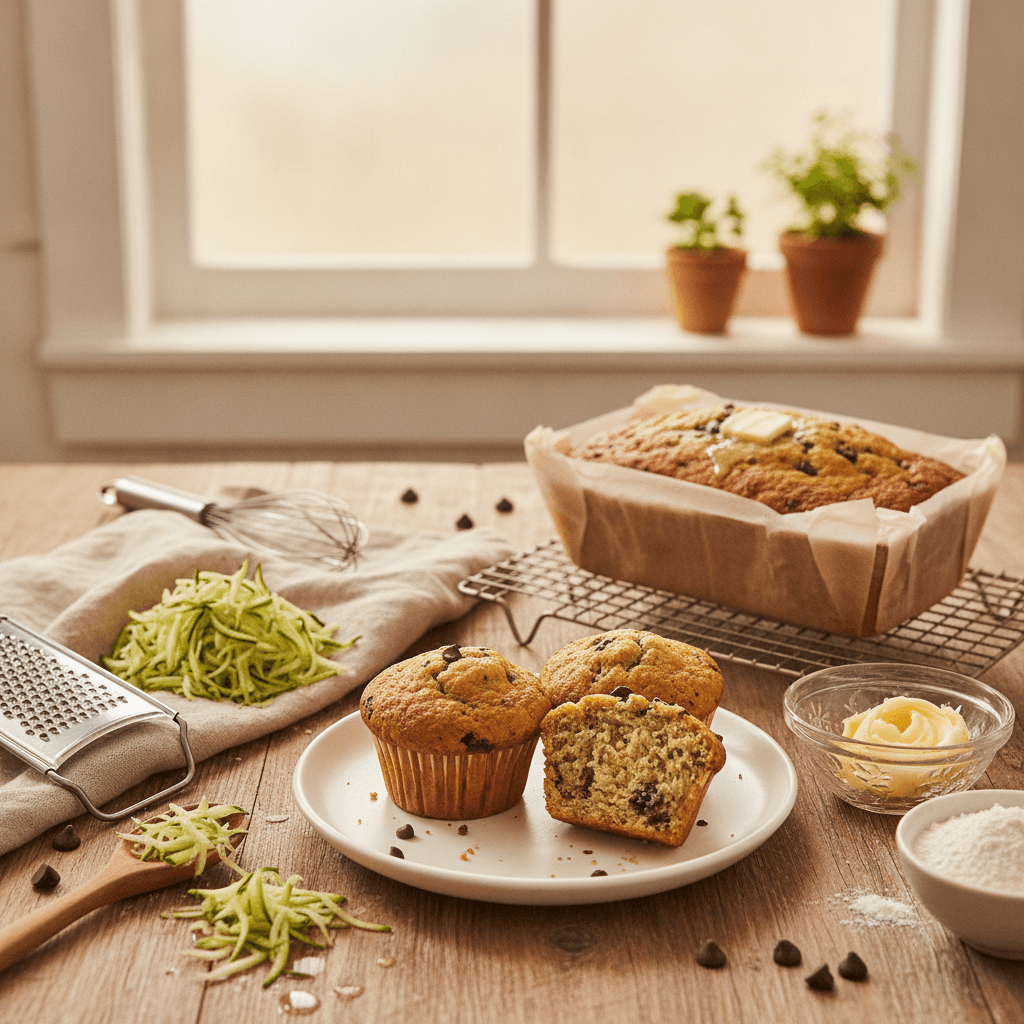
Zucchini can replace a significant portion of butter or oil in quick breads, muffins, and cakes — but it changes moisture levels, texture, and browning in ways that catch bakers off guard. Here's exactly how the swap works, where it succeeds, and where it creates problems you'll need to solve.
Key takeaways
- Shredded zucchini can typically replace 50–75% of the butter or oil in muffins, quick breads, and snack cakes without a dramatic texture change — but going to 100% replacement often produces a gummy or rubbery crumb.
- Zucchini is roughly 95% water, so it adds moisture rather than fat. This means it cannot replicate the tenderizing, flavor-carrying, or browning functions that fat performs in baked goods.
- Squeezing excess water from shredded zucchini before adding it to batter is the single most important step — skip it and your bake time extends by 10–15 minutes while the center stays underdone.
- The swap works poorly in recipes that depend on creaming butter with sugar (layer cakes, butter cookies) because zucchini can't trap air the way solid fat does.
- Pairing zucchini with a small amount of retained fat — even 2 tablespoons of oil — dramatically improves mouthfeel compared to a full replacement.
Why zucchini works as a partial fat substitute
Zucchini's high water content and mild flavor make it a natural candidate for reducing fat in baked goods. When you shred it fine and fold it into batter, it adds moisture that keeps the crumb soft — mimicking one of fat's key roles without the calorie density of butter or oil. The vegetable's pectin and soluble fiber also contribute a subtle binding effect that helps hold structure together.
But here's the important distinction: zucchini replaces the moisture function of fat, not the fat function of fat. Butter and oil do more than add wetness. They coat flour proteins to limit gluten development, carry fat-soluble flavors, contribute to Maillard browning, and create that rich mouthfeel we associate with well-made baked goods. Zucchini does none of those things. That's why partial replacement works so much better than a full swap.
This is similar to how applesauce functions as a fat substitute — both are fruit or vegetable purees that contribute moisture and some body, but neither can fully replicate what fat does structurally. If you've ever tried applesauce as a sugar replacement, you've already seen how produce-based swaps change more than just one variable.
How much fat can you actually replace with zucchini?
The safe zone for most quick breads and muffins is replacing 50–75% of the fat with shredded zucchini. A recipe calling for 1 cup of oil, for example, could use 1/4 cup of oil plus 3/4 cup of well-drained shredded zucchini. The retained fat keeps the crumb tender and prevents that dry, cardboard quality that fully fat-free baked goods tend to have.
Going beyond 75% replacement is where problems multiply. A banana muffin with all of its oil replaced by zucchini, for example, may taste fine warm but turn rubbery and dense within hours. Dropping back to around 60% replacement — keeping a few tablespoons of oil per batch — gives a texture that holds up much better.
| Fat replacement level | Best for | Common problems |
|---|---|---|
| 25–50% | Layer cakes, pancakes, lighter muffins | Minimal — slight moisture increase |
| 50–75% | Quick breads, dense muffins, brownies | Slightly denser crumb, may need 5 min extra bake time |
| 75–100% | Very few applications | Gummy center, rubbery texture, poor browning, flat flavor |
Prep matters more than the ratio
The biggest mistake bakers make with zucchini isn't using too much — it's not draining it properly. A medium zucchini yields roughly 1 to 1.5 cups of shredded vegetable, and a significant portion of that volume is water. If you dump it straight into batter, you're adding far more liquid than the recipe can handle.
The standard approach: shred the zucchini on the fine side of a box grater, spread it on a clean kitchen towel or several layers of paper towels, and squeeze firmly. You'll be surprised how much liquid comes out — often 3–4 tablespoons from a single medium zucchini. That extracted water would have turned your muffin centers soggy and added 10–15 minutes to your bake time.
Some bakers salt the shredded zucchini first and let it sit for 10 minutes before squeezing. The salt draws out additional moisture through osmosis. This works well for savory applications, but for sweet baked goods, be cautious — even a quarter teaspoon of salt distributed through the zucchini can shift the flavor balance if your recipe already includes salt.
Skin on or skin off?
Leave the skin on. It's thin enough to virtually disappear when finely shredded, and it contains most of the zucchini's fiber and color. Peeling creates a paler result and removes the slight structural benefit the skin provides. The only exception: if you're making a white or very light-colored cake where green flecks would be visually distracting.
Where zucchini as a fat substitute works well
Zucchini shines in baked goods that are already moist, dense, and forgiving:
- Quick breads and loaves — Zucchini bread is the classic example, but the same principle works in banana bread, pumpkin bread, and carrot cake. These recipes already expect high moisture content and a dense crumb.
- Muffins — Especially chocolate, spice, or fruit-forward muffins where the zucchini flavor disappears behind stronger ingredients.
- Brownies — Fudgy brownies tolerate the extra moisture well. The cocoa and chocolate mask any vegetable flavor completely.
- Pancakes and waffles — A 50% oil replacement with zucchini produces surprisingly good results here, though the exterior won't crisp as much without fat.
If you're working with gluten-free flours, zucchini can actually be an advantage. Many gluten-free baked goods suffer from dryness and crumbliness — problems covered in detail in our guide to dry, crumbly gluten-free baking. The extra moisture from zucchini helps counteract the thirsty nature of rice flour, tapioca starch, and similar alternatives.
Where zucchini as a fat substitute fails
Not every baked good can handle this swap. Here are the situations where zucchini creates more problems than it solves:
Creamed butter recipes
Any recipe that starts with "cream butter and sugar together" is a poor candidate. That creaming step traps air bubbles in solid fat, creating the lift and lightness that defines butter cakes and many cookie doughs. Zucchini is a liquid — it cannot trap air. Substituting it here produces flat, dense results with a wet, almost steamed texture.
Butter cookies and shortbread
These rely on a high fat-to-flour ratio for their crumbly, melt-in-your-mouth texture. Replacing butter with zucchini in shortbread would produce something closer to a cracker. The entire identity of these baked goods is the fat.
Laminated doughs
Croissants, puff pastry, and Danish dough need solid fat layered between sheets of dough. There's no way to substitute a vegetable puree here.
Recipes where browning matters
Fat contributes to Maillard browning — that golden, caramelized exterior on muffin tops and bread crusts. Reduce the fat significantly and the surface stays pale and soft instead of developing that appealing crust. This is purely cosmetic in some cases, but in others (like the top of a coffee cake) it changes the eating experience.
Zucchini versus other produce-based fat substitutes
Zucchini isn't the only vegetable or fruit that can stand in for fat. Here's how it compares to the most common alternatives:
| Substitute | Best application | Flavor impact | Moisture level |
|---|---|---|---|
| Zucchini | Quick breads, muffins, brownies | Very mild — nearly undetectable | Very high (needs draining) |
| Applesauce | Cakes, muffins, spice-forward bakes | Adds sweetness and fruit flavor | High |
| Avocado | Brownies, chocolate cakes | Mild but detectable in light batters | Moderate |
| Mashed banana | Quick breads, pancakes | Strong — dominates flavor | Moderate-high |
| Pumpkin puree | Muffins, spice cakes, quick breads | Moderate — earthy, sweet | High |
| Greek yogurt | Cakes, muffins, scones | Slight tang | Moderate |
Zucchini's biggest advantage over applesauce and banana is flavor neutrality. You can add it to a chocolate muffin and no one will taste vegetable. Banana, by contrast, takes over the flavor profile of almost anything it touches. And avocado as a butter substitute works beautifully in chocolate applications but can leave a faintly grassy note in vanilla or citrus batters.
Greek yogurt is arguably the closest competitor to zucchini for fat replacement because it also has a mild flavor and contributes moisture plus some protein for structure. The key difference: yogurt adds acidity, which can activate baking soda and change leavening behavior. Zucchini is pH-neutral and won't affect your leavening chemistry.
Adjustments you'll need to make
Swapping zucchini for fat isn't a straight 1:1 trade. Here are the adjustments that prevent common failures:
Reduce other liquids
Even after squeezing, shredded zucchini adds moisture to your batter. If your recipe includes milk, buttermilk, or water, reduce those liquids by about 2–3 tablespoons per cup of zucchini added. This keeps the batter consistency in the right range.
Increase bake time slightly
Expect to add 3–8 minutes to your bake time, depending on how much fat you replaced and how well you drained the zucchini. Use the toothpick test and start checking 5 minutes before the original recipe's time — but don't be surprised if it needs longer.
Keep some fat in the recipe
This is the contrarian take that experienced bakers tend to agree on: the goal should never be zero fat. A tablespoon or two of oil in a 12-muffin batch costs roughly 14 grams of fat total — about 1.2 grams per muffin — but it dramatically improves tenderness, browning, and shelf life. Removing every last drop of fat to chase a "fat-free" label almost always produces something nobody actually wants to eat.
Add a binder if needed
In recipes where you're replacing a large percentage of fat, the batter may feel looser than expected. A flax egg or chia egg can add binding power without adding fat. This is especially helpful in gluten-free versions where there's no gluten network to hold things together.
Storage and shelf life differences
Fat acts as a preservative in baked goods — it slows staling by coating starch molecules and preventing them from recrystallizing. When you reduce fat with zucchini, your baked goods will stale faster. A full-fat muffin might stay soft for 3–4 days at room temperature; a zucchini-swapped version may start drying out by day 2.
The workaround: store zucchini-heavy baked goods in the refrigerator or freeze them. Wrapping individual muffins tightly in plastic wrap and freezing them within a few hours of baking preserves moisture effectively. They'll reheat well in a 300F oven for about 8–10 minutes. If you're baking for a farmers market or selling from home, this shorter shelf life is worth factoring into your production schedule.
A note on nutrition claims
Replacing fat with zucchini does reduce the total fat and calorie content of baked goods — that much is straightforward. But be cautious about overstating the health benefits. A zucchini muffin that still contains sugar, refined flour, and some oil is not a health food. It's a slightly lower-fat muffin. If you're selling baked goods and making nutrition-related marketing claims, check your local regulations. Many cottage food laws restrict or prohibit specific health claims on labels.
Also worth noting: if you're reducing fat to manage dietary fat intake, the retained fat in the recipe still matters. And if you're reducing fat but compensating with extra sugar to improve flavor (a common instinct), the calorie savings may be smaller than expected. For a deeper look at how sugar functions in baking beyond sweetness, that context helps explain why simply removing one ingredient often triggers a cascade of other changes.
Frequently asked questions
Can you replace all the oil in a recipe with zucchini?
Technically yes, but the results are usually disappointing. A 100% replacement tends to produce a gummy, rubbery crumb with poor browning and flat flavor. Most bakers get better results replacing 50–75% of the fat and keeping a small amount of oil for tenderness and mouthfeel.
Does zucchini change the flavor of baked goods?
In most cases, no. Zucchini has an extremely mild flavor that virtually disappears when baked, especially in chocolate, spice, or fruit-forward recipes. In very plain vanilla batters, some people detect a faint vegetal note, but it's subtle.
Do you need to peel zucchini before using it as a fat substitute?
No. The skin is thin enough to disappear when finely shredded, and it adds fiber and a bit of color. The only reason to peel is if you're making a white or very light-colored bake where green flecks would be unwanted.
How much shredded zucchini equals one cup of oil?
A common starting point is 3/4 cup of well-drained shredded zucchini plus 1/4 cup of oil to replace 1 cup of oil. This isn't an exact science — the moisture content varies by zucchini size and how thoroughly you squeeze it — so expect some trial and error with your specific recipes.
Does zucchini work as a fat substitute in gluten-free baking?
It can work well, and sometimes even better than in conventional baking. Gluten-free baked goods often suffer from dryness and crumbliness, and zucchini's moisture helps counteract those issues. Just be sure to adjust other liquids downward and consider adding a binder like a flax or chia egg for structure.

Written by
Co-founder, BakingSubs
Co-founder of BakingSubs, where he turns the science of ingredient substitutions into tested, reliable guidance for home bakers.
Related Posts
Bake with Confidence
See all
Confident Gluten-Free Baker Toolkit
The science-based system that replaces gluten's seven invisible jobs so your baking turns out soft, fluffy, and foolproof — every time.

Gluten-Free Recipe Vault
Instant access to our complete library of proven gluten-free recipes — no waiting, no guesswork, just results that work tonight.

Fix Your Gluten-Free Bread
Learn the 3-step formula to make bread rise and stay soft, discover why your loaves collapse, and get a tested sandwich bread recipe that actually works.