

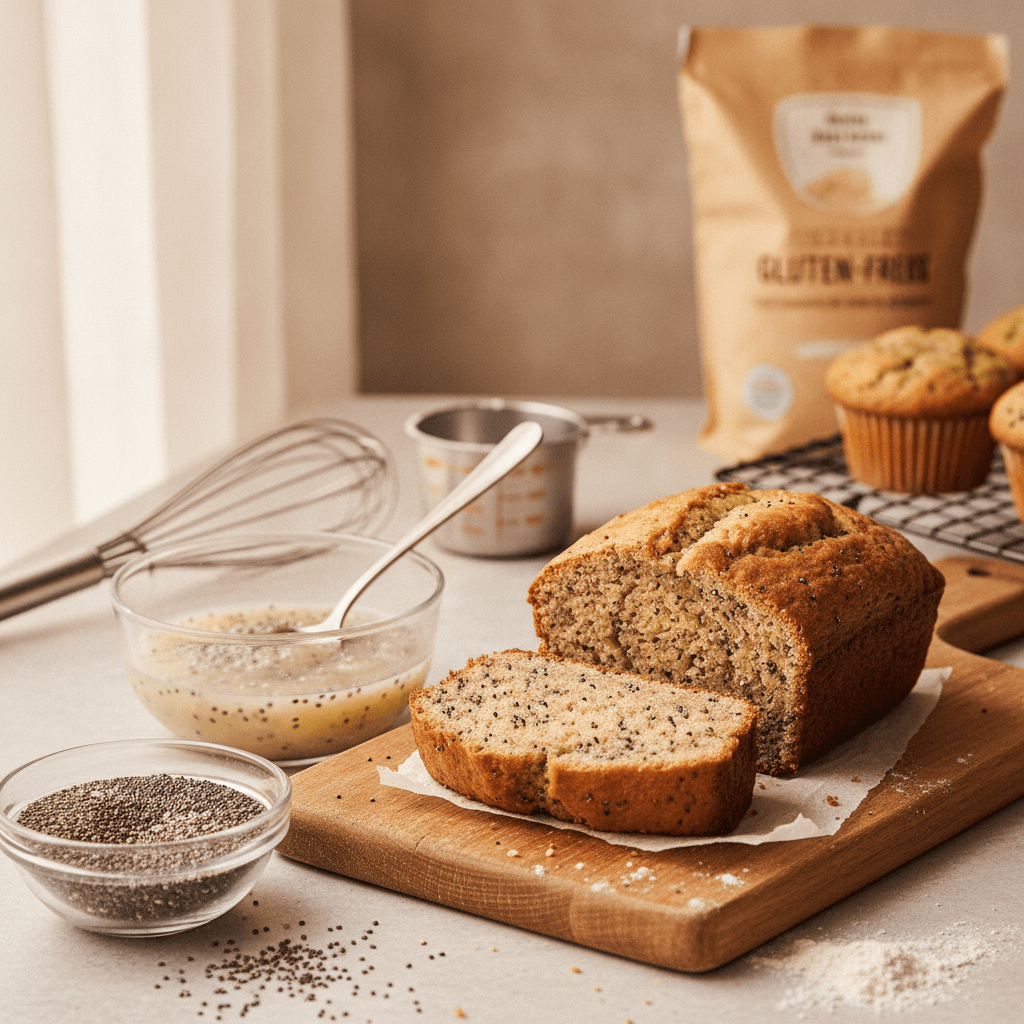
Chia seeds are one of the most popular egg replacements in vegan and allergy-friendly baking, but they don't work the same way in every recipe. The difference between a chia egg that holds a muffin together and one that leaves you with a crumbly mess comes down to understanding what eggs actually do in a specific bake and whether chia can replicate that function.
Key takeaways
- One chia egg equals 1 tablespoon of ground chia seeds mixed with 3 tablespoons of water, rested for at least 5 minutes until a gel forms.
- Chia eggs work best as binders in dense, moist baked goods like muffins, quick breads, and pancakes — not in recipes that rely on eggs for lift or structure.
- Ground chia seeds form a stronger gel than whole seeds, and the gel is what mimics the binding function of a real egg.
- Chia eggs add a slight nutty flavor and visible specks; use white chia seeds in light-colored batters if appearance matters.
- Replacing more than 2 eggs with chia in a single recipe is risky — the texture shifts noticeably, and returns diminish past that point.
- Chia eggs do not whip, emulsify fats, or create the airy structure that beaten whole eggs or separated whites provide.
What eggs actually do (and where chia can step in)
Eggs perform several jobs at once in baking: they bind ingredients together, trap air for leavening, emulsify fats with liquids, add moisture, and contribute to browning. No single substitute handles all of those roles. Chia seeds primarily address the binding function. The mucilaginous gel that forms around ground chia seeds when mixed with water creates a sticky matrix that holds dry ingredients together, similar to how egg proteins coagulate during baking.
That binding ability makes chia eggs a strong fit for recipes where structure and cohesion are the primary egg roles — think banana bread, oatmeal cookies, and cornbread. But for recipes where eggs provide significant lift (angel food cake, soufflés, choux pastry), chia is the wrong tool entirely. For a deeper breakdown of every function eggs serve, the eggs functions guide covers each role in detail.
The standard chia egg ratio
The widely accepted ratio for one chia egg is:
| Component | Amount |
|---|---|
| Ground chia seeds | 1 tablespoon (about 7g) |
| Water | 3 tablespoons (about 45ml) |
| Rest time | 5–15 minutes |
Grinding the seeds first is important. Whole chia seeds will absorb water and swell, but they don't release as much of the soluble fiber that creates the gel. A spice grinder or small blender works well for this. You want the mixture to reach a consistency similar to raw egg white — thick, slightly slimy, and cohesive enough to hold together when you tilt the bowl.
Some bakers use warm water instead of room-temperature water to speed up gel formation. This works, but avoid hot water above roughly 70°C (158°F), which can begin to break down some of the gel-forming polysaccharides before they fully hydrate.
Where chia eggs perform well
Chia eggs shine in baked goods that are already dense, moist, or forgiving in texture. Here's where they tend to work consistently:
Muffins and quick breads
These are the sweet spot. Muffins typically call for 1–2 eggs, and the batter is thick enough that the chia gel integrates smoothly. The binding holds the crumb together, and the added moisture from the gel compensates for the lost egg liquid. Banana muffins, zucchini bread, and pumpkin bread are particularly forgiving because the fruit or vegetable puree already provides moisture and binding support.
Pancakes and waffles
A single chia egg works well in pancake and waffle batters. The texture will be slightly denser than egg-based versions, but the difference is subtle. Adding an extra half-teaspoon of baking powder can offset the lost lift from the egg.
Cookies (some types)
Drop cookies and oatmeal cookies handle chia eggs reasonably well. The cookies may spread slightly less than egg-based versions because chia gel doesn't thin out the same way egg proteins do when heated. For choosing the right egg substitute across different cookie styles, the approach matters — a chewy chocolate chip cookie responds differently than a crisp sugar cookie.
Dense cakes and brownies
Brownies are an excellent candidate because they're already fudgy and moist. The chia gel blends into the batter without noticeably changing the final product. Dense chocolate cakes and snack cakes work similarly well.
Where chia eggs fall short
Understanding the limits saves you from wasting ingredients on a bake that was never going to work.
Sponge cakes and anything requiring whipped eggs
If a recipe asks you to beat eggs until fluffy, whip whites to stiff peaks, or cream eggs with sugar for several minutes, chia cannot replicate that. The air incorporation from beaten eggs is a mechanical leavening process, and chia gel has zero capacity to trap air the same way. Genoise, chiffon cake, angel food cake, and meringue-based recipes are all off the table.
Custards and cream fillings
Eggs in custards act as thickeners through protein coagulation. Chia gel doesn't set the same way when heated — it softens rather than firms. You'll end up with a loose, grainy filling instead of a smooth set custard.
Recipes calling for 3 or more eggs
Replacing 4 eggs with chia eggs in a pound cake, for example, is likely to give you a loaf that's gummy in the center and crumbly at the edges. The issue: chia gel adds moisture but doesn't provide the structural protein network that multiple eggs create. When eggs make up a significant percentage of a recipe's structure — as in pound cake, where the ratio of eggs to flour is nearly 1:1 by weight — chia simply can't compensate.
A reasonable ceiling is 2 chia eggs per recipe. Beyond that, consider combining chia with another substitute like applesauce (for moisture) or a commercial egg replacer (for structure).
Chia eggs vs. flax eggs: which performs better?
Flax eggs (1 tablespoon ground flaxseed + 3 tablespoons water) are the closest alternative to chia eggs, and bakers often wonder which is better. The honest answer: they're interchangeable in most recipes, with a few differences worth noting.
| Factor | Chia egg | Flax egg |
|---|---|---|
| Gel strength | Slightly firmer gel | Slightly thinner gel |
| Flavor | Mild, slightly nutty | Earthier, more noticeable |
| Color impact | Dark specks (black) or minimal (white) | Brown specks |
| Gel formation time | 5–15 minutes | 5–10 minutes |
| Binding strength | Comparable | Comparable |
| Best for | Light-colored bakes (white chia), neutral flavor | Whole grain bakes where earthiness fits |
The firmer gel from chia can be an advantage in wetter batters where you want more cohesion. Flax tends to work slightly better in recipes where you want a softer, more tender crumb. Neither is objectively superior — it depends on the recipe. For a broader comparison of vegan egg options including aquafaba and commercial replacers, the vegan egg substitutes guide breaks down the full landscape.
Common mistakes with chia eggs
Most chia egg failures come down to a handful of avoidable errors. Here are the ones that trip people up most often:
Not grinding the seeds
Whole chia seeds absorb water but don't release enough of their soluble fiber to form a proper gel. You get a bowl of swollen seeds floating in liquid instead of a cohesive egg-like mixture. Always grind first. A dedicated spice grinder makes this a 10-second job.
Not waiting long enough
Impatience is the second most common cause of failure. If you stir chia into water and immediately dump it into your batter, you're adding chia-flavored water, not a binder. The minimum rest time is 5 minutes, but 10–15 minutes produces a noticeably thicker gel. Some bakers make their chia eggs the night before and refrigerate them — the gel is even stronger after several hours.
Using too much water
The 1:3 ratio (chia to water) is well-established, but some bakers eyeball it and end up with a runny mixture. Measuring matters here. Too much water means a weak gel that adds excess liquid to your batter, which can cause gummy centers in gluten-free bakes especially.
Expecting chia to replace every egg function
This is the conceptual mistake. If your cake fell flat or your cookies crumbled, the issue might not be the chia egg itself — it might be that the recipe needed an egg for leavening or emulsification, not just binding. The common egg substitute mistakes page walks through how to diagnose which function you're actually missing.
Tips for better results with chia eggs
A few adjustments can meaningfully improve your outcomes:
- Add a pinch of extra leavening. Since chia eggs don't trap air, bump up your baking powder by about half a teaspoon per chia egg used. This partially compensates for the lost lift.
- Use white chia seeds for lighter bakes. Black chia seeds leave visible dark specks in vanilla cakes, sugar cookies, and light-colored muffins. White chia seeds — nutritionally identical — are nearly invisible in pale batters. A bag of white chia seeds costs roughly the same as black and solves the aesthetic issue entirely.
- Combine with another substitute when replacing 2+ eggs. For recipes calling for 3 eggs, try 2 chia eggs plus 3 tablespoons of applesauce for the third. The applesauce adds moisture and a small amount of pectin-based binding without the gumminess risk of a third chia egg.
- Reduce other liquids slightly. A chia egg adds about 2.5–3 tablespoons of liquid to your recipe. If you're working with a batter that's already on the wet side, reduce the milk or water by 1–2 tablespoons to keep the hydration balanced.
Chia eggs in gluten-free baking
Gluten-free baking presents a unique challenge because you're already missing the structural network that gluten provides. Eggs often serve as a critical structural backup in gluten-free recipes, so replacing them with chia requires extra care.
The good news: chia's gel-forming ability is especially valuable in gluten-free batters because it provides cohesion that neither the flour blend nor xanthan gum fully delivers on their own. The gel acts as a supplementary binder alongside whatever gum or starch is already in the recipe.
The risk: gluten-free batters tend to be wetter and more delicate than wheat-based ones. Adding chia eggs to an already-wet batter can push the hydration too high, leading to dense, gummy results. If you're adapting a gluten-free recipe to also be egg-free, reduce other liquids by about 2 tablespoons per chia egg and consider adding an extra tablespoon of starch (like arrowroot or tapioca) to absorb the additional moisture.
For bakers dealing with both gluten-free and egg-free requirements — common in allergen-friendly home bakeries — chia eggs are a practical, affordable option that keeps ingredient lists clean and recognizable. If you're also reducing sugar in the same recipe, be aware that removing multiple ingredients simultaneously compounds texture challenges. The post on low-sugar baking substitutes that fix texture covers how to manage those layered substitutions.
A contrarian take: chia eggs are overused
Here's an opinion that might raise eyebrows in the vegan baking community: chia eggs have become a default recommendation in situations where they're not the best choice. Blog posts and social media accounts recommend them for everything from layer cakes to macarons, and that's misleading. The reality is that chia eggs are a narrow-use tool — excellent for binding in dense, moist bakes, mediocre to poor for anything else.
If your recipe needs leavening, aquafaba is a better choice. If it needs moisture and tenderness, applesauce or mashed banana often outperforms chia. If it needs structure across multiple eggs, a commercial egg replacer designed to mimic protein coagulation will give you more reliable results. Chia eggs are great at what they do, but treating them as a universal egg replacement leads to a lot of disappointing bakes.
Frequently asked questions
How many chia eggs can you use in one recipe?
Chia eggs are most reliable when replacing up to 2 eggs in a single recipe. Beyond that, the texture tends to become gummy or overly dense because chia gel adds moisture without providing the structural protein that multiple eggs contribute. For recipes calling for 3 or more eggs, combine chia with another substitute like applesauce or a commercial egg replacer.
Do chia eggs change the flavor of baked goods?
Chia eggs add a very mild, slightly nutty flavor that's usually undetectable in chocolate, spiced, or fruit-forward recipes. In plain vanilla bakes or delicate sugar cookies, some people notice a faint seed-like taste. Using white chia seeds instead of black doesn't change the flavor but eliminates the visible dark specks.
Can you make chia eggs ahead of time?
Yes. Chia eggs can be made up to 3 days in advance and stored in a sealed container in the refrigerator. The gel actually becomes firmer and more cohesive with extended hydration time, which can improve binding performance. Let refrigerated chia eggs come to room temperature for about 10 minutes before adding them to your batter.
Are chia eggs safe for people with nut allergies?
Chia seeds are not tree nuts or peanuts, and they're generally considered safe for people with nut allergies. However, always check the packaging for cross-contamination warnings, as some chia seeds are processed in facilities that also handle tree nuts. For allergen-friendly baking, look for brands that certify their products as processed in nut-free facilities.
Do chia eggs work in savory baking?
Chia eggs work well in savory applications like cornbread, savory muffins, and flatbreads. The mild flavor doesn't clash with herbs, cheese, or vegetables. They're also effective in binding veggie burgers and fritters, though those fall outside traditional baking. The same 1:3 ratio applies regardless of whether the recipe is sweet or savory.

Written by
Co-founder, BakingSubs
Co-founder of BakingSubs, where he turns the science of ingredient substitutions into tested, reliable guidance for home bakers.
Related Posts
Bake with Confidence
See all
Confident Gluten-Free Baker Toolkit
The science-based system that replaces gluten's seven invisible jobs so your baking turns out soft, fluffy, and foolproof — every time.

Gluten-Free Recipe Vault
Instant access to our complete library of proven gluten-free recipes — no waiting, no guesswork, just results that work tonight.

Fix Your Gluten-Free Bread
Learn the 3-step formula to make bread rise and stay soft, discover why your loaves collapse, and get a tested sandwich bread recipe that actually works.