

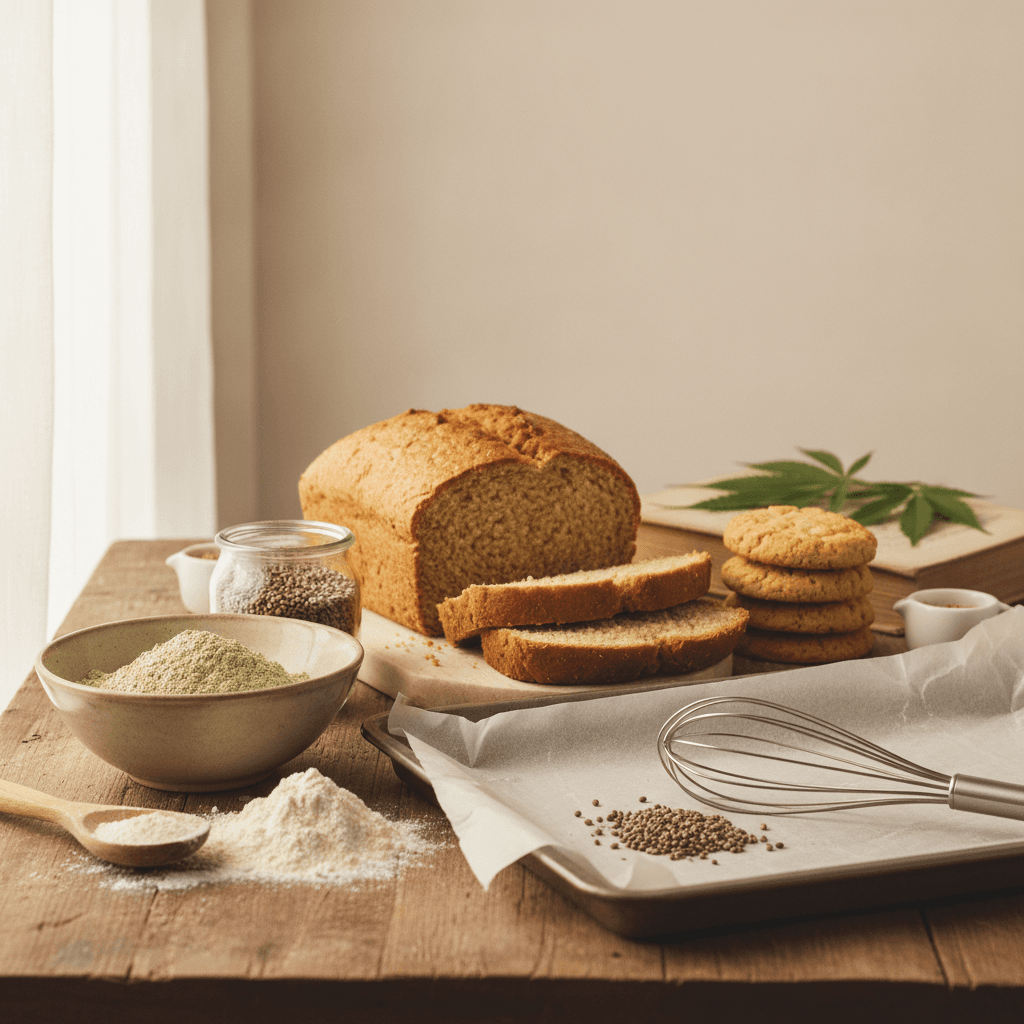
Hemp protein powder adds a nutritional boost to baked goods, but it behaves nothing like flour — and treating it like a 1:1 swap is the fastest way to end up with dense, bitter, crumbly results. Here's what actually changes when you add hemp protein to your baking, and how to work with it instead of against it.
Key takeaways
Hemp protein powder works best as a partial flour replacement — typically no more than 25% of the total flour weight — not a standalone flour substitute.
It absorbs significantly more liquid than most flours, so you'll need to increase wet ingredients or reduce the hemp ratio to avoid dry, crumbly textures.
The earthy, slightly bitter flavor is more pronounced in delicate baked goods like sugar cookies and is easier to mask in chocolate, banana, or spice-heavy recipes.
Hemp protein contains no gluten and limited starch, so it cannot provide structure or rise on its own — it needs a base flour and often a binder.
Color will shift toward green-brown in the final bake, which is cosmetic but worth knowing if appearance matters for what you're making.
What hemp protein powder actually is (and isn't)
Hemp protein powder is made from hemp seeds that have been cold-pressed to remove most of the oil, then milled into a fine powder. It's not the same as hemp flour, which is typically ground from the whole seed and contains more fat and less concentrated protein. The protein content varies by brand, but most hemp protein powders contain roughly 50% protein by weight, with the remainder being fiber, residual fat, and minerals.
The critical thing for bakers: hemp protein is not a flour. It has almost no starch, no gluten, and very little of the binding capacity that holds baked goods together. If you try to use it as a full protein powder flour replacement, you'll get something closer to a compressed protein bar than a muffin. It works as an ingredient within a recipe, not as the foundation of one.
How much hemp protein powder to use (the ratio that matters)
The general guideline that works across most baked goods: replace no more than 25% of your total flour weight with hemp protein powder. For a recipe calling for 200g of flour, that means roughly 50g of hemp protein and 150g of your base flour.
Even at 25%, you'll notice texture and flavor changes. Many bakers who are new to hemp protein find that starting at 10–15% gives a more subtle result while still adding meaningful protein. Going above 25% almost always produces something dry, dense, and strongly flavored — the kind of bake that ends up in the trash rather than on the table.
Hemp protein ratio | Texture impact | Flavor impact | Best for |
|---|---|---|---|
10% of flour weight | Minimal — slightly denser crumb | Mild earthiness, easy to mask | Pancakes, muffins, quick breads |
15–20% of flour weight | Noticeably denser, may need extra liquid | Moderate earthy/nutty flavor | Chocolate brownies, banana bread, spice cakes |
25% of flour weight | Significantly denser, drier — liquid adjustment required | Strong hemp flavor, needs bold pairings | Dense energy bars, heavily spiced loaves |
Above 25% | Crumbly, dry, often unpleasant texture | Dominant and often bitter | Not recommended for most baking |
If you're working with a gluten-free base flour blend, the ratio matters even more. Gluten-free flours already lack the structural protein that wheat provides, so piling on hemp protein — which also can't provide that structure — compounds the problem. Stick to the lower end of the range (10–15%) when your base flour is already gluten-free.
5 things that change when you add hemp protein to baking
1. Moisture absorption increases dramatically
Hemp protein powder is high in fiber — often 15–20% fiber by weight — and fiber absorbs water aggressively. A batter that looks perfectly hydrated with regular flour will turn thick and pasty when you swap in hemp protein at the same liquid ratio.
The fix is straightforward: add more liquid. How much depends on the specific brand and the percentage you're using, but a common starting point is an additional 1–2 tablespoons of liquid per 30g of hemp protein added. The liquid can be water, milk, plant milk, or even an extra egg if the recipe supports it. Mix the batter and let it sit for 5 minutes before judging the consistency — hemp protein continues to absorb moisture after initial mixing. If the batter looks too thick after resting, add liquid a tablespoon at a time until it reaches the consistency you'd expect from the original recipe.
This moisture issue is one of the main reasons gluten-free bakes with hemp protein can turn out dry and crumbly. If your results are consistently too dry, increasing liquid is the first lever to pull.
2. Structure and rise suffer
Wheat flour provides structure through gluten development and starch gelatinization. Hemp protein provides neither. When you replace a portion of flour with hemp protein, you're removing some of the structural material that holds your bake together and helps it rise.
At 10–15% substitution, the effect is manageable — you'll get a slightly denser crumb but the bake will still hold together. At 25%, you may need to add a binder. Xanthan gum (about 0.5–1 teaspoon per cup of total flour blend) is a common choice. Flax eggs or chia eggs can also help with binding, though they add their own flavor and texture characteristics.
If your bake is coming out with poor rise, the hemp protein itself isn't the only culprit — but it's contributing. Make sure your leavening is fresh and consider adding a small amount of extra baking powder (about 1/4 teaspoon per 30g of hemp protein added) to compensate for the heavier batter.
3. Flavor shifts toward earthy and bitter
Hemp protein has a distinctive earthy, slightly grassy flavor that some people describe as nutty and others describe as bitter. The perception varies — partly because brands differ in processing, and partly because individual taste sensitivity to bitter compounds varies significantly.
This flavor is easiest to work with in recipes that already have bold flavors: chocolate, cinnamon, ginger, banana, peanut butter, coffee, or dark molasses. It's hardest to hide in plain sugar cookies, vanilla cakes, or anything where a clean, neutral flavor is the goal. If you're making something delicate, hemp protein is probably the wrong protein powder for the job.
A practical trick: cocoa powder is particularly effective at masking hemp's earthiness. In brownies or chocolate muffins, most people won't detect the hemp flavor at all when the substitution stays at or below 20%.
4. Color changes to green-brown
Hemp protein powder is naturally green-gray, and it will tint your baked goods accordingly. The final color depends on how much you use and what else is in the recipe, but expect anything from a subtle olive tint to a distinctly green-brown crumb.
This is purely cosmetic and doesn't affect flavor or texture, but it can be off-putting if you're not expecting it. Again, chocolate-based recipes handle this well — the cocoa masks the green. For lighter-colored bakes, some bakers add a small amount of cocoa or use a darker sweetener like brown sugar to make the color shift less jarring.
5. Shelf life may shorten slightly
Hemp protein retains some residual fat from the hemp seed, even after oil extraction. This fat can go rancid over time, especially in warm or humid storage conditions. Baked goods made with hemp protein are best consumed within a couple of days or frozen for longer storage.
Store your hemp protein powder itself in the refrigerator or freezer once opened. At room temperature in a pantry, it can develop off-flavors within a few weeks — faster than most wheat flours or starches.
Best baked goods for hemp protein (and which to skip)
Not every baked good benefits equally from hemp protein. The denser and more forgiving the recipe, the better hemp protein works.
Baked good | Hemp protein suitability | Notes |
|---|---|---|
Muffins | Good | Dense crumb hides texture changes; pairs well with banana, blueberry, or chocolate |
Brownies | Very good | Cocoa masks flavor and color; fudgy texture tolerates density well |
Banana bread / quick breads | Very good | Banana flavor complements earthiness; moist batter offsets absorption |
Pancakes and waffles | Good | Works at 10–15% ratio; batter may need extra liquid |
Energy bars / no-bake bites | Very good | No structure concerns; combined with nut butters and dates |
Sugar cookies | Poor | Flavor and color clash with delicate, neutral profile |
Angel food cake | Poor | Requires airy structure that hemp protein actively undermines |
Yeast bread | Fair at low ratios | Can work at 10% but affects gluten development and rise |
If you're baking bread and want to explore high-fiber flour alternatives that play better with yeast-leavened doughs, options like oat fiber or psyllium husk may give you fewer headaches than hemp protein.
Hemp protein vs. other protein powders in baking
Hemp isn't the only protein powder people add to baked goods, and it's worth understanding how it compares to the alternatives — because they don't all behave the same way.
Whey protein is the most commonly used protein powder in baking. It dissolves more easily, has a milder flavor, and produces a softer crumb than hemp protein. However, it's dairy-based, which rules it out for vegan baking.
Pea protein is another plant-based option that's higher in protein per gram than hemp and has a less pronounced flavor. It can produce a slightly chalky texture, though, and some people find its flavor more objectionable than hemp's earthiness.
Soy protein isolate has good binding properties and a relatively neutral flavor, but soy is a common allergen and some bakers avoid it for that reason.
Hemp protein's main advantages over these alternatives are its fiber content, its amino acid profile (it contains all essential amino acids, though it's lower in lysine than some other sources), and the fact that it's free from the most common allergens — no dairy, no soy, no gluten, no tree nuts. For bakers working around multiple food sensitivities, hemp protein can be one of the few viable options.
For a broader look at how different high-protein flour substitutes perform in baking, that comparison covers several options side by side.
Common mistakes with hemp protein in baking
These are the errors that trip people up most often:
Using it as a 1:1 flour replacement. This is the single biggest mistake. Hemp protein is not flour. It cannot replace flour at equal weight and produce anything resembling normal baked goods. It's an additive, not a base. If you've tried this and gotten terrible results, you're not alone — here's why protein powder fails as a flour replacement and what to do instead.
Not adjusting liquid. The high fiber content means hemp protein will steal moisture from your batter. If you don't add extra liquid, the result will be dry and crumbly every time.
Using it in recipes where flavor neutrality matters. Hemp protein has a strong flavor. Putting it in a vanilla buttercream cake is like adding tahini to a sugar cookie — technically possible, but you're fighting the ingredient instead of working with it.
Buying low-quality powder and blaming the ingredient. Hemp protein powders vary significantly in grind fineness, fiber content, and residual fat. Coarser grinds produce grittier baked goods. If your results have a gritty texture, the powder's grind size may be part of the problem. Look for finely milled options and sift before adding to your batter.
Storing it at room temperature for months. Hemp protein's residual fat content means it goes rancid faster than you'd expect. Refrigerate or freeze it after opening.
Tips for getting better results
Sift the powder before adding it to your dry ingredients. Hemp protein tends to clump, and those clumps don't break down during mixing the way flour lumps do.
Let the batter rest for 5–10 minutes after mixing. This gives the fiber time to hydrate, so you can accurately judge whether you need more liquid.
Pair with strong flavors. Cocoa, cinnamon, ginger, espresso powder, peanut butter, and banana all work well alongside hemp's earthiness.
Use a kitchen scale. Volume measurements are unreliable for protein powders because they pack differently than flour. A reliable kitchen scale eliminates guesswork.
Combine with a complementary flour. Almond flour pairs well with hemp protein because its fat content helps keep bakes moist, and its mild nuttiness complements rather than clashes with hemp's earthiness. Brown rice flour is another good base that provides the starch hemp protein lacks.
Don't skip the binder in gluten-free recipes. If your base flour is gluten-free and you're adding hemp protein on top of that, a binder like xanthan gum or psyllium husk is not optional — it's what holds the whole thing together.
Frequently asked questions
Can you replace all the flour with hemp protein powder?
No. Hemp protein powder lacks starch and gluten, which means it cannot provide the structure, rise, or crumb texture that flour delivers in baked goods. Using it as a full flour replacement produces dense, crumbly, often inedible results. Keep it to 25% or less of total flour weight for the best outcomes. For more on why this happens with all protein powders, see why protein powder fails as a flour replacement.
Does hemp protein powder make baked goods taste like hemp?
It adds an earthy, slightly grassy or nutty flavor that becomes more pronounced as you increase the ratio. At 10% of flour weight, the flavor is subtle and easy to mask with chocolate, banana, or warm spices. At 25%, the hemp flavor is dominant and difficult to hide in mild-flavored recipes.
Is hemp protein powder gluten-free?
Hemp seeds are naturally gluten-free. However, cross-contamination during processing is possible if the powder is manufactured in a facility that also handles wheat. If you need a certified gluten-free product, check the label for third-party gluten-free certification rather than assuming all hemp protein powders are safe.
How does hemp protein compare to whey protein for baking?
Whey protein dissolves more readily, produces a softer crumb, and has a milder flavor than hemp protein. Hemp protein adds more fiber, absorbs more liquid, and creates a denser texture. Hemp is the better choice for vegan and allergen-conscious baking; whey generally produces results closer to conventional baked goods in texture and flavor.
What's the best way to store hemp protein powder?
Store opened hemp protein powder in an airtight container in the refrigerator or freezer. Its residual fat content makes it more prone to rancidity than most flours. At room temperature, it can develop off-flavors within a few weeks. Sealed and refrigerated, it typically stays fresh for several months.

Written by
Co-founder, BakingSubs
Co-founder of BakingSubs, where he turns the science of ingredient substitutions into tested, reliable guidance for home bakers.
Related Posts
Bake with Confidence
See all
Confident Gluten-Free Baker Toolkit
The science-based system that replaces gluten's seven invisible jobs so your baking turns out soft, fluffy, and foolproof — every time.

Gluten-Free Recipe Vault
Instant access to our complete library of proven gluten-free recipes — no waiting, no guesswork, just results that work tonight.

Fix Your Gluten-Free Bread
Learn the 3-step formula to make bread rise and stay soft, discover why your loaves collapse, and get a tested sandwich bread recipe that actually works.