

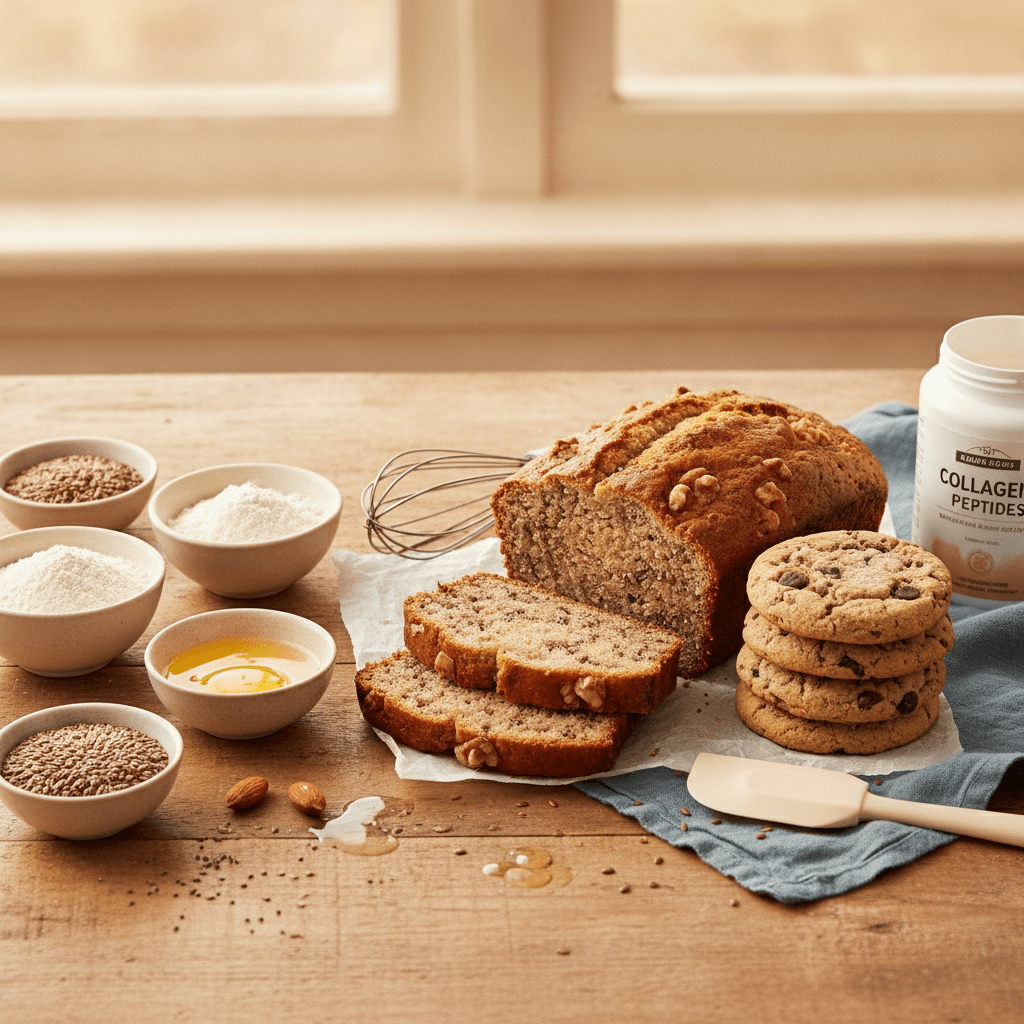
Adding protein to baked goods sounds simple until your muffins turn into hockey pucks or your bread collapses in the center. The problem is that protein sources behave very differently from standard flour and sugar, and each one changes moisture, structure, and flavor in ways you need to plan for.
Here are seven methods that actually work — and the tradeoffs each one brings to your batter.
Key takeaways
- Protein powder can boost protein content but should replace no more than about 25% of the flour in most applications — going higher leads to dry, dense, or rubbery results.
- Nut flours like almond flour add meaningful protein (roughly 6g per 28g serving) while also adding fat, which changes moisture balance.
- Greek yogurt and cottage cheese add protein and moisture simultaneously, which means you typically need to reduce other liquids.
- Egg whites are one of the most reliable protein additions because they also contribute structure and leavening.
- Seeds and seed flours (hemp, chia, flax) add protein plus fiber, but they absorb significant water and can create gummy textures if you don't adjust hydration.
- Collagen peptides dissolve in liquid without changing texture much, but they do not provide structure or leavening the way egg-based proteins do.
Why adding protein to baked goods is harder than it looks
Protein ingredients absorb water differently than all-purpose flour. Whey protein, for example, can absorb roughly twice its weight in liquid, while casein protein absorbs even more. That means swapping protein powder for flour at a 1:1 ratio almost always produces something dry, crumbly, or rubbery.
Beyond moisture, protein affects gluten development (or in gluten-free baking, the binder network), browning rate, and rise. Most protein sources brown faster than wheat flour because of the Maillard reaction between amino acids and sugars. If you don't lower your oven temperature by about 25°F (roughly 15°C), you'll end up with over-browned exteriors and underdone centers.
The key principle: treat protein additions as a modification that requires compensating adjustments, not a simple swap.
Method 1: protein powder (whey, casein, or plant-based)
Protein powder is the most popular route, and also the one that causes the most failures. The general guideline that works across most baked goods is to replace no more than about 25% of the flour with protein powder. Beyond that threshold, texture degrades significantly.
A more conservative approach is to cap whey protein at 20% of total flour weight — roughly 30g of whey per 150g of flour blend — and add an extra tablespoon of liquid (milk or oil) per 15g of protein powder to compensate for absorption.
Whey vs. casein vs. plant-based
| Protein type | Texture effect | Best for | Watch out for |
|---|---|---|---|
| Whey isolate | Can turn rubbery if overused | Cookies, pancakes, muffins | Dries out quickly; eat same day or freeze |
| Casein | Softer, more cake-like crumb | Cakes, soft breads, brownies | Absorbs more water than whey — add extra liquid |
| Pea protein | Slightly gritty; can be dense | Muffins, quick breads | Can have a beany aftertaste at higher amounts |
| Brown rice protein | Gritty, chalky in large amounts | Blending with other proteins | Works best combined with pea or another protein |
If you're working with almond flour or other nut flour bases, keep in mind that those already contribute protein. Adding protein powder on top of an almond flour base can push the total protein content high enough that the bake becomes excessively dry.
Method 2: nut flours and nut butters
Nut flours are a more forgiving way to add protein because they come with built-in fat, which helps keep baked goods moist. Almond flour contains roughly 6g of protein per 28g serving, which is modest compared to protein powder but adds up across a full batch.
The limitation: nut flours don't provide the same structure as wheat flour. In gluten-free baking, you'll still need a binder like xanthan gum or psyllium husk. And because nut flours are high in fat, they can make baked goods greasy if you don't reduce butter or oil accordingly.
Nut butters — almond butter, peanut butter, cashew butter — work well in cookies and brownies where a dense, fudgy texture is desirable. A common approach is to use 2 tablespoons of almond butter per standard muffin batch, which adds roughly 7g of protein to the total without dramatically changing texture.
Method 3: Greek yogurt and cottage cheese
Greek yogurt adds about 10g of protein per 100g serving, and it does double duty by contributing moisture and a slight tang that works well in quick breads, muffins, and cakes. The trade-off is that it adds liquid, so you need to reduce milk, water, or other wet ingredients to compensate.
A practical starting point: replace half the butter or oil in a muffin or quick bread with an equal weight of full-fat Greek yogurt. This adds protein and reduces fat simultaneously. If you're curious about other ways Greek yogurt can substitute for butter, that swap has its own set of considerations worth reading about.
Cottage cheese is gaining popularity in high-protein baking, particularly when blended smooth. It has a similar protein profile to Greek yogurt but with a milder flavor. The key is blending it completely — visible curds in batter create an uneven texture in the finished product.
Method 4: extra eggs and egg whites
Eggs are arguably the most reliable way to add protein to baked goods because they also contribute structure, leavening, and emulsification. One large egg provides about 6g of protein, and egg whites alone provide about 3.6g each with almost no fat.
Adding 1-2 extra egg whites to a standard cake or muffin recipe boosts protein without dramatically changing flavor. The result is usually a slightly lighter, more tender crumb — which is the opposite of what happens with protein powder.
The caveat: too many egg whites can make baked goods taste eggy or create a spongy, almost meringue-like texture. More than 2 extra whites per standard batch (roughly 300g total flour) starts to push into that territory.
For a deeper look at what eggs do in baking, understanding their multiple roles helps explain why they're such an effective protein vehicle.
Method 5: seeds and seed flours
Hemp seeds, chia seeds, and flaxseeds all add protein along with fiber and healthy fats. Hemp hearts are particularly notable — about 10g of protein per 30g serving — and they have a mild, nutty flavor that doesn't dominate.
The main challenge with seeds is water absorption. Chia seeds absorb roughly 10-12 times their weight in liquid, which means even a tablespoon of whole chia seeds can significantly thicken your batter if you don't account for it. Ground flaxseed has a similar absorption effect, though somewhat less extreme.
Hemp seed flour (ground hemp hearts) is one of the more forgiving seed-based protein additions. It doesn't gel like chia or flax, so it's easier to incorporate without hydration math. However, it can create a slightly greenish tint in lighter-colored bakes.
Seed protein comparison
| Seed | Protein per 30g | Key consideration |
|---|---|---|
| Hemp hearts | ~10g | Mild flavor, no gelling, slight green color |
| Chia seeds (ground) | ~5g | High water absorption; forms gel |
| Ground flaxseed | ~5.5g | Gelling effect; can go rancid quickly |
| Pumpkin seed flour | ~8g | Strong flavor; best in small amounts |
Method 6: collagen peptides
Collagen peptides have become popular in protein baking because they dissolve in liquid without forming a gel, don't change flavor significantly, and don't create the rubbery texture that whey protein can. They're essentially invisible in most applications.
The limitation is important: collagen is not a complete protein (it's very low in tryptophan and lacks adequate amounts of some essential amino acids), and it doesn't provide any structural benefit to your bake. It won't help with rise, binding, or crumb structure the way eggs or gluten-forming proteins do. Think of it as a protein supplement you're hiding in food, not a functional baking ingredient.
A typical addition is 10-15g of collagen peptides per batch of muffins or pancakes, dissolved into the liquid ingredients before mixing. At that level, there's typically no detectable change in taste or texture.
Method 7: high-protein flours
Some flours are naturally higher in protein than standard all-purpose flour (which runs about 10-12% protein). Swapping part of your flour for a high-protein flour alternative can boost protein content while keeping the bake more predictable than protein powder does.
| Flour | Approximate protein content | Notes |
|---|---|---|
| Chickpea flour | ~20-22% | Strong beany flavor; best at 25-30% of total flour |
| Soy flour (defatted) | ~45-50% | Very high protein but strong flavor; use sparingly |
| Buckwheat flour | ~12-15% | Earthy flavor; naturally gluten-free despite the name |
| Amaranth flour | ~14-16% | Slightly grassy; works well blended with other flours |
| Quinoa flour | ~14-16% | Bitter if not toasted first; good in savory bakes |
The practical approach is to replace 20-30% of your base flour with a high-protein flour rather than doing a full swap. This keeps the texture close to what you'd expect while meaningfully increasing protein. For gluten-free bakers, many of these flours are naturally gluten-free, but check for cross-contamination risk if you need certified GF products. Our gluten-free baking guide covers common pitfalls with alternative flours.
How to combine methods without wrecking your bake
The most effective high-protein baked goods typically use 2-3 of these methods together at moderate levels rather than pushing any single method to its limit. For example:
- A muffin using 80% all-purpose flour + 20% chickpea flour, plus 2 extra egg whites, plus 2 tablespoons of almond butter in the batter
- A pancake using 75% oat flour + 25% whey protein, with Greek yogurt replacing half the milk
- A brownie using almond flour as the base, with collagen peptides dissolved into the wet ingredients
The stacking approach works because each method contributes a modest protein boost without any single ingredient dominating the texture. A muffin that gets 3-4g extra protein from flour, 7g from egg whites, and 3-4g from nut butter ends up with significantly more protein per serving than the original — without tasting like a supplement.
Hydration is the adjustment most people skip
Nearly every protein addition absorbs more liquid than the ingredient it's replacing. The single most common mistake is not adding enough moisture to compensate. A general rule: for every 15g of protein powder or high-protein flour you add, start with an extra tablespoon (15ml) of liquid and adjust from there. Your batter should look the same consistency as the original — if it looks thicker, it is, and the finished product will be drier.
What about gluten-free high-protein baking?
Gluten-free bakers face an extra challenge because many protein sources (like vital wheat gluten, which is pure protein) are off the table. The good news is that several of the best options — nut flours, seeds, eggs, collagen, and legume flours — are naturally gluten-free.
The risk in gluten-free protein baking is stacking too many dense, absorbent ingredients. If you're already using a blend of brown rice flour and tapioca starch, adding chickpea flour and protein powder on top can create something that's more brick than bread. Keep your total protein additions modest and lean on eggs and Greek yogurt as your primary protein boosters — they add moisture rather than absorbing it.
If your gluten-free bakes are coming out dry and crumbly, adding protein will likely make that worse unless you simultaneously increase fat or liquid.
A contrarian take: not every bake needs more protein
The fitness and wellness world has pushed the idea that everything should be high-protein, but in baking, chasing protein numbers often means sacrificing the qualities that make baked goods worth eating — tenderness, moisture, flavor, and a pleasant crumb. A dry, chalky protein muffin that technically has 20g of protein per serving but tastes like cardboard isn't actually a better food choice than a well-made regular muffin with 5g of protein that you enjoy eating alongside a protein-rich meal.
If you're adding protein to baked goods for a specific dietary need — athletic recovery, medical requirements, or meal replacement — the methods above will get you there. But if you're doing it because you feel like you should, consider whether pairing a normal baked good with a glass of milk or a handful of nuts accomplishes the same goal with less fuss and better flavor.
Frequently asked questions
Can you just add protein powder to any baking recipe?
You can, but you shouldn't treat it as a simple addition. Protein powder absorbs significantly more liquid than flour, so adding it without reducing flour or increasing liquid will produce dry, dense results. The general guideline is to replace no more than about 25% of the flour with protein powder and add extra liquid to compensate. Start with small amounts and adjust from there.
Which protein source changes the taste of baked goods the least?
Collagen peptides and egg whites have the least impact on flavor. Collagen dissolves into liquid ingredients and is essentially undetectable in the finished product. Egg whites add a very mild flavor that most people don't notice. Whey protein isolate (unflavored) is also relatively neutral, though vanilla-flavored versions can work well in sweet bakes.
Does adding protein to baked goods change how long they stay fresh?
Generally, yes — high-protein baked goods tend to stale and dry out faster than their standard counterparts. Protein absorbs moisture during baking and continues to do so during storage. Storing high-protein bakes in airtight containers and consuming them within 1-2 days (or freezing them) helps. Adding fat sources like nut butters or Greek yogurt alongside the protein can help with moisture retention.
What is the best protein source for gluten-free baking?
Eggs and egg whites are the most reliable option because they add protein, structure, and leavening simultaneously — all things gluten-free bakes often need more of. Almond flour and other nut flours are a close second because they contribute fat that keeps the crumb moist. Avoid relying heavily on protein powder in gluten-free baking, since gluten-free batters are already prone to dryness and crumbliness.
How much protein can you realistically add to a muffin or cookie?
Using a combination of methods — high-protein flour, extra egg whites, nut butter, and a small amount of protein powder — you can typically add 8-15g of protein per serving to a muffin without making it taste like a supplement. Cookies are harder because they're thinner and more sensitive to texture changes; 5-8g of extra protein per cookie is a more realistic ceiling before quality drops noticeably.

Written by
Co-founder, BakingSubs
Co-founder of BakingSubs, where he turns the science of ingredient substitutions into tested, reliable guidance for home bakers.
Related Posts
7 Common Healthy Baking Mistakes That Ruin Texture (and How to Fix Each One)
7 Texture Changes With Health Swaps That Catch Bakers Off Guard (and How to Handle Each One)

Gluten-Free Flour Weight Chart: Grams per Cup for 9 Major Brands (and Why the Spread Is Over 20%)
Bake with Confidence
See all
Confident Gluten-Free Baker Toolkit
The science-based system that replaces gluten's seven invisible jobs so your baking turns out soft, fluffy, and foolproof — every time.

Gluten-Free Recipe Vault
Instant access to our complete library of proven gluten-free recipes — no waiting, no guesswork, just results that work tonight.

Fix Your Gluten-Free Bread
Learn the 3-step formula to make bread rise and stay soft, discover why your loaves collapse, and get a tested sandwich bread recipe that actually works.