

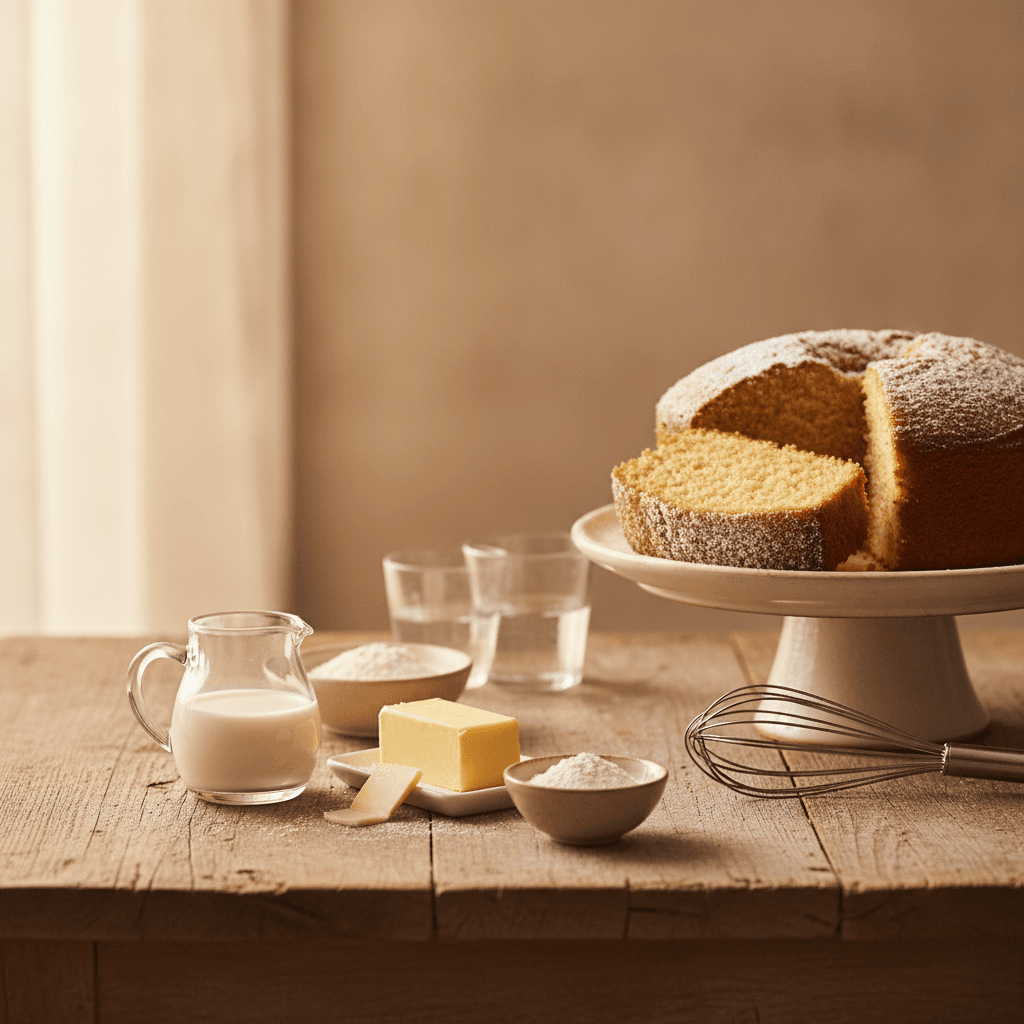
Your recipe calls for whole milk, you open the fridge, and all you have is skim. Or maybe you're deliberately cutting fat. Either way, skim milk behaves differently in batter and dough — and not every workaround gives you the same result. Here are the substitutes that close the gap and the ones that make things worse.
Key takeaways
- Skim milk plus a small amount of melted butter (about 1 tablespoon per cup) is the closest match to whole milk's fat content and performance in most baked goods.
- Skim milk on its own works fine in lean baked goods like pancakes and quick breads, but produces noticeably drier cakes and less tender cookies.
- Half-and-half diluted with water matches whole milk's fat percentage more precisely than cream does.
- Evaporated milk (diluted 1:1 with water) adds a slight caramelized flavor and extra protein, which can actually improve browning.
- Two common substitutes — coconut milk from a carton and rice milk — fall short because their fat content and protein levels don't match whole milk's role in structure and browning.
Why whole milk matters in baking (and what skim milk is missing)
Whole milk contains roughly 3.25% fat. Skim milk sits at about 0.5% or less. That difference sounds small, but fat in milk does three things in baked goods: it tenderizes the crumb by coating flour proteins, it carries fat-soluble flavors, and it contributes to browning through the Maillard reaction alongside milk's lactose and protein. For a deeper look at how milk functions in batter and dough, the milk functions guide covers this in detail.
When you swap in skim milk without compensating for that missing fat, the result is a baked good that's leaner, slightly tougher, and sometimes paler on top. In a simple pancake batter, the difference is barely noticeable. In a butter cake where milk is a primary liquid, it matters a lot more.
Substitute 1: skim milk plus melted butter
This is the most reliable fix. Add 1 tablespoon (about 14g) of melted unsalted butter to 1 cup of skim milk. That brings the total fat content close to whole milk's 3.25% — not a perfect chemical match, but close enough that most bakers won't detect a difference in the finished product.
Why it works: butter is dairy fat, so you're essentially re-adding what was removed during the skimming process. The lactose and casein proteins are already present in the skim milk, so browning and structure stay intact.
Best for: cakes, muffins, quick breads, yeast breads, custard-based desserts — essentially anything where the recipe calls for whole milk.
Watch out for: if you're adding the butter to a cold batter, it can resolidify into small clumps. Melt the butter and let it cool to room temperature, or whisk it into the skim milk before combining with other ingredients. If you're working with a recipe that also calls for butter substitutes, account for total fat so you don't accidentally double up or leave too much out.
Substitute 2: half-and-half diluted with water
Half-and-half contains roughly 10–12% fat. Mixing it with water in a ratio of about 1 part half-and-half to 2 parts water brings you close to whole milk's fat percentage. For a cup of substitute, that means roughly 1/3 cup half-and-half and 2/3 cup water.
This approach is useful when you don't have skim milk at all — maybe you grabbed half-and-half for coffee and need milk for a recipe. The protein and lactose content will be slightly lower than whole milk because of the water dilution, but in practice the difference is minimal for most baked goods.
Best for: cakes, scones, biscuits, any recipe where you need a cup or less of milk.
Limitation: if a recipe relies heavily on milk for structure (like a milk bread where milk is the primary liquid), the diluted protein may produce a slightly less chewy crumb. For most standard recipes, this won't be an issue.
Substitute 3: evaporated milk diluted 1:1 with water
Evaporated milk is whole milk with about 60% of its water removed. Diluting it back with equal parts water gives you something close to whole milk in fat and protein content. A standard 12-ounce can mixed with 12 ounces of water yields about 3 cups of reconstituted milk.
The interesting wrinkle: evaporated milk has been heat-processed, which causes some of the lactose and proteins to undergo early-stage Maillard reactions. That gives it a slightly caramelized, toasty flavor. In baked goods, this can actually be an advantage — it enhances browning and adds a subtle depth that plain whole milk doesn't provide.
Best for: quick breads, banana bread, pumpkin bread, spice cakes — anything where a slightly richer, warmer flavor profile works. Also a strong choice for choosing milk alternatives when you want to stay within dairy.
Watch out for: the caramelized flavor is noticeable in delicate bakes like white cake or angel food cake. If you need a neutral-flavored milk substitute, this isn't the right pick.
Substitute 4: plain skim milk (no modification)
Sometimes the simplest answer is fine. Skim milk used as a straight 1:1 replacement for whole milk works in recipes where milk plays a supporting role rather than a starring one. Think pancakes, waffles, cornbread, and lean muffins where butter or oil in the recipe already provides plenty of fat.
Take a cornbread recipe that already contains 3 tablespoons of oil per batch: the missing milk fat — roughly 8 grams per cup — is a rounding error compared to the 42 grams of fat from the oil.
That logic holds up. If your recipe has a generous amount of butter, oil, or another fat source, the fat contribution from milk is a small fraction of the total. Swapping skim for whole in those cases changes almost nothing.
Best for: recipes where milk is less than 1/3 of the total liquid and the recipe already includes a significant fat source.
Where it falls short: butter cakes, enriched doughs, and custards where milk is the primary liquid. In those cases, expect a slightly drier, less tender result.
Substitute 5: 2% milk
If you have 2% (reduced-fat) milk on hand, it's a closer match to whole milk than skim is. At roughly 2% fat versus whole milk's 3.25%, the gap is small enough that most baked goods turn out nearly identical. No modification needed — use it 1:1.
This is honestly the least interesting substitute on the list because it just... works. The fat difference of about 1.25 percentage points translates to roughly 3 grams of fat per cup, which is less than a teaspoon of butter. In a recipe that makes 12 muffins, that's a quarter gram of fat per muffin. Not enough to change texture or flavor in any detectable way.
Best for: everything. Seriously. If you have 2% milk and a recipe calls for whole milk, just use it.
Two substitutes that fall flat
Coconut milk from a carton
Carton coconut milk (the kind sold as a beverage, not the canned stuff) typically has about 1–2% fat, which seems close to whole milk. But the fat is coconut oil rather than dairy fat, and the protein content is dramatically lower — often less than 1 gram per cup versus whole milk's 8 grams. That protein difference matters because milk proteins contribute to structure, browning, and moisture retention in baked goods.
The result: baked goods made with carton coconut milk tend to brown less, have a slightly gummy or flat texture in cakes, and may carry a faint coconut flavor that clashes with some profiles. It's not a terrible option if you're avoiding dairy entirely, but as a substitute specifically for whole milk's function in baking, it underperforms. For more on how common milk substitution mistakes affect your results, that guide is worth reading.
Rice milk
Rice milk is very thin, with almost no fat (typically under 1%) and minimal protein (under 1 gram per cup). It's essentially starchy water with added vitamins. In baking, it contributes moisture but almost nothing else — no tenderizing, poor browning, and no structural support from protein.
If you use rice milk as a whole milk substitute in a cake, expect a paler crust, a slightly gummy interior, and a less complex flavor. It can work in a pinch for pancakes or simple quick breads where other ingredients carry the load, but it's the weakest dairy milk substitute for baking purposes.
Quick comparison table
| Substitute | Fat match | Protein match | Flavor impact | Best use |
|---|---|---|---|---|
| Skim milk + 1 Tbsp butter | Close | Identical | Neutral | Universal — works everywhere |
| Half-and-half + water (1:2) | Close | Slightly lower | Neutral | Cakes, scones, biscuits |
| Evaporated milk + water (1:1) | Close | Slightly higher | Lightly caramelized | Quick breads, spice cakes |
| Plain skim milk (no change) | Low | Identical | Neutral | Recipes with plenty of other fat |
| 2% milk | Very close | Identical | Neutral | Everything |
| Coconut milk (carton) | Low-moderate | Very low | Slight coconut | Dairy-free only |
| Rice milk | Very low | Very low | Thin, starchy | Last resort |
How to decide which substitute to use
The decision tree is simpler than it looks:
- Do you have 2% milk? Use it. Done.
- Do you have skim milk and butter? Add 1 tablespoon of melted butter per cup of skim. This is the most reliable swap.
- Do you have half-and-half? Dilute 1 part half-and-half with 2 parts water.
- Do you have evaporated milk? Dilute 1:1 with water. Be aware of the slight flavor shift.
- Do you only have skim milk, no butter? Check how much fat is already in the recipe. If there's plenty of butter or oil, skim milk alone will be fine. If milk is the main liquid and there's not much other fat, expect a leaner result.
If you're also making substitutions for other ingredients in the same recipe — like swapping applesauce for sugar or using flax eggs — be cautious about stacking too many changes at once. Each substitution shifts the balance of fat, moisture, and protein in the batter, and multiple swaps can compound in unpredictable ways.
A note on buttermilk as a whole milk substitute
Buttermilk sometimes comes up in this conversation, but it's not a straightforward swap. Buttermilk is acidic (pH around 4.5), which reacts with baking soda to produce leavening. If you replace whole milk with buttermilk in a recipe that uses baking powder (not baking soda), you'll introduce acidity the recipe wasn't designed for, which can affect rise and flavor.
Buttermilk also has a lower fat content than whole milk — typically around 1–2%. So it doesn't solve the fat gap, and it introduces a new variable (acidity) that you'd need to compensate for by adjusting leaveners. It's a valid ingredient in recipes designed for it, but it's not a simple drop-in replacement for whole milk.
Does the type of baked good matter?
Absolutely. Here's a rough guide to how sensitive different categories are to the skim-for-whole swap:
Low sensitivity (skim milk alone is fine): pancakes, waffles, cornbread, pizza dough, most yeast breads where milk is a minor ingredient.
Medium sensitivity (add butter or use 2%): muffins, quick breads, brownies, cookie doughs where milk is used.
High sensitivity (match the fat carefully): butter cakes, pound cakes, enriched brioche-style doughs, custards, cream-based fillings. In these recipes, milk fat directly affects mouthfeel and tenderness. A vanilla pound cake, for example, can go from moist and velvety to noticeably dry when you switch to skim milk without adding back any fat.
If you're baking something in the high-sensitivity category, the skim-plus-butter method or 2% milk are your safest bets. For the full overview of milk in baking, that resource covers how different milk types interact with other ingredients.
Contrarian take: skim milk is sometimes the better choice
Most baking advice treats whole milk as the default and skim as the compromise. But there are cases where less fat in the liquid is actually what you want. If you're making a lean, crusty bread and the recipe calls for milk to improve crumb softness, skim milk gives you the lactose (for browning) and protein (for structure) without adding fat that could soften the crust too much. Similarly, in recipes where you want a chewier texture — like certain bagel doughs — skim milk's lower fat content lets gluten develop more freely.
The point is that skim milk isn't always a downgrade. It depends entirely on what you're making and what outcome you want.
Frequently asked questions
Can I use skim milk instead of whole milk in cake?
You can, but the cake will be slightly drier and less tender because skim milk has almost no fat. The simplest fix is to add 1 tablespoon of melted butter per cup of skim milk, which brings the fat content close to whole milk. If the cake recipe already includes a generous amount of butter or oil, plain skim milk may work without any adjustment.
What is the best substitute for whole milk in baking?
For a dairy-based substitute, 2% milk is the easiest — it's close enough in fat and protein that no adjustment is needed. If you only have skim milk, adding 1 tablespoon of melted butter per cup is the most reliable workaround. Both options preserve the browning, flavor, and texture that whole milk contributes. For help choosing between dairy and non-dairy options, see the choosing milk alternatives guide.
Does skim milk change the texture of cookies?
In most cookie recipes, milk is a minor ingredient — often just a tablespoon or two. At that volume, the fat difference between skim and whole milk is negligible (less than 1 gram). If your cookie recipe calls for a larger amount of milk, you may notice slightly less spread and a leaner chew, but for standard drop cookies and cookie recipes with other substitutions, skim milk works fine.
Can I use evaporated milk instead of whole milk in baking?
Yes, but dilute it first. Mix equal parts evaporated milk and water to approximate whole milk's consistency and fat content. Keep in mind that evaporated milk has a slightly caramelized flavor from heat processing, which works well in spice cakes and banana bread but may be noticeable in delicate white cakes or vanilla-forward recipes.
Is almond milk a good substitute for whole milk in baking?
Almond milk can work as a 1:1 liquid replacement, but it has significantly less protein and fat than whole milk. Expect reduced browning and a slightly different crumb structure. It's a reasonable option for dairy-free baking, but if you have access to any dairy milk — even skim — that will perform closer to whole milk in most recipes.

Written by
Co-founder, BakingSubs
Co-founder of BakingSubs, where he turns the science of ingredient substitutions into tested, reliable guidance for home bakers.
Related Posts
Bake with Confidence
See all
Confident Gluten-Free Baker Toolkit
The science-based system that replaces gluten's seven invisible jobs so your baking turns out soft, fluffy, and foolproof — every time.

Gluten-Free Recipe Vault
Instant access to our complete library of proven gluten-free recipes — no waiting, no guesswork, just results that work tonight.

Fix Your Gluten-Free Bread
Learn the 3-step formula to make bread rise and stay soft, discover why your loaves collapse, and get a tested sandwich bread recipe that actually works.