

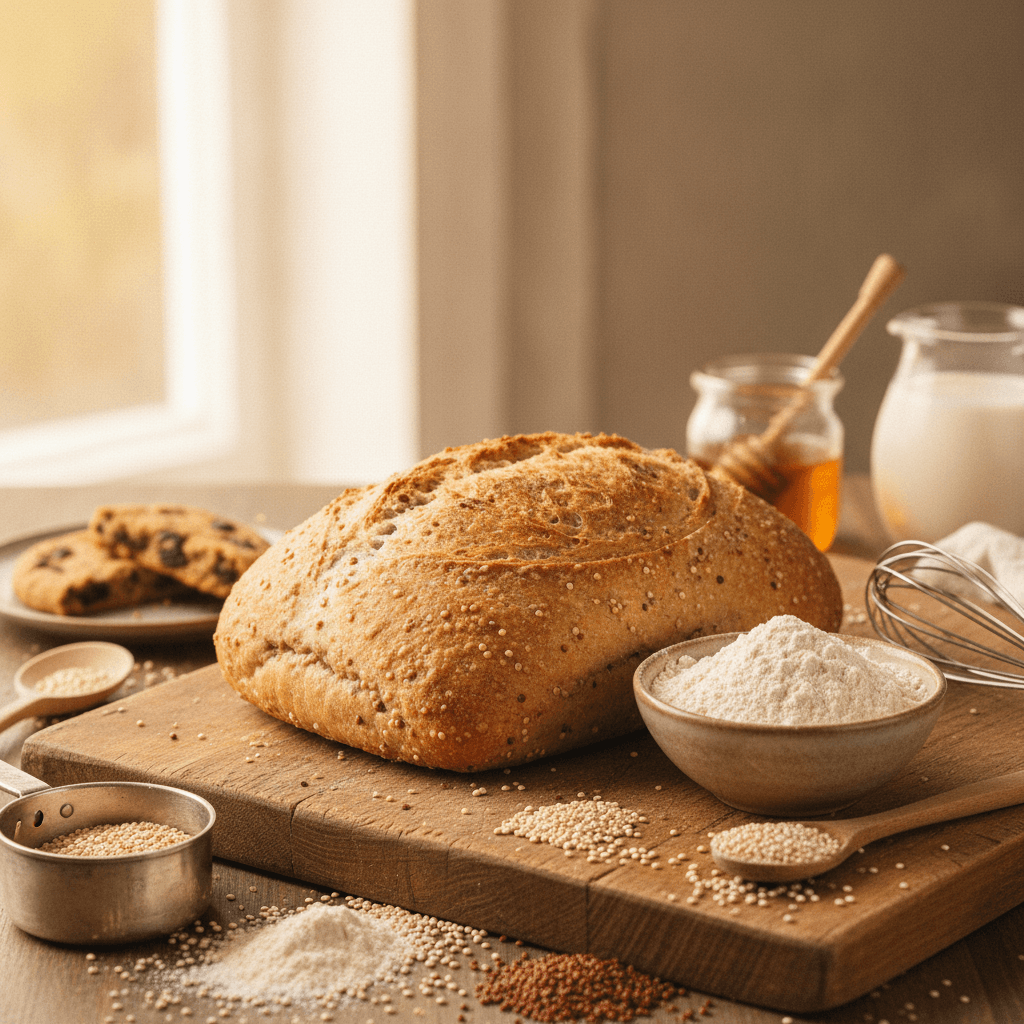
Quinoa flour packs roughly 13–16g of protein per 100g depending on the variety, making it one of the highest-protein gluten-free flours available. But protein content alone does not make a good flour substitute — the type of protein, the flavor, and how it behaves in a batter all matter. Here is what actually changes when you swap quinoa flour into your baking, and where the limits are.
Key takeaways
- Quinoa flour contains roughly 13–16g of protein per 100g, comparable to bread flour but with no gluten-forming capability.
- It works best as a partial replacement — typically 25–50% of a flour blend — rather than a full 1:1 swap for all-purpose or bread flour.
- The distinctive earthy, slightly bitter flavor is the most common complaint, and it intensifies in recipes with fewer competing flavors like sugar or chocolate.
- Quinoa flour absorbs more liquid than all-purpose flour, so batters and doughs often need additional moisture.
- It pairs well with starches like tapioca or potato starch, which compensate for the lack of gluten structure.
- Toasting quinoa flour in a dry skillet before baking can reduce the bitter aftertaste significantly.
What quinoa flour actually brings to baking
Quinoa flour is milled from whole quinoa seeds, so it retains the grain's full nutritional profile — protein, fiber, iron, and all nine essential amino acids. That "complete protein" status is what draws bakers to it, especially those building high protein flour substitutes into their routine.
But here is the catch: quinoa protein is not gluten. Wheat flour's protein (glutenin and gliadin) forms the elastic network that traps gas and gives bread its chew. Quinoa protein does none of that. It contributes tenderness and nutritional density, but it cannot build structure on its own. Expecting quinoa flour to behave like bread flour just because the protein numbers are similar is the single biggest mistake bakers make with this ingredient.
In practice, replacing 100% of the all-purpose flour in a muffin recipe with quinoa flour is likely to give you muffins that collapse into hockey pucks. A blend such as 30% quinoa flour, 30% brown rice flour, and 40% tapioca starch holds together far better.
How quinoa flour compares to other high protein flours
Protein content is only one variable. The table below shows how quinoa flour stacks up against other popular high-protein flour options across the factors that actually affect your bake.
| Flour | Protein (per 100g) | Gluten | Flavor impact | Best used as |
|---|---|---|---|---|
| Quinoa flour | ~13–16g | None | Earthy, slightly bitter | 25–50% of a blend |
| Almond flour | ~21g | None | Mild, nutty, sweet | Up to 100% in some recipes |
| Buckwheat flour | ~12–13g | None | Earthy, malty | 25–50% of a blend |
| Bread flour | ~12–14g | Yes | Neutral | 100% (wheat-based baking) |
| Amaranth flour | ~14–15g | None | Grassy, slightly peppery | 15–25% of a blend |
Notice that almond flour has significantly more protein per gram, but it also adds a lot of fat and behaves completely differently in structure. If you are comparing those two options, the post on almond flour vs coconut flour for keto baking covers how fat-heavy flours change texture in ways protein-heavy grain flours do not.
The bitter flavor problem (and how to manage it)
Quinoa contains saponins — naturally occurring compounds on the seed's outer coating that taste bitter and slightly soapy. Most commercial quinoa flour is made from washed quinoa, which removes the majority of saponins, but a noticeable earthy bitterness often remains. This is the number one reason bakers abandon quinoa flour after one attempt.
Two approaches help:
- Toast the flour first. Spread quinoa flour in a dry skillet over medium-low heat and stir constantly for about 5–6 minutes until it smells nutty and deepens slightly in color. This drives off volatile bitter compounds and brings out a more pleasant, toasty flavor. It is a small extra step that makes a dramatic difference.
- Pair it with bold flavors. Chocolate, warm spices (cinnamon, ginger, cardamom), molasses, and brown sugar all mask the bitterness effectively. In a plain white cake or a delicate vanilla cookie, quinoa flour's flavor is hard to hide. In a spiced banana bread or a double-chocolate brownie, most people cannot detect it at all.
A contrarian take: many bakers try to eliminate quinoa's flavor entirely, but some cuisines lean into it. The earthy, slightly grassy taste works well in savory baking — flatbreads, crackers, and herb-forward scones — where you would not want a flour that tastes like nothing.
Where quinoa flour works as a protein-boosting substitute
Quinoa flour is not a universal 1:1 swap. It works well in some applications and poorly in others. Here is an honest breakdown.
Muffins, quick breads, and pancakes
These are the sweet spot. Quick breads rely on chemical leaveners (baking powder, baking soda) rather than gluten for lift, so the lack of gluten in quinoa flour matters less. Replacing 25–50% of all-purpose flour with quinoa flour in a muffin recipe typically produces a slightly denser, more tender crumb with a noticeable protein boost. The remaining 50–75% can be all-purpose flour (for non-gluten-free baking) or a combination of rice flour and starch for gluten-free versions.
Cookies
Quinoa flour can work at 25–40% of the flour blend in cookies, especially drop cookies and bar cookies where a dense, chewy texture is desirable. In thin, crispy cookies it tends to make the texture gritty rather than snappy. The flavor pairs well with chocolate chips, peanut butter, and oats — less well with delicate shortbread or sugar cookies where there is nowhere for the earthiness to hide.
Yeast breads
This is where quinoa flour struggles the most. Yeast bread depends on gluten for structure, and quinoa protein cannot form that network. Using more than about 15–20% quinoa flour in a wheat-based bread recipe tends to weaken the gluten network enough to reduce oven spring and create a denser loaf. For gluten-free bread, quinoa flour can be part of a multi-flour blend, but it needs structural support from xanthan gum, psyllium husk, or similar binders. If you are building a low carb or alternative flour bread, understand that quinoa flour is not low-carb — it has roughly 64g of carbohydrates per 100g.
Cakes
Partial replacement (around 25–30%) can work in denser cakes like carrot cake, banana cake, or chocolate cake. For light, airy sponge cakes, quinoa flour's weight and flavor make it a poor choice. The crumb tends to be tighter and the texture more moist than crumbly, which is a positive for some styles and a dealbreaker for others.
The hydration adjustment most bakers miss
Quinoa flour absorbs more liquid than all-purpose flour. If you swap it in at the same ratio without adjusting moisture, the result is a dry, crumbly bake. This is one of the most common dry and crumbly texture problems in gluten-free baking.
A general guideline: for every 100g of quinoa flour you add in place of all-purpose flour, increase the liquid in the recipe by approximately 1–2 tablespoons. The exact amount depends on the brand (grind fineness varies) and what other flours are in the blend. Start with the smaller addition and adjust based on batter consistency — it should look the same as your original batter, not thicker.
Eggs, yogurt, and applesauce all contribute moisture and binding, which can offset quinoa flour's absorbency while adding their own functional benefits. If you are already using applesauce as a sugar replacement, the extra moisture it provides can actually work in your favor when quinoa flour is in the blend.
Building a quinoa flour blend that actually works
The most reliable approach is blending quinoa flour with a neutral starch and a second grain flour. Here is a starting framework for gluten-free baking:
| Component | Percentage of blend | Role |
|---|---|---|
| Quinoa flour | 25–35% | Protein, nutrition, structure support |
| White rice flour or brown rice flour | 30–40% | Neutral flavor, familiar texture |
| Tapioca starch or arrowroot powder | 25–35% | Binding, chew, moisture retention |
| Xanthan gum (if not already in the recipe) | ~0.5–1 tsp per cup of blend | Gluten replacement for structure |
This is not the only combination that works, but it is a solid baseline. Some bakers add a small amount of buckwheat flour (10–15%) for depth of flavor, which complements quinoa's earthiness rather than fighting it.
For non-gluten-free baking where you simply want to boost protein, the math is simpler: replace 25–30% of your all-purpose flour with quinoa flour, increase liquid slightly, and leave everything else the same. The wheat flour's gluten will carry the structural load.
Why quinoa flour is not the same as adding protein powder
Some bakers lump quinoa flour in with protein powder as a way to add protein to baked goods, but they behave completely differently. Protein powder (whey, casein, pea, etc.) is an isolated concentrate that absorbs massive amounts of liquid and can turn baked goods rubbery or dry. Quinoa flour is a whole-grain flour that happens to be high in protein — it still contains starch, fiber, and fat in proportions that function more like a traditional flour.
If you have tried adding protein powder directly to a recipe and gotten disappointing results, the post on protein powder as flour replacement explains why that approach fails and what to do instead. Quinoa flour avoids most of those problems because it is not a protein isolate — it is a flour that brings protein along for the ride.
Cost and availability: the practical side
Quinoa flour typically costs $6–$10 per pound at retail, which is significantly more expensive than all-purpose flour ($0.50–$1.00 per pound) and more expensive than most rice flours ($2–$4 per pound). It is comparable in price to almond flour and slightly less expensive than specialty options like tiger nut flour.
Bob's Red Mill is the most widely available brand in US grocery stores. Ancient Harvest and Shiloh Farms also produce quinoa flour, though availability varies by region. Some bakers mill their own quinoa flour from whole quinoa seeds using a high-speed blender or grain mill, which can reduce cost to roughly $3–$5 per pound depending on the source of whole quinoa. Home-milled quinoa flour tends to be coarser, which can contribute to a gritty texture — sifting through a fine-mesh strainer helps.
Common mistakes when using quinoa flour as a high protein substitute
These are the errors that lead to disappointing results and make bakers give up on quinoa flour prematurely:
- Using it at 100% in a recipe designed for wheat flour. Without gluten, the structure collapses. Keep it at 25–50% of the total flour weight unless the recipe was specifically developed for quinoa flour.
- Skipping the toast. Untoasted quinoa flour has a stronger bitter edge that turns off most tasters. Five to six minutes in a dry skillet is worth the effort.
- Not adjusting liquid. Quinoa flour is thirstier than all-purpose flour. Dry, crumbly results almost always mean the batter needed more moisture.
- Expecting it to taste neutral. Quinoa flour has a flavor. Lean into it with complementary ingredients rather than pretending it is not there.
- Confusing high protein with high structure. Protein content on a nutrition label does not tell you how that protein behaves in a dough. Quinoa protein does not form gluten, does not create elasticity, and does not trap gas. Plan accordingly.
Who quinoa flour is (and is not) for
Quinoa flour makes the most sense for bakers who need or want gluten-free baking with a protein boost — particularly those managing celiac disease or gluten sensitivity who also want to increase protein intake without relying on nut flours (due to allergies) or protein powder isolates. It is also a good option for bakers who want to incorporate more whole grains and complete proteins into their baking.
It is not the best choice if your primary goal is a neutral-flavored, high-protein flour that behaves like wheat. For that, vital wheat gluten added to all-purpose flour (to make bread flour) is more practical, though obviously not gluten-free. And if you are looking for a high-fiber alternative flour rather than a high-protein one, the roundup of high fiber flour alternatives covers options that prioritize fiber content.
Frequently asked questions
Can you substitute quinoa flour for all-purpose flour 1:1?
Not reliably. Quinoa flour lacks gluten and absorbs more liquid than all-purpose flour, so a straight 1:1 swap usually produces dense, dry, or crumbly results. Replacing 25–50% of the all-purpose flour with quinoa flour and adding a small amount of extra liquid is a more dependable approach.
Does quinoa flour taste like quinoa?
Yes, it has a noticeable earthy, slightly bitter flavor that comes from naturally occurring saponins. Toasting the flour in a dry skillet for 5–6 minutes before baking reduces the bitterness significantly. Pairing it with chocolate, warm spices, or brown sugar also helps mask the flavor.
Is quinoa flour good for gluten-free bread?
It can be part of a gluten-free bread blend, but it should not be the only flour. Quinoa flour contributes protein and nutrition, but it cannot form the elastic structure that bread needs. Combining it with rice flour, tapioca starch, and a binder like xanthan gum or psyllium husk produces better results. Even then, expect a denser crumb than wheat bread.
How much protein does quinoa flour add to baked goods?
Quinoa flour contains roughly 13–16g of protein per 100g. In a recipe where quinoa flour makes up 30% of the total flour (a common ratio), you are adding approximately 4–5g of protein per 100g of flour used — a meaningful increase over white rice flour (about 6g per 100g) but not a dramatic transformation of the recipe's overall protein content.
Is quinoa flour better than almond flour for high protein baking?
It depends on what you are baking. Almond flour has more protein per gram (about 21g per 100g) and a milder flavor, but it also adds significant fat and produces a very different texture — moist, dense, and tender rather than light and fluffy. Quinoa flour behaves more like a traditional grain flour and works better in blends where you want structure rather than richness. Almond flour is also a tree nut allergen, which rules it out for some bakers.

Written by
Co-founder, BakingSubs
Co-founder of BakingSubs, where he turns the science of ingredient substitutions into tested, reliable guidance for home bakers.
Related Posts

Bake with Confidence
See all
Confident Gluten-Free Baker Toolkit
The science-based system that replaces gluten's seven invisible jobs so your baking turns out soft, fluffy, and foolproof — every time.

Gluten-Free Recipe Vault
Instant access to our complete library of proven gluten-free recipes — no waiting, no guesswork, just results that work tonight.

Fix Your Gluten-Free Bread
Learn the 3-step formula to make bread rise and stay soft, discover why your loaves collapse, and get a tested sandwich bread recipe that actually works.