
How to Make Cottage Cheese Smooth for Baking: 9 Brands Compared, Best Tools, and 3 Fixes for Grainy Results
Learn how to make cottage cheese smooth for baking with the right brand, blending tool, and draining method. 9 brands compared with protein, fat, and texture data.

Malik
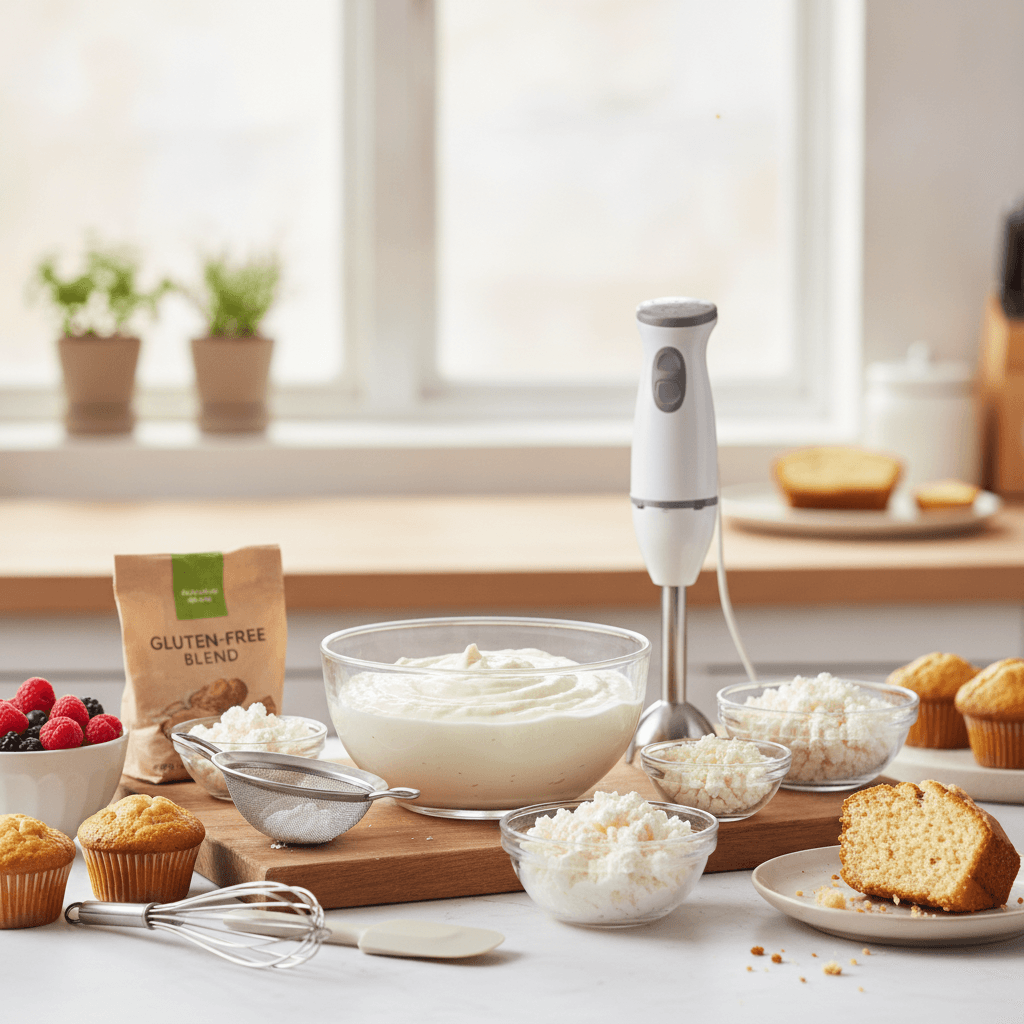
Blend it. That is the single most reliable way to make cottage cheese smooth for baking. A 30-second spin in a regular blender or food processor turns even the chunkiest large-curd tub into a silky puree that disappears into pancake, muffin, and cheesecake batters. But the brand you start with matters almost as much as the tool you use: some cottage cheeses blend to a perfectly smooth, ricotta-like consistency in seconds, while others stay stubbornly grainy no matter how long you process them. Below we break down nine popular brands, the equipment that actually works, and the fixes for the three most common problems bakers run into.
Key takeaways
A countertop blender produces the smoothest result in about 30 seconds. A food processor takes 45 to 60 seconds and leaves slightly more texture. An immersion blender works but needs a tall, narrow container.
Small-curd, full-fat cottage cheese (4% milkfat) blends smoothest. Low-fat versions contain more water and less emulsifiable fat, which makes grainy texture harder to eliminate.
Small-curd brands like Good Culture and Muuna blend smooth quickly. Friendship large-curd and Breakstone's take longer and can keep a faint graininess.
Draining cottage cheese through a fine mesh strainer for 10 minutes removes 15 to 25% of the liquid weight, preventing soggy baked goods.
Cottage cheese curdles above roughly 180 degrees F (82 degrees C) if added alone. Tempering it into warm batters or mixing it with flour first prevents protein shock.
At 11 to 12g protein per 100g, cottage cheese is one of the highest-protein dairy additions you can make to baked goods. For more ways to boost protein, see our guide on how to add protein to baked goods without ruining texture.
Why the brand you buy changes everything
Not all cottage cheese is created equal for baking. The differences come down to curd size, fat percentage, water content, and whether the manufacturer uses gums or stabilizers. A brand with small, soft curds and a creamy base liquid will blend smooth in seconds. A brand with large, rubbery curds and thin, watery whey will fight you the entire way.
We looked at nine brands you can actually find at major retailers. Here is how they compare on the specs that matter most for baking.
Brand | Protein per 100g | Fat % | Curd size | Approximate water content | Blends smooth? | Where to buy |
|---|---|---|---|---|---|---|
Good Culture (4% whole milk) | 12g | 4% | Small | ~78% | Yes (small curd) | Target, Whole Foods, Walmart |
Muuna (4% classic) | 11g | 4% | Small | ~79% | Yes (small curd) | Target, Walmart, some Whole Foods |
Nancy's Organic (whole milk) | 11g | 4% | Small to medium | ~80% | Yes | Whole Foods, natural grocers |
Daisy (4% small curd) | 11g | 4% | Small | ~79% | Yes (small curd) | Walmart, Target, Costco (large tub) |
Trader Joe's (whole milk small curd) | 11g | 4% | Small | ~80% | Yes (small curd) | Trader Joe's only |
Kirkland (Costco, 4% milkfat) | 11g | 4% | Small to medium | ~80% | Yes, may need a little longer | Costco only |
Kalona SuperNatural (whole milk) | 12g | 4% | Medium | ~78% | Yes, medium curd needs longer blending | Whole Foods, natural grocers |
Breakstone's (small curd, 4%) | 11g | 4% | Small to medium | ~81% | Yes, may need a little longer | Walmart, Target, most grocery chains |
Friendship (large curd, 4%) | 12g | 4% | Large | ~79% | Needs the longest blending (large curd) | Walmart, regional grocers (Northeast US) |
A few patterns jump out. Good Culture and Muuna have small curds that blend easily. Daisy and Trader Joe's are widely available small-curd options. Kirkland is the best value if you bake often: the 3 lb tub at Costco runs about $4.49, which works out to roughly $0.09 per ounce. Friendship large-curd is a great snacking cheese but the worst choice for smooth baking applications.
Our pick for baking: Good Culture 4% whole milk, small curd. It is among the highest in protein per 100g in the lineup (12g), has one of the lowest approximate water contents (~78%), and its small curds blend to a smooth puree easily. If you cannot find it, Daisy 4% small curd is the runner-up and is stocked at nearly every Walmart and Target in the country.
Best tools for making cottage cheese smooth
The tool you use determines how smooth the final texture will be. Here are the four common options.
Countertop blender (best results)
A standard countertop blender produces the smoothest cottage cheese, period. The high-speed blade creates a vortex that pulls every curd through the cutting zone. 30 seconds on medium-high is enough for most brands. A high-speed model like the Vitamix E310 turns a full cup of cottage cheese into something that looks like Greek yogurt, but even a $35 blender will get you most of the way there.
One tip: if you are blending less than 1 cup, add 1 to 2 tablespoons of the liquid from your recipe (milk, egg, or even water) so the blade catches the curds instead of spinning underneath them.
Food processor (great for large batches)
A food processor takes a bit longer, usually 45 to 60 seconds, because the wider bowl means less contact with the blade. But it handles large volumes better. If you are making a cottage cheese cheesecake that calls for 4 cups, the food processor is the more practical choice. A Cuisinart 14-Cup Food Processor handles that volume without any trouble.
Immersion blender (good in a pinch)
An immersion blender works, but you need to use a tall, narrow container like a 2-cup measuring cup or a mason jar. In a wide bowl, the blade just pushes curds around. In a narrow vessel, it pulls them down and processes them efficiently. Expect about 30 to 45 seconds for a smooth result. This is the best option if you do not want to wash a full blender for a single cup of cottage cheese.
Fine mesh strainer (for texture, not smoothness)
Pressing cottage cheese through a fine mesh strainer with the back of a spoon removes large curds and excess whey at the same time. The result is not as smooth as blending, but it works when you want a slightly textured batter, like in cottage cheese pancakes where some body is desirable. This method takes about 3 to 4 minutes per cup.
How to drain cottage cheese before baking
Most baking recipes that call for cottage cheese assume you are using it straight from the tub. But cottage cheese is roughly 78 to 81% water, and that liquid can throw off your batter's hydration. If your muffins come out gummy or your cheesecake weeps, excess moisture is almost certainly the culprit.
Here is the simple fix: set a fine mesh strainer over a bowl, add the cottage cheese, and let it drain for 10 minutes at room temperature. You will lose about 2 to 3 tablespoons of liquid per cup, which is roughly 15 to 25% of the total weight. For recipes where moisture control is critical, like cottage cheese cheesecake or stuffed pastries, drain for a full 20 minutes.
Do not press or squeeze it in cheesecloth unless the recipe specifically asks for dry-curd cottage cheese. Over-draining makes the blended result too thick and pasty, which can create dense, heavy baked goods.
When to blend vs. when to leave curds
Not every cottage cheese baking recipe needs a perfectly smooth puree. Here is a quick guide:
Blend smooth: cheesecakes, cream fillings, smooth batters (crepes, blini), anything where visible curds would be a flaw.
Blend roughly (5 to 10 seconds): muffins, quick breads, pancakes. Some texture adds moisture pockets that keep the crumb tender.
Leave whole: savory bakes like lasagna filling, stuffed shells, or drop biscuits where you want distinct pockets of cheese.
If you are scaling a recipe up or down and need to recalculate cottage cheese amounts, our recipe scaler handles dairy conversions.
Cottage cheese as a high-protein swap in baking
One reason cottage cheese has become so popular in baking is the protein content. At 11 to 12g of protein per 100g, it delivers more protein than Greek yogurt (roughly 10g per 100g) and far more than sour cream (about 2.4g per 100g). Swapping 1 cup of sour cream for 1 cup of blended cottage cheese adds roughly 18g of protein to your recipe while cutting fat by about 15g.
That protein boost matters if you are building high-protein baked goods. Cottage cheese pairs well with protein powder flour replacements in pancakes and muffins. It also works alongside egg white-based protein strategies when you want to keep fat moderate.
One thing to watch: cottage cheese protein is casein-dominant, which means it sets firmly when heated. If you replace more than about 50% of the liquid dairy in a cake batter with cottage cheese, the crumb can turn rubbery. Keep it to a 1:1 swap for sour cream, ricotta, or yogurt, and you will stay in the safe zone.
Troubleshooting cottage cheese in baking
Grainy texture in the finished bake
If your cake or muffin has visible white specks or a sandy mouthfeel, the cottage cheese was not blended long enough. Blend for a full 30 seconds on medium-high, scrape down the sides, and blend for another 10 seconds. If you are using a brand with large curds like Friendship, switch to a small-curd variety or add 1 tablespoon of milk to help the blade catch the curds.
Another cause: adding cold, unblended cottage cheese directly to a thick batter and folding gently. The curds do not break down during baking. Always blend the cottage cheese separately before adding it to the batter.
Excess moisture and soggy bottoms
Cottage cheese releases water during baking, especially low-fat versions (1% or 2% milkfat). If your quick bread is gummy at the center or your cheesecake has a puddle on top, drain the cottage cheese for 10 to 20 minutes before blending. You can also reduce other liquids in the recipe by 2 tablespoons per cup of cottage cheese used.
Full-fat (4%) cottage cheese has less free water than low-fat, which is another reason to stick with 4% for baking. The fat also helps emulsify the batter and creates a more tender crumb. For more on how dairy fat affects baked goods, see our guide to milk functions in baking.
Curdling at high heat
Cottage cheese proteins begin to denature and clump around 180 degrees F (82 degrees C). In a batter surrounded by flour and sugar, this is not a problem because the starch network holds everything together. But if you are making a stovetop custard, cheese sauce, or adding cottage cheese to a hot filling, it can curdle into rubbery lumps.
The fix: temper the cottage cheese by whisking a few tablespoons of the hot mixture into the blended cottage cheese first, then slowly adding the warmed cottage cheese back into the pot. Or mix 1 tablespoon of flour or cornstarch into the blended cottage cheese before it hits the heat. The starch coats the proteins and prevents them from bonding into clumps.
Frequently asked questions
Can you use cottage cheese instead of ricotta in baking?
Yes, blended cottage cheese is one of the best ricotta substitutes in baking. Blend it for 30 seconds until completely smooth, and it behaves almost identically to ricotta in cheesecakes, cannoli filling, and lasagna. The main difference is that cottage cheese has more protein (about 11 to 12g per 100g vs. ricotta's 8g) and less fat (4% vs. ricotta's roughly 13%), so your result will be slightly leaner and firmer. Drain it for 10 minutes if the recipe calls for whole-milk ricotta.
Does blending cottage cheese change its nutrition?
No. Blending changes the physical texture but does not alter the protein, fat, carbohydrate, or calorie content. A cup of blended cottage cheese has the same roughly 220 calories and 25g of protein as a cup of unblended. The only thing that changes nutrition is draining: you lose a small amount of whey protein and lactose with the drained liquid, but the difference is minor (roughly 1 to 2g protein per cup drained).
Why does my cottage cheese taste sour after baking?
Cottage cheese has a natural tanginess from lactic acid, and baking concentrates that flavor slightly. If the sourness bothers you, add 1/2 teaspoon of sugar or a pinch of baking soda per cup of cottage cheese to neutralize some of the acid. You can also pair cottage cheese with maple syrup or vanilla extract, which mask tanginess effectively.
What is the best low-fat cottage cheese for baking?
If you must use low-fat, Daisy 2% small curd is the most reliable option. Its small curds blend reasonably smooth, and it is available at Walmart, Target, and Costco. But expect more free liquid than the 4% version. Drain it for 15 minutes and reduce other liquids in your recipe by 2 tablespoons per cup. For the best texture, we still recommend 4% milkfat every time.
Can you freeze blended cottage cheese for baking later?
You can, but the texture changes. Freezing causes the casein proteins to aggregate, so thawed cottage cheese will be grainier than fresh. If you plan to blend it into a batter anyway, this is not a dealbreaker. Freeze it in measured portions (1/2 cup or 1 cup) in silicone molds or freezer bags, thaw overnight in the fridge, and re-blend for 15 seconds before using. Use within 3 months for best results.

Written by
Co-founder, BakingSubs
Co-founder of BakingSubs, where he turns the science of ingredient substitutions into tested, reliable guidance for home bakers.
Related Posts
Bake with Confidence
See all
Confident Gluten-Free Baker Toolkit
The science-based system that replaces gluten's seven invisible jobs so your baking turns out soft, fluffy, and foolproof — every time.

Gluten-Free Recipe Vault
Instant access to our complete library of proven gluten-free recipes — no waiting, no guesswork, just results that work tonight.

Fix Your Gluten-Free Bread
Learn the 3-step formula to make bread rise and stay soft, discover why your loaves collapse, and get a tested sandwich bread recipe that actually works.