

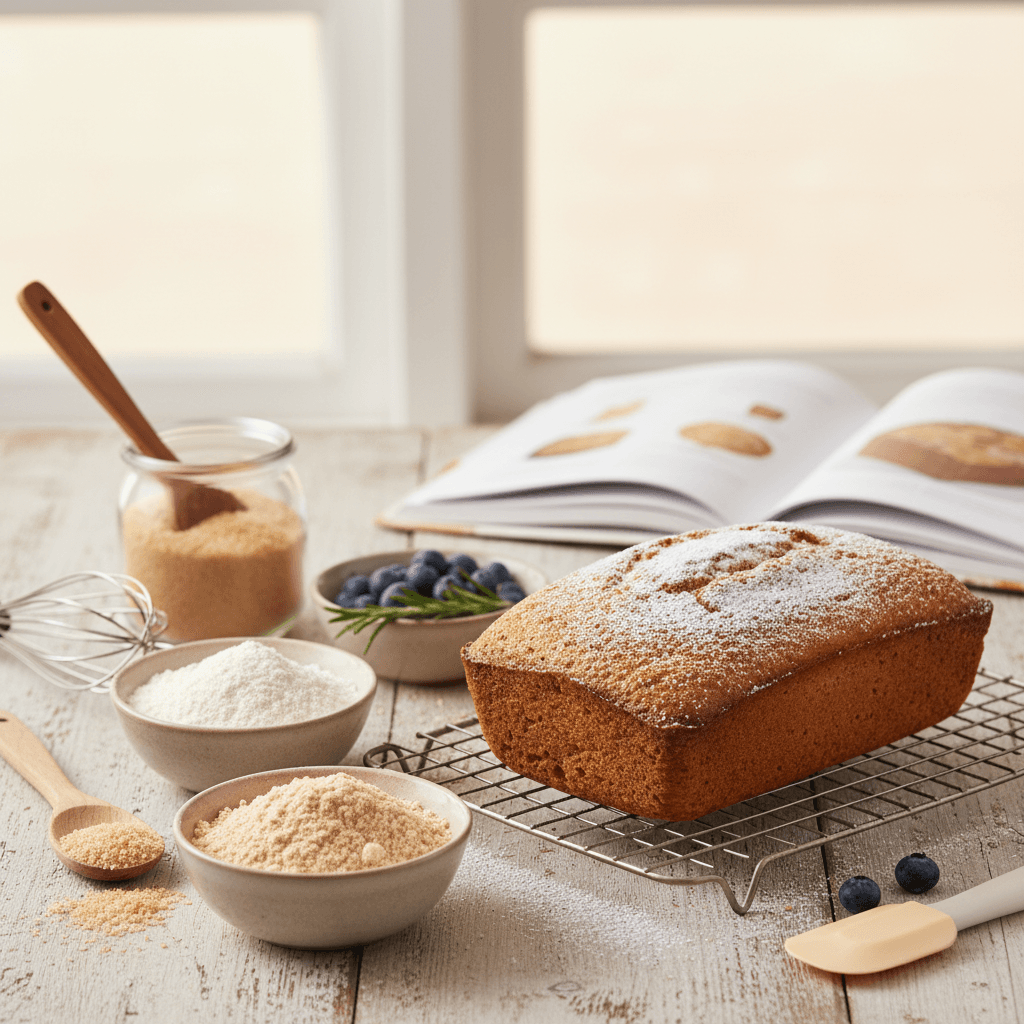
Baking when you're managing both a low FODMAP diet and gluten-free requirements can feel impossibly restrictive — but it doesn't have to be. This guide covers exactly which flours, starches, sweeteners, and products are safe for both dietary needs, plus the hidden ingredients you need to watch for on labels.
Key takeaways
- Not all gluten-free flours are low FODMAP — almond flour, coconut flour, and amaranth flour are high FODMAP in typical baking quantities.
- Rice flour, oat flour (certified GF), tapioca starch, and potato starch are safe staples for low FODMAP gluten-free baking.
- Hidden high FODMAP ingredients in gluten-free products include inulin, chicory root fiber, honey, agave, apple fiber, and high fructose corn syrup.
- Maple syrup, cane sugar, and brown sugar are low FODMAP sweeteners that work perfectly in baking.
- Xanthan gum is low FODMAP at typical baking amounts (under 5g per recipe), making it a safe binder for gluten-free bakes.
- Always check "may contain" statements — some certified gluten-free products are processed on lines with high FODMAP ingredients like garlic and onion powder.
Why low FODMAP and gluten-free baking overlap (but aren't the same)
A low FODMAP diet restricts certain fermentable carbohydrates — fructans, galacto-oligosaccharides, lactose, fructose, and polyols — that trigger IBS symptoms. Gluten-free baking eliminates wheat, barley, and rye. There's significant overlap because wheat is high in fructans (a FODMAP), but going gluten-free alone doesn't make something low FODMAP, and vice versa.
The tricky part is that many popular gluten-free ingredients are actually high FODMAP. Almond flour, for example, is a gluten-free baking staple — but almonds are high in GOS (galacto-oligosaccharides) at quantities over about 24 almonds, and most almond flour recipes use far more than that. Similarly, coconut flour in large amounts can be problematic due to its sorbitol content.
Understanding this distinction is the key to baking successfully with both restrictions. If you're newer to gluten-free baking in general, our complete beginner's guide to gluten-free baking covers the fundamentals you'll want to have down first.
Which gluten-free flours are low FODMAP safe
The good news is that many of the best gluten-free flours happen to be low FODMAP too. Here's a complete breakdown of common gluten-free flours and their FODMAP status at typical baking quantities.
| Flour/starch | Low FODMAP safe? | Serving note |
|---|---|---|
| White rice flour | Yes | Safe in all typical baking amounts |
| Brown rice flour | Yes | Safe in all typical baking amounts |
| Sweet rice flour (glutinous rice flour) | Yes | Safe in all typical baking amounts |
| Oat flour (certified GF) | Yes | Safe up to about 52g (roughly 1/2 cup) per serving |
| Sorghum flour | Yes | Safe up to about 60g per serving |
| Millet flour | Yes | Safe in all typical baking amounts |
| Buckwheat flour | Yes | Safe in all typical baking amounts |
| Teff flour | Yes | Safe in typical amounts |
| Tapioca starch | Yes | Safe in all typical baking amounts |
| Potato starch | Yes | Safe in all typical baking amounts |
| Arrowroot starch | Yes | Safe in all typical baking amounts |
| Cornstarch | Yes | Safe in all typical baking amounts |
| Almond flour | No (high GOS) | High FODMAP above ~24g per serving |
| Coconut flour | Moderate caution | Low FODMAP at small amounts (under ~30g), but recipes often exceed this |
| Amaranth flour | No (high GOS) | High FODMAP at typical baking quantities |
| Chickpea flour | No (high GOS) | High FODMAP above ~28g per serving |
| Cassava flour | Yes | Safe in typical baking amounts (moderate fructans at very high doses) |
| Tigernut flour | Yes | Monash tested as low FODMAP |
Rice flour is your workhorse here. It's safe, affordable, neutral-flavored, and widely available. We have a detailed comparison of brown rice flour vs white rice flour for baking if you want to understand the differences. For structure and chew, sweet rice flour is fantastic and completely FODMAP safe.
If you want to build your own flour blends — which we highly recommend for the best results — check out our guide to homemade gluten-free flour blends. Just swap out any high FODMAP flours for the safe options listed above.
If you're feeling overwhelmed by all the flour options and ratios, the Confident Gluten-Free Baker Toolkit walks you through building custom flour blends step by step — you can easily adapt the ratios to keep everything low FODMAP.
Hidden high FODMAP ingredients in gluten-free products
This is where things get sneaky. Many commercial gluten-free products add high FODMAP ingredients to improve taste, texture, or fiber content. Here's what to scan for on every label:
Sweeteners to avoid
- Honey — high in excess fructose, a major FODMAP trigger
- Agave nectar/syrup — extremely high in fructose
- High fructose corn syrup — obvious, but it shows up in surprising places
- Molasses in large amounts — moderate fructose content
- Isomalt, sorbitol, mannitol, maltitol, xylitol — sugar alcohols (polyols) are FODMAPs
Fiber additives to avoid
- Inulin — a fructan, extremely common in gluten-free products as a fiber booster
- Chicory root fiber/extract — same thing as inulin, just a different name
- FOS (fructo-oligosaccharides) — another fructan source
Other problem ingredients
- Apple fiber or apple juice concentrate — high in excess fructose and sorbitol
- Pear juice concentrate — same issue
- Dried fruit in large amounts — especially dried mango, apricot, and apple
- Garlic and onion powder — high fructan, sometimes added to savory gluten-free baked goods
- Milk powder or whey — high lactose (a FODMAP for those sensitive to it)
The biggest offender we see is inulin. Gluten-free bread brands love adding it because it improves fiber content on the nutrition label, but it's one of the worst FODMAP triggers. Always flip the package over, even if the front says "gluten-free" and looks safe.
Low FODMAP sweeteners that work in baking
Sweeteners are one of the easiest categories to get right. Stick with these and you'll have no issues:
- White cane sugar — completely FODMAP safe in any amount
- Brown sugar — safe (it's just white sugar plus a small amount of molasses)
- Maple syrup — low FODMAP at up to about 2 tablespoons per serving
- Rice malt syrup — FODMAP safe and a great liquid sweetener alternative
- Powdered/confectioner's sugar — safe (check that cornstarch is the anti-caking agent, not wheat starch)
Avoid agave nectar entirely — it's almost pure fructose. And while small amounts of honey might be tolerated during the reintroduction phase, we recommend keeping it out of baking during the elimination phase.
Building a low FODMAP gluten-free flour blend
The best approach is to create a versatile all-purpose blend from low FODMAP safe flours. Here's a blend we've had excellent results with:
Basic low FODMAP gluten-free all-purpose blend
- 2 parts white rice flour
- 2/3 part potato starch
- 1/3 part tapioca starch
This is essentially the classic gluten-free flour blend ratio, and every ingredient is fully FODMAP safe. For more flavor complexity, you can swap some of the white rice flour for sorghum flour or millet flour — both are low FODMAP and add a warmer, slightly nutty taste that makes baked goods more interesting.
Add 1 teaspoon of xanthan gum per cup of flour blend for structure. Xanthan gum is low FODMAP at the small amounts used in baking (typically 1/2 to 1 teaspoon per recipe). If you want to understand more about what gluten does in baking and how to replace it, that context will help you understand why binders like xanthan gum matter so much.
7 recommended products for low FODMAP gluten-free baking
We've verified that each of these products meets both low FODMAP and gluten-free requirements. Always double-check labels when you receive your order, as manufacturers can change formulations.
1. Bob's Red Mill white rice flour
This is the foundation of most low FODMAP gluten-free baking. It's certified gluten-free, single ingredient (white rice), and widely available. The Bob's Red Mill White Rice Flour grinds finer than many competitors, which helps avoid that gritty texture that plagues gluten-free bakes. If grittiness is an issue you've dealt with, our guide on fixing gritty texture in gluten-free baking has more solutions.
2. Bob's Red Mill potato starch
Pure potato starch with no additives — just one ingredient on the label. The Bob's Red Mill Potato Starch adds moisture and tenderness to your flour blend. Don't confuse this with potato flour, which is a completely different product — our potato flour vs potato starch comparison explains the difference.
3. Bob's Red Mill tapioca starch
The Bob's Red Mill Tapioca Starch is another clean single-ingredient product. Tapioca starch adds chew and helps with browning — two things that are often lacking in gluten-free bakes. It's completely FODMAP safe at any baking quantity.
4. Anthony's sorghum flour
For adding depth and a slightly sweet, wheat-like flavor to your blends, the Anthony's Sorghum Flour is excellent. It's certified gluten-free, verified non-GMO, and the single-ingredient label means no hidden FODMAP triggers. Sorghum is low FODMAP at standard baking portions.
5. Bob's Red Mill xanthan gum
You need a binder in almost every gluten-free recipe, and the Bob's Red Mill Xanthan Gum is the gold standard. At the 1/2 to 1 teaspoon per recipe that most bakes call for, xanthan gum is well within low FODMAP limits. The bag lasts forever since you use so little per batch.
6. Wholesome organic cane sugar
If you want a clean, organic cane sugar that's verified free of any additives, the Wholesome Organic Cane Sugar is our pick. Pure cane sugar is one of the safest sweeteners on the low FODMAP diet — no fructose concerns, no polyols, no fructans.
7. Coombs Family Farms maple syrup
When you need a liquid sweetener (for things like muffins, quick breads, or glazes), pure maple syrup is your best low FODMAP option. The Coombs Family Farms Organic Maple Syrup is single-ingredient, organic, and works beautifully in baking. Keep portions to about 2 tablespoons per serving to stay within FODMAP limits.
Low FODMAP gluten-free baking tips that make a real difference
Weigh your ingredients
This matters even more when you're managing two dietary restrictions. Scooping flour can give you 20-30% more than the recipe intends, which can push borderline ingredients over their FODMAP threshold. A kitchen scale eliminates this variable entirely.
Adjust dairy carefully
Many baking recipes call for milk or buttermilk. Regular dairy is high in lactose (a FODMAP). Swap in lactose-free milk 1:1 for regular milk, or use rice milk, which is naturally low FODMAP. Oat milk (made from certified GF oats) is also safe in moderate amounts. Avoid cashew milk in large quantities — cashews are high FODMAP.
Watch your chocolate
Dark chocolate is low FODMAP at about 30g per serving. Milk chocolate contains lactose and is often higher in FODMAP. When baking with chocolate, use dark chocolate chips or cocoa powder (which is FODMAP safe) and sweeten with cane sugar or maple syrup.
Be cautious with dried fruits
Dried cranberries (sweetened with sugar, not apple juice) are generally safe. Raisins are low FODMAP at 1 tablespoon. But dried apricots, mango, and apple are high FODMAP. If a recipe calls for dried fruit, check the specific fruit against the Monash FODMAP app.
Don't fear butter
Butter is very low in lactose and is considered low FODMAP. You don't need to swap it out unless you have a separate dairy allergy. This simplifies a lot of baking since butter is such a foundational ingredient.
Sample recipes to get you started
Here are a few recipe frameworks using only low FODMAP and gluten-free ingredients. These aren't full recipes with exact measurements — they're templates to show you how the principles above come together.
Low FODMAP gluten-free banana muffins
Firm (just ripe) bananas are low FODMAP at about 1/3 of a medium banana per serving — so use them sparingly. Build with your rice flour blend, eggs, butter, maple syrup, and a small amount of banana for flavor. Avoid overripe bananas, which have higher fructan content.
Low FODMAP gluten-free chocolate chip cookies
Use your custom flour blend, butter, brown sugar, one egg, vanilla extract, and dark chocolate chips. This is one of the simplest places to start because the recipe is naturally low FODMAP once you've swapped the wheat flour for your blend.
Low FODMAP gluten-free lemon cake
Lemon juice and zest are both low FODMAP. Combine with your flour blend, eggs, butter, cane sugar, and a touch of rice milk. Top with a simple powdered sugar glaze. If you're looking for a great pan for this, our best bundt pan guide has options that release gluten-free cakes cleanly.
Frequently asked questions
Is gluten-free flour always low FODMAP?
No. Many gluten-free flours are high FODMAP, including almond flour, chickpea flour, and amaranth flour. The safest low FODMAP gluten-free flours are rice flour (white and brown), tapioca starch, potato starch, sorghum flour, millet flour, and buckwheat flour. Always check the specific flour against Monash University's FODMAP database.
Can I use xanthan gum on a low FODMAP diet?
Yes. Xanthan gum is considered low FODMAP at the small amounts typically used in gluten-free baking — usually 1/2 to 1 teaspoon per recipe. At these levels, it won't trigger symptoms for most people. It's an essential binder in gluten-free baking that replaces some of gluten's structural functions.
What sweeteners are safe for low FODMAP gluten-free baking?
Cane sugar, brown sugar, powdered sugar, maple syrup (up to 2 tablespoons per serving), and rice malt syrup are all low FODMAP and gluten-free. Avoid honey, agave nectar, high fructose corn syrup, and sugar alcohols like sorbitol and mannitol. Always check that powdered sugar uses cornstarch rather than wheat starch as the anti-caking agent.
Is inulin safe on a low FODMAP diet?
No. Inulin (also labeled as chicory root fiber or chicory root extract) is a fructan and one of the most common high FODMAP additives in gluten-free products. It's added to boost fiber content on nutrition labels but can cause significant digestive symptoms. Always check ingredient lists on gluten-free breads, muffins, and baking mixes for this ingredient.
Can I use coconut flour on a low FODMAP diet?
Coconut flour is low FODMAP in small amounts — roughly 2-3 tablespoons per serving. However, many coconut flour recipes use significantly more than this because coconut flour is extremely absorbent. If you use it, keep the quantity small and combine it with other low FODMAP flours like rice flour rather than using it as the sole flour in a recipe.

Written by
Co-founder, BakingSubs
Co-founder of BakingSubs, where he turns the science of ingredient substitutions into tested, reliable guidance for home bakers.
Related Posts

Bake with Confidence
See all
Confident Gluten-Free Baker Toolkit
The science-based system that replaces gluten's seven invisible jobs so your baking turns out soft, fluffy, and foolproof — every time.

Gluten-Free Recipe Vault
Instant access to our complete library of proven gluten-free recipes — no waiting, no guesswork, just results that work tonight.

Fix Your Gluten-Free Bread
Learn the 3-step formula to make bread rise and stay soft, discover why your loaves collapse, and get a tested sandwich bread recipe that actually works.