

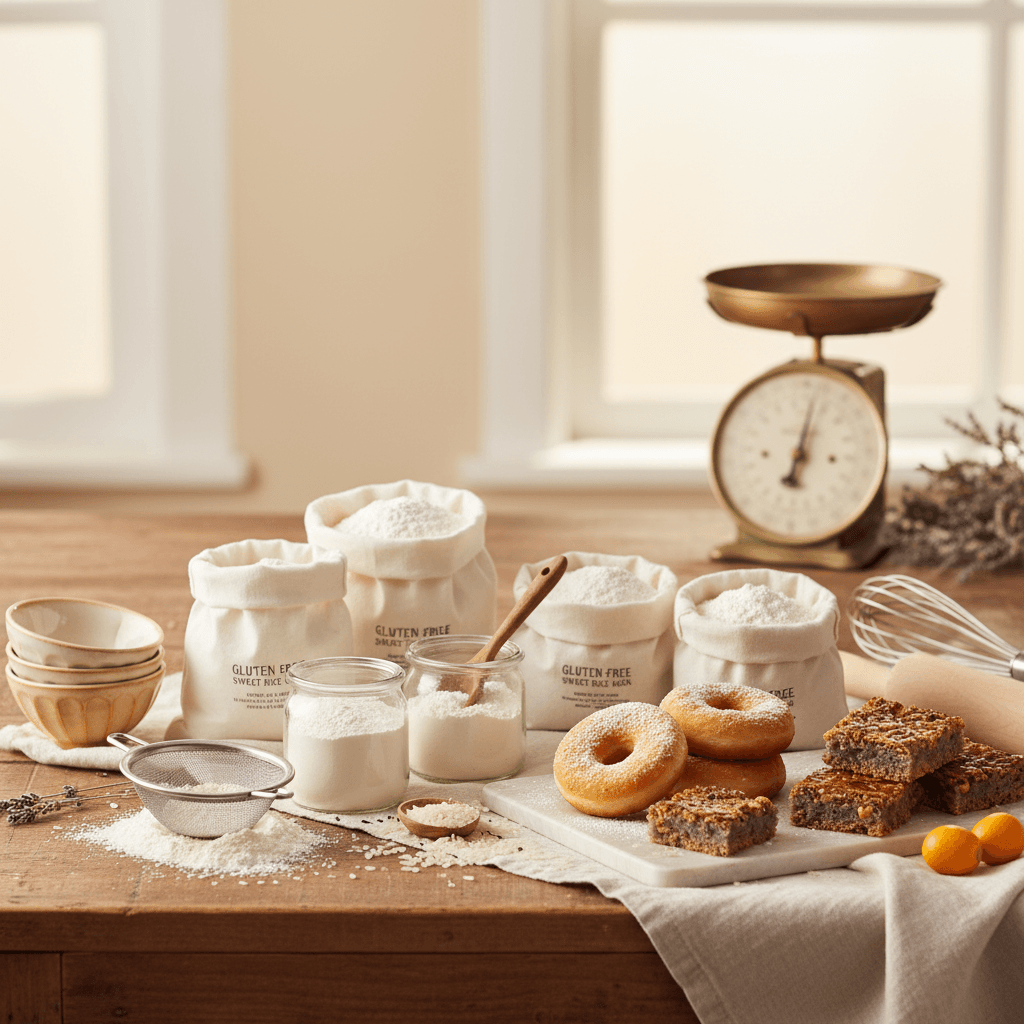
Sweet rice flour (also called glutinous rice flour or mochiko) is one of the most useful flours in a gluten-free baker's pantry, but the brand you choose makes a real difference in your results. We compared six popular brands so you can pick the right one for your recipes.
Key takeaways
- Sweet rice flour is made from short-grain sticky rice and acts as a binder and moisture-retainer in gluten-free baking — it is naturally gluten-free despite the name "glutinous."
- Grind fineness varies dramatically between brands, and a coarser grind can leave your baked goods gritty.
- The best all-around pick for most gluten-free bakers is Koda Farms Mochiko for its ultra-fine grind and consistent performance.
- Sweet rice flour works best at 15-25% of a gluten-free flour blend — too much makes baked goods gummy.
- Price per pound ranges from about $1.50 to $5.00, so buying in bulk from the right brand saves money without sacrificing quality.
- All six brands reviewed here are naturally gluten-free, but only some carry third-party gluten-free certification.
What sweet rice flour does in gluten-free baking
Sweet rice flour is a starch-heavy flour milled from short-grain glutinous rice (the "glutinous" refers to its sticky, glue-like texture — not gluten protein). It contains about 85% amylopectin starch, which gives it exceptional binding and moisture-holding properties that partially mimic what gluten does in conventional baking.
In a homemade gluten-free flour blend, sweet rice flour typically makes up 15-25% of the total. It helps hold crumbs together, prevents that dry and crumbly texture so many gluten-free bakers struggle with, and adds a subtle chewiness. If you've been dealing with dry, crumbly results, adding sweet rice flour to your blend is often the single biggest improvement you can make.
It's especially effective in:
- Pie crusts and tart shells (adds pliability)
- Cookies (creates chewiness)
- Bread recipes (improves crumb structure and moisture retention)
- Mochi and Japanese-style confections
- Thickening sauces and gravies
If you're still getting the hang of building your own blends and understanding how different flours work together, the Confident Gluten-Free Baker Toolkit walks you through flour ratios, troubleshooting, and recipe conversion step by step.
What to look for when choosing a sweet rice flour brand
Not all sweet rice flour is created equal. Here are the factors that actually matter when you're comparing brands:
Grind fineness
This is the single most important factor. A fine, powdery grind blends seamlessly into batters and doughs, while a coarser grind can leave a gritty texture in your finished bakes. If you pinch the flour between your fingers and feel individual grains, it's too coarse for delicate applications like cakes and cookies.
Protein and starch content
Sweet rice flour is naturally low in protein (around 6-7g per 100g) and high in starch. Small differences between brands don't usually affect results dramatically, but the starch composition — specifically the amylopectin ratio — determines how sticky and binding the flour behaves.
Gluten-free certification
All sweet rice flour is inherently gluten-free, but cross-contamination during milling is a real concern. If you're baking for someone with celiac disease, look for brands with third-party gluten-free certification or dedicated gluten-free facilities.
Price per pound
Since sweet rice flour is typically used in smaller quantities within a blend, even a pricier brand won't break the bank. That said, if you bake frequently or run a home bakery business, buying in bulk makes a real difference to your margins.
6 best sweet rice flour brands compared
We evaluated each brand on grind fineness, certification, versatility, and value. Here's how they stack up:
| Brand | Grind | Protein (per 100g) | GF certified | Approx. price/lb | Best for |
|---|---|---|---|---|---|
| Koda Farms Mochiko | Ultra-fine | ~6g | No (dedicated rice facility) | $3.00-$3.50 | All-purpose GF baking, mochi |
| Bob's Red Mill Sweet White Rice Flour | Fine | ~6g | Yes (third-party tested) | $2.50-$3.00 | Everyday GF baking, flour blends |
| Authentic Foods Superfine Sweet Rice Flour | Superfine | ~7g | Yes | $4.00-$5.00 | Cakes, pastries, delicate bakes |
| Erawan Brand Sweet Rice Flour | Fine | ~6g | No | $1.50-$2.00 | Mochi, Asian desserts, budget baking |
| Anthony's Sweet Rice Flour | Fine | ~6g | Yes (batch tested) | $2.50-$3.00 | Bulk GF baking, flour blends |
| Theppadungporn (Three Elephants) | Medium-fine | ~6g | No | $1.50-$2.00 | Mochi, dumplings, thickening |
Koda Farms Mochiko: best overall for gluten-free baking
Koda Farms Mochiko is our top pick for gluten-free baking. This California-grown sweet rice flour has an ultra-fine, silky grind that disappears completely into batters and doughs. It's been the gold standard for mochi-making for decades, and that same quality translates perfectly to gluten-free flour blends.

The flavor is clean and neutral with just a hint of natural sweetness. Its fine grind suits pie crusts, cookies, and bread blends, where it gives a tender, slightly chewy crumb without grittiness. Koda Farms is a family-run operation that mills exclusively rice products, so cross-contamination risk is minimal even without formal certification.
The only downside is availability — it can be harder to find in regular grocery stores, though it's readily available online.
Koda Farms Mochiko Sweet Rice Flour — our top recommendation for serious gluten-free bakers.
Bob's Red Mill Sweet White Rice Flour: best certified option for everyday baking
Bob's Red Mill is the brand most gluten-free bakers already know, and their sweet white rice flour is a solid, reliable choice. It carries third-party gluten-free certification and is tested to below 20 ppm, which matters if you're baking for someone with celiac disease or you need to convert recipes to gluten-free with confidence.

Bob's Red Mill Sweet White Rice Flour, 24-ounce (Pack of 3)
Check price on Amazon →The grind is fine — not quite as silky as Koda Farms or Authentic Foods, but perfectly acceptable for most baking applications. It works beautifully in flour blends, cookie doughs, and as a thickener. The flavor is neutral and clean.
It's widely available at grocery stores, health food shops, and online, which makes it the most convenient option for most bakers.
Bob's Red Mill Sweet White Rice Flour — the easiest certified option to find.
Authentic Foods Superfine Sweet Rice Flour: best for delicate bakes
If you're making cakes, pastries, or anything where texture is paramount, Authentic Foods Superfine Sweet Rice Flour is worth the premium price. The grind is exceptionally fine — finer than Bob's Red Mill — and it produces a remarkably smooth crumb in delicate baked goods.
Authentic Foods specializes in gluten-free flours and operates a dedicated gluten-free facility, so this is also a great choice for celiac-safe baking. The slightly higher protein content (around 7g per 100g) gives a touch more structure, which can be helpful in cake flour replacements.
The main drawback is cost — at $4-5 per pound, it's the most expensive option on this list. But if you're making special-occasion cakes or running a gluten-free wedding cake business, the quality justifies the investment.
Authentic Foods Superfine Sweet Rice Flour — premium quality for premium bakes.
Erawan Brand Sweet Rice Flour: best budget option
Erawan (also labeled as "Erawan Elephant Brand") is a Thai import that you'll find in most Asian grocery stores for a fraction of the price of specialty brands. At around $1.50-$2.00 per pound, it's the most affordable option on this list.
The grind is fine and consistent, and it works well in mochi, Asian-style desserts, and general gluten-free baking. The flavor is neutral. The main caveat is that it doesn't carry gluten-free certification and isn't produced in a dedicated gluten-free facility, so if cross-contamination is a concern, this may not be the right choice for you.
For budget-conscious bakers who don't need certification, Erawan delivers excellent value.
Erawan Brand Sweet Rice Flour — best value for the price.
Anthony's Sweet Rice Flour: best for bulk buying
Anthony's is a popular online brand that sells sweet rice flour in larger bags (typically 2.5 or 5 pounds), making it a smart choice for bakers who go through flour quickly. It's batch-tested and verified gluten-free, and the grind is consistently fine.
The flavor is clean and neutral, and it performs well in flour blends, cookies, and bread recipes. If you're building a pantry for regular gluten-free baking, Anthony's bulk bags offer a good balance of quality, certification, and price.
Anthony's Sweet Rice Flour — best for stocking up.
Three Elephants (Theppadungporn) Sweet Rice Flour: best for Asian desserts
Three Elephants is another Thai brand commonly found in Asian grocery stores. The grind is medium-fine — slightly coarser than the other brands on this list — which makes it better suited for traditional Asian desserts like mochi, tang yuan, and sticky rice cakes than for delicate Western-style baking.
If you're primarily using sweet rice flour for mochi or dumplings, this brand works great and is very affordable. For gluten-free flour blends where you need a super-fine grind, we'd recommend one of the other options instead.
Which sweet rice flour is right for you?
Here's a quick decision guide:
- Best overall: Koda Farms Mochiko — ultra-fine grind, clean flavor, minimal cross-contamination risk
- Best for celiac-safe baking: Bob's Red Mill or Authentic Foods — both carry third-party GF certification
- Best for cakes and pastries: Authentic Foods Superfine — the finest grind produces the smoothest crumb
- Best on a budget: Erawan — excellent quality at half the price of specialty brands
- Best for bulk buying: Anthony's — good quality in larger bags at a fair price
No matter which brand you choose, sweet rice flour is a game-changer in gluten-free baking. If you're new to building flour blends and want to understand what gluten actually does so you can replace it effectively, that's a great place to start learning.
Tips for using sweet rice flour in gluten-free recipes
Sweet rice flour behaves differently from regular rice flour, so keep these tips in mind:
- Don't substitute 1:1 for regular rice flour. Sweet rice flour is much stickier and more binding. If a recipe calls for brown rice flour or white rice flour, swapping in sweet rice flour will change the texture significantly.
- Use it as 15-25% of your flour blend. Too much sweet rice flour makes baked goods gummy or overly chewy. It works best as a supporting player alongside other flours and starches like arrowroot powder or tapioca starch.
- It makes an excellent thickener. Sweet rice flour thickens sauces and gravies without the chalky taste of cornstarch, and it holds up well when frozen and reheated.
- Store it in an airtight container. Like all rice flours, sweet rice flour can absorb odors and moisture. A sealed container in a cool, dry place keeps it fresh for months.
Frequently asked questions
Is sweet rice flour the same as regular rice flour?
No, sweet rice flour and regular rice flour are different products. Sweet rice flour is milled from short-grain glutinous (sticky) rice and has a much higher amylopectin starch content, which makes it stickier and more binding. Regular rice flour is milled from long-grain or medium-grain non-glutinous rice and has a lighter, less sticky texture. They are not interchangeable in recipes.
Does sweet rice flour contain gluten?
Sweet rice flour is naturally gluten-free. The word "glutinous" in its name refers to the flour's sticky, glue-like texture when cooked — not to the gluten protein found in wheat, barley, and rye. However, cross-contamination during milling is possible, so if you have celiac disease, choose a brand with third-party gluten-free certification like Bob's Red Mill or Authentic Foods.
Can I use sweet rice flour to make my own gluten-free flour blend?
Yes, sweet rice flour is one of the best flours to include in a homemade gluten-free flour blend. It adds binding, moisture retention, and a slight chewiness that helps mimic the texture of wheat-based baked goods. Most effective blends use sweet rice flour at about 15-25% of the total flour weight.
What can I substitute for sweet rice flour if I don't have it?
Tapioca starch is the closest substitute for sweet rice flour in terms of binding and chewiness, though it won't behave identically. Arrowroot powder can also work as a thickener replacement. For baking, there's no perfect 1:1 swap — sweet rice flour's unique starch composition is hard to replicate with a single ingredient.
How much sweet rice flour should I use in gluten-free baking?
For most gluten-free baking applications, sweet rice flour works best at 15-25% of your total flour blend. Using more than 25-30% can result in gummy centers and an overly dense, sticky texture. Start at the lower end and adjust based on your specific recipe and desired texture.

Written by
Co-founder, BakingSubs
Co-founder of BakingSubs, where he turns the science of ingredient substitutions into tested, reliable guidance for home bakers.
Related Posts
Bake with Confidence
See all
Confident Gluten-Free Baker Toolkit
The science-based system that replaces gluten's seven invisible jobs so your baking turns out soft, fluffy, and foolproof — every time.

Gluten-Free Recipe Vault
Instant access to our complete library of proven gluten-free recipes — no waiting, no guesswork, just results that work tonight.

Fix Your Gluten-Free Bread
Learn the 3-step formula to make bread rise and stay soft, discover why your loaves collapse, and get a tested sandwich bread recipe that actually works.