
How to start a baking business from home: a complete guide with real costs and actionable steps
Learn how to start a baking business from home with real startup costs, legal steps, pricing formulas, and proven strategies to get your first paying customers.

Malik
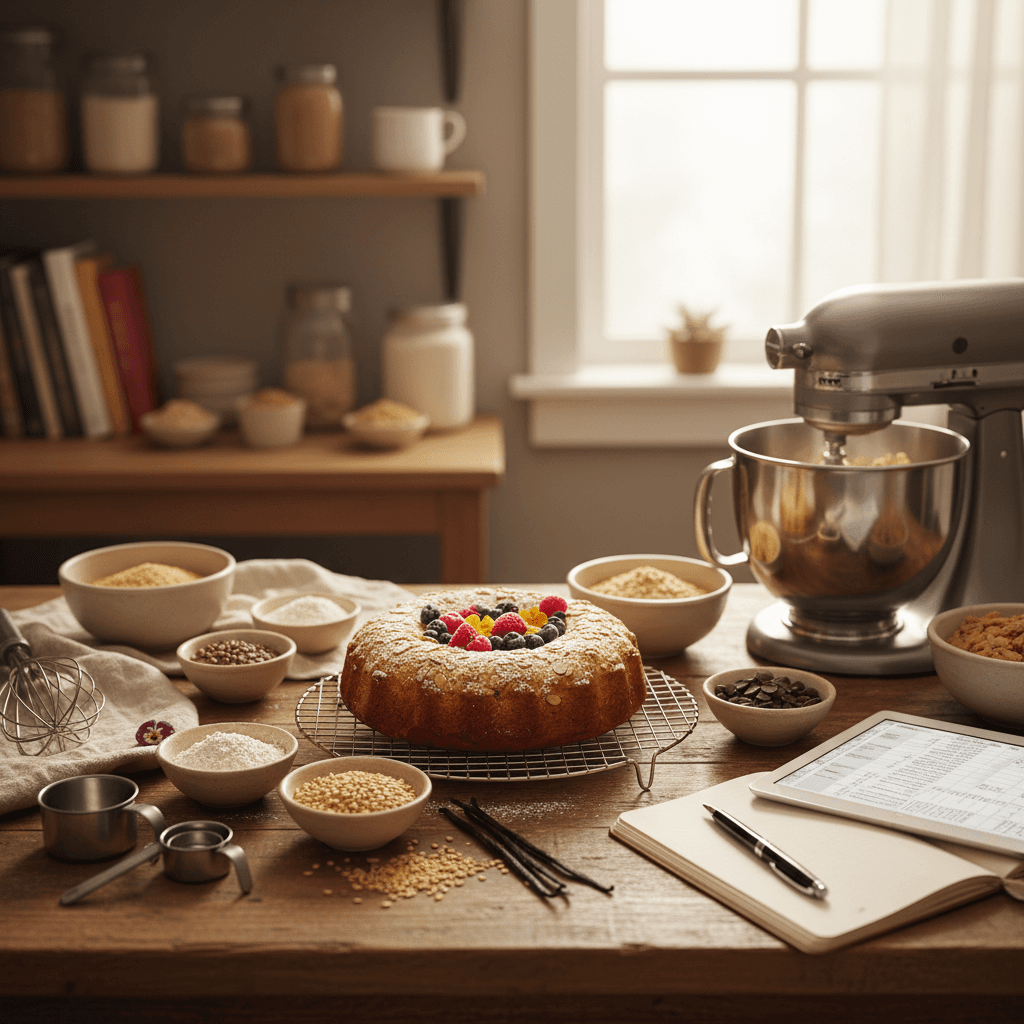
Starting a baking business from home is one of the lowest-risk ways to become your own boss, but only if you approach it like a real business from day one. This guide walks you through every step, from legal requirements to getting your first paying customers, with real numbers so you can plan with confidence.
Key takeaways
- Most home bakeries can launch for $500 to $2,000 depending on what equipment you already own and your state's requirements.
- Cottage food laws in most states allow you to sell baked goods from home without a commercial kitchen, but revenue caps and labeling rules vary widely.
- Pricing based on ingredient cost alone is the number one mistake new home bakers make. You need to factor in labor, overhead, and packaging.
- Starting with a focused menu of 3 to 5 items lets you perfect your recipes, streamline production, and build a reputation faster than offering everything.
- Your first 20 customers will almost always come from your personal network, local Facebook groups, and word of mouth, not a fancy website.
- Niche markets like gluten-free, vegan, or allergen-friendly baking command higher prices and attract fiercely loyal customers.
Is a home baking business right for you?
A home baking business works best for people who already bake regularly, enjoy the process, and are willing to treat it as a business rather than a hobby. The barrier to entry is low, the startup costs are manageable, and the demand for quality homemade baked goods has never been higher.
That said, this is not passive income. You will spend hours on your feet, deal with demanding timelines around holidays, and handle every aspect of the business yourself, at least in the beginning. If that sounds exciting rather than exhausting, you are in the right place.
One of the smartest moves you can make early on is choosing a niche. General bakeries compete with every grocery store and big-box bakery in town. Niche bakeries, like those specializing in gluten-free baked goods, attract customers who are actively searching for exactly what you offer and are willing to pay more for it.
How much does it cost to start a home bakery?
Most home bakers can get started for between $500 and $2,000, though the exact number depends on what you already own and what your state requires. Here is a realistic breakdown of typical startup costs.
| Category | Budget range | Notes |
|---|---|---|
| Business license and permits | $0 - $300 | Varies by state; some cottage food operations need no license |
| Food handler's certification | $10 - $30 | Required in most states; often available online |
| Insurance | $200 - $500/year | Not always required, but highly recommended |
| Equipment upgrades | $100 - $800 | Stand mixer, extra sheet pans, food scale |
| Packaging and labels | $50 - $200 | Bags, boxes, stickers, required cottage food labels |
| Initial ingredients | $50 - $150 | First batch of bulk supplies |
| Website or ordering system | $0 - $200 | Free options exist; paid platforms offer more features |
For a much deeper dive into every line item, check out our full home bakery startup cost breakdown. The key takeaway is that you do not need thousands of dollars to get started. Many successful home bakers launched with under $500 by using equipment they already had and scaling up as revenue came in.
Step 1: understand your state's cottage food laws
Before you bake a single item for sale, you need to know exactly what your state allows. Cottage food laws govern what you can sell, where you can sell it, how much you can earn, and what labeling is required. Getting this wrong can mean fines or being shut down.
Here is what you need to find out for your specific state:
- Revenue cap: Some states cap annual sales at $25,000, others at $75,000 or more, and a few have no cap at all.
- Allowed products: Most states allow shelf-stable baked goods like cookies, breads, and cakes. Some restrict items that require refrigeration.
- Sales channels: Some states only allow direct-to-consumer sales (farmers markets, your front door). Others allow online orders and delivery.
- Labeling requirements: Nearly every state requires a cottage food label that includes your name, address, ingredients, allergens, and a disclaimer that the product was made in a home kitchen.
- Permits and inspections: Requirements range from nothing at all to a food handler's certificate and kitchen inspection.
We have a comprehensive guide to cottage food laws for home bakers that covers the general framework, and our home bakery license requirements by state guide helps you find your specific rules. Do not skip this step. It takes an afternoon to research and saves you enormous headaches later.
If you are looking for a structured approach to building your home bakery the right way from the start, our free Home Bakery Pro masterclass walks you through getting consistent orders and building a sustainable home bakery business. It is worth your time before you invest money in anything else.
Step 2: write a simple business plan
You do not need a 50-page document. You need a clear, honest plan that answers the fundamental questions about your business. A good home bakery business plan covers:
- What you will sell: Your core menu of 3 to 5 items.
- Who you will sell to: Your target customer. Local families? Office workers? People with dietary restrictions?
- How you will sell: Farmers markets, social media orders, a website, local delivery, or some combination.
- What you will charge: Prices based on real cost analysis, not guesswork.
- What it will cost to operate: Monthly ingredient costs, packaging, gas for deliveries, and your time.
- Revenue goals: How much you want to earn per month and how many orders that requires.
Our home bakery business plan template gives you a practical framework you can fill out in an evening. The goal is not perfection. It is clarity. When you know your numbers, every decision becomes easier.
Step 3: set up your kitchen for production
Your home kitchen can absolutely handle a baking business, but you will likely need to make some adjustments for efficiency and compliance. The good news is that most of the equipment you need is stuff you may already own.
At minimum, you need:
- A reliable oven (calibrate it with an oven thermometer)
- A stand mixer that can handle repeated batches
- A good food scale for commercial baking (weighing ingredients is non-negotiable for consistency)
- Enough sheet pans and cooling racks to keep production moving
- Adequate storage for bulk ingredients
- A dedicated workspace that you can keep clean and organized
If your mixer is struggling with double batches or your oven has hot spots that ruin every other tray, those are the upgrades worth prioritizing. Our home bakery equipment list for beginners covers everything you need and what you can skip for now.
One thing we see new bakers overlook is workflow. Think about how you move through your kitchen during a production day. Can you mix, shape, bake, cool, and package without constantly bumping into yourself? Even small changes like rearranging your counter space or adding a rolling cart can save you hours over a week of baking.
Step 4: develop your menu and price it correctly
This is where most home bakers either set themselves up for success or doom themselves to burnout. Your menu and your pricing are the two most important business decisions you will make.
Keep your menu small and focused
Start with 3 to 5 items that you make exceptionally well. A focused menu means you can buy ingredients in bulk (lowering costs), perfect your recipes (raising quality), and streamline production (saving time). You can always expand later once you have steady demand.
Think about what items are profitable, what travels well, and what people in your area actually want. Our guide on how to create a menu for your home bakery walks through this decision in detail.
Price based on real numbers, not feelings
Underpricing is the fastest way to burn out. You are not competing with grocery store prices, and you should not try to. Your customers are paying for quality, freshness, and the personal touch that mass production cannot deliver.
Here is a simple pricing formula to start with:
(Ingredient cost + packaging cost) x 3 to 4 = minimum retail price
That multiplier accounts for your labor, overhead (utilities, equipment wear, gas for deliveries), and a reasonable profit margin. If a batch of cookies costs you $8 in ingredients and $2 in packaging, your minimum price should be $30 to $40 for that batch.
For a much more detailed approach with real examples, read our complete guide to pricing baked goods for a home bakery. Getting this right from the start means you actually make money instead of just staying busy.
Step 5: handle the legal and financial basics
Running a legitimate business protects you and builds trust with customers. Here is what to tackle:
- Register your business: Most home bakers start as a sole proprietorship. Some states require a DBA (doing business as) filing if you use a business name different from your legal name. Cost is usually $10 to $50.
- Get your food handler's certificate: Available online in most states for $10 to $30. Takes a few hours.
- Apply for any required permits: Check your state and local requirements. Some cities have additional rules beyond state cottage food laws.
- Consider liability insurance: Not always legally required, but a single claim from a customer with an allergic reaction could wipe out everything you have built. Policies for home bakers typically run $200 to $500 per year. Our guide on home bakery insurance explains what is covered and whether you need it.
- Open a separate bank account: Do not mix personal and business finances. Even a free checking account at your local bank works.
- Track every expense and sale: You will need this for taxes and for understanding whether your business is actually profitable.
Step 6: build your brand and online presence
You do not need a professional logo or a $5,000 website to start selling. But you do need a way for people to find you, learn what you offer, and place an order.
Here is the minimum viable online presence for a home bakery:
- An Instagram or Facebook page: Post photos of your baked goods, share your story, and make it easy for people to message you with orders. This is free and where most of your early customers will find you.
- A simple website or ordering page: Even a one-page site with your menu, prices, and an order form is enough to start. Our best website builder for home bakery business comparison covers platforms from free to paid.
- Consistent branding: Pick a name, choose 2 to 3 colors, and use them everywhere. Consistency makes you look professional even when you are just getting started.
Your brand is not just a logo. It is the experience customers have from the moment they find you online to the moment they open your package. Speaking of which, your packaging matters more than you think. First impressions drive repeat orders and referrals.
Step 7: get your first customers
This is the part that intimidates most new bakers, but it is actually simpler than you think. Your first customers are not strangers on the internet. They are people who already know and trust you.
Here is the playbook that works for nearly every home baker:
- Tell everyone you know. Post on your personal social media. Text your friends and family. Bring samples to your kids' school events, your workplace, your church. Word of mouth is your most powerful tool.
- Join local Facebook groups. Most communities have buy/sell/trade groups, neighborhood groups, and food-specific groups. Follow the group rules, be helpful, and mention your business when appropriate.
- Offer a launch special. A small discount on your first week of orders creates urgency and gets product into people's hands. Those first customers become your marketing team when they share your food with their friends.
- Show up at a farmers market. Even one Saturday a month puts you in front of hundreds of potential customers. The in-person connection is powerful and leads to repeat online orders.
- Ask for reviews and referrals. After every order, follow up. A simple text asking if they enjoyed it and whether they would mind sharing a photo goes a long way.
For a deeper strategy, our guide on how to get customers for a home bakery covers 15 proven tactics that work even when you are brand new.
Step 8: manage orders and scale sustainably
Once orders start coming in, you need systems to keep things organized. Missed orders, wrong flavors, and late deliveries will kill your reputation faster than anything.
Start simple. A spreadsheet or notebook works for your first few weeks. But as soon as you are handling more than 5 to 10 orders per week, invest in a proper system. Track order details, delivery dates, payment status, and customer contact information in one place.
Here are a few signs it is time to scale up your operations:
- You are turning down orders because you cannot keep up.
- You are baking every single day with no days off.
- Your ingredient costs are rising because you are buying in small quantities.
- Customers are asking for items you do not currently offer.
Scaling does not mean doing more of everything. It means getting more efficient at what you already do well. Batch your production days, buy ingredients in bulk, raise your prices as demand increases, and only add new menu items when you can do so without sacrificing quality.
Common mistakes to avoid when starting a home bakery
We see the same mistakes over and over from new home bakers. Avoiding these will put you ahead of most people who try this:
- Pricing too low: You are not a grocery store. Price for profit from day one.
- Saying yes to everything: Custom orders for items you have never made, unrealistic deadlines, and free samples for everyone. Learn to say no.
- Skipping the legal research: Operating outside your state's rules puts your entire business at risk.
- Ignoring your numbers: If you do not track costs and revenue, you have no idea whether you are making money or losing it.
- Trying to compete on price: Compete on quality, consistency, and customer experience instead.
- Burning out in the first three months: Set boundaries on your time. You cannot bake seven days a week and sustain it.
Realistic income expectations for a home bakery
Let us talk real numbers. What you can earn depends on your state's revenue cap, your pricing, and how many hours you want to work.
| Scenario | Orders per week | Average order value | Monthly revenue | Estimated monthly profit (after costs) |
|---|---|---|---|---|
| Side hustle | 5 - 10 | $35 | $700 - $1,400 | $400 - $900 |
| Part-time business | 10 - 20 | $40 | $1,600 - $3,200 | $1,000 - $2,100 |
| Full-time business | 20 - 40 | $50 | $4,000 - $8,000 | $2,500 - $5,500 |
These numbers assume you are pricing correctly (not undercharging) and that your cost of goods sold stays around 30 to 35 percent of revenue. The profit margin widens as you scale because many of your fixed costs (insurance, website, equipment) stay the same.
Many home bakers hit $1,000 to $2,000 per month within their first 3 to 6 months. Reaching $4,000 or more usually takes 6 to 12 months of consistent effort and a growing customer base.
Frequently asked questions
Do I need a license to sell baked goods from home?
It depends on your state. Most states have cottage food laws that allow you to sell certain baked goods from home with minimal or no licensing. Some require a food handler's certificate, a business registration, or both. Check our home bakery license requirements by state guide to find your specific rules before you start selling.
How much money do I need to start a home baking business?
Most home bakers launch for $500 to $2,000. If you already own a decent oven, stand mixer, and basic baking equipment, you can start for even less. Your biggest early expenses will be permits, packaging, initial ingredients, and possibly insurance. Our detailed cost breakdown covers every line item.
What baked goods sell best from a home bakery?
Cookies, cupcakes, specialty breads, and decorated cakes tend to be the highest-demand items. However, the most profitable items are often niche products that are hard to find locally, like gluten-free breads, allergen-friendly treats, or artisan sourdough. The best approach is to focus on what you make exceptionally well and what your local market is missing.
Can I make a full-time income from a home bakery?
Yes, many home bakers earn $3,000 to $6,000 or more per month. Reaching full-time income typically takes 6 to 12 months of consistent work, proper pricing, and growing your customer base. Your state's cottage food revenue cap may be a factor. Some bakers eventually transition to a commercial kitchen or apply for a home processor license to remove revenue limits.
What is the best way to get my first customers?
Start with your personal network. Tell friends, family, coworkers, and neighbors. Post on personal social media and join local community Facebook groups. Bring samples to events and gatherings. Most home bakers get their first 20 orders entirely through word of mouth before they ever need a website or paid advertising.

Written by
Co-founder, BakingSubs
Co-founder of BakingSubs, where he turns the science of ingredient substitutions into tested, reliable guidance for home bakers.
Related Posts
Bakery Recipe Cost Sheet: How to Cost a Recipe in 6 Steps (With a Table You Can Copy)
Home Bakery Order Form Template: A Copy-Paste Layout That Cuts Mistakes by Half
Cottage Food Label Requirements and Template: What Every State Demands (With a Copy-Paste Layout)
Bake with Confidence
See all
Confident Gluten-Free Baker Toolkit
The science-based system that replaces gluten's seven invisible jobs so your baking turns out soft, fluffy, and foolproof — every time.

Gluten-Free Recipe Vault
Instant access to our complete library of proven gluten-free recipes — no waiting, no guesswork, just results that work tonight.

Fix Your Gluten-Free Bread
Learn the 3-step formula to make bread rise and stay soft, discover why your loaves collapse, and get a tested sandwich bread recipe that actually works.