

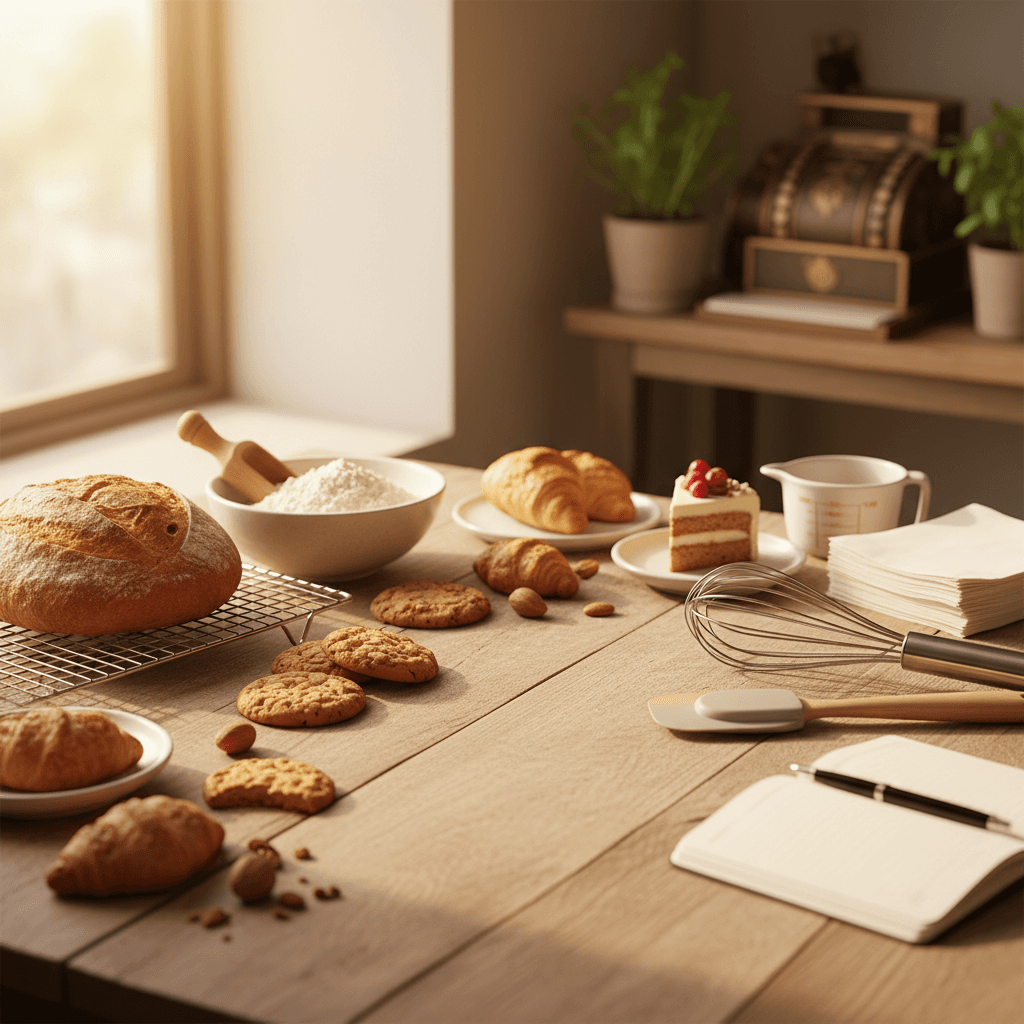
Starting a home bakery is one of the most affordable small businesses you can launch, but the actual costs depend on what you already own, what you plan to bake, and your state's cottage food laws. Here's a realistic breakdown of every expense you'll face, from equipment to licensing to packaging, so you can plan your budget with confidence.
Key takeaways
- Most home bakeries can launch for $500 to $3,000, depending on what equipment you already have and your state's requirements.
- Your biggest upfront costs are typically a quality stand mixer, baking pans, and packaging — not licensing or permits.
- Cottage food laws in most states keep licensing costs under $200, and many states require no license at all.
- Gluten-free home bakeries have a significant market advantage: less competition, loyal customers, and premium pricing that covers higher ingredient costs.
- Ongoing monthly costs (ingredients, packaging, insurance) typically run $200 to $600 until you build consistent order volume.
- You do not need a commercial kitchen to start in most states — your home kitchen is enough.
Total startup cost ranges for a home bakery
The total cost to start a home bakery ranges from about $500 on the low end to $3,000 or more if you're buying everything new. Most bakers who already have a decent oven and some basic equipment land somewhere around $800 to $1,500 to get fully operational.
Here's how that breaks down by category:
| Category | Budget estimate | Notes |
|---|---|---|
| Equipment (mixer, pans, tools) | $200 - $1,200 | Depends on what you already own |
| Licensing and permits | $0 - $200 | Varies by state cottage food law |
| Initial ingredients | $100 - $400 | Higher for gluten-free or specialty baking |
| Packaging and labels | $75 - $300 | Boxes, bags, stickers, labels |
| Insurance | $0 - $350/year | Optional but recommended |
| Marketing and branding | $0 - $200 | Logo, business cards, basic website |
| Food handler certification | $10 - $30 | Required in many states |
| Total | $385 - $2,680 |
The range is wide because every baker's situation is different. Let's break each category down so you know exactly where your money goes.
Equipment costs: what you actually need to start
Equipment is usually the biggest line item, but you probably already own more than you think. A working oven, mixing bowls, measuring cups, and a few baking sheets are enough to get started with cookies and quick breads. The real question is whether you need to invest in a stand mixer and commercial-quality pans.
The essentials you probably need to buy
A stand mixer is the single most important piece of equipment for a home bakery. Hand mixing works for personal baking, but when you're making 4 to 6 batches in a day, you need something that can handle the volume without burning out. The KitchenAid Artisan 5-Quart Stand Mixer runs about $280 to $350 and is the workhorse most home bakers start with. If you're planning to scale, the KitchenAid Professional 600 Series at around $400 handles larger batches.
Beyond the mixer, here's what you'll likely need to purchase:
- Sheet pans (half sheet, commercial grade): $12 to $18 each — buy at least 4. The Nordic Ware Natural Aluminum Half Sheet Pans are the industry standard at about $15 each.
- Digital kitchen scale: $15 to $30. Essential for consistent results, especially in gluten-free baking where precision matters.
- Cooling racks: $10 to $20 for a set.
- Cake pans, muffin tins, or loaf pans: $10 to $30 each depending on what you're selling.
- Piping bags and tips (if doing decorated items): $15 to $40 for a starter set.
- Parchment paper and silicone mats: $10 to $25.
If you're starting from scratch with no equipment at all, expect to spend $400 to $800 on quality tools that will last. If you already bake regularly, you might only need $100 to $200 in upgrades. For a deeper dive on what's worth upgrading, check out our guide to professional baking equipment worth investing in.
If you're serious about building a profitable home bakery, the free masterclass at Home Bakery Pro covers how to get consistent orders and build a sustainable business — it's a great next step once you've got your equipment sorted.
Licensing and permit costs by state
Licensing is where most new bakers overestimate costs. In the majority of US states, cottage food laws allow you to sell baked goods made in your home kitchen with minimal or no licensing requirements. Many states require nothing more than a food handler's certificate ($10 to $30 online) and a simple registration.
Here's what to expect:
- States with no license required: Some states like Utah and Wyoming have very permissive cottage food laws. You may just need to label your products correctly.
- States requiring registration or a permit: Most states fall here. Expect $25 to $100 for a cottage food permit or home bakery license.
- States requiring a business license on top of food permits: You might pay $50 to $150 for a general business license plus $25 to $75 for a food-specific permit.
- Food handler certification: Required in many states, usually $10 to $30 through an online course like ServSafe or StateFoodSafety.
Your total licensing costs will almost always be under $200. The key is to look up your specific state's cottage food law — search for "[your state] cottage food law" and check your state's Department of Agriculture website for current requirements and revenue caps.
Ingredient costs: stocking your baking pantry
Your initial pantry stock typically runs $100 to $400, depending on what you plan to sell. If you're doing standard cookies and cakes, you're looking at flour, sugar, butter, eggs, vanilla, leaveners, and chocolate — all relatively affordable.
If you're going the gluten-free route, your ingredient costs will be higher upfront, but this is where the business advantage kicks in. Gluten-free baking requires specialty flours and starches — brown rice flour, tapioca starch, almond flour, and binders like xanthan gum. A full gluten-free pantry stock might cost $250 to $400 initially. But here's the thing: gluten-free customers are accustomed to paying premium prices. A dozen gluten-free cookies can easily sell for $18 to $24, compared to $12 to $15 for conventional ones. Your margins can actually be better despite higher ingredient costs.
For a detailed guide on building your ingredient supply affordably, our post on how to stock a baking pantry on a budget covers strategies for buying in bulk and finding the best deals on specialty flours.
Ongoing ingredient costs
Once you're up and running, expect to spend $100 to $400 per month on ingredients depending on order volume. Buy staples like flour and sugar in bulk (25-pound bags from restaurant supply stores or online) to keep per-unit costs low. Most home bakers find that ingredients account for 25% to 35% of their selling price — which means if you're pricing correctly, your ingredient costs are covered with healthy margin to spare.
Packaging costs: what you need and where to buy
Packaging is the cost that sneaks up on new home bakers. You need your products to look professional, stay fresh, and meet any labeling requirements your state mandates. Budget $75 to $300 for your initial packaging supplies.
Here's what most home bakers need:
| Item | Approximate cost | Where to buy |
|---|---|---|
| Bakery boxes (25-50 count) | $15 - $30 | Amazon, WebstaurantStore, BRP Box Shop |
| Clear cellophane bags (100 count) | $8 - $15 | Amazon, Nashville Wraps |
| Custom sticker labels (100 count) | $15 - $40 | Avery, Sticker Mule, Vista Print |
| Ingredient/allergen labels | $10 - $25 | Avery templates (print at home) |
| Tissue paper or parchment inserts | $8 - $12 | Amazon, Nashville Wraps |
| Ribbon or twine (optional) | $5 - $10 | Amazon, craft stores |
Start simple. A clean kraft box with a branded sticker looks professional without costing a fortune. You can always upgrade your packaging as your business grows. The BRP Box Shop kraft bakery boxes are a popular affordable option that many home bakers start with.
One tip: buy packaging in larger quantities once you know what sells. The per-unit cost drops dramatically when you order 200+ boxes versus 25.
Insurance: optional but worth considering
Home bakery insurance isn't required in most states, but it's a smart investment once you're selling regularly. A product liability policy specifically for cottage food businesses typically costs $250 to $350 per year. Companies like Flip (by Farmers Insurance) and Veracity offer policies designed specifically for home food businesses.
If you're selling at farmers markets, many markets require proof of insurance to participate, so factor this in if that's part of your sales plan. Your homeowner's insurance likely does not cover a home-based food business, so don't assume you're covered.
Marketing and branding costs
You can start marketing your home bakery for nearly nothing. Here's what's actually worth spending on:
- Logo design: $0 (Canva free tier) to $50 (Fiverr). You don't need a fancy logo to start — a clean text-based logo works fine.
- Business cards: $15 to $30 for 250 cards from Vista Print or Moo.
- Simple website or landing page: $0 to $15/month. A free Google Business Profile is honestly more valuable than a website when you're starting local.
- Social media: Free, but time-intensive. A simple Instagram or Facebook page with photos of your products is enough to start.
Total marketing costs at launch: $0 to $100. The real investment here is your time, not money. And honestly, the most effective marketing for home bakeries isn't social media — it's word of mouth, repeat customers, and showing up consistently. We'll talk more about that in the next section.
The gluten-free home bakery advantage
If you're considering a gluten-free home bakery, you're looking at a genuinely underserved market in most areas. Here's why the numbers work in your favor:
- Less competition: Most local bakeries don't offer gluten-free options, or they offer one or two items as an afterthought. A dedicated gluten-free home bakery fills a real gap.
- Customer loyalty: People with celiac disease or gluten sensitivity are starved for good options. When they find a baker they trust, they become repeat customers for life.
- Premium pricing: Gluten-free customers expect to pay more and are willing to do so for quality. You can price 30% to 50% above conventional baked goods.
- Lower volume, higher margin: You don't need hundreds of customers. A base of 20 to 30 regular customers placing orders weekly or biweekly can generate $1,000 to $3,000+ per month.
Your startup costs will be slightly higher due to specialty ingredients, and you'll want to invest in proper storage to prevent cross-contamination if you also bake with wheat flour in your home. But the return on that investment is real. Many gluten-free home bakers report hitting profitability within their first month of taking orders.
Sample startup budgets: three scenarios
Here are three realistic scenarios to help you see where you might land:
| Expense | Budget start ($500) | Mid-range start ($1,200) | Premium start ($2,500) |
|---|---|---|---|
| Stand mixer | $0 (already own) | $300 (KitchenAid Artisan) | $400 (KitchenAid Pro 600) |
| Pans and tools | $75 (basics only) | $150 | $350 |
| Licensing/permits | $40 | $75 | $150 |
| Food handler cert | $15 | $15 | $15 |
| Initial ingredients | $150 | $250 | $400 |
| Packaging | $75 | $150 | $300 |
| Insurance | $0 | $0 | $300 |
| Marketing | $0 | $50 | $150 |
| Digital scale | $15 | $25 | $25 |
| Misc (parchment, bags, etc.) | $30 | $50 | $75 |
| Total | $400 | $1,065 | $2,165 |
The budget start assumes you already own a mixer and basic pans. The mid-range start is the most common scenario for bakers who need to buy a mixer but have some tools. The premium start covers everything from scratch plus insurance.
Hidden costs most new home bakers forget
Beyond the obvious expenses, a few costs tend to catch people off guard:
- Utility costs: Running your oven for several hours increases your electric or gas bill. Expect an extra $20 to $50/month during busy periods.
- Delivery costs: If you deliver orders, factor in gas and your time. Many bakers set a minimum order for delivery or charge a delivery fee.
- Recipe testing: You'll go through ingredients developing and perfecting recipes before you sell them. Budget $50 to $100 for testing.
- Replacement pans and tools: Pans wear out faster with heavy use. Budget for replacements every 12 to 18 months.
- Accounting software or bookkeeping: Even a simple tool like Wave (free) or QuickBooks Self-Employed ($15/month) helps you track expenses for taxes.
None of these are deal-breakers, but they're worth knowing about so you're not surprised. If you're looking for ways to keep equipment costs down, our budget vs premium baking equipment comparison helps you decide where to save and where to invest.
How to recoup your startup costs quickly
Most home bakers can recoup their full startup investment within 1 to 3 months of active selling. Here's the math:
If you sell cookies at $18/dozen and your ingredient cost is $5/dozen, that's $13 gross profit per dozen. Sell just 10 dozen per week, and you're making $130/week in gross profit — roughly $520/month. A $1,000 startup investment is paid back in under two months.
The key is getting those first consistent customers quickly. That's honestly the hardest part of starting a home bakery — not the baking, not the licensing, but building a reliable customer base that orders regularly.
Frequently asked questions
Can I start a home bakery with $500 or less?
Yes, if you already own a stand mixer and basic baking pans. Your main costs will be licensing, initial ingredients, packaging, and a food handler certificate. Many bakers start with under $500 by using equipment they already have and keeping their initial menu simple — focusing on two or three items they can make exceptionally well.
Do I need a commercial kitchen to start a home bakery?
In most US states, no. Cottage food laws allow you to bake and sell from your home kitchen. Some states have revenue caps (ranging from $25,000 to unlimited) and product restrictions, but the majority allow cookies, cakes, breads, and other baked goods without a commercial kitchen. Check your specific state's cottage food law for details.
Is a gluten-free home bakery more expensive to start?
Initial ingredient costs are higher — expect to spend $250 to $400 stocking your pantry with specialty flours like almond flour and brown rice flour, plus binders and starches. However, gluten-free products command premium prices (30% to 50% higher than conventional), so your profit margins can actually be better. The underserved market and fierce customer loyalty make it a strong business model.
What ongoing monthly costs should I expect for a home bakery?
Most home bakers spend $200 to $600 per month on ingredients, packaging, and utilities once they're taking regular orders. This scales with your volume — when you're just starting with a few orders per week, you might spend $100 to $200. As you grow, buying ingredients and packaging in bulk brings your per-unit costs down significantly.
Do I need insurance for a home bakery?
Insurance isn't legally required in most states for cottage food operations, but it's strongly recommended once you're selling regularly. A product liability policy costs $250 to $350 per year and protects you if a customer has an allergic reaction or other issue. If you plan to sell at farmers markets, most markets require proof of insurance.
Ready to start your home bakery?
Now you know what it costs — and it's probably less than you expected. The real challenge isn't the startup budget. It's getting those first customers and turning them into repeat orders.
Watch the free Home Bakery Pro masterclass
Getting your first customers is the hardest part. This free masterclass from a baker who replaced her full-time salary with home bakery income shows you exactly how to get consistent repeat orders — without relying on social media.

Written by
Co-founder, BakingSubs
Co-founder of BakingSubs, where he turns the science of ingredient substitutions into tested, reliable guidance for home bakers.
Related Posts
Best Bread Proofing Box for Home Bakers (2026): 8 Compared on Specs That Matter
Best Bakery Display Case for Farmers Markets: 6 Options Compared on Specs, Not Sales Pitches
Gluten-Free Flour Weight Chart: Grams per Cup for 9 Major Brands (and Why the Spread Is Over 20%)
Bake with Confidence
See all
Confident Gluten-Free Baker Toolkit
The science-based system that replaces gluten's seven invisible jobs so your baking turns out soft, fluffy, and foolproof — every time.

Gluten-Free Recipe Vault
Instant access to our complete library of proven gluten-free recipes — no waiting, no guesswork, just results that work tonight.

Fix Your Gluten-Free Bread
Learn the 3-step formula to make bread rise and stay soft, discover why your loaves collapse, and get a tested sandwich bread recipe that actually works.