

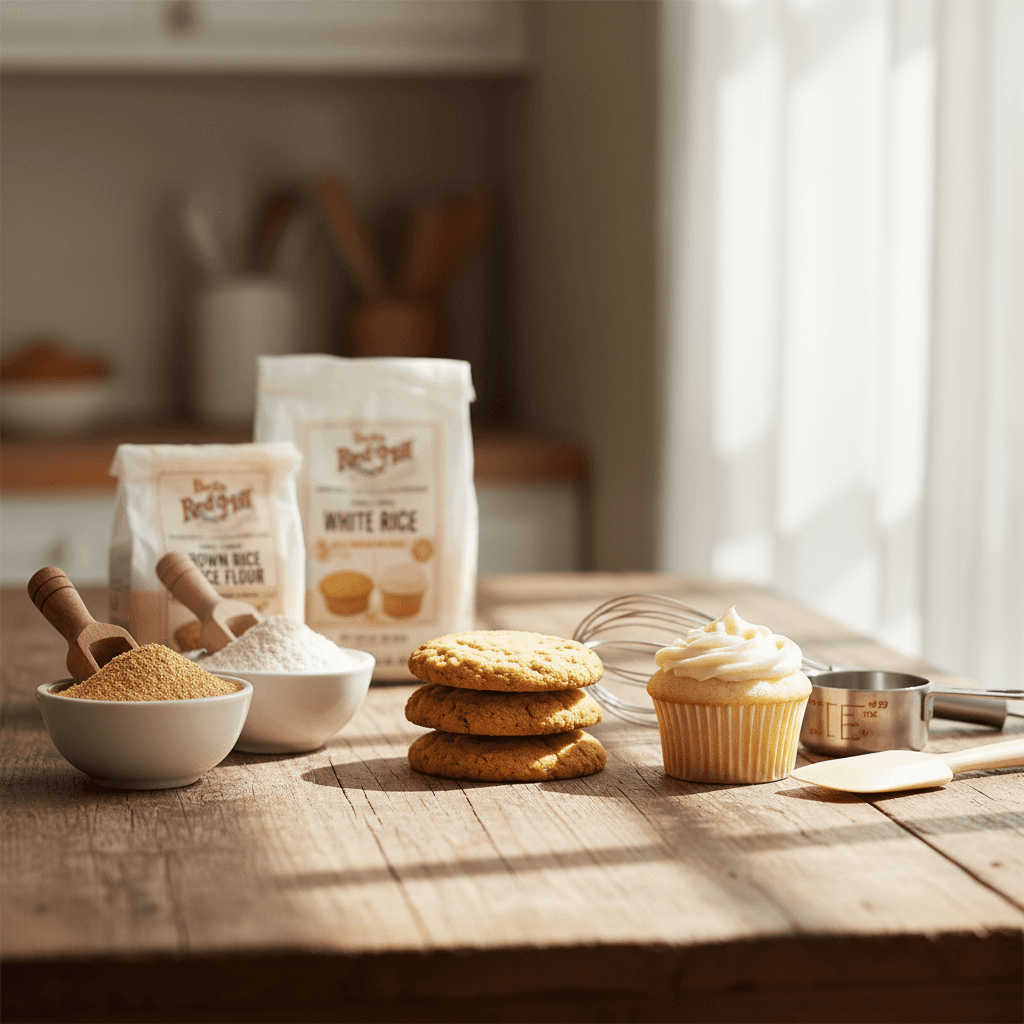
Brown rice flour and white rice flour are the two most common base flours in gluten-free baking, and choosing the wrong one can make or break your recipe. Here's everything you need to know about how they compare, which brands perform best, and when to use each one.
Key takeaways
- White rice flour has a milder flavor and finer texture, making it the better all-purpose choice for cakes, cookies, and delicate pastries.
- Brown rice flour adds more nutrition and a slightly nutty flavor, but can produce gritty results if the grind isn't fine enough.
- The best gluten-free flour blends typically use white rice flour as the base, though some bread-focused blends favor brown rice flour for its higher protein and fiber.
- Grind fineness matters more than brand in most cases — a superfine brown rice flour will outperform a coarse white rice flour every time.
- Neither flour works well alone. Both need starches and binders to mimic wheat flour's structure in baking.
- Price per pound varies significantly between brands, from under $1 to over $4 depending on organic certification and grind quality.
What makes rice flour essential in gluten-free baking
Rice flour — whether brown or white — is the backbone of most homemade gluten-free flour blends. It provides the bulk starch and structure that replaces all-purpose wheat flour, and it has a relatively neutral flavor compared to alternatives like buckwheat flour or amaranth flour.
Rice flour is naturally gluten-free, widely available, and affordable. It blends well with starches like arrowroot powder and tapioca starch to create flour mixes that handle everything from sandwich bread to sugar cookies. Understanding the difference between the brown and white versions helps you pick the right one for your recipe.
If you're just getting started with gluten-free flour blends and substitutions, the Confident Gluten-Free Baker Toolkit walks you through exactly how to build blends, troubleshoot common problems, and stop wasting ingredients on failed batches.
Brown rice flour vs white rice flour: how they compare
The core difference is simple: brown rice flour is milled from whole-grain brown rice with the bran intact, while white rice flour comes from polished white rice with the bran removed. That one difference cascades into flavor, texture, nutrition, and baking performance.
| Property | Brown rice flour | White rice flour |
|---|---|---|
| Protein (per 1/4 cup) | 3-4 g | 2-3 g |
| Fiber (per 1/4 cup) | 2-3 g | 0.5-1 g |
| Flavor | Nutty, slightly earthy | Mild, neutral |
| Typical grind | Medium to fine (varies widely) | Fine to superfine |
| Color in baked goods | Slightly tan/beige | White, similar to wheat flour |
| Shelf life | Shorter (3-6 months, refrigerate) | Longer (6-12 months, pantry-stable) |
| Best for | Bread, muffins, hearty baked goods | Cakes, cookies, pastries, pie crusts |
| Average price per pound | $1.50-$4.00 | $1.00-$3.50 |
Flavor and texture differences
White rice flour tastes almost like nothing, which is exactly what you want in a base flour. It disappears into your recipe and lets other flavors shine. Brown rice flour brings a subtle nuttiness that works beautifully in rustic breads and muffins but can taste slightly off in delicate vanilla cakes or sugar cookies.
Texture is where things get tricky. Brown rice flour from some brands can be noticeably gritty — and that gritty texture is one of the most common complaints in gluten-free baking. The bran particles in brown rice flour are harder to mill superfine, so brand selection matters enormously. White rice flour is generally easier to find in a consistently fine grind.
Nutrition comparison
Brown rice flour wins on nutrition. It has roughly 50% more protein, significantly more fiber, and higher levels of B vitamins, iron, and magnesium compared to white rice flour. If you're baking for someone who needs both gluten-free and higher-nutrition options, brown rice flour adds meaningful nutritional value.
That said, neither rice flour is a protein powerhouse. If you need more structure and protein in your baking, you'll get better results adding almond flour or a dedicated protein source to your blend rather than relying on brown rice flour alone.
Shelf life and storage
Brown rice flour contains natural oils from the bran, which means it can go rancid. Store it in the refrigerator or freezer and use it within three to six months of opening. White rice flour is much more shelf-stable and can sit in a cool, dry pantry for up to a year without issues.
Best brown rice flour brands for gluten-free baking
Not all brown rice flours are created equal. Grind quality varies dramatically, and a coarse brown rice flour will ruin an otherwise good recipe. Here are the brands we recommend, ranked by grind fineness, price, and best use.
1. Bob's Red Mill stone ground brown rice flour
The Bob's Red Mill Brown Rice Flour is the most widely available option and a solid starting point. It's stone ground, certified gluten-free, and reasonably priced at around $2.00-$2.50 per pound. The grind is medium-fine — not the finest available, but adequate for breads, muffins, and heartier baked goods. Protein content is about 3g per quarter cup. We'd recommend it for bread baking and pancakes, but it can be slightly gritty in delicate cakes.

Bob's Red Mill Brown Rice Flour, 24oz (Pack of 4) - Non GMO, Whole Grain, Vegan, Kosher
Check price on Amazon →2. Authentic Foods superfine brown rice flour
This is the gold standard for brown rice flour. The Authentic Foods Superfine Brown Rice Flour has an incredibly fine grind that virtually eliminates the gritty texture problem. At around $3.50-$4.00 per pound it's pricier, but the difference in texture is dramatic. Protein is about 3g per quarter cup. If you want to use brown rice flour in cakes and cookies without grittiness, this is the one to buy.

3. Anthony's brown rice flour
The Anthony's Brown Rice Flour is a great value option at roughly $1.50-$2.00 per pound. It's certified gluten-free, non-GMO, and batch tested. The grind falls between Bob's Red Mill and Authentic Foods — finer than Bob's but not quite superfine. It works well in muffins, quick breads, and flour blends where it's combined with starches. Protein is about 3g per quarter cup.
4. Arrowhead Mills organic brown rice flour
The Arrowhead Mills Organic Brown Rice Flour is a solid organic option at about $2.50-$3.00 per pound. It has a pleasant nutty flavor and a medium grind. It performs best in bread recipes and savory baking. Protein is about 3g per quarter cup. The organic certification matters to some bakers, and Arrowhead Mills has a long track record of quality.
5. Nuts.com superfine brown rice flour
The Nuts.com Superfine Brown Rice Flour is another excellent superfine option, typically running $2.50-$3.50 per pound depending on quantity. It's processed in a dedicated gluten-free facility, which is important if you're baking for someone with celiac disease. The grind is very fine and it works well across a wide range of recipes.
Best white rice flour brands for gluten-free baking
White rice flour is generally more consistent across brands than brown rice flour, but there are still meaningful differences in grind fineness, taste, and price.
1. Bob's Red Mill white rice flour
The Bob's Red Mill White Rice Flour is the workhorse of gluten-free baking. It's certified gluten-free, widely available at grocery stores and online, and costs about $1.50-$2.00 per pound. The grind is fine and consistent. Protein is about 2g per quarter cup. This is what most gluten-free bakers start with, and for good reason — it works reliably in almost everything.
2. Authentic Foods superfine white rice flour
The Authentic Foods Superfine White Rice Flour is noticeably finer than Bob's, and that difference shows up in cakes and pastries with a smoother, more wheat-like crumb. At $3.00-$3.50 per pound it's a premium product, but many experienced gluten-free bakers consider it essential for delicate baking. Protein is about 2g per quarter cup.
3. Anthony's white rice flour
The Anthony's White Rice Flour is an excellent budget option at roughly $1.00-$1.50 per pound when bought in bulk. It's certified gluten-free and has a fine, consistent grind. It performs well in flour blends and works across all recipe types. Protein is about 2g per quarter cup. For bakers going through large quantities, this is hard to beat on value.
4. Koda Farms Mochiko sweet rice flour (honorable mention)
This is technically sweet rice flour (glutinous rice flour), not standard white rice flour, so it behaves differently — it's much stickier and chewier. We mention it because bakers sometimes confuse the two. Mochiko is excellent for adding chewiness to certain recipes but should not be used as a 1:1 swap for regular white rice flour.
5. Nuts.com white rice flour
The Nuts.com White Rice Flour is processed in a dedicated gluten-free facility and has a very fine grind. At about $1.50-$2.50 per pound, it's competitively priced and a great option for bakers with celiac who need strict cross-contamination control.
6. Hodgson Mill white rice flour
The Hodgson Mill White Rice Flour is another grocery store staple at around $1.50-$2.00 per pound. The grind is fine and it performs well in standard gluten-free flour blends. It's a reliable, no-surprises option that gets the job done.
Brand comparison at a glance
| Brand | Type | Grind | Protein (per 1/4 cup) | Approx. price per lb | Best for |
|---|---|---|---|---|---|
| Bob's Red Mill | Brown | Medium-fine | 3g | $2.00-$2.50 | Bread, muffins, pancakes |
| Authentic Foods | Brown | Superfine | 3g | $3.50-$4.00 | Cakes, cookies, all-purpose |
| Anthony's | Brown | Fine | 3g | $1.50-$2.00 | Flour blends, quick breads |
| Arrowhead Mills | Brown | Medium | 3g | $2.50-$3.00 | Bread, savory baking |
| Nuts.com | Brown | Superfine | 3g | $2.50-$3.50 | Celiac-safe baking, all-purpose |
| Bob's Red Mill | White | Fine | 2g | $1.50-$2.00 | All-purpose, flour blends |
| Authentic Foods | White | Superfine | 2g | $3.00-$3.50 | Cakes, pastries, delicate baking |
| Anthony's | White | Fine | 2g | $1.00-$1.50 | Bulk baking, flour blends |
| Nuts.com | White | Very fine | 2g | $1.50-$2.50 | Celiac-safe baking |
| Hodgson Mill | White | Fine | 2g | $1.50-$2.00 | General-purpose flour blends |
When to use brown rice flour vs white rice flour in recipes
The short answer: use white rice flour as your default, and switch to brown rice flour when you want added nutrition or a heartier flavor profile. Here's a more detailed breakdown by recipe type.
Bread and pizza dough
Brown rice flour is often the better choice for gluten-free pizza and bread baking. Its higher protein and fiber content contribute to a slightly sturdier crumb, and the nutty flavor complements savory recipes. Many commercial gluten-free bread flour blends use brown rice flour as their base for this reason.
Cakes, cupcakes, and pastries
White rice flour is the clear winner here. Its neutral flavor and finer grind produce a lighter, more tender crumb. If you're baking a vanilla cake or lemon cupcakes, brown rice flour's flavor and color will work against you. For best results in delicate baking, use a superfine white rice flour like Authentic Foods.
Cookies
Both work, depending on the cookie. White rice flour is better for sugar cookies and shortbread where you want a clean, buttery flavor. Brown rice flour shines in oatmeal-style cookies, chocolate chip cookies, and anything where a slightly earthy flavor adds complexity. Either way, make sure you're using the right cookie sheet for gluten-free cookies to prevent spreading.
Muffins and quick breads
Brown rice flour is excellent in muffins and quick breads. The heartier texture and flavor complement banana bread, pumpkin muffins, and zucchini bread beautifully. These recipes are also more forgiving of a slightly coarser grind.
Flour blends
Most standard gluten-free flour blends call for white rice flour because of its neutral flavor and consistent performance. If you're building your own homemade gluten-free flour blend, start with white rice flour as your base and experiment with swapping in brown rice flour for specific recipes once you're comfortable with the basics.
How to avoid gritty texture with rice flour
Gritty texture is the number one complaint with rice flour in gluten-free baking, and it almost always comes down to grind fineness. Here's how to fix it:
- Buy superfine when possible. Authentic Foods and Nuts.com both offer superfine grinds that make a huge difference.
- Let batter rest. Allowing your batter to rest for 20-30 minutes before baking gives the rice flour time to hydrate, which softens any remaining graininess.
- Blend with starches. Combining rice flour with tapioca starch and potato starch in a blend smooths out the overall texture significantly.
- Sift before measuring. This breaks up any clumps and aerates the flour for more consistent results.
If you're still struggling with gritty results, our guide to fixing gritty texture in gluten-free baking covers additional techniques.
Can you substitute brown rice flour for white rice flour (and vice versa)?
Yes, you can swap them 1:1 by weight in most recipes, but expect some differences. Brown rice flour absorbs slightly more liquid than white rice flour, so your batter may be a touch thicker. You may need to add an extra tablespoon or two of liquid to compensate. The flavor and color will also shift — brown rice flour will make your baked goods slightly darker and nuttier.
For more details on substitution ratios and tips, check out our brown rice flour ingredient page, which covers exact swap ratios for different recipe types.
Frequently asked questions
Is brown rice flour healthier than white rice flour for baking?
Brown rice flour has more protein, fiber, and micronutrients than white rice flour because it retains the bran layer. However, the nutritional difference per serving in a baked good is modest since flour is just one ingredient. If nutrition is a priority, brown rice flour is the better choice, but both are naturally gluten-free and work well in baking.
Why does my brown rice flour taste gritty?
Grittiness comes from a coarse grind, not from the flour itself. Many brands mill brown rice flour to a medium grind that leaves noticeable bran particles. Switching to a superfine brand like Authentic Foods or letting your batter rest for 20-30 minutes before baking can eliminate the problem. See our gritty texture troubleshooting guide for more solutions.
Can I use brown rice flour instead of white rice flour in a gluten-free flour blend?
Yes, you can substitute brown rice flour for white rice flour 1:1 by weight in most flour blends. Expect a slightly nuttier flavor, darker color, and potentially thicker batter. You may need to add a small amount of extra liquid. This swap works best in bread and muffin blends and is less ideal for delicate cake blends.
What is the best rice flour brand for gluten-free baking?
For most bakers, Bob's Red Mill white rice flour is the best starting point — it's affordable, widely available, and performs consistently. If you want the absolute best texture for cakes and pastries, Authentic Foods Superfine (in either brown or white) is worth the premium. For budget bulk baking, Anthony's offers excellent value in both varieties.
Does rice flour need xanthan gum or other binders?
Yes. Rice flour alone doesn't provide the structure or elasticity that gluten gives wheat flour. You'll need a binder like xanthan gum, psyllium husk, or guar gum to hold your baked goods together. Most gluten-free flour blends include a binder, or you can add it separately. Our guide on what gluten does in baking explains why binders are essential and how to choose the right one.

Written by
Co-founder, BakingSubs
Co-founder of BakingSubs, where he turns the science of ingredient substitutions into tested, reliable guidance for home bakers.
Related Posts

Bake with Confidence
See all
Confident Gluten-Free Baker Toolkit
The science-based system that replaces gluten's seven invisible jobs so your baking turns out soft, fluffy, and foolproof — every time.

Gluten-Free Recipe Vault
Instant access to our complete library of proven gluten-free recipes — no waiting, no guesswork, just results that work tonight.

Fix Your Gluten-Free Bread
Learn the 3-step formula to make bread rise and stay soft, discover why your loaves collapse, and get a tested sandwich bread recipe that actually works.