

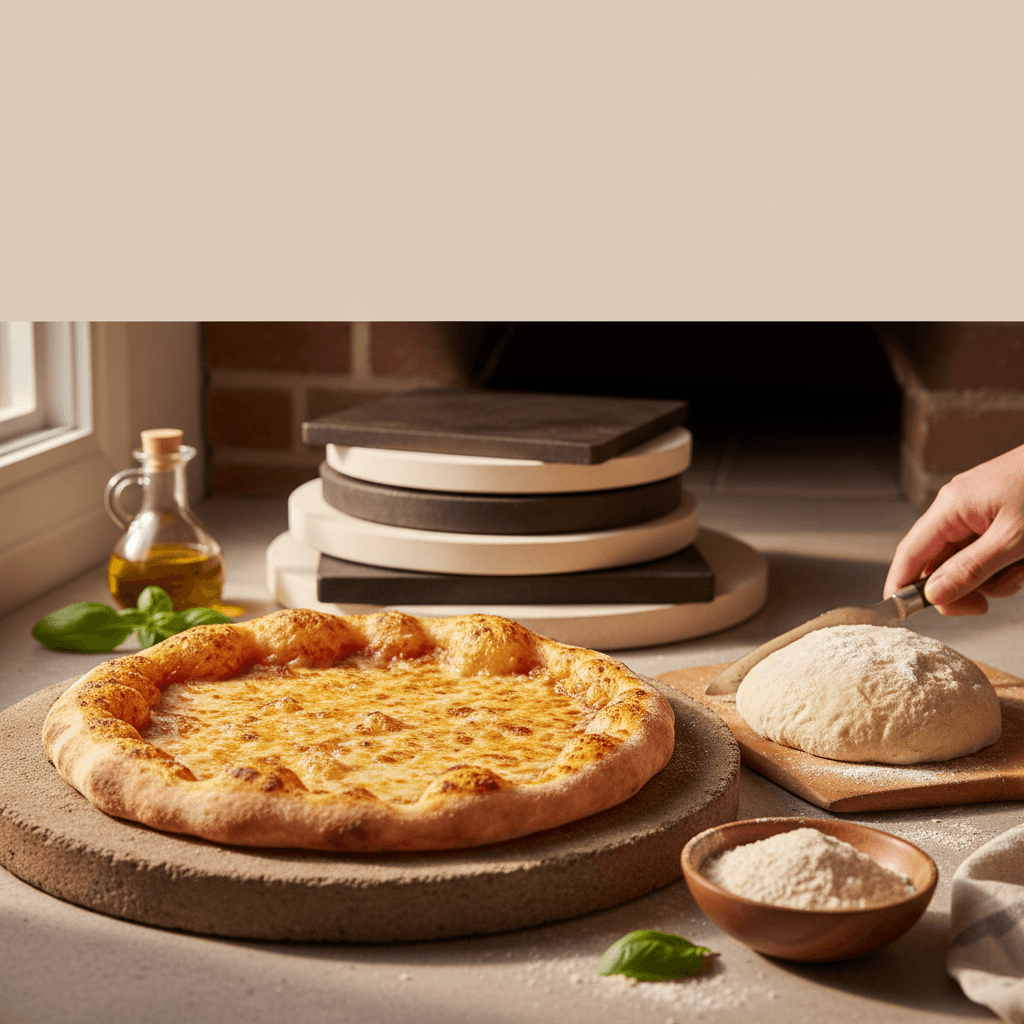
Gluten-free pizza dough behaves nothing like wheat-based dough on a pizza stone, and choosing the wrong surface can leave you with a soggy, stuck-on mess. Here are the best pizza stones and steels for gluten-free baking, compared on material, thickness, size, and price, with picks across every budget.
Key takeaways
- Gluten-free pizza dough is wetter and more fragile than wheat dough, so you need a stone that heats evenly and releases easily without sticking.
- Cordierite and ceramic stones are the most popular materials, but a baking steel gives the fastest heat transfer for the crispiest gluten-free crust.
- Thicker stones (at least 1/2 inch) retain more heat and recover faster after you slide a cold, wet GF dough onto them.
- Always preheat your pizza stone for a full 45-60 minutes at your oven's highest temperature for best results with gluten-free crusts.
- A pizza peel with parchment paper is practically mandatory for gluten-free dough since it tears easily during transfer.
- Rectangular stones give you more usable surface area for gluten-free flatbreads and multiple small pizzas.
Why gluten-free pizza needs a different approach to pizza stones
The biggest challenge with gluten-free pizza is moisture. Without gluten's elastic protein network, GF doughs rely on starches, xanthan gum, and extra hydration to hold together. That means the dough sitting on your stone is significantly wetter than a traditional wheat dough, and it takes more thermal energy to drive off that moisture and create a crispy bottom crust.
A thin, cheap pizza stone can't store enough heat to handle this. The moment your wet GF dough hits the surface, the stone's temperature drops dramatically and you end up with a gummy center instead of a crispy base. That's why thickness and material matter so much more for gluten-free bakers than for conventional pizza makers.
Gluten-free dough is also more fragile. You can't stretch it, toss it, or slide it off a peel the way you would wheat dough. It tends to stick and tear. So the surface texture of your stone, and whether you use parchment paper, makes a real difference in your success rate.
If you're building out your gluten-free baking setup, our Confident Gluten-Free Baker Toolkit covers the fundamentals of working with GF flours and doughs so your equipment investments actually pay off.
What to look for in a pizza stone for gluten-free baking
Material
The three main options are cordierite, ceramic (fireclay), and steel. Cordierite is the most thermal-shock-resistant, meaning it won't crack if your oven temperature swings. Ceramic stones are affordable and work well but can crack over time. Baking steels conduct heat the fastest, which is a major advantage for wet GF doughs that need aggressive bottom heat.
Thickness
Go for at least 1/2 inch thick. Thicker stones store more thermal energy and recover faster after you place your dough. For gluten-free pizza, this heat recovery is critical because the dough releases more steam than wheat dough.
Size and shape
Rectangular stones give you more usable surface area than round ones. If you're making gluten-free pizzas for a family or selling from home, a larger surface lets you bake multiple smaller pizzas or one large rectangular pie.
Surface texture
A slightly porous surface helps absorb moisture from the bottom of the crust, which is exactly what you want with GF dough. Glazed or overly smooth surfaces don't wick moisture as effectively.
7 best pizza stones for gluten-free pizza
Here are our picks across budget, mid-range, and premium tiers. We've focused on options that specifically address the challenges of gluten-free dough: moisture management, even heat, and easy release.
| Product | Material | Thickness | Size | Price range | Best for |
|---|---|---|---|---|---|
| Cuisinart Ceramic Pizza Stone | Ceramic | 1/2 inch | 13 inch round | $20-30 | Budget pick |
| Rockler Pizza Stone (Cordierite) | Cordierite | 5/8 inch | 14 inch round | $30-40 | Budget cordierite |
| FibraMent-D Home Oven Baking Stone | Firecite composite | 3/4 inch | 15 x 20 inch | $55-75 | Best mid-range overall |
| Lodge Pre-Seasoned Cast Iron Pizza Pan | Cast iron | Heavy gauge | 15 inch round | $35-50 | No-stick alternative |
| Dough-Joe Pizza Steel | Steel | 3/8 inch | 15 x 15 inch | $80-100 | Best heat transfer |
| NerdChef Steel Stone | Steel | 1/4 inch | 14.5 x 16 inch | $90-110 | Premium steel pick |
| Baking Steel Original | Steel | 1/4 inch | 14 x 16 inch | $100-120 | Best premium option |
Budget pick: Cuisinart ceramic pizza stone
The Cuisinart Ceramic Pizza Stone is a solid entry point if you're new to pizza stones. At around $25, it's hard to beat for the price. The 1/2-inch thickness provides decent heat retention, and the ceramic surface does a reasonable job wicking moisture from gluten-free dough.
Pros: Very affordable, widely available, comes with a wire rack for serving. Cons: Can crack with thermal shock if you're not careful, round shape limits pizza size. Not as much heat retention as thicker options.
Budget cordierite: Rockler pizza stone
If you want better crack resistance on a budget, the Rockler Cordierite Pizza Stone is a step up. Cordierite handles temperature swings much better than standard ceramic, so you're less likely to end up with a cracked stone after a few months of use.
Pros: Thermal shock resistant, slightly thicker at 5/8 inch, good heat retention for the price. Cons: Still a round shape, and the surface can stain over time (purely cosmetic).
Best mid-range: FibraMent-D home oven baking stone
This is the stone we recommend most often for serious gluten-free bakers. The FibraMent-D Baking Stone is 3/4 inch thick and made from a proprietary firecite composite that retains heat exceptionally well. The rectangular shape gives you a full 15 x 20 inches of baking surface, and you can get it custom-cut to fit your oven.
Pros: Outstanding heat retention and recovery, porous surface wicks moisture beautifully, rectangular shape maximizes oven space. Cons: Heavy (around 15 lbs), takes a full hour to preheat properly, can't be washed with soap.
If you're baking gluten-free pizza regularly or thinking about selling at farmers markets, this stone is worth the investment.
No-stick alternative: Lodge pre-seasoned cast iron pizza pan
Not technically a stone, but the Lodge Cast Iron Pizza Pan deserves a spot on this list. Cast iron conducts heat quickly and the pre-seasoned surface gives you a naturally non-stick cooking area. For gluten-free dough that tends to stick and tear, this is a huge advantage.
Pros: Naturally non-stick, virtually indestructible, heats quickly, easy to maintain. Cons: Doesn't wick moisture like a porous stone, heavier than most stones, requires seasoning maintenance.
Best heat transfer: Dough-Joe pizza steel
Baking steels transfer heat to your dough roughly 18 times faster than a ceramic stone. For gluten-free pizza, that means the bottom crust sets and crisps before the excess moisture can make it soggy. The Dough-Joe Pizza Steel is a great entry into the steel category with its 3/8-inch thickness providing excellent thermal mass.
Pros: Fastest heat transfer, extremely durable, will never crack, creates the crispiest GF crust. Cons: Heavy (around 16 lbs), needs to be oiled to prevent rust, higher price point.
Premium steel: NerdChef steel stone
The NerdChef Steel Stone is a well-regarded option in the premium steel category. The generous 14.5 x 16 inch surface gives you plenty of room, and the steel construction means you'll never worry about cracking.
Pros: Excellent heat conductivity, large surface area, lasts a lifetime. Cons: Expensive, very heavy, requires regular oiling to prevent rust.
Best premium: Baking Steel original
The Baking Steel Original is the gold standard for pizza steels. At 1/4 inch thick and 14 x 16 inches, it delivers incredible heat transfer that's ideal for gluten-free crusts. The company also provides excellent resources for getting the most out of your steel.
Pros: Industry-leading heat transfer, large rectangular surface, doubles as a stovetop griddle, lifetime durability. Cons: The most expensive option on this list, very heavy at 16 lbs, requires oiling after each use.
Pizza stone vs. pizza steel for gluten-free baking
This is the biggest decision you'll make, so let's break it down clearly.
| Factor | Pizza stone (cordierite/ceramic) | Pizza steel |
|---|---|---|
| Heat transfer speed | Moderate | Very fast (18x faster) |
| Moisture wicking | Excellent (porous surface) | None (non-porous) |
| Crust crispiness | Good | Excellent |
| Durability | Can crack over time | Virtually indestructible |
| Weight | Moderate (5-15 lbs) | Heavy (15-25 lbs) |
| Maintenance | No seasoning needed | Requires oiling |
| Price range | $20-75 | $80-120+ |
For gluten-free pizza specifically, a steel has a slight edge because the rapid heat transfer sets the bottom crust quickly before moisture can make it soggy. However, a good thick cordierite stone like the FibraMent-D also does an excellent job and costs less. Either way, you're miles ahead of baking on a regular sheet pan.
Tips for using a pizza stone with gluten-free dough
Even the best stone won't save a poorly handled gluten-free dough. Here are the techniques that make the biggest difference.
Always use parchment paper. Gluten-free dough sticks to everything. Assemble your pizza on parchment paper, then slide the whole thing (parchment and all) onto the preheated stone. You can pull the parchment out from under the pizza halfway through baking once the crust has set.
Preheat for a full hour. We know it's tempting to rush, but a stone that hasn't fully saturated with heat will give you a disappointing crust. Set your oven to its highest temperature (usually 500-550 degrees F) and let the stone sit in there for 45-60 minutes.
Don't overload the dough with toppings. Gluten-free crust can't support as much weight as wheat crust. Keep toppings moderate and pat wet ingredients like fresh mozzarella dry before adding them.
Use the right flour blend. Your stone can only do so much. A good GF pizza dough starts with the right flour. Blends that include brown rice flour and tapioca starch tend to crisp up nicely on a hot stone.
Weigh your ingredients. Gluten-free baking is less forgiving than wheat baking when it comes to measurements. Too much water and your dough will steam instead of crisp. A good food scale is essential for consistent results.
How to care for your pizza stone
Never wash a pizza stone with soap. The porous surface absorbs it and you'll taste soap in your next pizza. Instead, let the stone cool completely in the oven, then scrape off any stuck bits with a bench scraper or stiff brush. For stubborn spots, use a damp cloth with a paste of baking soda.
For baking steels, wipe down with a thin layer of food-safe oil (like flaxseed oil) after each use to prevent rust. Treat it like you would a cast iron skillet.
Store your stone or steel in the oven between uses. It actually helps regulate your oven temperature and you'll always have it preheated when pizza night rolls around.
Frequently asked questions
Can you use a regular pizza stone for gluten-free pizza?
Yes, any pizza stone will work for gluten-free pizza, but thicker stones (1/2 inch or more) perform significantly better. Gluten-free dough is wetter than wheat dough, so you need a stone with enough thermal mass to maintain its temperature and crisp the bottom crust before it gets soggy. Thin stones lose too much heat on contact.
Do you need parchment paper on a pizza stone for gluten-free dough?
We strongly recommend it. Gluten-free dough lacks the elasticity and structure of wheat dough, which means it tears easily and sticks to surfaces. Assembling your pizza on parchment paper and sliding the whole thing onto the stone is the most reliable way to avoid a mess. You can remove the parchment partway through baking once the crust sets.
Is a pizza steel better than a pizza stone for gluten-free crust?
A pizza steel transfers heat roughly 18 times faster than a ceramic stone, which helps set the bottom crust quickly before excess moisture makes it soggy. For gluten-free pizza specifically, this faster heat transfer gives you a crispier result. However, a thick cordierite stone also works very well and costs significantly less. Both are a major upgrade over a standard baking sheet.
How long should you preheat a pizza stone for gluten-free pizza?
Preheat your pizza stone for 45-60 minutes at your oven's maximum temperature, usually 500-550 degrees F. This is even more important for gluten-free pizza than regular pizza because the wetter dough needs maximum thermal energy from the stone to crisp properly. Skipping this step is one of the most common reasons for a gummy, undercooked center.
What size pizza stone is best for a home oven?
For most home ovens, a rectangular stone around 14-16 inches wide and 15-20 inches deep works best. This maximizes your usable baking surface while still allowing air to circulate around the edges. If you're baking gluten-free pizza for a family or considering a home bakery, the extra surface area of a rectangular stone lets you bake more efficiently.

Written by
Co-founder, BakingSubs
Co-founder of BakingSubs, where he turns the science of ingredient substitutions into tested, reliable guidance for home bakers.
Related Posts
Bake with Confidence
See all
Confident Gluten-Free Baker Toolkit
The science-based system that replaces gluten's seven invisible jobs so your baking turns out soft, fluffy, and foolproof — every time.

Gluten-Free Recipe Vault
Instant access to our complete library of proven gluten-free recipes — no waiting, no guesswork, just results that work tonight.

Fix Your Gluten-Free Bread
Learn the 3-step formula to make bread rise and stay soft, discover why your loaves collapse, and get a tested sandwich bread recipe that actually works.