

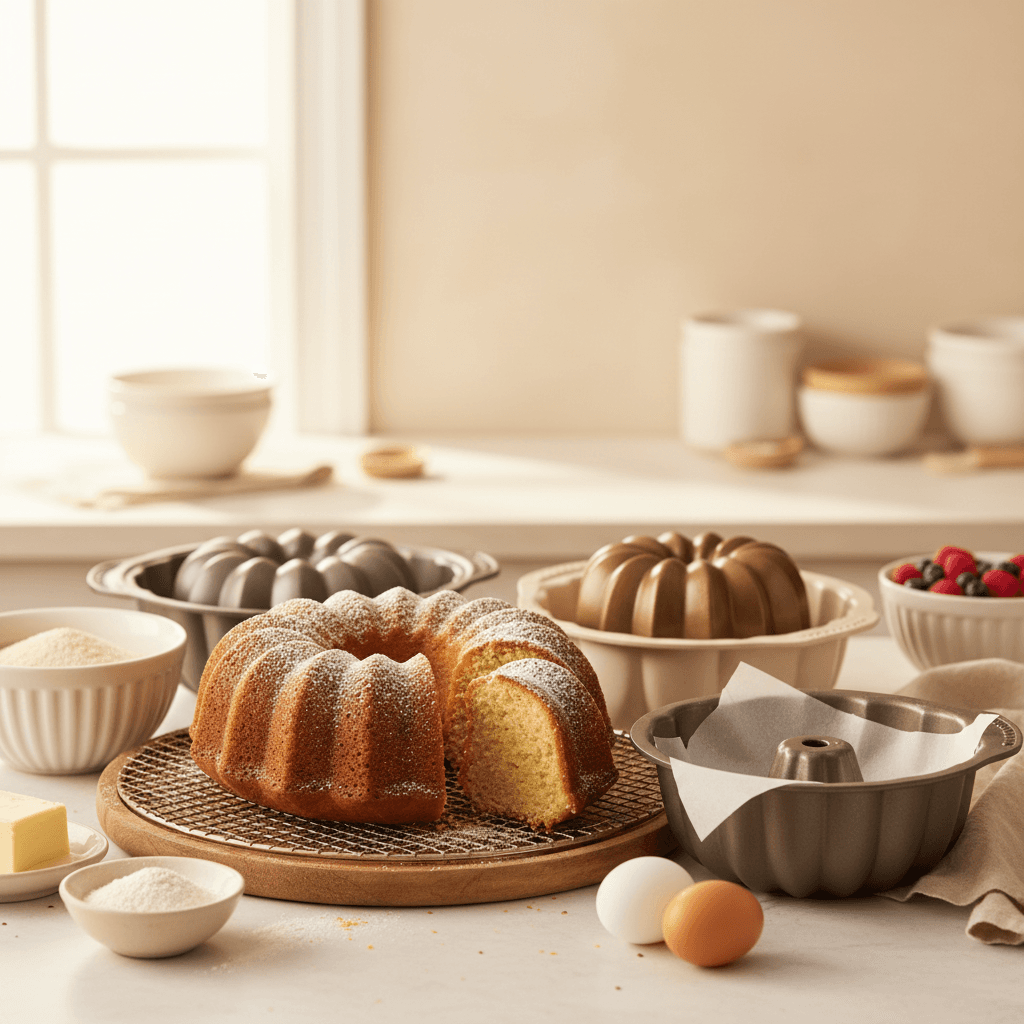
Gluten-free bundt cakes are gorgeous when they work — and heartbreaking when half the cake stays stuck in the pan. The right bundt pan makes an enormous difference when you're working without gluten, and most "best bundt pan" guides don't account for how differently gluten-free batters behave. Here's what actually matters and our top 7 picks across every budget.
Key takeaways
- Gluten-free batters are stickier and more fragile than wheat-based batters, making nonstick quality and pan design the most important factors in choosing a bundt pan.
- Lighter-colored, heavy-gauge aluminum pans produce the most even browning without over-crisping the crust — a common problem with dark nonstick coatings on gluten-free cakes.
- Simple, classic fluted designs release gluten-free cakes far more reliably than intricate, detailed patterns.
- Proper greasing technique matters as much as the pan itself — use a paste of butter, oil, and brown rice flour for the best results.
- Silicone bundt pans can work well for gluten-free baking but require a baking sheet underneath for structural support.
- For home bakery production, investing in a premium pan pays for itself quickly in reduced waste and consistent results.
Why bundt pans matter more for gluten-free baking
Without the structural protein network that gluten provides, gluten-free cakes are inherently more delicate and prone to sticking. The batter tends to be wetter and stickier, and the finished cake has less tensile strength — meaning it tears apart more easily when you try to unmold it. A pan that works perfectly fine for a standard wheat pound cake can be a disaster with a gluten-free version.
There are a few specific things that make a bundt pan gluten-free friendly:
- Nonstick coating quality: Cheap nonstick wears out fast and creates uneven release. Gluten-free batters cling to any imperfection.
- Pan color: Dark pans absorb more heat and can over-brown the exterior before the center sets, which is already a challenge with gluten-free cakes that tend toward gummy centers.
- Design complexity: Those gorgeous cathedral and rose-shaped bundt pans? They're a gamble with gluten-free batter. Simpler designs with wider channels release more reliably.
- Material and weight: Heavy-gauge aluminum conducts heat evenly, which helps gluten-free cakes bake through without developing a thick, dry crust.
If you're building out your gluten-free baking setup, the right pan is one of the highest-impact investments you can make. For a full overview of essential tools, check out our Confident Gluten-Free Baker Toolkit — it walks you through exactly what equipment actually matters and what you can skip.
How we chose these bundt pans
We evaluated bundt pans based on nonstick reliability with gluten-free batters specifically, heat distribution, ease of cleaning, durability over time, and value at each price point. We also prioritized pans with simpler interior geometries, since those release gluten-free cakes more consistently.
7 best bundt pans for gluten-free baking
1. Nordic Ware Anniversary bundt pan (best overall)
The Nordic Ware Anniversary Bundt Pan is the gold standard for a reason. Its cast aluminum construction provides incredibly even heat distribution, and the classic fluted design has wide, gently sloped channels that release gluten-free cakes beautifully. The light-colored interior helps you avoid over-browning.
| Feature | Details |
|---|---|
| Material | Cast aluminum |
| Capacity | 10-15 cups |
| Nonstick | Premium nonstick coating |
| Price range | $30-$40 |
| Best for | Everyday gluten-free bundt cakes |
Pros: Excellent heat distribution, reliable release with proper greasing, lifetime warranty, made in the USA. The wide channels are forgiving with delicate gluten-free batters.
Cons: Hand wash only. The nonstick coating can degrade over time if you use cooking sprays with propellants (use a brush-on grease instead).
2. Nordic Ware Brilliance bundt pan (best for even browning)
The Nordic Ware Brilliance Bundt Pan was specifically designed to address browning issues. Its lighter-colored exterior and interior reflect more heat, producing a golden crust rather than a dark one. This is a huge advantage for gluten-free cakes, which often struggle with the exterior cooking faster than the interior.
| Feature | Details |
|---|---|
| Material | Cast aluminum |
| Capacity | 10 cups |
| Nonstick | Light-colored premium nonstick |
| Price range | $35-$45 |
| Best for | Bakers who struggle with over-browning |
Pros: More even browning than standard dark pans, excellent release, same heavy-gauge quality as the Anniversary pan.
Cons: Slightly smaller capacity than the Anniversary. The lighter coating shows staining more easily (purely cosmetic).
3. USA Pan heritage bundt pan (best mid-range pick)
The USA Pan Heritage Bundt Pan features a silicone-based Americoat nonstick coating that's remarkably effective with sticky gluten-free batters. The corrugated surface design actually improves airflow and heat distribution. It's a commercial-grade pan at a home-baker price.
| Feature | Details |
|---|---|
| Material | Aluminized steel |
| Capacity | 10 cups |
| Nonstick | Americoat silicone nonstick |
| Price range | $25-$35 |
| Best for | Reliable everyday use on a budget |
Pros: PTFE and BPA-free coating, excellent release, corrugated surface promotes even baking, very durable.
Cons: Slightly lighter weight than cast aluminum options, which means marginally less heat retention. The corrugated exterior produces a textured crust (some love it, some prefer smooth).
4. Wilton Perfect Results bundt pan (best budget pick)
If you're just getting started with gluten-free bundt cakes and don't want to invest heavily, the Wilton Perfect Results Bundt Pan is a solid entry point. The nonstick coating handles gluten-free batters reasonably well when properly greased, and the simple design makes release straightforward.
| Feature | Details |
|---|---|
| Material | Steel |
| Capacity | 9-10 cups |
| Nonstick | Standard nonstick |
| Price range | $12-$18 |
| Best for | Beginners and occasional bakers |
Pros: Very affordable, simple design releases well, widely available.
Cons: Thinner gauge steel means less even heat distribution — you may notice more browning on the bottom. The nonstick coating wears out faster than premium options. Not ideal for high-volume production.
5. Nordic Ware Pro Form bundt pan (best for home bakery production)
For bakers who are running a gluten-free home bakery and need a pan that holds up to daily use, the Nordic Ware Pro Form Bundt Pan is built for the job. It's heavier and more durable than the Anniversary model, with a commercial-grade nonstick coating.
| Feature | Details |
|---|---|
| Material | Heavy-gauge cast aluminum |
| Capacity | 12 cups |
| Nonstick | Commercial-grade nonstick |
| Price range | $40-$55 |
| Best for | High-volume production baking |
Pros: Extremely durable, handles repeated use without coating degradation, excellent heat distribution, larger capacity for production batches.
Cons: Heavier and bulkier to store. Higher price point, though it pays for itself quickly if you're selling gluten-free baked goods.
6. Trudeau silicone fluted bundt pan (best silicone option)
Silicone bundt pans offer one massive advantage for gluten-free baking: you can literally peel the pan away from the cake instead of flipping and hoping. The Trudeau Silicone Fluted Bundt Pan is our favorite in this category because it's rigid enough to hold its shape while still being flexible enough for easy release.
| Feature | Details |
|---|---|
| Material | Silicone with steel structure ring |
| Capacity | 10 cups |
| Nonstick | Inherent silicone nonstick |
| Price range | $20-$30 |
| Best for | Bakers who struggle with sticking |
Pros: Virtually zero sticking, dishwasher safe, flexible release method is ideal for fragile gluten-free cakes, no coating to wear out.
Cons: Must be placed on a baking sheet for stability. Doesn't brown the crust as well as metal pans — you'll get a lighter, softer exterior. Can feel floppy when full of batter.
7. Nordic Ware Formed Aluminum classic bundt pan (best for decorative cakes)
If you want a more detailed design for special occasions or wedding cake orders, the Nordic Ware Formed Aluminum Classic Bundt Pan strikes the best balance between visual detail and gluten-free release reliability. The design has enough definition to look impressive but the channels are wide enough that a properly greased gluten-free cake will release cleanly.
| Feature | Details |
|---|---|
| Material | Cast aluminum |
| Capacity | 10-12 cups |
| Nonstick | Premium nonstick |
| Price range | $35-$50 |
| Best for | Special occasion and decorative cakes |
Pros: Beautiful design that's still gluten-free friendly, excellent heat distribution, impressive presentation.
Cons: More detailed designs require more careful greasing. Not the best choice for your first gluten-free bundt attempt — get comfortable with a simpler design first.
Quick comparison of all 7 bundt pans
| Pan | Best for | Material | Price range | GF release rating |
|---|---|---|---|---|
| Nordic Ware Anniversary | Best overall | Cast aluminum | $30-$40 | Excellent |
| Nordic Ware Brilliance | Even browning | Cast aluminum | $35-$45 | Excellent |
| USA Pan Heritage | Mid-range value | Aluminized steel | $25-$35 | Very good |
| Wilton Perfect Results | Budget pick | Steel | $12-$18 | Good |
| Nordic Ware Pro Form | Home bakery production | Cast aluminum | $40-$55 | Excellent |
| Trudeau Silicone | Zero sticking | Silicone | $20-$30 | Excellent |
| Nordic Ware Classic | Decorative cakes | Cast aluminum | $35-$50 | Very good |
How to grease a bundt pan for gluten-free baking
Even the best pan in the world will fail you if your greasing technique isn't right. For gluten-free batters, we recommend making a release paste:
- Mix equal parts softened butter (or coconut oil) and a neutral oil like avocado oil.
- Add an equal part of brown rice flour (not wheat flour, obviously — and rice flour works better than most gluten-free blends because of its fine texture).
- Use a pastry brush to coat every surface of the pan, getting into all the grooves and corners.
- Chill the pan for 10 minutes before adding batter. This sets the grease layer and creates a more reliable barrier.
Avoid commercial baking sprays with flour — most contain wheat flour, and even the "gluten-free" sprays often leave an uneven coating that causes partial sticking. The brush-on paste method takes an extra minute but dramatically improves your release rate.
Tips for perfect gluten-free bundt cakes every time
Beyond choosing the right pan, a few techniques make a big difference with gluten-free bundt cakes:
- Don't overfill: Fill bundt pans only two-thirds full. Gluten-free batters can rise unpredictably, and overflow creates a mess and an uneven base.
- Lower your oven temperature by 25 degrees F: This gives the center more time to set before the exterior over-browns. Especially important with dark-colored pans.
- Let it cool properly: After removing from the oven, let the cake rest in the pan for exactly 10-15 minutes. Too short and it falls apart; too long and it steams and sticks. Then flip onto a cooling rack.
- Use a food scale for your batter: Weighing ingredients ensures consistency, which matters more in gluten-free baking where ratios are less forgiving.
- Add structure with the right binders: If your gluten-free bundt cakes tend to be dry and crumbly, consider adding a small amount of xanthan gum or psyllium husk to your recipe for better cohesion.
Frequently asked questions
Why does my gluten-free bundt cake stick to the pan?
Gluten-free batters are naturally stickier than wheat-based batters because they lack the protein structure that helps cakes pull away from pan surfaces. The most common causes are insufficient greasing, using a worn-out nonstick coating, or unmolding too early or too late. Use a brush-on paste of fat and brown rice flour and wait exactly 10-15 minutes after baking before flipping.
Is a silicone or metal bundt pan better for gluten-free cakes?
Both can work well, but they produce different results. Metal pans (especially cast aluminum) give you better browning and a more defined crust, while silicone pans offer nearly foolproof release since you can peel the pan away from the cake. If sticking is your biggest problem, try silicone. If you want the best overall texture and appearance, go with a quality cast aluminum pan.
What size bundt pan should I use for gluten-free baking?
A 10-12 cup bundt pan is the most versatile size for gluten-free baking. Most gluten-free bundt cake recipes are formulated for this range. Remember to fill only two-thirds full, since gluten-free batters can rise unpredictably. If you're baking for a home bakery business, the 12-cup size gives you a more impressive presentation that justifies premium pricing.
Do I need to grease a nonstick bundt pan for gluten-free baking?
Yes, absolutely. Even the best nonstick coating needs help with gluten-free batters. The sugar and starches in gluten-free recipes create an especially sticky surface as they caramelize. Always grease thoroughly with a fat-and-flour paste, even with brand-new nonstick pans.
Can I use a regular bundt pan recipe and just swap in gluten-free flour?
You can, but you'll likely need to make adjustments beyond just the flour. Gluten-free batters often need more moisture, a binder like xanthan gum, and sometimes an extra egg for structure. You may also need to reduce the oven temperature slightly and extend the baking time. Check out our gluten-free baking guide for a deeper dive into adapting recipes successfully.

Written by
Co-founder, BakingSubs
Co-founder of BakingSubs, where he turns the science of ingredient substitutions into tested, reliable guidance for home bakers.
Related Posts
Bake with Confidence
See all
Confident Gluten-Free Baker Toolkit
The science-based system that replaces gluten's seven invisible jobs so your baking turns out soft, fluffy, and foolproof — every time.

Gluten-Free Recipe Vault
Instant access to our complete library of proven gluten-free recipes — no waiting, no guesswork, just results that work tonight.

Fix Your Gluten-Free Bread
Learn the 3-step formula to make bread rise and stay soft, discover why your loaves collapse, and get a tested sandwich bread recipe that actually works.