
Complete baking essentials guide: every product you need at every budget
Stock your entire baking kitchen with our complete guide to flours, sweeteners, fats, dairy, eggs, leaveners, spices, chocolate, and tools at budget, mid-range, and premium price points.

Malik
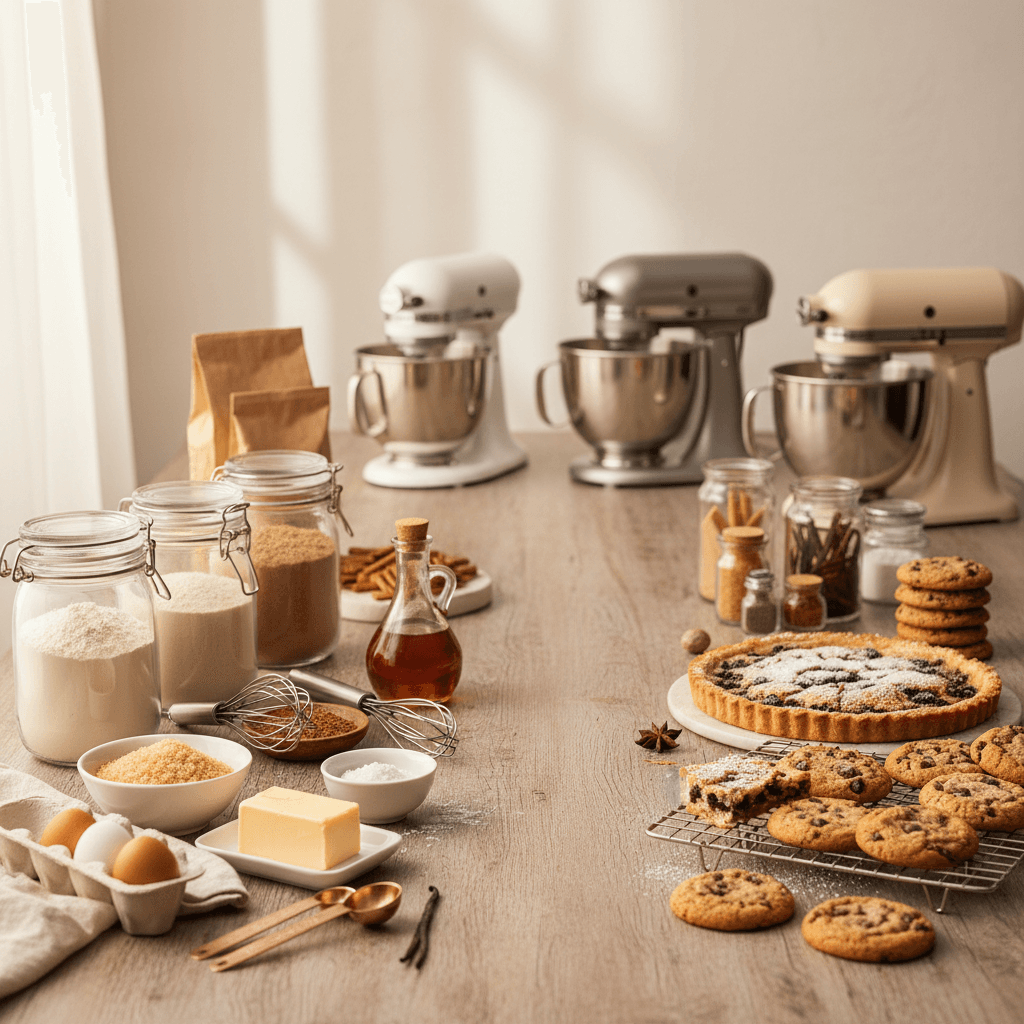
Stocking a baking kitchen can feel overwhelming, especially when every product comes in three price tiers and you're not sure which ones actually matter. This guide covers every major category — flours, sweeteners, fats, dairy, eggs, leaveners, binders, spices, chocolate, and equipment — with a budget, mid-range, and premium pick for each so you can build exactly the pantry you need.
Key takeaways
- You can stock a fully functional gluten-free baking pantry for under $75, but strategic upgrades in flour, butter, and vanilla make the biggest impact on results.
- Budget flours work fine for everyday baking; premium blends shine in delicate cakes and pastries where texture is everything.
- The single most impactful equipment upgrade is a digital kitchen scale — it matters more than any fancy stand mixer.
- Egg and dairy substitutes vary wildly by brand, so matching the substitute to the recipe function is more important than price.
- Buying store-brand leaveners, sugars, and basic spices saves money with zero quality difference.
- This guide links to deep-dive posts for every category so you can explore the details without getting lost here.
How to use this guide
Each section below covers one baking category with three picks: budget (under $8), mid-range ($8–$18), and premium ($18+). We kept descriptions short on purpose — every section links to a dedicated deep-dive post where we compare more products and explain the trade-offs in detail. If you're building a pantry from scratch, start with the budget column and upgrade the categories that matter most to you.
If you want a structured approach to gluten-free baking beyond just products, our Confident Gluten-Free Baker Toolkit walks you through techniques, ratios, and troubleshooting so every ingredient you buy actually performs the way you expect.
Best baking flours at every price point
Flour is the foundation of every bake, and in gluten-free baking, your flour blend choice affects texture more than almost anything else. For a full breakdown of brands and blends, see our complete baking flour guide.
Tier | Pick | Why we like it |
|---|---|---|
Budget | Widely available at most grocery stores and consistently produces good results in cookies, muffins, and quick breads. The xanthan gum is already included, which saves you a separate purchase. | |
Mid-range | Slightly finer grind than Bob's, which means less grittiness in cakes and tender baked goods. It's our everyday pick for most recipes. | |
Premium | Developed by a former Thomas Keller pastry chef, this blend is one of the closest-to-wheat options available, especially in pastry and pie crust. The price is steep, but for special-occasion baking it's worth it. |
Curious whether upgrading flour is actually worth the cost? We compare them head-to-head in our cheap vs expensive flour comparison.
Best sweeteners and sugar alternatives for baking
Sugar does more than sweeten — it affects moisture, browning, and texture. Our full sweetener guide covers every option in detail, but here are the essentials. You can also learn more about how sugar functions in baking on our learn pages.
Tier | Pick | Why we like it |
|---|---|---|
Budget | Sugar is sugar. Seriously — store-brand granulated sugar is chemically identical to name-brand and costs 30–50% less. Put that savings toward better flour or vanilla. | |
Mid-range | If you prefer organic or less-processed sugar, Wholesome is our pick. It dissolves well, creams beautifully with butter, and is certified gluten-free. | |
Premium | Deep, complex molasses flavor that transforms gingerbread, spice cakes, and dark cookies. This is a splurge ingredient you use strategically, not for everything. |
Best fats and oils for baking
Fat carries flavor and creates tenderness. The right fat at the right price makes a bigger difference than most people expect — we break this down further in our butter comparison post.
Tier | Pick | Why we like it |
|---|---|---|
Budget | For cookies, quick breads, and most everyday baking, store-brand unsalted butter performs nearly identically to premium options. Save your money here if you're on a tight budget. | |
Mid-range | Higher butterfat (82%) means flakier pie crusts and richer flavor in anything where butter is the star. It's the sweet spot between price and performance. | |
Premium | At 83% butterfat, Plugra is what many professional pastry kitchens use. The difference is most noticeable in laminated doughs, buttercream, and shortbread where butter flavor and texture are everything. |
For dairy-free bakers, check our dedicated dairy-free butter guide for vegan alternatives at every price point.
Best dairy and dairy alternatives for baking
Milk, cream, and yogurt add moisture, fat, and protein to baked goods. If you're dairy-free, the substitute you choose matters more than you might think — our dairy-free baking essentials guide goes deep on this topic.
Tier | Pick | Why we like it |
|---|---|---|
Budget | Store-brand whole milk (or canned coconut milk for dairy-free) | Whole milk adds richness without costing much. For dairy-free baking, full-fat canned coconut milk is the most versatile and affordable substitute. |
Mid-range | The higher fat content in the Barista Edition makes it behave more like whole milk in baking. It froths, thickens, and browns better than regular oat milk. | |
Premium | Real buttermilk adds tang, tenderness, and helps leaveners activate. It's a luxury ingredient that makes biscuits, pancakes, and cakes noticeably better. Learn more about how milk functions in baking. |
Best eggs and egg substitutes for baking
Eggs bind, leaven, add moisture, and emulsify — sometimes all at once. Choosing the right egg substitute depends entirely on what role the egg plays in your recipe. Our guide to choosing egg substitutes helps you match the right swap to the right recipe.
Tier | Pick | Why we like it |
|---|---|---|
Budget | A simple starch-and-leavener blend that works well for binding in cookies and quick breads. It's inexpensive and lasts a long time since you only use a small amount per recipe. | |
Mid-range | One of the best liquid egg substitutes for recipes where eggs provide moisture and richness — think custards, quiches, and enriched breads. Shake the bottle well before measuring. | |
Premium | Imported and pricier, but it whips into a foam that can mimic egg whites for meringue-style applications. If you bake egg-free cakes that need lift, this is the one to try. |
For a full comparison of egg-free products, see our egg substitute price comparison.
Best leaveners for baking
Leaveners are what make your baked goods rise, and thankfully they're one of the cheapest categories to stock. There's very little reason to splurge here.
Tier | Pick | Why we like it |
|---|---|---|
Budget | Store-brand double-acting baking powder | Baking powder is baking powder. Store brands use the same chemistry as name brands. Just check that it's aluminum-free if that matters to you, and confirm it's gluten-free on the label. |
Mid-range | Rumford is the most widely recommended aluminum-free option. It's reliably gluten-free, performs consistently, and costs only slightly more than store brand. | |
Premium | For bread bakers, buying yeast in bulk is both the premium move and the money-saving move. SAF Instant is the gold standard — store it in the freezer and it lasts over a year. |
Best binders for gluten-free baking
Without gluten, you need something else to hold your baked goods together. Binders like xanthan gum, psyllium husk, and flax are essential in gluten-free baking.
Tier | Pick | Why we like it |
|---|---|---|
Budget | The workhorse binder for gluten-free baking. A small bag lasts months because you only need 1/4 to 1 teaspoon per recipe. If your flour blend already includes it, you may not need this at all. | |
Mid-range | Psyllium is excellent for gluten-free bread baking specifically — it creates a stretchy, elastic quality that xanthan gum alone can't match. | |
Premium | A specialty binder that gels when heated, which is the opposite of most binders. It's used in professional gluten-free baking for hot applications and creates incredibly light textures. Definitely not essential, but fascinating to experiment with. |
Best spices and extracts for baking
Spices and extracts are where small upgrades create the most dramatic flavor differences. Vanilla in particular is worth understanding — see our full cheap vs premium vanilla comparison.
Tier | Pick | Why we like it |
|---|---|---|
Budget | As long as it says "pure" on the label, store-brand vanilla extract is perfectly fine for cookies, cakes, and anything with other strong flavors. Skip imitation if you can — the alcohol-based real stuff is worth the small premium. | |
Mid-range | Consistent quality, widely available, and a noticeable step up in complexity from most store brands. | |
Premium | Rich, creamy, and complex — this is the vanilla you use when vanilla is the star flavor, like in custard, panna cotta, or vanilla bean cake. You'll taste the difference immediately. |
Best chocolate and cocoa for baking
Chocolate quality varies enormously, and in baking the cocoa or chocolate you choose directly affects flavor depth, color, and richness.
Tier | Pick | Why we like it |
|---|---|---|
Budget | It's affordable, available everywhere, and works well in brownies, chocolate cake, and hot cocoa. Natural (non-Dutch) process cocoa reacts with baking soda for good rise. | |
Mid-range | Dutch-processed for a darker color and smoother flavor. Pair it with baking powder (not baking soda) since the acidity has been neutralized. | |
Premium | The professional pastry world's favorite cocoa. Intensely chocolatey with complex fruity notes that come through even in baked goods. Use it where chocolate flavor is front and center. |
Best baking equipment and tools at every budget
Good equipment makes baking easier and more consistent. The good news is that most of the essentials are surprisingly affordable. For a full rundown, see our complete baking equipment guide.
Tier | Pick | Why we like it |
|---|---|---|
Budget | If you buy one thing from this entire guide, make it a kitchen scale. Measuring by weight eliminates the biggest source of error in gluten-free baking. This OXO model is accurate, easy to read, and costs around $15. | |
Mid-range | The Classic series gives you the same core motor and attachments as the more expensive Artisan, just in a slightly smaller bowl. For home bakers making standard batches, it's plenty of power. | |
Premium | If you bake frequently and your oven has hot spots or unreliable temperature, a countertop convection oven like the Breville can be transformative. Even, consistent heat with precise digital controls. |
Starting from zero? Our affordable baking tools for beginners post covers everything you need for under $100. And if you're ready to invest in serious upgrades, our professional equipment guide covers the 12 upgrades that actually change your results.
Complete baking essentials checklist
Use this as your shopping reference. Check off what you already have and fill in the gaps based on your budget tier.
Flours and starches
- Gluten-free all-purpose flour blend (1-to-1 style)
- Almond flour or coconut flour (for specialty recipes)
- Tapioca starch or arrowroot powder (for thickening and texture)
Sweeteners
- Granulated sugar
- Brown sugar (light and/or dark)
- Honey or maple syrup (for liquid sweetener recipes)
Fats and oils
- Unsalted butter (or dairy-free alternative)
- Neutral oil (canola, vegetable, or avocado)
- Coconut oil (for specific recipes)
Dairy and dairy alternatives
- Whole milk or preferred non-dairy milk
- Plain yogurt or sour cream (for moisture and tang)
Eggs and egg substitutes
- Eggs (or your preferred egg replacer)
- Flax meal (backup binder — cheap and versatile)
Leaveners
- Baking powder (double-acting, aluminum-free)
- Baking soda
- Instant or active dry yeast (if you bake bread)
Binders
- Xanthan gum (unless your flour blend includes it)
- Psyllium husk powder (for bread baking)
Spices and extracts
- Pure vanilla extract
- Ground cinnamon
- Salt (fine sea salt or table salt for baking)
- Almond extract (optional but wonderful)
Chocolate and cocoa
- Unsweetened cocoa powder (natural or Dutch-process)
- Chocolate chips or baking chocolate
Equipment essentials
- Digital kitchen scale
- Measuring cups and spoons (for volume recipes)
- Mixing bowls (at least 3 sizes)
- Whisk, spatula, and wooden spoon
- Baking sheets (at least 2, ideally half-sheet size)
- 8- or 9-inch round cake pans
- Loaf pan
- Muffin tin
- Wire cooling rack
- Parchment paper or silicone baking mats
- Hand mixer or stand mixer
Frequently asked questions
How much does it cost to stock a baking pantry from scratch?
A complete gluten-free baking pantry with budget-tier products costs roughly $50–$75 for ingredients, plus $30–$50 for basic tools. Our baking essentials under $50 post shows exactly how to prioritize if you're working with a tight budget.
What are the most important baking ingredients to splurge on?
Flour blend, butter, and vanilla extract give you the biggest return on a splurge. These three ingredients affect flavor and texture in almost every recipe. For everything else — sugar, leaveners, basic spices — store brand is perfectly fine. We go deeper in our premium ingredients worth the splurge post.
Do I need xanthan gum if my gluten-free flour already contains it?
No. If your flour blend lists xanthan gum in the ingredients, you generally don't need to add more. Adding extra can make baked goods gummy or rubbery. Only buy separate xanthan gum if you use flour blends without it or if you make your own blends from individual flours.
What is the single best first purchase for a new baker?
A digital kitchen scale. It costs under $15 and immediately improves consistency in every recipe you make. Gluten-free flours especially vary in density, so measuring by weight eliminates the most common source of failed bakes.
Can I use these recommendations for vegan or allergy-friendly baking?
Absolutely. We've linked to our specialized guides throughout this post, including our vegan baking essentials and allergy-friendly baking products guides, which cover every category with dietary-specific picks at each price point.

Written by
Co-founder, BakingSubs
Co-founder of BakingSubs, where he turns the science of ingredient substitutions into tested, reliable guidance for home bakers.
Related Posts
Bake with Confidence
See all
Confident Gluten-Free Baker Toolkit
The science-based system that replaces gluten's seven invisible jobs so your baking turns out soft, fluffy, and foolproof — every time.

Gluten-Free Recipe Vault
Instant access to our complete library of proven gluten-free recipes — no waiting, no guesswork, just results that work tonight.

Fix Your Gluten-Free Bread
Learn the 3-step formula to make bread rise and stay soft, discover why your loaves collapse, and get a tested sandwich bread recipe that actually works.