

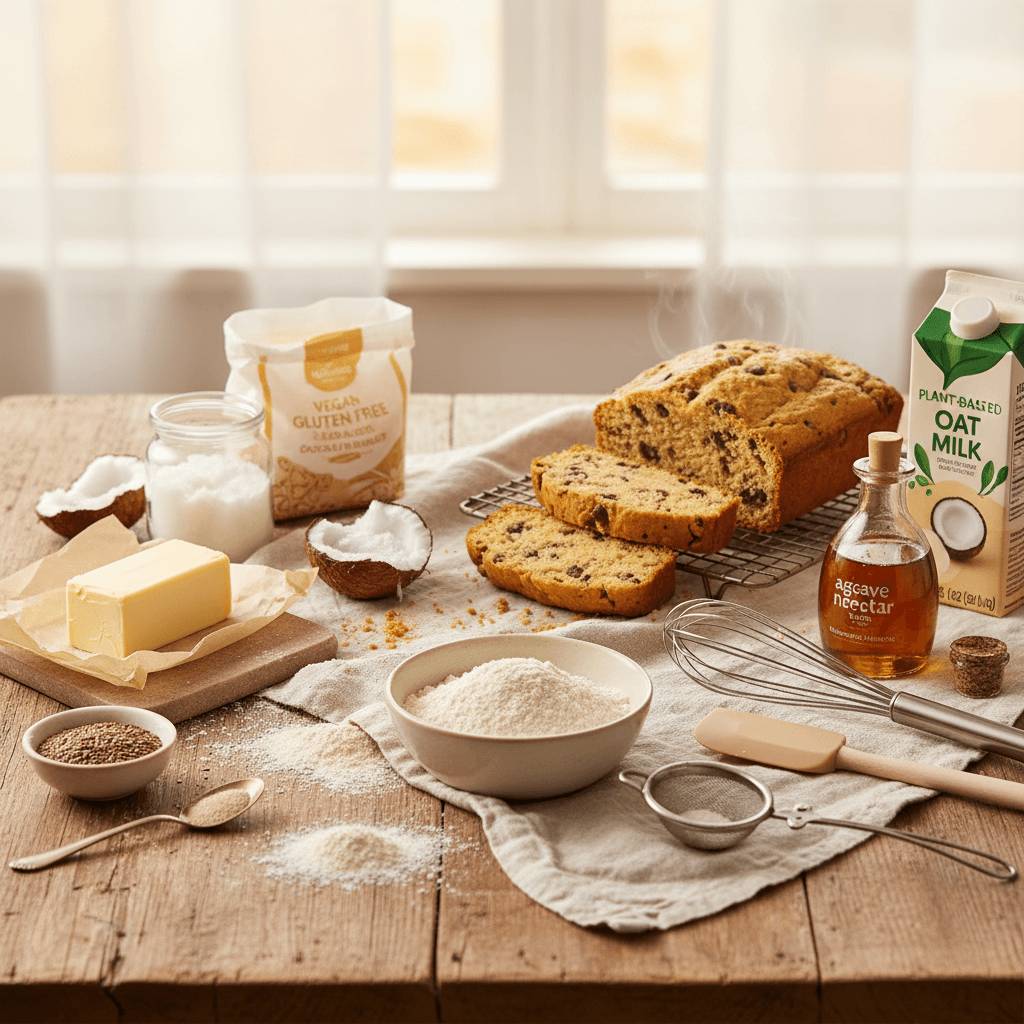
Building a vegan baking pantry can feel overwhelming — especially when you're also navigating gluten-free needs and trying not to blow your grocery budget. We've compared products across every price tier so you can stock your kitchen with confidence, whether you're spending $30 or $300.
Key takeaways
- You can build a fully functional vegan (and gluten-free) baking pantry for under $40 by focusing on budget staples like Bob's Red Mill 1-to-1 flour, refined coconut oil, and flax meal.
- The single biggest pain point for vegan bakers is egg replacement — and the right binder depends entirely on what you're making (flax for muffins, aquafaba for meringues, commercial replacers for cakes).
- Many vegan baking staples pull double duty across other dietary needs, making them smart investments for multi-restriction households.
- Premium products like Miyoko's cultured vegan butter and Bob's Red Mill superfine almond flour genuinely improve results, but they're not required to bake well.
- Weighing ingredients with a digital scale matters even more in vegan and gluten-free baking because small measurement errors compound when you're already missing gluten's structural safety net.
Vegan baking flours for every budget
Your flour choice is the foundation of every vegan bake, and the good news is that most gluten-free flour blends are already vegan. The key is finding one that performs consistently without dairy or egg proteins to mask off-flavors or gritty textures.
Budget: Bob's Red Mill 1-to-1 baking flour
At around $5-7 per 22-ounce bag, Bob's Red Mill 1-to-1 Baking Flour is the most accessible vegan-friendly gluten-free blend on the market. It contains xanthan gum already, so you don't need to buy it separately. It's available at virtually every grocery store, and we cover it in depth in our complete Bob's Red Mill guide. For basic muffins, quick breads, and cookies, this gets the job done.
Mid-range: King Arthur Measure for Measure flour
At $7-10 per 48-ounce bag, King Arthur Measure for Measure offers better value per ounce and tends to produce a slightly finer crumb. If you're curious how it stacks up, we did a full Bob's Red Mill vs King Arthur comparison. This is our go-to recommendation for vegan bakers who want one flour that handles everything from pancakes to layer cakes.
Premium: Cup4Cup or superfine single-origin flours
For special-occasion baking, Cup4Cup flour (around $12-15 per 25 oz) delivers remarkably close-to-wheat results. Alternatively, investing in individual almond flour, cassava flour, and arrowroot powder lets you create custom blends tailored to specific recipes. If you're deciding between nut flours, our almond flour vs coconut flour comparison breaks down when to use each.
| Tier | Product | Approx. price | Best for |
|---|---|---|---|
| Budget | Bob's Red Mill 1-to-1 | $5-7 / 22 oz | Everyday baking, beginners |
| Mid-range | King Arthur Measure for Measure | $7-10 / 48 oz | Versatile all-purpose use |
| Premium | Cup4Cup / custom blends | $12-15+ / 25 oz | Special-occasion baking, fine pastry |
Vegan fats and butter alternatives
Butter does a lot of heavy lifting in baking — it adds flavor, creates flaky layers, and helps with browning. Replacing it in vegan baking means choosing the right fat for the right job.
Budget: refined coconut oil
Refined coconut oil costs $5-8 for a large jar and works beautifully in most baked goods. The "refined" part is important — it has no coconut flavor, unlike virgin coconut oil. Use it as a 1:1 butter replacement by weight in cookies, muffins, and quick breads. It won't create flaky pie crust layers the way solid butter does, but for everything else it's a workhorse.
Mid-range: Earth Balance vegan buttery sticks
At around $4-5 per pack of four sticks, Earth Balance is widely available and works well for recipes that need creaming (like cookies and frosting). The stick format makes measuring easy. Just note that some Earth Balance products contain soy — if that's a concern, check out our soy-free baking guide for alternatives.
Premium: Miyoko's cultured vegan butter
At $5-7 per 8 oz, Miyoko's is pricier per ounce but delivers the closest-to-dairy-butter flavor and performance of the options here. It's made from cultured cashew cream and coconut oil, and it makes noticeably better pie crusts and laminated pastries. For a deeper dive into vegan butter options, our best dairy-free butter for baking guide ranks seven options head to head.
If you're building out your vegan and gluten-free pantry and want a structured approach to getting started, our Confident Gluten-Free Baker Toolkit walks you through everything from stocking your pantry to troubleshooting common texture issues. It's a great companion to the product picks in this guide.
Egg replacements that actually bind, leaven, and emulsify
This is the single biggest pain point for vegan bakers, and for good reason — eggs do three different jobs in baking (binding, leavening, and emulsifying), and no single vegan substitute does all three equally well. The trick is matching your replacer to the recipe.
Budget: flax eggs and chia eggs
One tablespoon of ground flax meal mixed with three tablespoons of water makes one "flax egg" for about $0.05. It's an excellent binder for muffins, pancakes, and quick breads. Chia seeds work similarly. Neither produces lift, so they're not ideal for fluffy cakes. A bag of flax meal costs $3-5 and lasts for dozens of batches.
Budget to mid-range: aquafaba
Aquafaba — the liquid from a can of chickpeas — is essentially free if you already cook with chickpeas. It whips into stiff peaks just like egg whites, making it the go-to for meringues, macarons, and angel food cake. Three tablespoons replaces one egg. This is one of those ingredients that pulls double duty across vegan, gluten-free, and nut-free baking.
Mid-range to premium: commercial egg replacers
Bob's Red Mill Egg Replacer ($7-9) and JUST Egg ($5-8 per bottle) cover different needs. Bob's version is a starch-based powder that works well in cakes and cookies. JUST Egg is a liquid made from mung beans that performs more like a real egg in rich batters and custard-based recipes. For a full breakdown of vegan egg options, our vegan egg substitutes guide covers every option with specific recipe recommendations.
| Replacer | Cost per "egg" | Best for | Not great for |
|---|---|---|---|
| Flax egg | ~$0.05 | Muffins, pancakes, quick breads | Light, fluffy cakes |
| Aquafaba | Free (from canned chickpeas) | Meringues, macarons, mousses | Dense, rich batters |
| Bob's Red Mill Egg Replacer | ~$0.30 | Cakes, cookies, general baking | Custards, quiches |
| JUST Egg | ~$0.75 | Rich batters, custards, brownies | Whipped applications |
Understanding what eggs actually do in baking makes choosing the right replacer much easier — we highly recommend reading that guide before your next bake.
Vegan sweeteners worth stocking
Most conventional sweeteners are technically vegan, but some (like certain white sugars processed with bone char) fall into a gray area for strict vegans. Here's what to keep on hand.
Budget: organic cane sugar and brown sugar
Organic cane sugar ($3-5 per 2 lb bag) is never processed with bone char, making it the simplest swap for conventional white sugar. Brown sugar works the same way — just look for "organic" on the label. These are functionally identical to their conventional counterparts in recipes, so no adjustments needed.
Mid-range: maple syrup and coconut sugar
Pure maple syrup ($8-12 per 12 oz) adds moisture and a distinctive flavor that works beautifully in muffins, granola, and quick breads. Coconut sugar ($5-7 per pound) is a 1:1 replacement for brown sugar with a slightly deeper caramel flavor. Both are naturally vegan and pull double duty for paleo bakers too.
Premium: date sugar and specialty syrups
Date sugar ($8-12 per pound) is made from ground whole dates and adds fiber and nutrients, though it doesn't dissolve like regular sugar. It's best in streusel toppings, cookie doughs, and recipes where a slightly rustic texture is welcome. For more on how different sweeteners affect your bakes, our choosing sugar alternatives guide walks through the trade-offs.
Plant milks for baking at every price point
Not all plant milks perform equally in baking. The best ones for baking are full-fat, unsweetened, and have a neutral flavor. Here's what works at each budget level.
Budget: store-brand oat milk or soy milk
Generic store-brand oat milk or soy milk runs $2-3 per half gallon and works perfectly in most baked goods. Soy milk has the highest protein content of any plant milk, which helps with browning and structure. Oat milk adds a subtle sweetness that's lovely in pancakes and cakes. Either one is a reliable everyday choice.
Mid-range: Oatly full-fat or canned coconut milk
Oatly Full Fat ($4-5 per carton) has a creamier body that works well in rich batters and frostings. Full-fat canned coconut milk ($2-3 per can) is unbeatable for coconut-based desserts and anywhere you need heavy cream richness. The cream that solidifies at the top of a chilled can whips beautifully as a dairy-free whipped cream.
Premium: barista-style plant milks
Barista-style oat or cashew milks ($5-6 per carton) are formulated to foam and emulsify better, which translates to smoother batters and more stable frostings. They're a worthwhile splurge for buttercream and custard-style recipes where texture really matters.
Essential vegan baking tools
The right tools matter just as much as the right ingredients — and in vegan and gluten-free baking, precision is even more important because you don't have gluten or eggs providing a structural safety net.
Budget: digital kitchen scale
If you buy one tool from this entire guide, make it a digital kitchen scale ($25-30). Weighing ingredients eliminates the measurement inconsistencies that cause the most common vegan baking failures — dry, crumbly textures and flat cookies.
Mid-range: stand mixer with paddle and whisk attachments
A stand mixer ($150-250) makes vegan baking dramatically easier. Whipping aquafaba to stiff peaks by hand takes 15-20 minutes; a stand mixer does it in 5. Creaming vegan butter with sugar also benefits from the consistent speed. If you're doing a lot of vegan baking, this is the upgrade that saves the most time and frustration.
Premium: high-speed blender
A Vitamix or Blendtec ($300-500) lets you make your own oat flour, nut butters, cashew cream, and plant milk from scratch — dramatically cutting your per-recipe costs over time. It also makes silky smooth vegan frostings and custards that cheaper blenders can't achieve.
Products that pull double duty across dietary needs
If your household juggles multiple dietary restrictions, these vegan essentials also cover other common needs:
| Product | Vegan | Gluten-free | Nut-free | Soy-free |
|---|---|---|---|---|
| Refined coconut oil | Yes | Yes | Yes | Yes |
| Flax meal | Yes | Yes | Yes | Yes |
| Aquafaba | Yes | Yes | Yes | Yes |
| Oat milk (certified GF) | Yes | Yes (if certified) | Yes | Yes |
| Coconut sugar | Yes | Yes | Yes | Yes |
| Bob's Red Mill 1-to-1 flour | Yes | Yes | Yes | Yes |
Refined coconut oil, flax meal, and aquafaba are the ultimate multi-restriction workhorses. If you're also navigating nut-free needs, our gluten-free and nut-free baking guide has specific product recommendations. For a broader look at vegan and gluten-free products together, check out our gluten-free vegan baking essentials guide which ranks seven products that cover both restrictions.
Budget-tier starter kit: everything you need for under $40
Here's exactly what we'd buy to start vegan baking on a tight budget:
- Bob's Red Mill 1-to-1 Baking Flour — $6
- Refined coconut oil (14 oz jar) — $6
- Ground flax meal — $4
- Organic cane sugar (2 lb) — $4
- Store-brand oat milk — $3
- Bob's Red Mill Egg Replacer — $8
- Digital kitchen scale — $10 (basic model)
Total: approximately $41. That's enough to make cookies, muffins, pancakes, quick breads, and simple cakes. Add a can of chickpeas from the pantry and you've got aquafaba for meringues too.
Frequently asked questions
What is the best egg replacement for vegan baking?
The best egg replacement depends on the recipe. Flax eggs work well for binding in muffins and quick breads, aquafaba is ideal for whipped applications like meringues, and commercial replacers like Bob's Red Mill Egg Replacer handle general cake and cookie baking. There's no single product that replaces eggs in every situation — learn more in our guide to choosing egg substitutes.
Can I use coconut oil instead of butter in vegan baking?
Yes, refined coconut oil works as a 1:1 replacement for butter by weight in most baked goods. It performs best in cookies, muffins, and quick breads. For recipes that require creaming butter with sugar (like fluffy cakes), a stick-style vegan butter like Earth Balance or Miyoko's will give better results because they contain water, which helps create air pockets during creaming.
Is all sugar vegan?
Not necessarily. Some conventional white sugar is processed using bone char as a decolorizing filter. Organic cane sugar is always vegan because organic certification prohibits bone char processing. Coconut sugar, maple syrup, and date sugar are also inherently vegan options. Our sugar functions guide explains how different sweeteners behave in recipes.
What plant milk is best for baking?
Soy milk and oat milk are the best plant milks for general baking because they have enough protein and fat to contribute to browning and structure. Full-fat canned coconut milk is best for rich desserts and whipped cream substitutes. Avoid ultra-thin milks like rice milk or almond milk in recipes where dairy milk plays a structural role.
Do I need xanthan gum for vegan gluten-free baking?
If your gluten-free flour blend already contains xanthan gum (like Bob's Red Mill 1-to-1 or King Arthur Measure for Measure), you don't need to add more. If you're using single-ingredient flours like almond flour or rice flour, you'll usually need about 1/2 to 1 teaspoon of xanthan gum per cup of flour. Our xanthan gum vs guar gum comparison helps you decide which binder to use.

Written by
Co-founder, BakingSubs
Co-founder of BakingSubs, where he turns the science of ingredient substitutions into tested, reliable guidance for home bakers.
Related Posts
Bake with Confidence
See all
Confident Gluten-Free Baker Toolkit
The science-based system that replaces gluten's seven invisible jobs so your baking turns out soft, fluffy, and foolproof — every time.

Gluten-Free Recipe Vault
Instant access to our complete library of proven gluten-free recipes — no waiting, no guesswork, just results that work tonight.

Fix Your Gluten-Free Bread
Learn the 3-step formula to make bread rise and stay soft, discover why your loaves collapse, and get a tested sandwich bread recipe that actually works.