

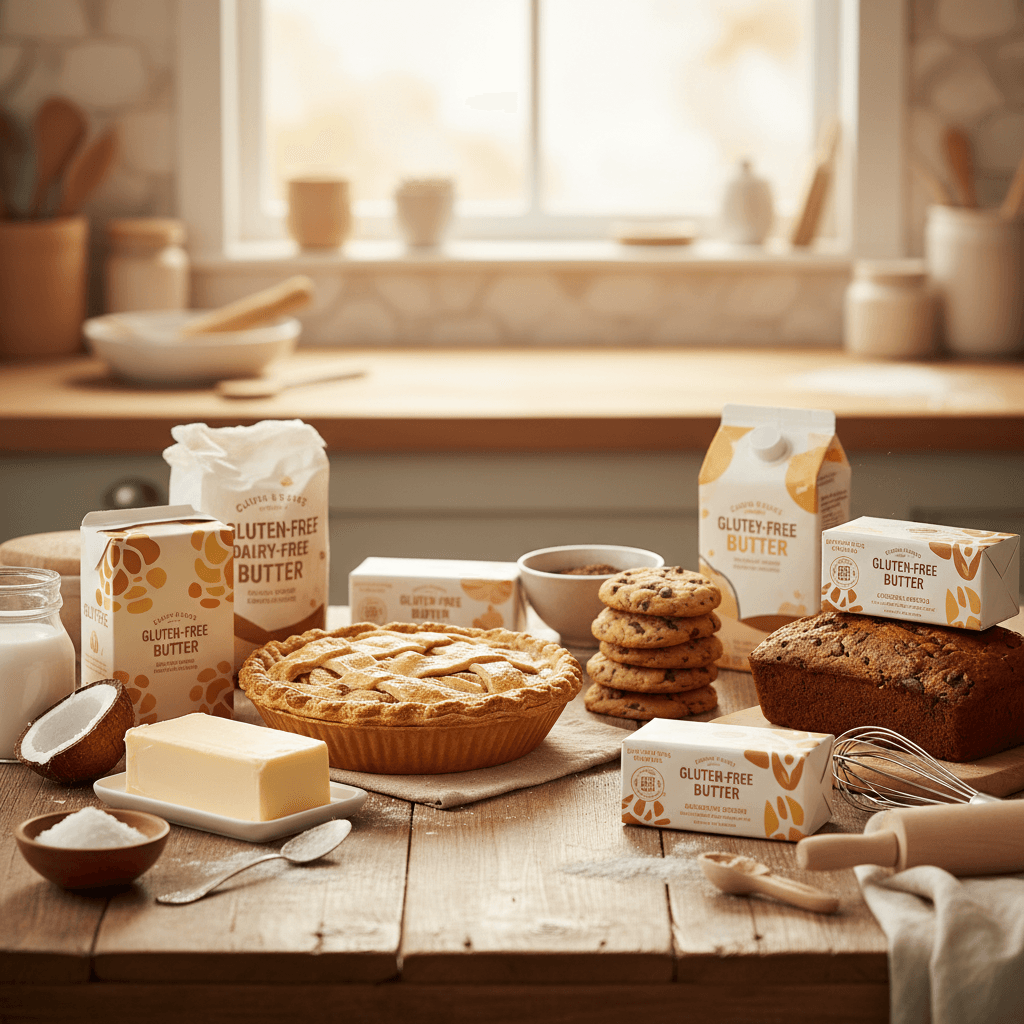
Finding a butter substitute that's both gluten-free and dairy-free shouldn't feel like solving a puzzle, but we know it often does. If you're managing celiac disease or gluten sensitivity alongside a dairy allergy or lactose intolerance, every label becomes a minefield. Here are our picks for baking — plus the hidden ingredients you need to watch out for.
Key takeaways
- Not all dairy-free butters are gluten-free — some contain barley-derived ingredients or are processed on shared lines with wheat products.
- For flaky pie crusts and laminated pastries, you need a dairy-free butter with at least 80% fat content (like Miyoko's or Violife).
- Coconut oil can work as a butter substitute in many recipes but behaves differently in creaming and laminating applications.
- Earth Balance, Miyoko's, and Nutiva are the most widely available brands that are certified both gluten-free and dairy-free.
- Always check for hidden dairy derivatives like casein, whey, and "natural flavors" sourced from milk — these show up in products you wouldn't expect.
- Soy is common in dairy-free butters, so if you're also avoiding soy, your options narrow but still exist.
Quick-reference table: gluten-free dairy-free butter for baking
Product | Price range (per lb) | Gluten-free | Dairy-free | Soy-free | Best for |
|---|---|---|---|---|---|
Miyoko's Creamery European Style Cultured Vegan Butter | $5–$7 | Yes | Yes | Yes | Pie crusts, croissants, pastries |
Earth Balance Vegan Buttery Sticks | $4–$6 | Yes (certified) | Yes | No (contains soy) | Cookies, cakes, general baking |
Nutiva Organic Buttery Coconut Oil | $6–$9 | Yes | Yes | Yes | Quick breads, muffins, brownies |
Violife Plant Butter | $4–$6 | Yes | Yes | Yes | All-purpose baking, frostings |
Melt Organic Butter | $5–$7 | Yes | Yes | Yes | Spreading and light baking |
Country Crock Plant Butter (sticks) | $3–$5 | Yes | Yes | No (contains soy) | Budget-friendly everyday baking |
Forager Project Buttery Spread | $5–$7 | Yes | Yes | Yes | Cakes, cookies, frostings |
Why finding butter that's both gluten-free and dairy-free is harder than it sounds
You'd think butter alternatives would automatically be safe for both restrictions, but that's not always the case. Some dairy-free butters are manufactured on shared equipment with wheat-containing products. Others include barley-derived flavorings or malt extracts that contain gluten. And on the flip side, some products labeled "plant-based" still sneak in casein or whey for improved texture.
The frustration is real — especially when you're standing in the grocery aisle, flipping product after product over to squint at ingredient lists. We've done the homework so you don't have to. If you're looking for more guidance on navigating dairy substitutions in baking, our Learn section walks through how milk and butter function in recipes and what happens when you swap them out.
If you're building a gluten-free, dairy-free pantry from scratch, our Confident Gluten-Free Baker Toolkit covers the essential ingredients and techniques you need to bake confidently with multiple dietary restrictions.
Best gluten-free dairy-free butters for baking, reviewed
Miyoko's Creamery European Style Cultured Vegan Butter
Miyoko's is the gold standard for dairy-free baking butter, and it's naturally gluten-free. Made from a base of cashews and coconut oil, it has an 82% fat content — higher than most dairy butters — which makes it exceptional for flaky gluten-free pie crusts and laminated pastries. It creams beautifully with sugar and produces cookies with the same spread and chew you'd expect from real butter.
Why it works for both restrictions: Certified plant-based with no dairy derivatives. Made in a facility free from gluten, dairy, and soy. The cultured flavor gives baked goods a richness that most vegan butters lack.
The catch: It's one of the pricier options, and it contains tree nuts (cashews), so it's not suitable if you're also managing a nut allergy.
Miyoko's European Style Vegan Butter is our first pick for any recipe where butter flavor matters.
Earth Balance Vegan Buttery Sticks
Earth Balance is the most widely available dairy-free butter in the US, and their sticks are certified gluten-free by GFCO. They perform reliably in cookies, cakes, and quick breads. The flavor is mild and neutral, which works well when you don't want a strong coconut or nut taste.
Why it works for both restrictions: Certified gluten-free and completely dairy-free. Available in virtually every grocery store, from Walmart to Whole Foods.
The catch: Contains soy lecithin and soy protein isolate. If soy is another restriction you're managing, you'll need to look elsewhere. The fat content is also slightly lower than Miyoko's, so pie crusts won't be quite as flaky.
Pick up Earth Balance Vegan Buttery Sticks if you want a reliable, affordable everyday baking butter.
Nutiva Organic Buttery Coconut Oil
This is a clever hybrid — it's coconut oil blended with a small amount of sunflower oil and natural butter flavor (plant-derived, not dairy). It melts and behaves like butter in most baking applications while staying solid at room temperature. It's excellent in gluten-free brownies and quick breads where you want richness without a strong coconut taste.

Nutiva Coconut Oil for Cooking and Baking - Butter Flavor Perfect for Making Movie Theater Popcorn, Baked Goods, Bread - Non-Dairy Alternative for Keto, Vegan, and Paleo Diets - 29floz
Check price on Amazon →Why it works for both restrictions: Certified organic, non-GMO, gluten-free, dairy-free, and soy-free. The ingredient list is remarkably short and clean.
The catch: It doesn't cream as well as stick butters, so it's not ideal for recipes that start with "cream butter and sugar together." Use it in melt-and-mix recipes for best results.
Violife Plant Butter
Violife has earned a strong reputation in the dairy-free space, and their plant butter sticks are a solid all-purpose baking option. Made from a coconut oil base, they're free from the top 14 allergens (including dairy, gluten, soy, and nuts), which makes them one of the safest choices for multi-allergy households.
Why it works for both restrictions: Free from all major allergens. Gluten-free and dairy-free by formulation and manufacturing. The fat content is high enough for good baking performance.
The catch: The flavor is milder than Miyoko's — it won't give you that rich, cultured butter taste in shortbread or buttercream. But for recipes where butter is a supporting player rather than the star, it works beautifully.
Try Violife Plant Butter sticks if you need a top-allergen-free option.
Melt Organic Butter
Melt Organic is made from a blend of coconut, palm fruit, and flaxseed oils. It's rich in omega-3s and has a creamy, slightly sweet flavor that works well in cakes and muffins. It's USDA Organic and certified gluten-free.
Why it works for both restrictions: No dairy, no gluten, no soy, no nuts. The blend of oils gives it a balanced fatty acid profile that performs well in baking.
The catch: Contains palm oil, which is a dealbreaker for some people on environmental grounds. Also, it's softer than traditional butter at room temperature, so chill it before using in pie crusts.
Country Crock Plant Butter sticks
Country Crock's plant butter sticks are the budget-friendly option on this list. They're made with a blend of plant oils and perform surprisingly well in everyday baking — think cake mixes, cookies, and banana bread. At $3–$5 per package, they're the most affordable option here.
Why it works for both restrictions: Dairy-free and gluten-free. Widely available at most grocery stores.
The catch: Contains soy. The flavor is less complex than Miyoko's or Melt, and the lower fat content means slightly less tender results in pastry applications.
Forager Project Buttery Spread
Forager Project makes their buttery spread from a base of cashew milk and coconut oil. It has a clean, mild flavor and a smooth texture that works well in frostings and cake batters. It's organic, dairy-free, soy-free, and gluten-free.
Why it works for both restrictions: Certified organic and free from dairy, gluten, and soy. The cashew base adds a subtle richness.
The catch: Like Miyoko's, it contains tree nuts. It's also sold as a spread rather than sticks, which makes measuring less precise — we recommend weighing it with a kitchen scale for baking accuracy.
Watch out for: hidden ingredients that break your restrictions
This is the section we wish we didn't have to write, but it's the one that might save you the most grief. When you're managing both gluten-free and dairy-free diets, hidden ingredients are everywhere.
Dairy hiding in "plant-based" products
- Casein and caseinate: A milk protein sometimes added to dairy-free margarines and spreads for texture. If you see "sodium caseinate" on a label, that product contains dairy.
- Whey: Another milk protein that occasionally shows up in butter alternatives, especially store-brand versions.
- "Natural flavors": This vague term can legally include dairy-derived ingredients. If a product doesn't explicitly state "dairy-free" or "vegan" on the label, contact the manufacturer to confirm.
- Lactose: Some "lactose-free" products still contain milk proteins. Lactose-free is not the same as dairy-free.
Gluten hiding in dairy-free products
- Barley malt extract: Used as a flavoring in some margarines and spreads. Barley contains gluten.
- "Modified food starch": This can be derived from wheat in some countries. In the US it's usually corn-based, but check the allergen statement.
- Shared manufacturing lines: Some dairy-free butters are made in facilities that also process wheat. Look for "certified gluten-free" or a dedicated facility statement.
- Oat-based butters: Newer oat-based spreads are entering the market. Unless the oats are certified gluten-free, they may be cross-contaminated.
For a deeper dive into how milk alternatives function in baking and what to watch for when substituting, our Learn section has you covered.
How to choose the right dairy-free butter for your recipe
Not every dairy-free butter works the same way in every recipe. Here's a quick guide to matching the right product to the right bake.
For pie crusts and pastries
You need high fat content and the ability to stay cold. Miyoko's is our top pick here because its 82% fat content creates those flaky layers. Chill it thoroughly before cutting it into your gluten-free flour blend, and work quickly to keep it from softening.
For cookies and cakes
Earth Balance and Country Crock both cream well with sugar and produce reliable results. If your recipe calls for creaming butter and sugar, use stick-form butters rather than tub spreads — the water content in tubs can throw off your ratios.
For brownies and quick breads
Nutiva's buttery coconut oil shines here. Since most brownie and quick bread recipes call for melted butter, you don't need the creaming ability of a stick butter. The coconut oil base adds moisture and richness without any dairy or gluten concerns.
For frostings and buttercream
Violife and Forager Project both whip up smoothly for frostings. Start with room-temperature butter, and add your powdered sugar gradually. Dairy-free buttercreams can be slightly softer than traditional versions, so refrigerate your finished cake for 20 minutes before serving if it's a warm day.
Tips for baking with dairy-free butter in gluten-free recipes
Gluten-free batters and doughs already behave differently from conventional ones, and swapping in dairy-free butter adds another variable. Here are the adjustments that make the biggest difference:
- Weigh your butter, don't just measure by sticks. Dairy-free butter sticks aren't always exactly 4 ounces. A few grams off can matter in gluten-free recipes that tend to run dry.
- Chill dairy-free butter longer than you think. Most plant-based butters soften faster than dairy butter. For pastry work, freeze it for 15 minutes before using.
- Add a pinch of salt if using unsalted versions. Dairy-free butters sometimes taste flatter than dairy butter. A quarter teaspoon of salt per cup of butter helps.
- Don't over-cream. Plant-based butters can break down faster during creaming. Cream just until fluffy (2–3 minutes), then stop.
- Expect slightly different browning. Without milk solids, dairy-free butter won't brown the same way. Your cookies may look paler on top but still be fully baked.
Frequently asked questions
Is all dairy-free butter gluten-free?
No, not all dairy-free butter is automatically gluten-free. Some brands use barley-derived flavorings or are manufactured on shared equipment with wheat products. Always look for a "certified gluten-free" label or check the allergen statement on the packaging. The seven brands listed in this guide have all been verified as both gluten-free and dairy-free.
Can I substitute dairy-free butter 1:1 for regular butter in gluten-free recipes?
In most cases, yes. Use a 1:1 ratio by weight for best results. The main exception is pastry recipes that rely on cold, solid butter for flakiness — in those cases, choose a high-fat option like Miyoko's and make sure it's well chilled. For more on how butter functions in baking and what changes when you swap it, check our guide on milk and dairy functions in baking.
What is the best soy-free dairy-free butter for gluten-free baking?
Miyoko's, Violife, Melt Organic, Nutiva, and Forager Project are all soy-free in addition to being gluten-free and dairy-free. Miyoko's is our top overall pick for baking performance, while Violife is the best choice if you also need to avoid tree nuts.
Does dairy-free butter affect the texture of gluten-free baked goods?
It can, slightly. Dairy-free butters often have higher water content than dairy butter, which can make gluten-free baked goods slightly more tender or soft. If you notice your results are too soft or spreading too much, try chilling your dough longer before baking or reducing the liquid in your recipe by 1–2 tablespoons.
Where can I buy gluten-free dairy-free butter?
Most of the brands on this list are available at major grocery stores. Earth Balance and Country Crock are the easiest to find at stores like Kroger and Target. Miyoko's and Violife are stocked at Whole Foods, Sprouts, and many natural food stores. All of them are also available on Amazon.

Written by
Co-founder, BakingSubs
Co-founder of BakingSubs, where he turns the science of ingredient substitutions into tested, reliable guidance for home bakers.
Related Posts
Bake with Confidence
See all
Confident Gluten-Free Baker Toolkit
The science-based system that replaces gluten's seven invisible jobs so your baking turns out soft, fluffy, and foolproof — every time.

Gluten-Free Recipe Vault
Instant access to our complete library of proven gluten-free recipes — no waiting, no guesswork, just results that work tonight.

Fix Your Gluten-Free Bread
Learn the 3-step formula to make bread rise and stay soft, discover why your loaves collapse, and get a tested sandwich bread recipe that actually works.