

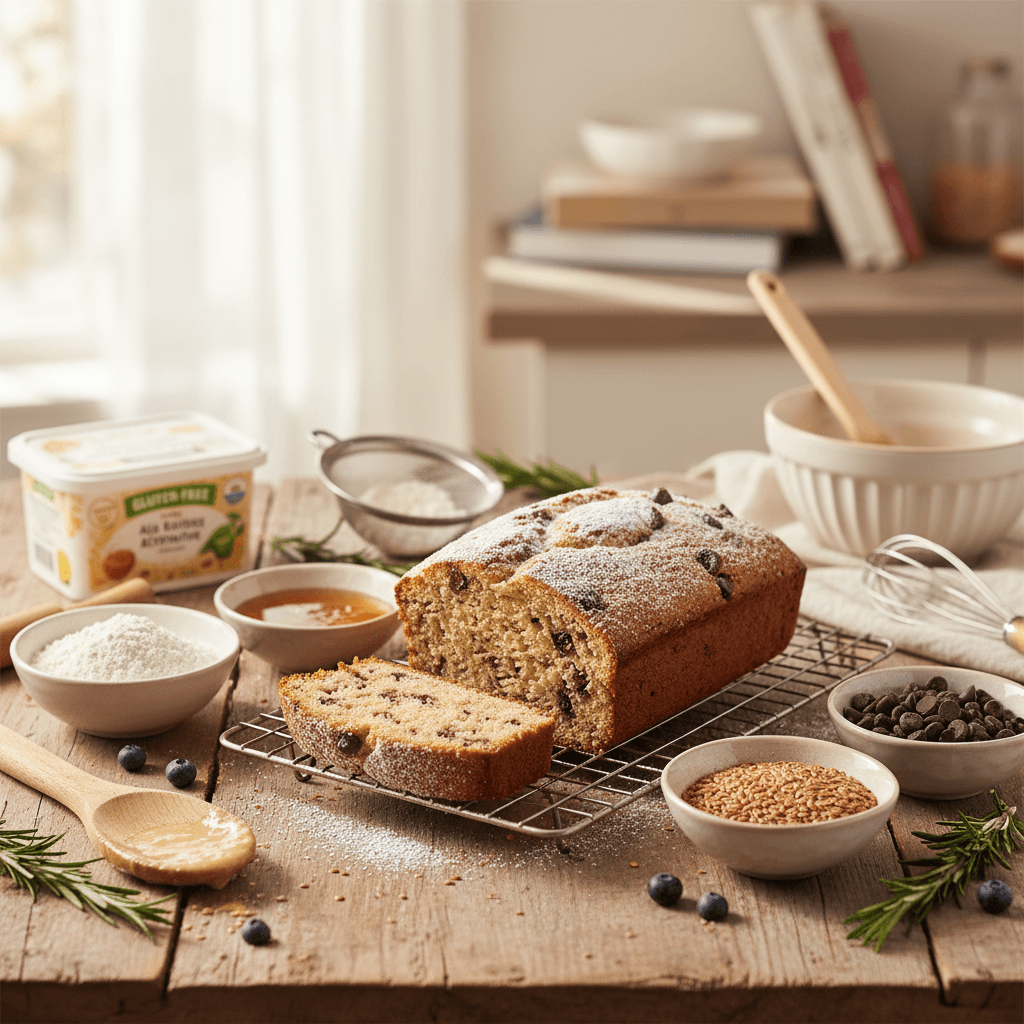
Baking with one dietary restriction is tricky. Baking with two at the same time — gluten-free and vegan — can feel like every ingredient is working against you. This guide covers the exact products, pantry staples, and hidden-ingredient pitfalls you need to know so you can bake confidently without gluten or animal products.
Key takeaways
- Many gluten-free mixes contain eggs, dairy, or honey — always read the full ingredient list, not just the front label.
- A good all-purpose gluten-free flour blend, a reliable egg replacer, and a quality vegan butter form the foundation of every gluten-free vegan pantry.
- Xanthan gum and psyllium husk are both vegan and gluten-free, making them ideal binders when you've removed eggs and gluten simultaneously.
- Coconut oil and refined coconut cream are safe fat sources that perform well in most baking applications where butter would normally go.
- Cross-contamination risks exist on both sides — a product can be dairy-free but processed on shared wheat equipment, or gluten-free but contain casein.
- Weighing ingredients with a kitchen scale matters even more when you're substituting multiple components at once.
Quick-reference table: gluten-free vegan baking essentials
Here's a snapshot of the seven products we recommend throughout this guide. Every single one is both gluten-free and vegan.
| Product | Category | Price range | Gluten-free | Vegan |
|---|---|---|---|---|
| Bob's Red Mill 1-to-1 Baking Flour | All-purpose flour blend | $6–$9 | Yes (certified) | Yes |
| Bob's Red Mill Egg Replacer | Egg substitute | $7–$10 | Yes | Yes |
| Miyoko's Creamery European Style Cultured Vegan Butter | Butter replacement | $5–$7 | Yes | Yes |
| Nutiva Organic Refined Coconut Oil | Baking fat | $8–$14 | Yes | Yes |
| NOW Foods Psyllium Husk Powder | Binder / structure | $8–$12 | Yes (tested) | Yes |
| Oatly Oat Milk Barista Edition | Dairy milk replacement | $5–$6 | Yes (purity protocol oats) | Yes |
| King Arthur Measure for Measure Flour | All-purpose flour blend | $7–$11 | Yes (certified) | Yes |
Why gluten-free vegan baking is harder than either restriction alone
When you remove gluten, you lose the protein network that gives baked goods structure, stretch, and chew. When you also remove eggs and dairy, you lose the binding, moisture, and fat that typically compensate for that missing structure. You're essentially rebuilding a recipe from scratch using ingredients that behave differently from what most recipes assume.
That's why grabbing a random gluten-free mix off the shelf doesn't always work — many of them rely on eggs or butter to hold everything together. And vegan recipes that use regular wheat flour won't help either. You need ingredients specifically chosen to handle both jobs.
If you're new to gluten-free baking in general, our gluten-free baking guide covers the fundamentals of how gluten-free flours and binders work. That foundation applies here too — you're just adding one more layer of substitution on top.
The 7 essential products for gluten-free vegan baking
1. Bob's Red Mill 1-to-1 Baking Flour
A certified gluten-free all-purpose blend is the single most important product in your pantry. The Bob's Red Mill 1-to-1 Baking Flour is both gluten-free and completely vegan — no dairy derivatives, no honey, no animal-sourced ingredients. It contains rice flour, tapioca starch, potato starch, and xanthan gum, so you don't need to add a separate binder in most recipes.
This blend works well in cookies, muffins, quick breads, and simple cakes. For a detailed comparison with another popular option, check out our post on Bob's Red Mill vs King Arthur gluten-free flour.
2. King Arthur Measure for Measure Flour
The King Arthur Measure for Measure Flour is another certified gluten-free, fully vegan blend that many bakers prefer for its slightly finer texture. It produces a less gritty result in delicate bakes like cakes and pancakes. Like Bob's, it already includes xanthan gum.
If gritty texture has been a problem for you, our guide on fixing gritty texture in gluten-free baking has additional tips that apply regardless of which blend you choose.
3. Bob's Red Mill Egg Replacer
Eggs provide binding, leavening, and moisture in baking. When you're already working without gluten, losing eggs too can make things crumbly and flat. The Bob's Red Mill Egg Replacer is made from potato starch, tapioca flour, baking soda, and psyllium husk — all gluten-free and plant-based. It handles the binding role well in cookies, muffins, and quick breads.
For more options and strategies, our vegan egg substitutes guide breaks down when to use flax eggs, aquafaba, commercial replacers, and more.
If you're building out your full gluten-free vegan pantry and want a structured approach to understanding substitutions and troubleshooting, our Confident Gluten-Free Baker Toolkit walks you through everything step by step — it's especially helpful when you're juggling multiple restrictions at once.
4. Miyoko's Creamery European Style Cultured Vegan Butter
Not all vegan butters perform the same in baking. Miyoko's Creamery European Style Cultured Vegan Butter is made from coconut oil and cashews, with no soy, no gluten, and no palm oil. It has a higher fat content than many vegan butter brands, which means it behaves more like real butter when you cream it with sugar or cut it into pie dough.
This matters a lot in recipes like cookies and pie crusts where butter's fat-to-water ratio directly affects texture. For dairy-free baking science, our choosing milk alternatives guide explains how different fats and liquids interact in recipes.
5. Nutiva Organic Refined Coconut Oil
When a recipe calls for melted butter or a neutral baking fat, Nutiva Organic Refined Coconut Oil is a reliable choice. The refined version has no coconut flavor, so it won't compete with other ingredients. It's naturally gluten-free and vegan, with no additives or processing aids to worry about.
Coconut oil is solid at room temperature, which makes it useful in recipes that need a firm fat — like pie crusts or crumble toppings. It also works well in gluten-free vegan brownies where you want fudgy density without dairy butter.
6. NOW Foods Psyllium Husk Powder
NOW Foods Psyllium Husk Powder is a game-changer for gluten-free vegan bread baking. Psyllium absorbs water and forms a gel that mimics gluten's stretchy, structural role — and it does this without eggs, dairy, or any animal products. It's the single best binder for yeast breads when you can't use eggs.
If you're baking bread specifically, our best psyllium husk for gluten-free bread roundup compares six brands in detail. For understanding when to choose psyllium vs. xanthan gum or guar gum, see our comparison of xanthan gum vs guar gum.
7. Oatly Oat Milk Barista Edition
You need a liquid dairy replacement that adds body and a touch of fat, not just water. Oatly Oat Milk Barista Edition is made from purity protocol oats (grown and processed separately from gluten-containing grains), making it safe for gluten-free diets. It's fully vegan and has a creamier consistency than most plant milks, which helps in cakes, pancakes, and muffins.
If oat milk isn't your preference, almond milk and cashew milk are also gluten-free and vegan — just check that the brand you buy doesn't add barley-based ingredients.
Watch out for: hidden ingredients that break your second restriction
This is where a lot of gluten-free vegan bakers get tripped up. A product can be clearly labeled gluten-free but still contain animal-derived ingredients — or be marketed as vegan but processed on equipment shared with wheat. Here's what to watch for.
Hidden dairy and eggs in gluten-free products
- Casein and whey — These milk proteins show up in many gluten-free baking mixes, protein-enriched flours, and chocolate chips. If the label says "contains milk," it's not vegan.
- Eggs in mixes — Some gluten-free cake and brownie mixes include dried egg whites or whole egg powder in the mix itself, not just in the recipe instructions. Always read the ingredient list, not just the allergen statement.
- Honey — Gluten-free granola, some gluten-free graham crackers, and certain specialty flours use honey as a sweetener. Honey is not vegan.
- Vitamin D3 — Often derived from lanolin (sheep's wool). It appears in fortified gluten-free milks and some baking mixes. Look for D2 instead if this matters to you.
Hidden gluten in vegan products
- Vital wheat gluten — Some vegan baking recipes and products add vital wheat gluten for structure. This is pure gluten. It sometimes appears in vegan bread mixes.
- Barley malt — Used as a sweetener in some vegan chocolate chips and cereals. Barley contains gluten.
- Oats without certification — Conventional oats are frequently cross-contaminated with wheat. If a vegan recipe calls for oat flour, make sure you're using certified gluten-free oats.
- Soy sauce in savory baking — Some vegan savory bread and cracker recipes use soy sauce, which typically contains wheat. Use tamari labeled gluten-free instead.
How to build recipes that work for both restrictions
Once you have the right products, the process of adapting recipes follows a predictable pattern. Start with a trusted gluten-free recipe, then swap out the animal-derived ingredients one at a time.
Replace eggs first
For each egg in a recipe, use one of these vegan options:
- Commercial egg replacer (like Bob's Red Mill) — best for cookies, muffins, and quick breads
- Flax egg (1 tablespoon ground flax + 3 tablespoons water, rested 5 minutes) — good for denser bakes like brownies
- Aquafaba (3 tablespoons per egg) — excellent for cakes and anywhere you need lift
Our choosing egg substitutes guide helps you pick the right option based on what the egg is doing in your specific recipe.
Replace dairy second
Swap butter 1:1 with Miyoko's vegan butter or coconut oil. Replace milk 1:1 with oat milk or another plant milk. For buttermilk, add 1 tablespoon of apple cider vinegar to a cup of plant milk and let it sit for 5 minutes.
Adjust expectations for structure
Without both gluten and eggs, your batter will be wetter and less elastic than you're used to. This is normal. Don't add extra flour to compensate — instead, let the batter rest for 10-15 minutes before baking so the starches and binders can hydrate fully. If your results are coming out dry and crumbly, you likely need more fat or liquid, not more flour.
Frequently asked questions
What is the best gluten-free vegan flour for all-purpose baking?
Bob's Red Mill 1-to-1 Baking Flour and King Arthur Measure for Measure are both certified gluten-free and fully vegan. They work as direct replacements for all-purpose flour in most recipes. Both already contain xanthan gum, so you don't need to add a separate binder for cookies, muffins, and quick breads.
How do you replace eggs in gluten-free vegan baking?
The best egg replacer depends on the recipe. Commercial egg replacers like Bob's Red Mill work well in most applications. Flax eggs are good for dense bakes like brownies, and aquafaba is ideal for cakes and recipes that need lift. See our full vegan egg substitutes guide for detailed ratios and recommendations.
Are most gluten-free baking mixes also vegan?
No. Many gluten-free mixes contain dried eggs, whey, casein, or honey. Always read the full ingredient list — not just the allergen statement — before assuming a gluten-free product is also vegan. Some mixes are vegan-friendly, but you need to verify each one individually.
What is the best vegan butter for gluten-free pie crust?
Miyoko's Creamery European Style Cultured Vegan Butter is our top pick because of its high fat content and firm texture when cold. These properties help create flaky layers in pie dough. Refined coconut oil also works well for pie crusts if you prefer a nut-free option. For more on pie crust technique, see our gluten-free pie crust recipes.
Can you make gluten-free vegan bread that actually rises?
Yes, but you need psyllium husk powder as your primary binder. Psyllium creates a gel that mimics gluten's elasticity, allowing yeast doughs to trap gas and rise. Combined with a good gluten-free flour blend and a warm proofing environment, you can get loaves with real height and structure. Our easiest gluten-free bread recipes are a great starting point.

Written by
Co-founder, BakingSubs
Co-founder of BakingSubs, where he turns the science of ingredient substitutions into tested, reliable guidance for home bakers.
Related Posts
Gluten-Free Flour Weight Chart: Grams per Cup for 9 Major Brands (and Why the Spread Is Over 20%)
Best Low Carb Tortillas (2026): 6 Brands Compared by Net Carbs
Best Sugar-Free Cake Mix and Brownie Mix (2026): 14 Options Ranked by Net Carbs, Sweetener, and Price
Bake with Confidence
See all
Confident Gluten-Free Baker Toolkit
The science-based system that replaces gluten's seven invisible jobs so your baking turns out soft, fluffy, and foolproof — every time.

Gluten-Free Recipe Vault
Instant access to our complete library of proven gluten-free recipes — no waiting, no guesswork, just results that work tonight.

Fix Your Gluten-Free Bread
Learn the 3-step formula to make bread rise and stay soft, discover why your loaves collapse, and get a tested sandwich bread recipe that actually works.