

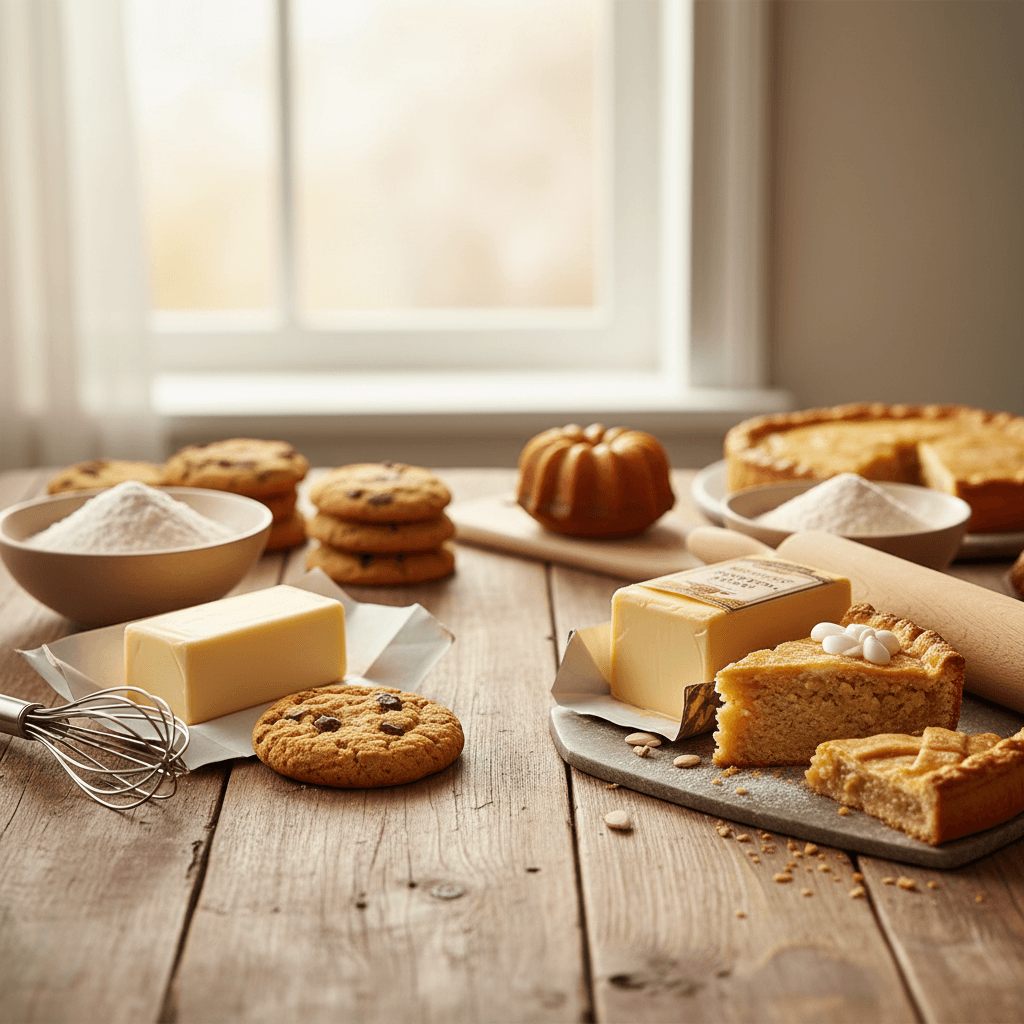
Does the butter you bake with actually matter, or is it all marketing? We compared budget store-brand butter with premium European-style options on butterfat, culturing, and price, and looked at how those differences play out across cookies, cakes, pie crusts, and more, so you know when the difference is likely to show and when it isn't.
Key takeaways
- In recipes where butter is the star flavor (shortbread, buttercream, pound cake), premium butter produces a noticeably richer, more complex taste.
- In recipes with lots of competing flavors (chocolate chip cookies, spice cakes, brownies), cheap butter performs nearly identically to premium options.
- Higher butterfat content in European-style butter (82-86%) creates flakier pastry and more tender crumbs than standard American butter (80%).
- Store-brand butter from Costco (Kirkland) and Aldi is a strong value for the price.
- For gluten-free baking specifically, butter quality matters more because fat carries flavor that can mask off-notes from alternative flours.
- The best strategy is to keep cheap butter for everyday baking and reserve premium butter for recipes where it truly shines.
What actually differs between cheap and premium butter
The difference comes down to two things: butterfat percentage and culturing. Standard American butter (like Great Value or store brands) contains exactly 80% butterfat, the legal minimum. European-style butters like Kerrygold or Plugra contain 82-86% butterfat. That extra fat means less water, which directly affects texture and flavor concentration.
Cultured butters go a step further. They're made from cream that's been fermented with live cultures before churning, which adds a tangy, complex depth you won't find in sweet cream butter. This matters enormously in simple recipes but gets buried in busy ones.
| Feature | Budget butter (Great Value, store brand) | Premium butter (Kerrygold, Plugra, Vital Farms) |
|---|---|---|
| Butterfat content | 80% | 82-86% |
| Water content | ~18% | ~14-16% |
| Culturing | Sweet cream (no culturing) | Often cultured |
| Color | Pale yellow | Deep golden yellow |
| Price per pound (approx.) | $3.50-$4.50 | $5.50-$8.00 |
| Flavor profile | Clean, mild, straightforward | Rich, complex, sometimes tangy |
If you're working on building a well-stocked gluten-free pantry, understanding your fats is just as important as choosing the right flour. Our Confident Gluten-Free Baker Toolkit walks you through ingredient selection so you can make smart choices across the board, not just with butter.
Brand matchup: Great Value vs Kerrygold in cookies
In a standard chocolate chip cookie, Great Value unsalted butter and Kerrygold unsalted butter should produce nearly identical results. The chocolate, vanilla, and brown sugar dominate the flavor profile so thoroughly that the butter difference is hard to pick out.
Where it gets interesting is spread. Kerrygold's higher butterfat means slightly less water, which means slightly less steam during baking. The result is cookies that spread a touch less and hold their shape marginally better. But we're talking subtle differences here, not dramatic ones.
Verdict: Save your money. Use Great Value unsalted butter for chocolate chip cookies, snickerdoodles, and any cookie loaded with mix-ins or strong flavors. The taste difference is negligible.
For more on choosing the right ingredients for gluten-free cookies, check out our roundup of the best gluten-free cookie mixes.
Brand matchup: Kirkland vs Plugra in pie crust
Pie crust is where butter quality starts to matter significantly. Higher butterfat creates more distinct, flaky layers because there's less water turning to steam and disrupting the lamination. Plugra (83% butterfat) should produce flakier, more tender crusts than Kirkland Signature (80%).
But here's the thing: Kirkland butter is a strong value, and it still makes a perfectly acceptable pie crust. A Plugra crust will be more delicate and buttery in flavor, but Kirkland gets the job done at roughly 60% of the cost.
Verdict: Splurge on premium butter for pie crust if you're making something special, like a holiday pie or a tart where the crust is the main event. For everyday quiche or pot pie, Kirkland is more than fine. If you're baking gluten-free pie crust, the higher butterfat actually helps compensate for the lack of gluten structure, so we'd lean toward premium here.
Brand matchup: Store brand vs Vital Farms in pound cake
This is where the difference is undeniable. Pound cake is essentially a butter delivery system. There's no chocolate, no fruit, no spice to hide behind. The butter flavor is the whole point.
A pound cake made with generic store-brand butter tastes fine. It's pleasant. But a pound cake made with Vital Farms pasture-raised butter tastes noticeably richer, with a deeper golden color and an almost caramel-like complexity that the budget version simply can't match.
The texture difference is real too. The higher butterfat in premium butter creates a more tender, velvety crumb. With less water in the batter, you get less gluten development (in wheat-based recipes) or less starch disruption (in gluten-free ones), which translates to a softer cake.
Verdict: Always splurge for pound cake, shortbread, butter cookies, and any recipe where butter is the dominant flavor. This is where premium butter earns its price. If you're making gluten-free cakes, premium butter does extra work by adding richness that helps mask any residual graininess from alternative flours.
Brand matchup: Aldi Countryside Creamery vs Land O'Lakes in brownies
Brownies are chocolate-forward and loaded with sugar, which means butter plays a supporting textural role rather than a starring flavor role. Aldi's Countryside Creamery unsalted butter and Land O'Lakes should produce brownies that are virtually indistinguishable in both taste and texture.
The cocoa and sugar overwhelm any subtle butter flavor differences, so the Aldi butter wins on value because it costs about $1 less per pound.
Verdict: Save your money without hesitation. Budget butter is the right call for brownies, chocolate cake, and any heavily chocolate-flavored bake. You literally cannot taste the difference.
When butter quality matters most in gluten-free baking
Gluten-free baking adds a wrinkle to this whole conversation. Because alternative flours can carry their own distinct flavors, from the nuttiness of almond flour to the slight bitterness of brown rice flour, butter quality becomes a more important lever for controlling the overall flavor of your bake.
Premium butter's richer, more complex flavor can help in two ways. First, it adds a pleasant depth that makes the whole bake taste more intentional. Second, the higher fat content coats your palate in a way that smooths out any gritty or off-tasting notes from gluten-free flours.
That said, this benefit is most pronounced in simple recipes. If you're making a gluten-free chocolate lava cake, don't waste premium butter. If you're making gluten-free shortbread or a simple butter cake, it's worth the upgrade.
The complete comparison: when to save and when to splurge
| Recipe type | Recommendation | Why |
|---|---|---|
| Chocolate chip cookies | Save (budget butter) | Chocolate and brown sugar dominate flavor |
| Shortbread | Splurge (premium butter) | Butter is the only flavor |
| Pound cake | Splurge (premium butter) | Butter flavor is the entire point |
| Brownies | Save (budget butter) | Cocoa completely masks butter nuance |
| Pie crust | Splurge for special occasions | Higher butterfat creates flakier layers |
| Buttercream frosting | Splurge (premium butter) | Raw butter flavor with no baking to hide behind |
| Banana bread / muffins | Save (budget butter) | Fruit and spice flavors dominate |
| Croissants / laminated dough | Splurge (premium butter) | Butterfat percentage directly affects lamination |
| Spice cake | Save (budget butter) | Cinnamon, ginger, and cloves overpower butter |
| Sugar cookies | Splurge if decorating simply | Butter flavor is prominent under a thin glaze |
Our bottom line recommendation
Keep two butters in your fridge. A budget option like Kirkland Signature or Aldi Countryside Creamery for everyday baking where butter plays a supporting role, and a premium option like Kerrygold or Plugra for the handful of recipes where butter is the star.
This approach saves you real money over the course of a year. If you bake regularly, you might go through 2-3 pounds of butter a week. Using budget butter for 70% of your baking and premium for 30% could save you $100 or more annually without sacrificing quality where it counts.
For anyone baking gluten-free, we'd slightly expand the "splurge" category to include any simple recipe where you want to distract from the quirks of alternative flours. A richer butter goes a long way toward making gluten-free bakes taste like they were made with premium ingredients all around. If you're also avoiding dairy, our guide to the best gluten-free dairy-free butter for baking covers plant-based options that follow similar quality tiers.
Frequently asked questions
Does expensive butter really taste better in baking?
It depends entirely on the recipe. In butter-forward bakes like shortbread, pound cake, and buttercream, expensive butter produces a noticeably richer, more complex flavor. In recipes dominated by chocolate, fruit, or heavy spicing, the taste difference is negligible and not worth the extra cost.
Is Kerrygold butter worth it for cookies?
For most cookies, no. Chocolate chip cookies, oatmeal raisin cookies, and heavily spiced cookies won't benefit much from Kerrygold's higher butterfat and cultured flavor. The exception is simple butter cookies or shortbread where butter is the primary flavor. In those cases, Kerrygold makes a noticeable difference.
What is the best cheap butter for baking?
Kirkland Signature unsalted butter from Costco and Aldi's Countryside Creamery unsalted butter are the two best budget options. Both are dependable across baking applications and cost significantly less per pound than name brands. Great Value from Walmart is also a solid, reliable choice.
Does higher butterfat make a difference in gluten-free baking?
Yes, and more so than in conventional baking. Higher butterfat butter contains less water, which helps create more tender textures in gluten-free bakes. The richer flavor also helps mask any gritty texture or unusual flavors that can come from alternative flours like rice flour or sorghum flour.
Can I use salted butter instead of unsalted to save money?
We don't recommend it for baking. Salted butter varies in salt content between brands, making it impossible to control the seasoning of your recipe precisely. Unsalted butter, whether budget or premium, gives you full control. The price difference between salted and unsalted is usually negligible anyway.

Written by
Co-founder, BakingSubs
Co-founder of BakingSubs, where he turns the science of ingredient substitutions into tested, reliable guidance for home bakers.
Related Posts
Bake with Confidence
See all
Confident Gluten-Free Baker Toolkit
The science-based system that replaces gluten's seven invisible jobs so your baking turns out soft, fluffy, and foolproof — every time.

Gluten-Free Recipe Vault
Instant access to our complete library of proven gluten-free recipes — no waiting, no guesswork, just results that work tonight.

Fix Your Gluten-Free Bread
Learn the 3-step formula to make bread rise and stay soft, discover why your loaves collapse, and get a tested sandwich bread recipe that actually works.