
Gluten-free sugar-free baking for diabetics: a complete guide to ingredients, products, and techniques that actually work
Learn gluten-free sugar-free baking for diabetics with the best low-glycemic flours, verified sweeteners, 7 product picks, and techniques that actually work.

Malik
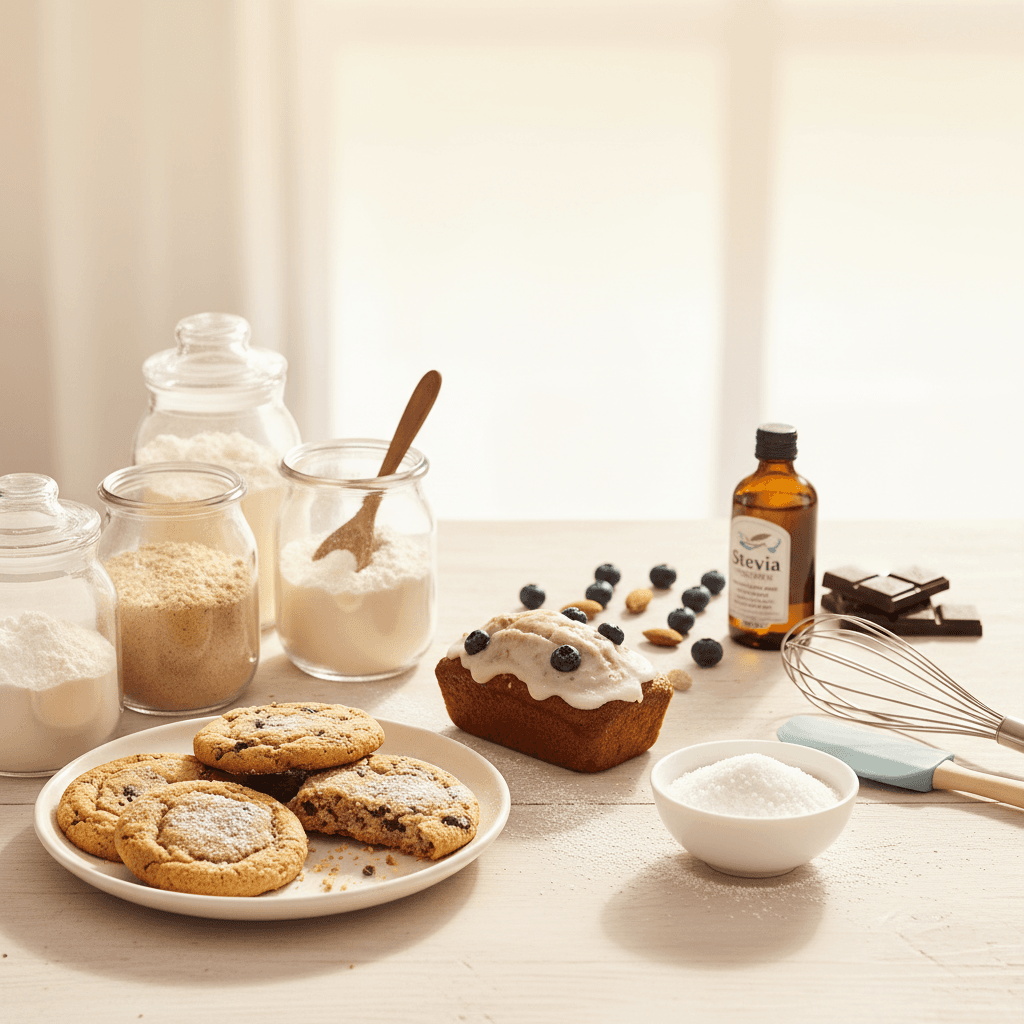
Baking when you need to avoid both gluten and sugar can feel like navigating a minefield, but it absolutely does not have to mean giving up the foods you love. This guide covers the specific ingredients, products, and techniques that satisfy both dietary needs so you can bake with confidence.
Key takeaways
- Not all gluten-free flours are equal for diabetics. Lower-glycemic options like almond flour, coconut flour, and chickpea flour give better blood sugar results than rice flour or tapioca starch.
- Many "sugar-free" sweeteners contain maltodextrin or dextrose, which spike blood sugar just like regular sugar. Always check the full ingredient list, not just the front label.
- Some gluten-free baking mixes contain hidden sugars like brown rice syrup, tapioca syrup, or cane sugar. You need to read every label carefully.
- Erythritol, monk fruit, and allulose are the most baking-friendly sweeteners that have minimal impact on blood sugar.
- Fat and protein from nut flours naturally slow glucose absorption, making almond flour-based baked goods a particularly good choice for diabetics.
- You can convert most gluten-free recipes to sugar-free by understanding how sugar functions beyond sweetness, including moisture, browning, and structure.
Why gluten-free baking needs a different approach for diabetics
Standard gluten-free baking relies heavily on high-glycemic starches like tapioca starch, potato starch, and white rice flour. These ingredients replace gluten's structural role effectively, but they can cause blood sugar spikes that are even sharper than regular wheat flour. For someone managing diabetes, swapping wheat flour for a typical gluten-free blend and calling it a day is not enough.
The key is choosing gluten-free flours that are naturally lower on the glycemic index while still producing good texture. That means leaning on nut flours, seed flours, and certain whole grain gluten-free flours rather than refined starches. You will also need to understand how sugar functions in baking beyond just sweetness, because replacing it requires more than a one-to-one swap.
If you are newer to gluten-free baking in general, our complete beginner's guide covers the fundamentals. Once you have those basics down, layering in the sugar-free component becomes much more manageable.
Best low-glycemic gluten-free flours for diabetic baking
The flour you choose is the single biggest factor in how your baked goods affect blood sugar. Here is how the most common gluten-free flours compare for diabetic baking:
| Flour | Glycemic index (approximate) | Net carbs per 1/4 cup | Best used for | Diabetic-friendly rating |
|---|---|---|---|---|
| Almond flour | Very low (under 20) | 3g | Cakes, cookies, muffins, crusts | Excellent |
| Coconut flour | Very low (under 45) | 6g | Muffins, pancakes, quick breads | Excellent |
| Chickpea flour | Low (around 35) | 13g | Savory bakes, flatbreads, dense cakes | Good |
| Sorghum flour | Moderate (around 62) | 18g | Bread, muffins, all-purpose blends | Moderate |
| Lupin flour | Very low (under 15) | 1g | Bread, protein-boosted bakes | Excellent |
| Brown rice flour | High (around 72) | 22g | General gluten-free baking | Poor for diabetics |
| Tapioca starch | Very high (85+) | 26g | Binding, chewiness | Use sparingly |
For diabetic baking, we recommend building your recipes around almond flour, coconut flour, or a combination of the two. When you do need a starch for structure, use small amounts of arrowroot starch, which has a somewhat lower glycemic impact than tapioca or potato starch.
If you want to explore building your own flour blends, our guide to homemade gluten-free flour blends explains the ratios. Just substitute the high-glycemic starches with the lower-glycemic options from the table above.
If you are working on dialing in your gluten-free baking and want a structured system for getting consistent results, the Confident Gluten-Free Baker Toolkit walks you through everything from flour selection to troubleshooting. It is especially helpful when you are juggling multiple dietary restrictions and need to understand the "why" behind each ingredient choice.
Best sugar substitutes for gluten-free diabetic baking
Not all sugar-free sweeteners behave the same way in baking. Some dissolve and caramelize like sugar, while others leave a cooling aftertaste or refuse to brown. Here are the ones that work best and what to watch out for on labels.
Sweeteners that work well for baking
Erythritol is a sugar alcohol with zero glycemic impact and about 70% of sugar's sweetness. It measures cup-for-cup like sugar in most recipes, though it can crystallize in some applications. We like the Swerve Granular Sweetener because it includes oligosaccharides that reduce the cooling effect and crystallization issues you get with pure erythritol.
Monk fruit sweetener (with erythritol) is our top recommendation for diabetic baking. It measures one-to-one with sugar, has zero glycemic impact, and tastes the most natural. The Lakanto Classic Monkfruit Sweetener is the gold standard here. They also make a Golden variety that substitutes for brown sugar beautifully.
Allulose is a rare sugar that tastes almost identical to regular sugar, browns naturally, and has virtually no impact on blood sugar. It is about 70% as sweet as sugar, so you will need a bit more. The Wholesome Allulose brand works well in baking. Allulose is particularly good for recipes where browning and moisture matter, like cookies and caramel.
Sweeteners to approach with caution
Stevia has zero glycemic impact but is extremely concentrated. Baking-specific stevia blends that bulk it up with maltodextrin or dextrose will spike blood sugar. If you use stevia, make sure the bulking agent is erythritol, not maltodextrin.
Xylitol has a glycemic index of about 7, which is low but not zero. It works well in baking but is extremely toxic to dogs, so use caution if you have pets in the house.
Coconut sugar and honey are often marketed as "natural" alternatives, but both have a significant glycemic impact (GI of 54 and 58 respectively). These are not suitable sugar replacements for diabetic baking. You can learn more about how different sweeteners behave on our choosing sugar alternatives page.
Hidden ingredients that sabotage diabetic-friendly baking
This is where things get tricky. Many products marketed as "gluten-free" or "sugar-free" contain hidden ingredients that violate one or both restrictions. Here is exactly what to look for on labels.
Hidden gluten sources in sugar-free products
- Maltodextrin from wheat -- While the FDA considers wheat-derived maltodextrin gluten-free due to processing, some celiacs react to it. Check the allergen statement.
- Caramel color -- Occasionally derived from barley malt. Look for "caramel color (from corn)" to be safe.
- Natural flavors -- These can occasionally contain gluten-based carriers. Contact the manufacturer if the label is not clear.
Hidden sugar sources in gluten-free products
- Tapioca syrup, brown rice syrup, and glucose syrup -- Common in gluten-free baking mixes and snacks. These are essentially liquid sugar.
- Maltodextrin -- Has a glycemic index of 85-105, higher than table sugar. Found in many "sugar-free" sweetener blends as a bulking agent.
- Dextrose -- Another name for glucose. Often added to sugar-free sweetener packets to add bulk.
- Fruit juice concentrate -- Sounds healthy but is essentially concentrated fructose.
The safest approach is to bake from scratch using verified individual ingredients rather than relying on pre-made mixes. When you control every ingredient, you control both the gluten and the sugar content completely.
7 verified products for gluten-free sugar-free baking
We have checked the labels on every product below to confirm they are both certified gluten-free (or produced in a dedicated gluten-free facility) and free of added sugars or high-glycemic fillers.
| Product | What it is | Why it works for diabetics |
|---|---|---|
| Lakanto Classic Monkfruit Sweetener | Monk fruit + erythritol blend | Zero glycemic impact, 1:1 sugar replacement, gluten-free |
| Lakanto Golden Monkfruit Sweetener | Brown sugar replacement | Zero glycemic impact, adds molasses-like depth, gluten-free |
| Wholesome Allulose | Rare sugar sweetener | Near-zero glycemic impact, browns like real sugar, gluten-free |
| Bob's Red Mill Super-Fine Almond Flour | Blanched almond flour | Very low GI, high protein and fat slow glucose absorption, tested gluten-free |
| Anthony's Organic Coconut Flour | Fine-ground coconut flour | High fiber (5g per 2 tbsp), very low net carbs, verified gluten-free |
| ChocZero Dark Chocolate Chips | Sugar-free chocolate chips | Sweetened with monk fruit, no sugar alcohols, no maltitol, gluten-free |
| Swerve Confectioners Sweetener | Powdered sugar replacement | Zero glycemic impact, perfect for frostings and glazes, gluten-free |
A note about chocolate chips specifically: many sugar-free chocolate brands use maltitol, which has a glycemic index of about 36 and causes significant digestive distress for many people. The ChocZero chips avoid this entirely by using monk fruit instead.
Techniques for successful gluten-free sugar-free baking
Understanding what sugar does in baking beyond sweetness is critical. Sugar provides moisture retention, browning, tenderness, and structure. When you remove it, you need to compensate for each of those functions.
Compensating for moisture loss
Sugar is hygroscopic, meaning it attracts and holds water. Without it, baked goods dry out faster. Add an extra tablespoon or two of fat (butter, coconut oil, or avocado oil) to your recipes. Allulose is particularly good here because it retains moisture almost identically to sugar.
Getting proper browning
Sugar caramelizes during baking, creating that golden color and complex flavor. Erythritol and monk fruit blends do not brown well on their own. Allulose does brown, so consider using it in recipes where color matters, like cookies. You can also add a small amount of unsweetened cocoa powder or a pinch of turmeric to mimic visual warmth in lighter bakes.
Maintaining structure
Sugar helps create structure by interacting with eggs and fat during creaming. When using sugar-free sweeteners, cream your butter and sweetener for a full 3-5 minutes to incorporate as much air as possible. If your bakes are coming out too dense, you may be dealing with a poor rise issue that needs extra leavening.
Preventing a dry, crumbly texture
The combination of gluten-free flour and no sugar can lead to crumbliness. Adding an extra egg yolk, a tablespoon of cream cheese, or a small amount of psyllium husk powder helps bind everything together. If you are consistently getting dry, crumbly results, check that page for specific troubleshooting steps.
A simple formula for converting recipes
If you have a favorite gluten-free recipe that uses sugar and want to make it diabetic-friendly, follow this general approach:
- Replace sugar 1:1 with Lakanto monk fruit sweetener or Swerve. If using allulose, use about 1.3x the amount of sugar called for (since it is less sweet).
- Add 1-2 tablespoons extra fat to compensate for the moisture sugar would have provided.
- Add 1 extra egg yolk for binding and richness if the recipe makes a full batch (12 muffins, a 9-inch cake, etc.).
- Reduce oven temperature by 25 degrees F when using allulose, as it browns faster than sugar. For erythritol-based sweeteners, keep the temperature the same but watch for pale results.
- Check doneness 5 minutes early -- sugar-free baked goods can go from done to overdone quickly since they lack sugar's moisture buffer.
For a deeper dive into adapting recipes, our guide on how to convert any recipe to gluten-free covers the structural principles that apply here as well.
Starter recipes to try
Here are three simple starting points that work well for gluten-free, sugar-free baking:
Almond flour muffins
Combine 2 cups blanched almond flour, 1/3 cup monk fruit sweetener, 1/2 teaspoon baking soda, a pinch of salt, 3 eggs, 1/4 cup melted coconut oil, and 1 teaspoon vanilla extract. Fold in 1/2 cup fresh blueberries. Bake at 325 degrees F for 22-25 minutes. These have roughly 2g net carbs per muffin.
Coconut flour chocolate cake
Whisk together 1/2 cup coconut flour, 1/2 cup unsweetened cocoa powder, 1 teaspoon baking powder, 1/2 cup monk fruit sweetener, and a pinch of salt. In a separate bowl, combine 6 eggs, 1/3 cup melted butter, 1/3 cup unsweetened almond milk, and 1 teaspoon vanilla. Combine wet and dry, pour into a greased 8-inch round pan, and bake at 350 degrees F for 30-35 minutes. Top with a glaze made from Swerve Confectioners and a splash of cream.
Cheesecake with almond flour crust
Press a mixture of 1.5 cups almond flour, 3 tablespoons melted butter, and 2 tablespoons monk fruit sweetener into a springform pan. Fill with a standard cheesecake batter using monk fruit sweetener instead of sugar. Cheesecake is naturally gluten-free and adapts beautifully to sugar-free sweeteners because the richness of cream cheese masks any subtle sweetener differences.
Frequently asked questions
What is the best flour for gluten-free diabetic baking?
Almond flour is the best overall choice for gluten-free diabetic baking because it has a very low glycemic index, high protein and healthy fat content that slows glucose absorption, and produces moist, tender baked goods. Coconut flour is another excellent option with very high fiber content, though it absorbs significantly more liquid and requires recipe adjustments.
Can diabetics eat gluten-free baked goods?
Not all gluten-free baked goods are safe for diabetics. Many standard gluten-free products use high-glycemic starches like tapioca, potato starch, and white rice flour that can spike blood sugar even more than wheat flour. Diabetics should look for gluten-free baked goods made with nut flours and sweetened with zero-glycemic sweeteners like monk fruit, erythritol, or allulose.
Is monk fruit or erythritol better for diabetic baking?
Both have zero glycemic impact, but monk fruit blended with erythritol (like Lakanto) gives the best results because it tastes more like real sugar than pure erythritol alone. Pure erythritol can have a cooling aftertaste and tends to crystallize in some recipes. For recipes where browning matters, allulose outperforms both options.
What sugar-free sweeteners should diabetics avoid in baking?
Diabetics should avoid sweetener blends that contain maltodextrin or dextrose as bulking agents, as these have a higher glycemic index than table sugar itself. Maltitol, commonly found in sugar-free chocolate, has a glycemic index of about 36 and still causes blood sugar spikes. Always check the ingredient list beyond the front label claims. Our choosing sugar alternatives guide covers this in more detail.
Does almond flour spike blood sugar?
Almond flour has a very low glycemic index (estimated under 20) and contains only about 3g of net carbs per quarter cup. The high fat and protein content further slows glucose absorption. It is one of the most diabetic-friendly flours available and works well in cakes, cookies, muffins, and pie crusts.

Written by
Co-founder, BakingSubs
Co-founder of BakingSubs, where he turns the science of ingredient substitutions into tested, reliable guidance for home bakers.
Related Posts
Bake with Confidence
See all
Confident Gluten-Free Baker Toolkit
The science-based system that replaces gluten's seven invisible jobs so your baking turns out soft, fluffy, and foolproof — every time.

Gluten-Free Recipe Vault
Instant access to our complete library of proven gluten-free recipes — no waiting, no guesswork, just results that work tonight.

Fix Your Gluten-Free Bread
Learn the 3-step formula to make bread rise and stay soft, discover why your loaves collapse, and get a tested sandwich bread recipe that actually works.