

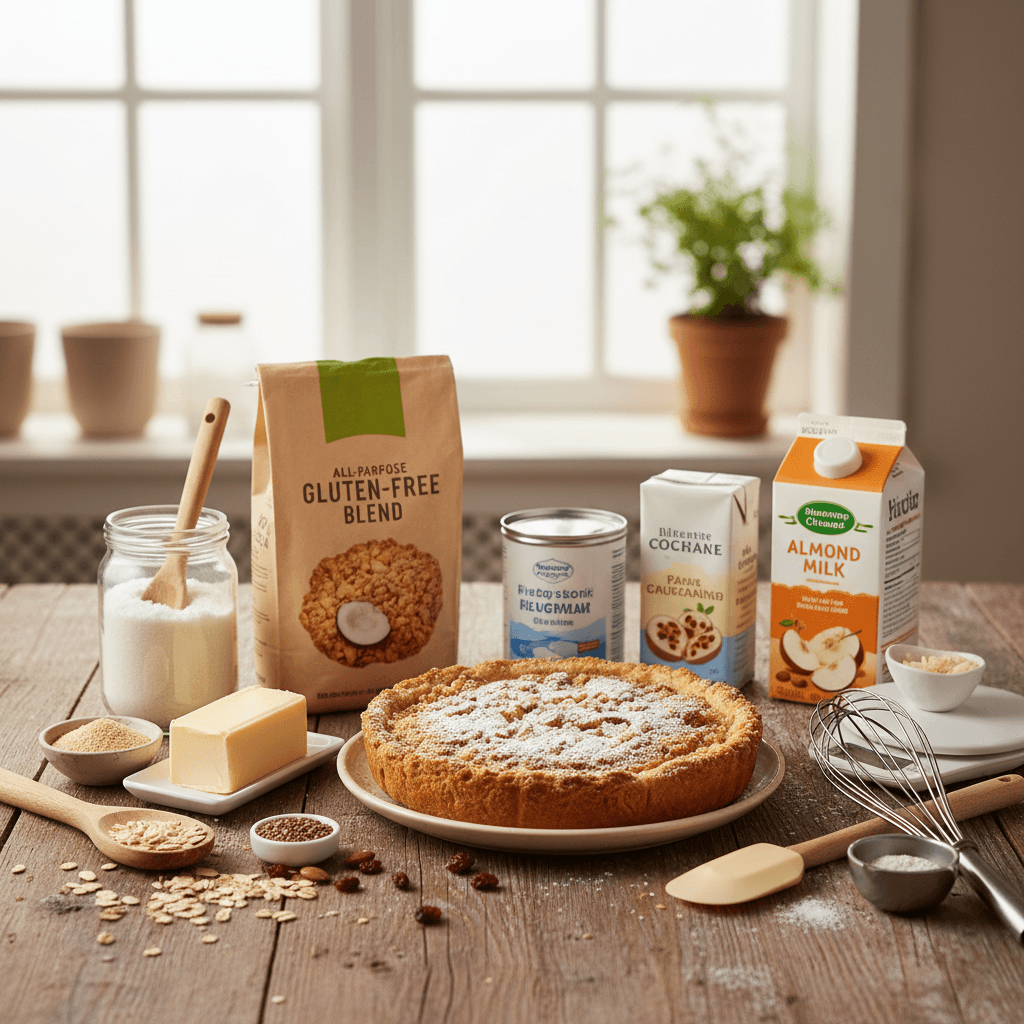
You don't need the cheapest products on the shelf or the most expensive ones to bake great gluten-free food at home. This guide covers the mid-range products worth buying for everyday baking — the ones that hit the sweet spot between quality, reliability, and price.
Key takeaways
- Mid-range gluten-free baking products typically cost 20-50% more than budget options but deliver noticeably better texture and flavor.
- Bob's Red Mill and King Arthur are the two brands that dominate the mid-range flour category for good reason — they're consistent and widely available.
- Investing in a good digital scale and a stand mixer matters more than upgrading every ingredient in your pantry.
- Psyllium husk powder is the mid-range binder upgrade that makes the biggest difference in bread and pizza dough.
- You can mix budget and mid-range products strategically — splurge on flour and binders, save on sugar and basic fats.
Mid-range gluten-free flours and starches
The flour you choose has the single biggest impact on your final bake, so this is where a mid-range investment pays off the most. Two all-purpose blends stand out and can be used almost interchangeably; both run around $5-8 per pound.
Bob's Red Mill 1-to-1 Baking Flour ($6-8/lb) is our top everyday pick. It already contains xanthan gum, works in nearly any recipe that calls for all-purpose flour, and you can find it at most grocery stores. For a detailed look at the full Bob's Red Mill lineup, check out our complete guide to Bob's Red Mill gluten-free products.
King Arthur Measure for Measure Flour ($6-9/lb) is the other blend we recommend. It produces slightly lighter results in cakes and muffins, though the difference is subtle. If you're torn between the two, our Bob's Red Mill vs King Arthur comparison breaks it all down.
Beyond the all-purpose blends, a few single-origin flours are worth keeping on hand for specific jobs:
| Flour | Best for | Approximate price |
|---|---|---|
| Almond flour (Bob's Red Mill Super-Fine) | Cookies, cakes, macarons | $8-10/lb |
| Brown rice flour (Bob's Red Mill) | Custom blends, breading | $3-5/lb |
| Cassava flour (Otto's Naturals) | Tortillas, flatbreads, nut-free baking | $8-12/lb |
| Buckwheat flour (Bob's Red Mill) | Pancakes, crepes, rustic breads | $4-6/lb |
If you're baking for specific dietary needs alongside gluten-free, our gluten-free and nut-free baking substitutes guide covers safe alternatives to almond flour and other tree nut products.
Mid-range sweeteners
Sweeteners are one category where you can save a bit without sacrificing quality, but there are a couple of mid-range upgrades worth making. Standard granulated sugar works fine at any price point, but the type of sweetener you pair it with matters.
For everyday baking, we recommend regular organic cane sugar ($3-5 for 2 lbs) and Wholesome Organic Light Brown Sugar ($4-6/lb). The organic versions have slightly more molasses depth than conventional brown sugar, which translates to richer cookies and quick breads.
For liquid sweeteners, pure honey from a local source ($8-12/lb) and grade A maple syrup ($12-16 for 12 oz) are our mid-range picks. They cost more than corn syrup or cheap honey blends, but they contribute real flavor. To understand how different sweeteners behave in your recipes, our sugar functions guide explains the science behind moisture, browning, and structure.
If you want to explore lower-sugar options, take a look at our best gluten-free low sugar baking products roundup.
If you're finding that building a gluten-free pantry feels overwhelming, our Confident Gluten-Free Baker Toolkit walks you through exactly what to stock and why — it takes the guesswork out of getting started.
Mid-range fats and oils
Good fat is the backbone of tender, flavorful baked goods. At the mid-range level, you get access to higher-quality butter and oils that genuinely improve results.
Butter: Kerrygold Pure Irish Butter (unsalted, $4-6 per 8 oz) is our pick. The higher butterfat content (about 82%) makes flakier pie crusts and richer cookies compared to standard American butter at 80%. It's widely available at most grocery stores.
Neutral oil: Avocado oil ($8-12 for 16 oz) is our preferred neutral oil for cakes, muffins, and quick breads. It has a cleaner flavor than canola and a high smoke point for any recipe that calls for oil.
Coconut oil: Refined coconut oil ($6-9 for 14 oz) from brands like Nutiva or Spectrum works well as a butter substitute in vegan baking. Refined has no coconut flavor, which makes it more versatile than virgin.
For dairy-free baking, our dairy-free butter roundup covers the best options that actually perform like real butter in recipes.
Mid-range leaveners and binders
This is where a mid-range investment makes a dramatic difference in gluten-free baking. Cheap baking powder can leave metallic off-flavors, and the wrong binder will give you crumbly results.
Baking powder: Rumford Aluminum-Free Baking Powder ($4-6 for 8.1 oz) is the standard we recommend. It's double-acting, aluminum-free (so no metallic taste), and reliable. If you're troubleshooting flat bakes, our poor rise troubleshooting guide can help.
Baking soda: Arm and Hammer works perfectly fine here — no need to upgrade. Just make sure it's fresh (replace every 3-6 months).
Yeast: SAF Instant Yeast ($6-8 for 1 lb) is the best value in the mid-range. Buying the 1-pound vacuum pack instead of individual packets saves money over time, and instant yeast is more forgiving than active dry for gluten-free bread.
Binders: This is the real upgrade category. Two binders are worth having:
- Xanthan gum (Bob's Red Mill, $8-12 for 8 oz) — essential for cookies, cakes, and general baking. A little goes a long way, and one bag lasts months. See our xanthan gum vs guar gum comparison if you're unsure which to use.
- Psyllium husk powder (Anthony's or NOW Foods, $10-14 for 12 oz) — this is the game-changer for bread and pizza dough. It creates a stretchy, elastic quality that mimics gluten far better than xanthan alone.
Mid-range dairy and dairy alternatives
For recipes that call for milk, buttermilk, or cream, mid-range products give you better flavor and more consistent results than ultra-cheap alternatives.
Dairy milk: Whole milk from any quality brand works. Organic whole milk ($4-6/half gallon) has a slightly richer flavor that comes through in custards and enriched doughs.
Buttermilk: Real cultured buttermilk ($3-5/quart) is always better than the vinegar-and-milk hack for scones, biscuits, and pancakes. The tangy flavor and thicker consistency make a real difference.
Dairy-free milk: Oat milk (Oatly Barista Edition, $5-6/quart) is our top pick for dairy-free baking. It has enough fat and body to stand in for whole milk in most recipes. For more options, visit our choosing milk alternatives guide.
Cream cheese and sour cream: Standard full-fat versions from Philadelphia or Daisy ($3-5 each) work perfectly. No need to go premium here — just avoid the low-fat versions, which have added starches that can affect your bake.
Mid-range baking tools and equipment
Good tools don't just make baking easier — they make it more consistent. These are the mid-range pieces we consider essential.
| Tool | Our pick | Approximate price |
|---|---|---|
| Digital scale | OXO Good Grips 11 lb Food Scale | $30-35 |
| Stand mixer | KitchenAid Artisan 5-Quart | $280-350 |
| Silicone spatulas | GIR Ultimate Spatula set | $15-20 each |
| Sheet pans | Nordic Ware half-sheet pans | $15-20 each |
| Oven thermometer | Taylor Precision oven thermometer | $7-10 |
| Cooling racks | Checkered Chef stainless steel racks | $15-20 for a set |
A digital scale is the single most important tool upgrade you can make. Gluten-free flours vary wildly in density, so measuring by weight eliminates one of the biggest sources of inconsistency.
A stand mixer isn't strictly necessary, but gluten-free batters — especially bread doughs — often need longer, more vigorous mixing than wheat-based ones. The KitchenAid Artisan handles this without overheating and will last decades with basic care.
How to build your mid-range pantry strategically
You don't need to buy everything at once. Here's our recommended order of priority, from highest impact to lowest:
- Flour blend — Start with one good all-purpose GF blend (Bob's Red Mill 1-to-1 or King Arthur Measure for Measure).
- Digital scale — This single tool improves every recipe you make.
- Binders — Get both xanthan gum and psyllium husk powder.
- Good butter — Kerrygold or another European-style butter with higher butterfat.
- Aluminum-free baking powder — Rumford is affordable and reliable.
- Specialty flours — Add almond flour, cassava flour, or others as specific recipes call for them.
- Stand mixer — Save this for when you're baking regularly and want to level up.
For a complete breakdown of where to find these products, our Amazon gluten-free baking guide covers online shopping, and our store-specific guides for Target and Whole Foods cover in-store options.
Frequently asked questions
What is the difference between budget and mid-range gluten-free flour?
Budget gluten-free flours are often single-grain flours like plain rice flour that require you to build your own blends. Mid-range options like Bob's Red Mill 1-to-1 and King Arthur Measure for Measure are pre-blended with starches and sometimes binders, so they work as direct substitutes for all-purpose wheat flour. The convenience and consistency are worth the extra cost for most home bakers.
Do I really need a digital scale for gluten-free baking?
Yes, a digital scale is one of the most impactful upgrades you can make. Gluten-free flours vary significantly in density — a cup of almond flour weighs about 96 grams while a cup of tapioca starch weighs around 120 grams. Measuring by weight ensures you get the right ratio every time, which prevents common problems like dry, crumbly texture or gummy centers.
Is psyllium husk powder better than xanthan gum for gluten-free bread?
For bread specifically, psyllium husk powder generally produces better results. It creates a stretchy, elastic network that mimics gluten more effectively than xanthan gum, giving you better rise and a more open crumb structure. However, xanthan gum is still better for cookies, cakes, and other non-bread applications. Most mid-range pantries benefit from having both. Our xanthan gum vs guar gum guide covers the differences between those two popular binders.
Can I mix budget and mid-range baking products?
Absolutely — and we recommend it. Splurge on the products that have the biggest impact on your results (flour blends, binders, and butter) and save on items where quality differences are minimal (granulated sugar, baking soda, and vanilla extract). This approach lets you build a high-performing pantry without overspending.
Where can I find mid-range gluten-free baking products in stores?
Most mid-range products like Bob's Red Mill and King Arthur flours are available at major grocery chains including Target, Whole Foods, Kroger, and Sprouts. You can also order them online through Amazon, often at slightly lower prices when buying in bulk. Check our Kroger shopping guide or Sprouts shopping guide for store-specific recommendations.

Written by
Co-founder, BakingSubs
Co-founder of BakingSubs, where he turns the science of ingredient substitutions into tested, reliable guidance for home bakers.
Related Posts
Bake with Confidence
See all
Confident Gluten-Free Baker Toolkit
The science-based system that replaces gluten's seven invisible jobs so your baking turns out soft, fluffy, and foolproof — every time.

Gluten-Free Recipe Vault
Instant access to our complete library of proven gluten-free recipes — no waiting, no guesswork, just results that work tonight.

Fix Your Gluten-Free Bread
Learn the 3-step formula to make bread rise and stay soft, discover why your loaves collapse, and get a tested sandwich bread recipe that actually works.