

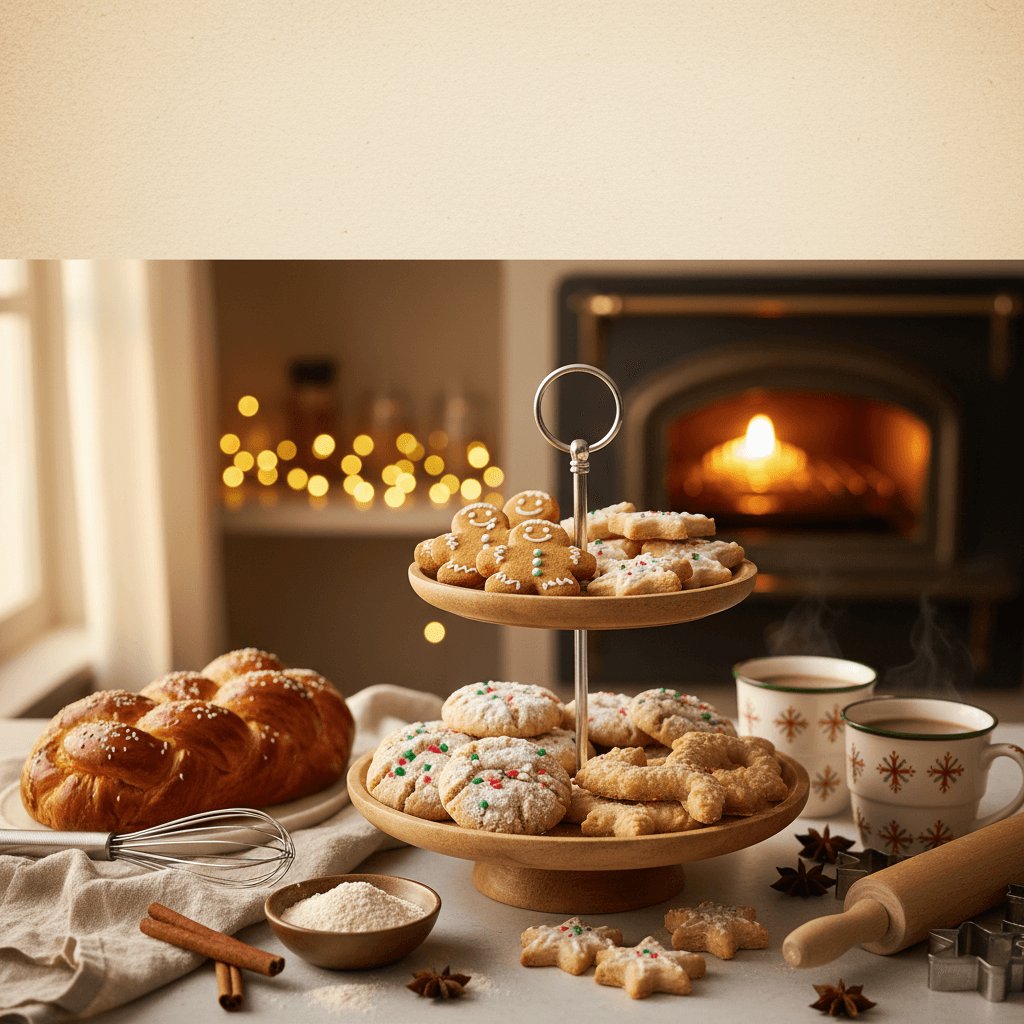
Holiday baking is stressful enough without worrying about whether your gluten-free gingerbread will crumble into dust or your Christmas cake will sink in the middle. We've narrowed down the five best styles of gluten-free Christmas baking that consistently deliver results, and we'll walk you through exactly why they work and how to nail each one.
Key takeaways
- Sugar cookies and shortbread are the easiest gluten-free Christmas bakes because their high fat content compensates for missing gluten structure.
- Gingerbread benefits from molasses and spices that mask any off-flavors from alternative flours, making it one of the most forgiving holiday recipes.
- Almond flour is a holiday baking powerhouse — it adds moisture, richness, and a naturally festive flavor to cakes and cookies alike.
- Psyllium husk outperforms xanthan gum as a binder in yeasted holiday breads like stollen and dinner rolls.
- Weighing your flour with a kitchen scale is the single most impactful change you can make to improve gluten-free holiday baking consistency.
- Most gluten-free Christmas baking failures come down to three things: wrong binder, too much starch, or incorrect oven temperature.
Gluten-free sugar cookies and cutout cookies
Sugar cookies are the single best place to start with gluten-free Christmas baking. The high butter-to-flour ratio means the dough is structurally forgiving, and the results are nearly indistinguishable from wheat-based versions.
The key is using a good all-purpose gluten-free flour blend that contains both starch (like tapioca starch) and a protein-rich flour (like rice flour). A blend with xanthan gum already included simplifies things, but if yours doesn't have it, add about half a teaspoon per cup of flour. The xanthan gum acts as the glue that holds cutout shapes together — without it, your Christmas trees will lose their branches.
For the best results, chill your dough for at least two hours before rolling. Gluten-free doughs warm up faster and get sticky quickly. Roll between two sheets of parchment paper and cut shapes while the dough is still cold. If it starts to crack at the edges, let it warm for just a minute or two — no more.
Common mistakes with gluten-free sugar cookies
- Overmixing the dough: Unlike wheat cookies where you can mix until smooth, gluten-free doughs get gummy if overworked. Mix just until the flour is incorporated.
- Skipping the chill time: Warm dough spreads too much and loses its shape. If your cookies are coming out as blobs instead of stars, your dough was too warm.
- Overbaking: Gluten-free cookies firm up as they cool more than wheat cookies do. Pull them when the edges are barely golden — they'll look underdone but will set perfectly on a cooling rack.
If you're new to gluten-free cookie baking, our full guide to the best gluten-free cookie recipes for beginners covers five styles that actually work, including drop cookies and slice-and-bake options that are even easier than cutouts.
If you want a comprehensive system for understanding how gluten-free flours, binders, and techniques work together — not just for the holidays but year-round — the Confident Gluten-Free Baker Toolkit walks you through exactly that. It's the kind of resource we wish we'd had when we first started adapting family recipes.
Gluten-free gingerbread cookies and gingerbread houses
Gingerbread is arguably the most forgiving gluten-free Christmas bake because the bold spices and molasses do a lot of heavy lifting flavor-wise. Any subtle aftertaste from rice flour or starch blends disappears completely behind ginger, cinnamon, and cloves.
For gingerbread cookies, use the same approach as sugar cookies: a quality flour blend, a small amount of xanthan gum if your blend doesn't include it, and thorough chilling. The molasses adds moisture and chewiness, which helps counteract the dry, crumbly texture that plagues so many gluten-free bakes.
For gingerbread houses, you need a stiffer dough. Reduce the molasses slightly and increase the flour by about two tablespoons per batch. The pieces need to hold their shape without spreading at all, so an extra-long chill (overnight is ideal) makes a real difference. We also recommend using a kitchen scale here — even small measurement variations can mean the difference between walls that stand and walls that buckle.
Common mistakes with gluten-free gingerbread
- Using too much starch in your blend: Starch-heavy blends make gingerbread brittle. Look for blends where a whole-grain flour (like brown rice or sorghum) is the first ingredient.
- Rolling too thin: Gluten-free gingerbread needs to be slightly thicker than wheat versions — about 1/4 inch for cookies and 3/8 inch for house pieces.
- Wrong oven temperature: Gingerbread is dark, so it's hard to judge doneness by color. Use an oven thermometer to verify your temperature, and bake at 350°F until the edges are firm to the touch.
Gluten-free Christmas cake and fruitcake
Rich, dense Christmas cakes and fruitcakes are naturally suited to gluten-free baking because they rely on eggs, butter, and fruit for structure rather than gluten. A traditional fruitcake barely needs flour at all — the dried fruit, nuts, and eggs do most of the structural work.
The best approach is to use almond flour as your primary flour. It adds moisture, richness, and a subtle nutty flavor that pairs beautifully with dried fruit and warm spices. You can use it alone or blend it with a small amount of rice flour for a lighter crumb. If you're choosing between brands, our almond flour brand comparison breaks down which ones work best for different baking applications.
For a lighter sponge-style Christmas cake, a standard gluten-free flour blend works well. The key is not to skimp on eggs — they're providing the lift and structure that gluten would normally handle. Check our guide to how eggs function in baking if you want to understand why this matters so much.
Common mistakes with gluten-free Christmas cake
- Underbaking: Dense cakes with lots of fruit take longer to bake through. Use an instant-read thermometer — the center should reach 200-205°F.
- Not soaking the fruit: Dried fruit absorbs moisture from gluten-free batters aggressively. Soak your fruit in brandy, rum, or juice overnight so it goes into the batter already hydrated.
- Using the wrong pan: A deep cake tin with straight sides gives the best results. Line it thoroughly with parchment, and consider wrapping the outside with a double layer of brown paper to prevent the edges from over-browning during the long bake time.
Gluten-free shortbread and butter cookies
Shortbread is one of those magical recipes where the gluten-free version can actually taste better than the original. Traditional shortbread is just butter, sugar, and flour — and when you swap in a blend that includes rice flour and cornstarch, you get an incredibly tender, melt-in-your-mouth texture that wheat flour can't quite match.
The science is simple: gluten makes things chewy and elastic, which is the opposite of what you want in shortbread. Without gluten, the butter and starch create a delicate, sandy crumb that shatters perfectly. This is one of the few times being gluten-free is actually an advantage.
A basic ratio that works well: 1 cup butter, 1/2 cup powdered sugar, 2 cups gluten-free flour blend. Add a pinch of salt and a teaspoon of vanilla. Press into a pan, prick with a fork, and bake at 325°F until the edges are just barely golden.
| Shortbread style | Best flour choice | Texture result | Difficulty |
|---|---|---|---|
| Classic pressed | Rice flour + cornstarch blend | Sandy, crumbly, traditional | Easy |
| Whipped/piped | All-purpose GF blend with xanthan | Lighter, slightly chewy | Medium |
| Almond shortbread | 50/50 almond flour + GF blend | Rich, dense, nutty | Easy |
| Chocolate dipped | GF blend + cocoa powder | Tender with slight snap | Easy |
Common mistakes with gluten-free shortbread
- Using a blend with too much xanthan gum: Shortbread should be crumbly, not chewy. If your blend already contains xanthan gum, don't add more. Some bakers even prefer blends without it for shortbread.
- Warm butter: The butter should be soft but not melted. If it's too warm, the shortbread will spread and lose its shape.
- Baking too hot: Shortbread bakes low and slow. Anything above 350°F risks browning the outside before the center is cooked through.
Gluten-free holiday bread: stollen, dinner rolls, and cinnamon rolls
Yeasted holiday breads are the most challenging category on this list, but they're absolutely doable with the right approach. The key difference from wheat baking is that gluten-free bread doughs are more like thick batters than traditional doughs — you won't be kneading anything.
For stollen and cinnamon rolls, psyllium husk is the binder of choice over xanthan gum. It creates a dough that's actually shapeable, which matters when you need to roll, fill, and form these breads. Our guide to the best psyllium husk brands can help you pick the right one — brand matters more than you'd think here.
For dinner rolls, a good all-purpose gluten-free blend with xanthan gum works fine since you're just scooping dough into muffin tins rather than shaping it by hand. The dough should be wet and sticky — resist the urge to add more flour. If you're struggling with sticky dough, our guide on how to make gluten-free bread less sticky has practical solutions that don't compromise the final texture.
Common mistakes with gluten-free holiday breads
- Expecting the dough to look like wheat dough: It won't. Gluten-free bread dough should look wetter and stickier than you're comfortable with. If it looks like normal bread dough, it's too dry and will bake up dense.
- Over-proofing: Gluten-free doughs can't hold as much gas as wheat doughs. One rise is usually enough, and it should only increase by about 50% in volume — not double. Over-proofed dough collapses in the oven.
- Skipping the internal temperature check: Holiday breads with fillings (fruit, cinnamon sugar, chocolate) are nearly impossible to judge by appearance alone. The center needs to reach 205-210°F for a fully baked crumb that isn't gummy.
How to set yourself up for gluten-free Christmas baking success
Before you start any holiday baking project, a few universal principles will save you from disappointment:
- Weigh everything. Cup measurements vary wildly with gluten-free flours because they pack differently than wheat flour. A kitchen scale eliminates the guesswork.
- Stock your pantry in advance. Nothing derails holiday baking like realizing you're out of tapioca starch on December 23rd. Our gluten-free baking pantry checklist covers the seven essentials you should always have on hand.
- Test recipes before the big day. Run through any new recipe at least once before you're baking for a crowd. Gluten-free recipes can behave differently based on your specific flour blend, oven, and altitude.
- Let baked goods cool completely. This is true for all baking, but it's critical for gluten-free. The starches need time to set, and cutting into warm gluten-free baked goods almost always results in a gummy texture that wouldn't have been there if you'd waited.
Frequently asked questions
What is the best gluten-free flour for Christmas cookies?
A quality all-purpose gluten-free flour blend is the best choice for most Christmas cookies. Look for blends that combine rice flour with at least one starch (tapioca or potato) and include xanthan gum. For shortbread specifically, almond flour blended with rice flour gives an exceptionally tender result. Our flour blend comparison ranks the top options.
Can you make gluten-free gingerbread houses that hold together?
Yes, gluten-free gingerbread houses absolutely hold together when made correctly. The keys are using a stiffer dough with slightly less molasses, rolling the pieces thicker (about 3/8 inch), chilling overnight before cutting, and baking until completely firm. Royal icing made with meringue powder acts as the structural glue and works identically whether the gingerbread is gluten-free or not.
Why does my gluten-free Christmas cake sink in the middle?
Gluten-free Christmas cakes usually sink because of underbaking, too much leavener, or opening the oven door too early. Dense fruit cakes need a long, slow bake — often 90 minutes or more. Use an instant-read thermometer to confirm the center reaches 200-205°F. Also check that your baking powder hasn't expired, as old leavener loses its strength and can't support the batter.
How do you keep gluten-free Christmas cookies from crumbling?
The most common reason gluten-free cookies crumble is insufficient binding. Make sure your recipe includes xanthan gum or guar gum (about 1/2 teaspoon per cup of flour), and don't reduce the eggs or fat. Also avoid overbaking — gluten-free cookies firm up significantly as they cool, so pull them from the oven when they still look slightly underdone. For a deeper dive, check our guide on fixing dry, crumbly gluten-free bakes.
Can you make gluten-free cinnamon rolls that taste like regular ones?
You absolutely can. The trick is using psyllium husk as your binder instead of xanthan gum, which creates a dough pliable enough to roll out and fill. The dough will still be stickier than wheat-based dough, so work with well-oiled hands and a floured surface. Use a generous amount of filling — the brown sugar and cinnamon do a lot to make the final product taste indistinguishable from the wheat version.

Written by
Co-founder, BakingSubs
Co-founder of BakingSubs, where he turns the science of ingredient substitutions into tested, reliable guidance for home bakers.
Related Posts
Best Low Carb Bread Brands (2026): 8 Compared by Net Carbs, Ingredients, and Price
Best Keto Buns, Bagels, and English Muffins: 10 Products Compared by Net Carbs and Ingredients
Gluten-Free Flour Weight Chart: Grams per Cup for 9 Major Brands (and Why the Spread Is Over 20%)
Bake with Confidence
See all
Confident Gluten-Free Baker Toolkit
The science-based system that replaces gluten's seven invisible jobs so your baking turns out soft, fluffy, and foolproof — every time.

Gluten-Free Recipe Vault
Instant access to our complete library of proven gluten-free recipes — no waiting, no guesswork, just results that work tonight.

Fix Your Gluten-Free Bread
Learn the 3-step formula to make bread rise and stay soft, discover why your loaves collapse, and get a tested sandwich bread recipe that actually works.