

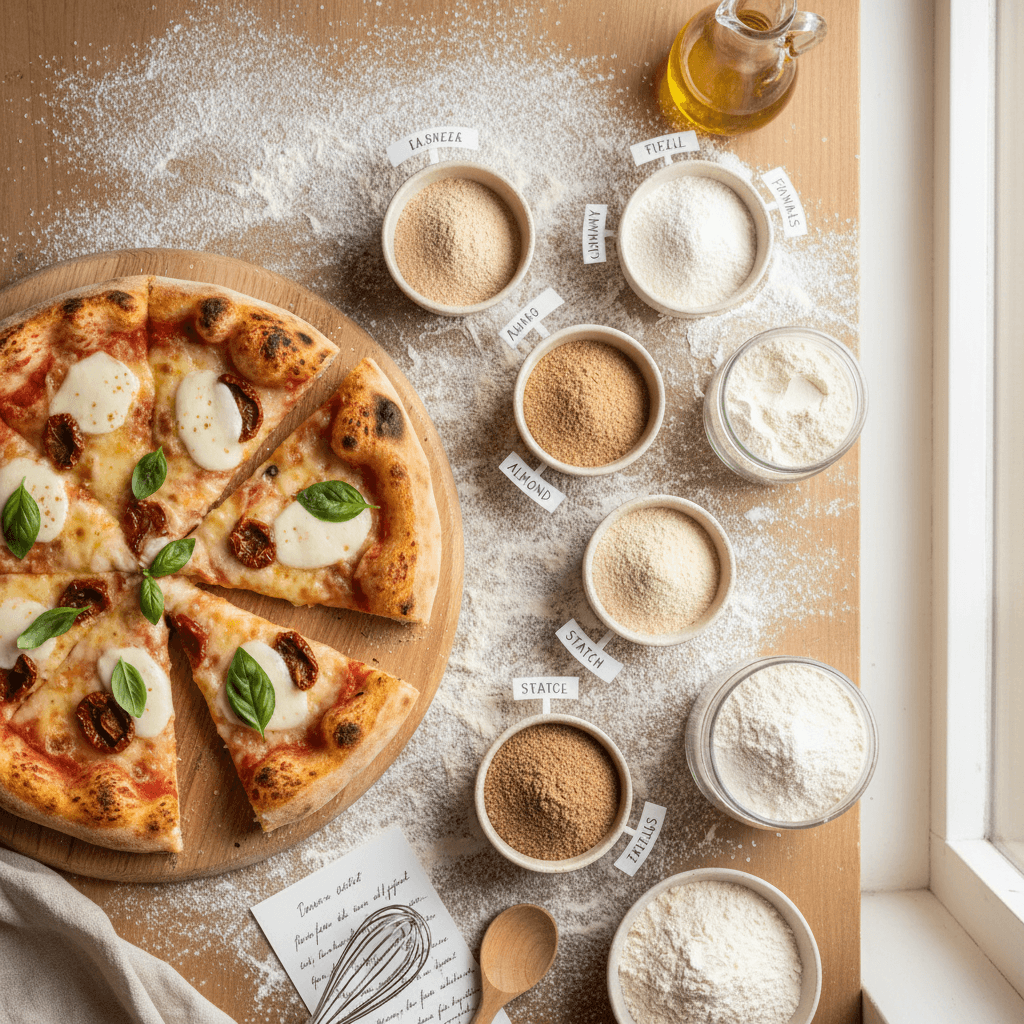
Choosing the right flour is the single biggest factor in whether your gluten-free pizza turns out crispy and foldable or crumbly and sad. When it comes to pizza dough, the differences between flours and blends are dramatic.
Here is exactly which flours work, which ones do not, and why the science behind each one matters for pizza specifically.
Key takeaways
- The best gluten-free flour for pizza dough is a blend that combines rice flour, tapioca starch, and potato starch for the right balance of chew, stretch, and crispness.
- Pre-made blends like Caputo Fioreglut and Bob's Red Mill 1-to-1 work well but produce very different crusts, so matching the blend to your preferred style matters.
- Single-ingredient flours like almond flour or cassava flour can work for specific pizza styles but cannot replicate a traditional wheat-based crust on their own.
- Psyllium husk and xanthan gum are essential binders that replace gluten's structural role, giving the dough stretch and preventing crumbling.
- Gluten-free pizza dough typically runs at 70-80% hydration versus 60-65% for wheat-based dough, so absorption rate of your flour matters enormously.
- A pizza stone or steel preheated for at least 45 minutes is non-negotiable for achieving a crispy bottom on gluten-free pizza.
What makes a flour good for gluten-free pizza dough
A great gluten-free pizza flour needs to do three things: absorb enough water to form a workable dough, create a crispy exterior when baked at high heat, and provide some chewiness in the finished crust. In wheat-based pizza, gluten handles all of this. Without it, you need a combination of starches, flours, and binders working together.
Here is what each component does in a gluten-free pizza flour blend:
- Rice flour (white or brown) provides the main structure and a neutral flavor. Brown rice flour adds slightly more nutrition and a nuttier taste, while white rice flour gives a lighter, crispier result.
- Tapioca starch creates chewiness and stretch. This is the ingredient that makes gluten-free pizza feel closer to the real thing. Without it, crusts tend to be dry and crumbly. Check out our comparison of tapioca starch brands if you are building your own blend.
- Potato starch adds moisture retention and a tender crumb. It also helps with browning, which is critical for pizza. Our potato starch and cornstarch comparison breaks down the best brands.
- Binders like xanthan gum or psyllium husk replace gluten's elasticity, letting you stretch and shape the dough without it falling apart.
The ratio matters more than the individual ingredients. Too much starch and the crust is gummy. Too much rice flour and it is gritty and crumbly. The sweet spot for most pizza doughs is roughly 60% rice flour and 40% starches, plus a binder.
If you are still building out your gluten-free pantry, our Confident Gluten-Free Baker Toolkit walks you through exactly which ingredients and tools to stock so you are not guessing every time you start a recipe.
Best pre-made gluten-free flour blends for pizza dough
Pre-made blends are the easiest starting point for gluten-free pizza. They take the guesswork out of ratios, and the best ones are specifically formulated for yeasted doughs. Here is how the top options compare:
| Flour blend | Best for | Texture | Binder included? | Notes |
|---|---|---|---|---|
| Caputo Fioreglut | Neapolitan-style, thin crust | Crispy, chewy, closest to wheat | Yes (psyllium, guar gum) | Italian import, pricier but exceptional |
| Bob's Red Mill 1-to-1 | All-purpose, thicker crusts | Tender, slightly cakey | Yes (xanthan gum) | Widely available, consistent results |
| Cup4Cup | Thin to medium crust | Crispy, slightly delicate | Yes (xanthan gum) | Premium price, very fine grind |
| King Arthur Measure for Measure | Medium to thick crust | Sturdy, good chew | Yes (xanthan gum) | Binder already included |
| Namaste Perfect Flour Blend | Budget-friendly all-purpose | Soft, less crispy | Yes (xanthan gum) | Better for pan pizza than thin crust |
Caputo Fioreglut: the gold standard
Caputo Fioreglut is the best pre-made gluten-free flour for pizza dough if you want a crust that genuinely rivals wheat-based pizza. It was developed by the same Italian company that makes the world's most popular Neapolitan pizza flour, and they clearly understood the assignment.
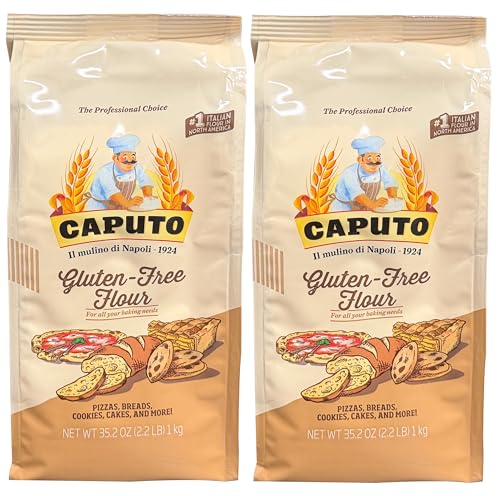
Antico Molino Napoli Antimo Caputo Pizza Flour, Gluten Free, 2 Pound (Pack of 2)
Check price on Amazon →What makes it work is a starch-heavy base (gluten-free wheat starch, corn starch, and rice starch, plus a little buckwheat flour) bound with psyllium fiber and guar gum, which together mimic gluten's extensibility. The dough is actually stretchable, which is rare for gluten-free. You can hand-shape it without it cracking, and it bakes up with a charred, blistered exterior and a soft, chewy interior.
The downsides: it is expensive (roughly $12-15 per 1-kilogram bag), it can be hard to find in regular grocery stores, and its main ingredient is gluten-free wheat starch, so it is not suitable for anyone with a wheat allergy. It is easiest to order Caputo Fioreglut online, and it is worth keeping a few bags stocked for pizza night.
Bob's Red Mill 1-to-1: the reliable workhorse
Bob's Red Mill 1-to-1 Baking Flour is the most widely available gluten-free blend and produces a perfectly good pizza crust, though it leans more toward a bread-like texture than a traditional pizza texture. The blend includes rice flour, tapioca starch, potato starch, and xanthan gum, which covers all the bases.

Bob's Red Mill Gluten Free 1 to 1 Baking Flour, 22oz (4 Pack)
Check price on Amazon →For pizza, it works best for thicker, pan-style crusts or Detroit-style pizza where a softer, breadier crumb is actually desirable. For thin crust, it can be a bit too tender and prone to cracking. Adding an extra teaspoon of arrowroot powder or tapioca starch per cup of flour helps with crispness.
The big advantage is price and availability. You can find Bob's Red Mill 1-to-1 at virtually any grocery store, and it performs well across many different recipes. Our full gluten-free flour blend comparison covers how it stacks up for other baking projects too.
King Arthur Measure for Measure: solid, with the binder built in
King Arthur Measure for Measure already includes xanthan gum, so you do not need to add a binder to use it. Note that King Arthur positions it for non-yeasted recipes like cookies, brownies, and cakes. If you use it for pizza and want a chewier, more bread-like crust, you can add a little psyllium husk powder (see the binder section below).
It produces a crust with good structure and a pleasant chew. The flour has a very fine grind, which means less grittiness than some competitors.
Pre-made blends are the fastest path to gluten-free pizza, and some are genuinely excellent. Here is how the top options stack up.
| Flour | Best for | Crust style | Protein | Binder included | Price range |
|---|---|---|---|---|---|
| Caputo Fioreglut | Neapolitan-style pizza | Thin, chewy, foldable | 5g per serving | Yes (psyllium, guar gum) | $$$$ |
| Cup4Cup Pizza Crust Mix | Thin crust pizza | Crispy, delicate | 3g per serving | Yes (xanthan gum) | $$$ |
| King Arthur Measure for Measure | All-purpose versatility | Moderate chew, good crunch | 2g per serving | Yes (xanthan gum) | $$ |
| Bob's Red Mill 1-to-1 | Budget-friendly option | Slightly crumbly, decent crisp | 2g per serving | Yes (xanthan gum) | $$ |
| Jovial Cassava Flour | Grain-free pizza | Pliable, slightly dense | 1g per serving | No | $$$ |
| Simple Mills Pizza Dough Mix | Almond flour fans | Thin, nutty, crispy | 5g per serving | No (uses flax) | $$$ |
Best single-ingredient flours for gluten-free pizza
Sometimes you want to go beyond a pre-made blend, either because of additional allergies, dietary preferences, or just because you want more control. Here are the single-ingredient flours that work for pizza and the styles they suit best.
Cassava flour for grain-free pizza crust
Cassava flour is the best single-ingredient option for pizza dough because it behaves more like wheat flour than any other gluten-free flour. It is made from the whole cassava root (not just the starch), so it has a mild flavor and creates a dough that is pliable and easy to roll out.
Cassava flour pizza crust is slightly denser than wheat-based crust and has a subtle chewiness. It works especially well for thin, crispy crusts. The key is using a high-quality, finely ground brand. A good pick is Otto's Cassava Flour for its consistent, fine texture.
The limitation is that cassava flour does not have the same extensibility as a blend, so you will not get big, airy bubbles in the crust. It is better for flatbread-style pizza than puffy Neapolitan-style.
Almond flour for low-carb pizza crust
Almond flour is the go-to for keto and low-carb pizza crusts, but it behaves nothing like wheat flour. It is high in fat, has no starch, and cannot form a traditional dough on its own. Most almond flour pizza crusts use eggs and cheese (often mozzarella) as binders to create a workable dough.
The result is a dense, rich crust that tastes more like a savory almond cookie than bread. It crisps up beautifully on the bottom but will never be chewy or stretchy. If low-carb is your priority, it is a solid option. If you want something that resembles traditional pizza, look elsewhere. Our almond flour brand comparison helps you pick the right one for any recipe.
Buckwheat flour for rustic, nutty pizza crust
Despite the name, buckwheat flour is completely gluten-free. It has a distinctive earthy, nutty flavor that works beautifully for rustic pizza styles, especially with toppings like goat cheese, caramelized onions, or roasted mushrooms.
Buckwheat is too heavy and dense to use alone for pizza dough. We recommend using it as 30-40% of your flour blend, combined with tapioca starch and white rice flour. This gives you the flavor benefits without the heaviness. It also browns exceptionally well, giving you a gorgeous, deeply colored crust.
The role of binders in gluten-free pizza dough
Without a binder, gluten-free pizza dough crumbles the moment you try to shape it. The two most common options are xanthan gum and psyllium husk, and they produce noticeably different results in pizza.
Xanthan gum creates a stretchy, elastic dough that is easier to work with. It is the more common choice in commercial blends and works well for all pizza styles. Use about 1 teaspoon per cup of flour blend. Too much makes the dough slimy and the crust gummy.
Psyllium husk creates a dough with more structure and a slightly more bread-like texture. It absorbs a lot of water, so you will need to increase your hydration. The finished crust has a better chew and holds up well to heavy toppings. Use about 1 tablespoon of finely ground psyllium husk powder per cup of flour. If your crust has been turning out with gummy centers, psyllium husk is often the fix because it manages moisture better than xanthan gum.
For pizza specifically, we slightly prefer psyllium husk because it produces a crust that feels more substantial and bread-like. But either works, and many successful recipes use both in small amounts.
How to prevent common gluten-free pizza dough problems
Even with the right flour, gluten-free pizza dough has a few quirks that trip people up. Here are the most common issues and how to fix them.
Crust is gritty or sandy
This almost always comes from rice flour that is too coarsely ground. Look for flour labeled "superfine" or "stone ground to a fine texture." You can also run your rice flour through a flour sifter before using it, or let the mixed dough rest for 30 minutes before shaping. This hydration rest allows the starches to fully absorb water and softens any gritty particles. Our guide to fixing gritty texture in gluten-free baking covers this in more detail.
Dough cracks when shaping
Gluten-free pizza dough needs more water than wheat dough. If your dough is cracking, it is too dry. Add water one tablespoon at a time until the dough is soft and slightly sticky. You should be able to press it into shape with wet hands without it splitting. Oiling your hands and the work surface also helps enormously.
Crust is soggy in the middle
Two fixes here. First, par-bake the crust for 8-10 minutes before adding toppings. This sets the structure and prevents moisture from the sauce and toppings from making the center soggy. Second, make sure your oven is hot enough. We are talking 450-500 degrees Fahrenheit minimum. An oven thermometer is essential here because most home ovens run 25-50 degrees cooler than the display says.
Crust does not brown
Gluten-free doughs sometimes struggle to brown because they lack the proteins that drive Maillard browning in wheat dough. Adding a tablespoon of milk powder, a teaspoon of sugar, or brushing the crust with olive oil before baking all help. Baking on a preheated pizza stone or steel also makes a huge difference for bottom browning.
Technique tips that matter as much as the flour
Even the best flour will underperform if your technique is off. These are the adjustments that matter most.
Hydration is everything
Gluten-free pizza dough needs more water than you expect. Where a conventional pizza dough might run at 60-65% hydration, gluten-free doughs often need 70-80%. The dough should be wetter and stickier than you are comfortable with. If it looks like a conventional dough, it is too dry and your crust will be crumbly. If you are troubleshooting dry, crumbly results, insufficient hydration is almost always the culprit.
Skip the rise and rest instead
Most gluten-free pizza doughs benefit from a 30-60 minute rest rather than a traditional rise. This gives the starches time to fully hydrate and the binders time to develop structure. You will still use yeast for flavor and some lift, but do not expect the dough to double in size like wheat dough.
Use a pizza stone or steel
Bottom heat is critical for gluten-free pizza. Without it, you end up with a soggy, gummy center and pale bottom. Preheat your pizza stone for at least 45 minutes at your oven's highest temperature — usually 500-550 degrees Fahrenheit. A baking steel works even better because it transfers heat faster.
Par-bake for best results
This is the single biggest tip we can give you: par-bake your crust for 8-10 minutes before adding toppings. Gluten-free crusts need more time to set their structure, and adding wet toppings too early leads to a soggy middle. Slide the naked crust onto your hot stone, bake until it is just starting to firm up and develop light color, then add your sauce, cheese, and toppings and finish baking.
Oil your hands, not the dough
Gluten-free pizza dough is sticky. Instead of adding more flour (which throws off your ratio), oil your hands generously with olive oil when shaping. You can also press the dough out directly on oiled parchment paper, which makes transferring to a hot stone much easier.
Our recommended approach: build your own pizza flour blend
If you want the best results and do not mind measuring a few ingredients, a custom blend gives you the most control. Here is the ratio we recommend:
- 1 cup (160g) superfine white rice flour
- 1/3 cup (50g) tapioca starch
- 1/4 cup (40g) potato starch
- 1 tablespoon psyllium husk powder
- 1/2 teaspoon xanthan gum
- 1 teaspoon salt
This makes enough for one large pizza or two personal-sized pizzas. The combination gives you a crust that is crispy on the outside, chewy on the inside, and sturdy enough to fold without cracking. Weigh everything on a kitchen scale because volume measurements with gluten-free flours are notoriously inconsistent.
For the full dough recipe and step-by-step technique, check out our gluten-free pizza dough recipes that actually work, which covers five different approaches from thin crust to deep dish.
Pre-made blend vs DIY blend: which should you choose
This depends on where you are in your gluten-free baking journey and what you value most.
| Factor | Pre-made blend | DIY blend |
|---|---|---|
| Convenience | Open the bag and go | Requires measuring and mixing |
| Consistency | Same result every time | Depends on your measuring accuracy |
| Cost per pizza | $2-5 per pizza | $1-3 per pizza |
| Flavor control | Limited to what is in the bag | Fully customizable |
| Allergen control | Check labels carefully | You control every ingredient |
| Best for | Beginners, convenience seekers | Experienced bakers, those with multiple allergies |
If you are just starting out with gluten-free baking, grab a bag of Caputo Fioreglut or King Arthur Measure for Measure and focus on nailing your technique. Once you are comfortable, experiment with DIY blends to fine-tune flavor and save money.
Frequently asked questions
Can I use regular gluten-free all-purpose flour for pizza dough?
Yes, most gluten-free all-purpose flour blends will work for pizza dough, but the results vary significantly by brand. Blends that include xanthan gum (like Bob's Red Mill 1-to-1 or King Arthur Measure for Measure) are easier to use straight from the bag. Blends without a binder need added xanthan gum or psyllium husk to hold the dough together. For the best results, choose a blend specifically designed for yeasted baking.
Why is my gluten-free pizza crust crumbly?
Crumbly crust is usually caused by not enough binder, not enough hydration, or both. Make sure your recipe includes xanthan gum or psyllium husk powder, and do not be afraid to add more water than seems right. Gluten-free pizza dough should be noticeably wetter and stickier than wheat dough. If your crust is also dry and crumbly in other bakes, the issue may be your flour blend ratio.
Is cassava flour or almond flour better for gluten-free pizza?
It depends on your priorities. Cassava flour produces a crust closer to traditional pizza with a mild flavor and pliable dough. Almond flour is better for low-carb or keto pizza but creates a denser, cookie-like crust that does not stretch or chew like bread. For the most pizza-like experience, cassava flour wins.
Do I need a pizza stone for gluten-free pizza?
A pizza stone or pizza steel is not strictly required, but it makes a dramatic difference. Gluten-free crusts are more prone to sogginess, and a preheated stone provides intense bottom heat that crisps the base quickly. If you do not have one, an inverted baking sheet preheated in the oven is a decent substitute. Preheat it for at least 30 minutes at your oven's highest temperature.
Can I make gluten-free pizza dough ahead of time?
Yes, but it handles differently than wheat dough. You can refrigerate gluten-free pizza dough for up to 24 hours, and the cold rest actually improves flavor and makes it easier to shape. However, it does not freeze and thaw as well as wheat dough because the starches can become grainy after freezing. For best results, make the dough the morning of or the night before pizza night.
Does gluten-free pizza dough need to rise?
Gluten-free pizza dough benefits from a rest period of 30-60 minutes, but it will not rise dramatically like wheat dough. The rest allows starches to hydrate and binders to develop, which improves texture and workability. Using yeast adds flavor and some lift, but the primary structure comes from your flour blend and binders, not from gluten development.
Is Caputo Fioreglut worth the price for gluten-free pizza?
For most home bakers, yes. Caputo Fioreglut produces the closest thing to traditional Neapolitan pizza crust available in a gluten-free flour. A 2.2-pound bag costs around $12-15 and makes 4-6 pizzas, which works out to $2-4 per pizza — significantly cheaper than ordering gluten-free delivery. If you make pizza regularly and want the best possible result with minimal fuss, it is worth every penny.

Written by
Co-founder, BakingSubs
Co-founder of BakingSubs, where he turns the science of ingredient substitutions into tested, reliable guidance for home bakers.
Related Posts
Bake with Confidence
See all
Confident Gluten-Free Baker Toolkit
The science-based system that replaces gluten's seven invisible jobs so your baking turns out soft, fluffy, and foolproof — every time.

Gluten-Free Recipe Vault
Instant access to our complete library of proven gluten-free recipes — no waiting, no guesswork, just results that work tonight.

Fix Your Gluten-Free Bread
Learn the 3-step formula to make bread rise and stay soft, discover why your loaves collapse, and get a tested sandwich bread recipe that actually works.