

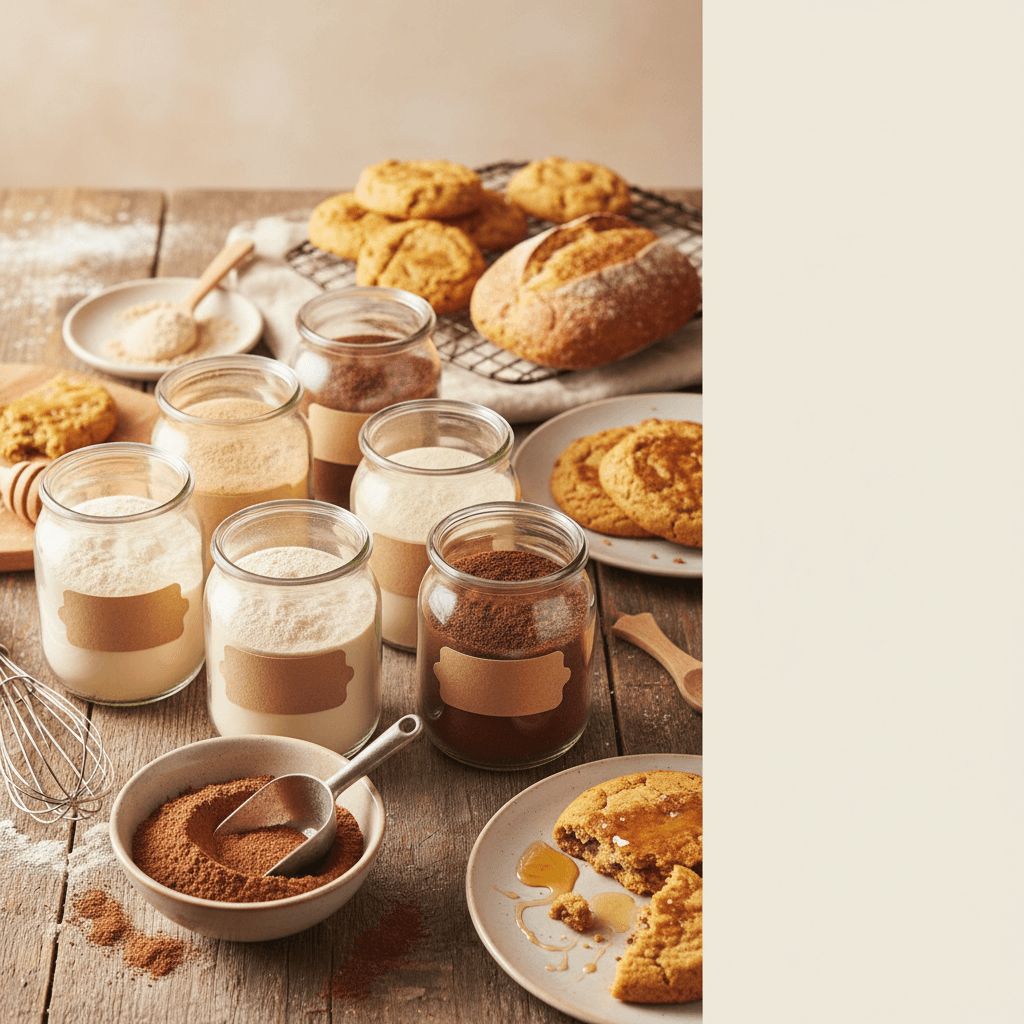
Teff flour is one of the most nutritious and versatile flours you can add to your gluten-free pantry, but not all brands perform the same way. We compared six popular teff flour brands to help you pick the right one for your recipes and budget.
Key takeaways
- Teff flour is naturally gluten-free, high in protein (around 12-13%), and rich in iron and calcium, making it one of the most nutrient-dense GF flours available.
- Ivory (white) teff flour has a milder, slightly sweet flavor, while brown teff flour has a deeper, nuttier, almost molasses-like taste.
- Grind fineness varies significantly between brands and directly affects whether your baked goods turn out smooth or gritty.
- Teff flour works best at 25-50% of your total flour blend in recipes like pancakes, quick breads, cookies, and injera.
- Price ranges from roughly $0.50 to $1.50 per ounce depending on the brand and whether it is certified gluten-free.
- For the best results, store teff flour in an airtight container in a cool, dark place or the refrigerator to preserve freshness.
What makes teff flour useful in gluten-free baking
Teff flour brings a combination of qualities that are genuinely hard to find in other gluten-free flours. It has a protein content around 12-13%, which is higher than brown rice flour and comparable to whole wheat flour. That protein helps create better structure in baked goods without relying on gluten.
Beyond protein, teff is packed with iron, calcium, and resistant starch, which means it adds real nutritional value to your bakes. The starch in teff flour also provides a slight binding quality that helps hold crumbs together, which is valuable when working with gluten-free flour blends.
Teff flour has a distinctive earthy, slightly sweet flavor that works beautifully in chocolate baked goods, spice cakes, banana bread, and hearty pancakes. It can taste overpowering if you use too much on its own, so we recommend keeping it at 25-50% of your total flour blend. If you are building your own blend, our homemade gluten-free flour blend recipe walks you through the ratios.
If you are still finding your footing with gluten-free flours and want a structured approach to understanding how different flours work together, our Confident Gluten-Free Baker Toolkit covers flour selection, blend building, and troubleshooting in one place.
How we compared these teff flour brands
We evaluated each brand on five criteria that matter most for baking results: protein content, grind fineness, flavor profile, certified gluten-free status, and price per ounce. We also noted which recipes each brand is best suited to, based on its grind and flavor profile.
6 best teff flour brands for gluten-free baking compared
| Brand | Type | Protein (per 1/4 cup) | Grind | Certified GF | Approx. price/oz | Best for |
|---|---|---|---|---|---|---|
| Bob's Red Mill | Brown (whole grain) | 7g | Medium-fine | Yes | $0.56 | Pancakes, quick breads, cookies |
| Anthony's Goods | Brown (whole grain) | 6g | Fine | Yes (batch tested) | $0.50 | All-purpose blending, budget baking |
| Maskal Teff | Brown and Ivory | 7g | Fine | Yes | $0.75 | Injera, specialty Ethiopian baking, cakes |
| Teff Company (Ivory) | Ivory | 6g | Very fine | Yes | $0.80 | Light cakes, muffins, delicate pastries |
| Shiloh Farms | Brown (whole grain) | 7g | Medium | No (GF labeled) | $0.65 | Hearty breads, rustic baking |
| Nuts.com | Brown (whole grain) | 7g | Medium-fine | Yes | $0.70 | Bulk baking, flour blends |
Bob's Red Mill teff flour
Bob's Red Mill Teff Flour is the easiest brand to find in stores and online, which makes it a natural starting point for most gluten-free bakers. It has a medium-fine grind that works well in most recipes, though it may leave a very slight grittiness in lighter cakes compared to finer-ground brands.
The flavor is classic brown teff: earthy, nutty, with a hint of cocoa. It shines in chocolate chip cookies, banana bread, and pancakes. At around $0.56 per ounce, it is one of the most affordable certified gluten-free options. If you are new to teff and want a reliable all-rounder, this is where we would start.
Best use cases: Pancakes, quick breads, cookies, and as a component in homemade flour blends.
Anthony's Goods teff flour
Anthony's Goods Teff Flour is a strong budget pick, especially if you buy in larger quantities. The grind is noticeably finer than Bob's Red Mill, which means it integrates more smoothly into batters and produces a less gritty texture in finished bakes.
The flavor is slightly milder than some other brown teff flours, making it a good choice if you want teff's nutritional benefits without an overpowering taste. Anthony's does batch testing for gluten, though the certification process is not as rigorous as some dedicated GF facilities. If you have celiac disease, check the packaging for the specific batch testing details.
Best use cases: Budget-friendly flour blending, everyday gluten-free baking, muffins.
Maskal Teff flour
Maskal Teff Flour is produced by The Teff Company, the original US importer of Ethiopian teff grain. This brand is widely considered the gold standard for teff flour quality. It is available in both brown and ivory varieties, giving you flexibility depending on the recipe.
The grind is fine, and the flavor is classic, complex teff. The brown variety has a deep, malty sweetness that pairs well with chocolate cakes and gingerbread. The ivory version is lighter and more neutral, making it better for vanilla cakes and lighter pastries. The price is higher, reflecting the brand's reputation for quality.
Best use cases: Injera, specialty Ethiopian recipes, chocolate cakes, gingerbread, and any recipe where teff is the star flour. If you are baking with teff for the first time and want to really understand the flavor, this is the brand to try.
The Teff Company ivory teff flour
The Teff Company Ivory Teff Flour deserves its own mention because ivory teff behaves quite differently from brown. It has a very fine grind and a milder, slightly sweet flavor that does not dominate a recipe the way brown teff can.
Ivory teff flour is our pick when you want teff's protein and binding benefits in lighter baked goods like vanilla muffins, scones, or delicate layer cakes. It blends beautifully with arrowroot powder and tapioca starch for a smooth, tender crumb. If you have been avoiding teff because of the strong flavor, ivory teff is worth trying.
Best use cases: Light cakes, muffins, scones, pie crusts, and any recipe where you want a neutral flavor.
Shiloh Farms teff flour
Shiloh Farms Teff Flour is a solid option for rustic, hearty baking. The grind is slightly coarser than other brands on this list, which gives baked goods a more textured, whole-grain feel. This works great in rustic bread, flatbreads, and thick pancakes, but we would not recommend it for delicate cakes or pastries where a smooth crumb matters.
One important note: Shiloh Farms labels their teff flour as gluten-free, but it does not carry a third-party certified GF seal. If you are baking for someone with celiac disease, you may want to choose a certified option instead. If gritty texture is something you have struggled with, this coarser grind could contribute to the problem in lighter recipes.
Best use cases: Rustic breads, flatbreads, hearty pancakes, and recipes where a whole-grain texture is welcome.
Nuts.com teff flour
Nuts.com Teff Flour is a great option if you bake in larger volumes and want a certified gluten-free product at a reasonable price. They sell in bulk sizes, which brings the per-ounce cost down compared to smaller packages.
The grind is medium-fine, similar to Bob's Red Mill, and the flavor is straightforward brown teff. It performs reliably in flour blends and everyday baking. Nuts.com also has a strong reputation for allergen handling and transparent sourcing, which matters when you are managing a gluten-free kitchen.
Best use cases: Bulk flour blending, everyday baking, stocking a gluten-free pantry.
How to choose the right teff flour for your recipe
The best teff flour for you depends on what you are baking. Here is a quick guide:
- For chocolate baked goods and spice cakes: Brown teff flour (Maskal or Bob's Red Mill). The deep, malty flavor complements chocolate and warm spices beautifully.
- For light cakes, muffins, and scones: Ivory teff flour (The Teff Company). The milder flavor will not compete with vanilla, citrus, or fruit flavors.
- For everyday flour blends: Anthony's Goods or Bob's Red Mill for the best balance of quality and price.
- For rustic breads and flatbreads: Shiloh Farms or Nuts.com, where the coarser grind adds pleasant texture.
No matter which brand you choose, teff flour works best when combined with other gluten-free flours and starches. A good starting ratio is 25-30% teff flour, 30-40% neutral starch like arrowroot or tapioca, and the remainder as another protein-rich flour like almond flour or buckwheat flour. If you are new to building blends, our guide on what gluten does in baking will help you understand why multi-flour blends work better than single-flour approaches.
Tips for baking with teff flour
Start with a small percentage
If you have never used teff flour before, start at 25% of your total flour weight and increase from there. Brown teff has a strong flavor that can overwhelm a recipe if you go too heavy too fast.
Sift before measuring
Teff flour can clump during storage. Sifting it before adding to your recipe helps it incorporate more evenly and reduces the chance of dense pockets in your batter.
Expect darker color
Brown teff flour will darken your baked goods noticeably. This is a feature, not a bug, in chocolate recipes, but if you want a lighter appearance, switch to ivory teff.
Store it properly
Teff flour is a whole grain flour with natural oils that can go rancid. Store it in an airtight container in the refrigerator or freezer for the longest shelf life. Bring it to room temperature before baking for the most accurate measurements.
Frequently asked questions
Is teff flour actually gluten-free?
Yes, teff is a naturally gluten-free grain. However, cross-contamination can occur during processing if the flour is milled in a facility that also handles wheat. Look for brands with certified gluten-free labeling, especially if you have celiac disease. Maskal Teff, Bob's Red Mill, and Nuts.com all carry third-party certifications.
Can you use teff flour as a 1:1 substitute for all-purpose flour?
No, teff flour is not a direct 1:1 replacement for all-purpose flour. It is much denser, more absorbent, and has a strong flavor. It works best as part of a multi-flour blend, typically making up 25-50% of the total flour. Our recipe conversion guide walks through how to adapt wheat-based recipes to gluten-free blends.
What does teff flour taste like?
Brown teff flour has a warm, earthy, slightly nutty flavor with hints of cocoa and molasses. Ivory teff flour is much milder and slightly sweet, closer to a neutral whole grain flavor. Both varieties work well in baking, but they suit different recipes.
Which is better for baking: brown or ivory teff flour?
Neither is universally better. Brown teff flour is ideal for chocolate cakes, spice cookies, gingerbread, and hearty breads where its deep flavor adds complexity. Ivory teff flour is better for lighter bakes like vanilla cakes, muffins, and scones where you want nutrition without a strong taste. Many bakers keep both on hand.
How much protein does teff flour have compared to other gluten-free flours?
Teff flour has approximately 12-13g of protein per 100g, which is higher than brown rice flour (about 7g), cassava flour (about 1g), and tapioca starch (0g). It is comparable to buckwheat flour (about 13g) and lower than almond flour (about 21g). This high protein content is one reason teff flour adds structure to gluten-free baked goods.

Written by
Co-founder, BakingSubs
Co-founder of BakingSubs, where he turns the science of ingredient substitutions into tested, reliable guidance for home bakers.
Related Posts
Bake with Confidence
See all
Confident Gluten-Free Baker Toolkit
The science-based system that replaces gluten's seven invisible jobs so your baking turns out soft, fluffy, and foolproof — every time.

Gluten-Free Recipe Vault
Instant access to our complete library of proven gluten-free recipes — no waiting, no guesswork, just results that work tonight.

Fix Your Gluten-Free Bread
Learn the 3-step formula to make bread rise and stay soft, discover why your loaves collapse, and get a tested sandwich bread recipe that actually works.